
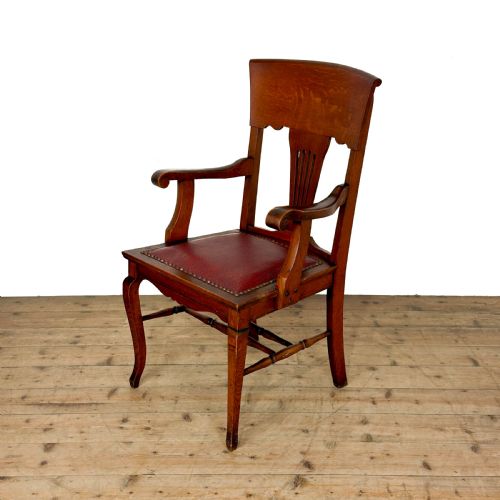


Dark Oak Office Chair
A dark oak office chair brings substance and character to a working space, offering robust construction alongside rich, deep timber tones.
Dark Oak Office Chair
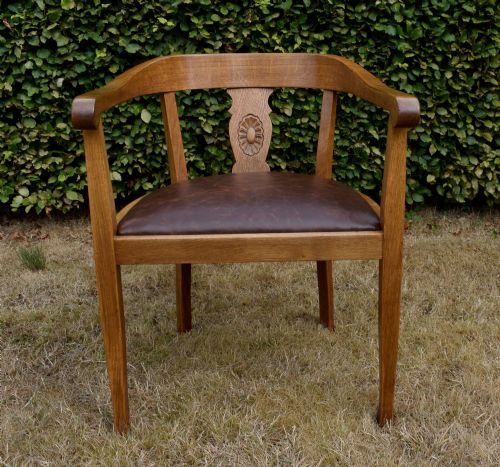
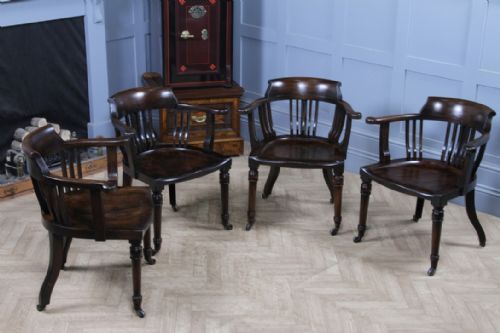
A dark oak office chair is a sturdy and functional seating option designed for daily work, drawing on forms from the Victorian and Edwardian eras. Buyers searching for a dark oak office chair will encounter various iterations, from swivel desk chairs with adjustable heights to solid armchairs and captain's chairs.
The selection on this page spans several decades, with Edwardian and Victorian pieces predominating. Forms range from simple solid timber seats to versions upholstered in leather or velvet, often featuring structural elements like bentwood, iron, or brass fittings.
Originating largely from British workshops and country houses, these chairs balance utility with period aesthetics. Whether a heavy swivel mechanism is needed or a simpler elbow chair, the overarching style remains grounded in substantial oak timber.
Materials and Construction
Construction relies heavily on solid oak and hardwood, selected for strength and longevity in a working environment. Timbers are joined using traditional methods and finished to achieve the characteristic dark tones seen across the period.
Metal components such as iron, brass, and copper frequently appear in swivel mechanisms, adjustable height screws, and structural brackets. Upholstery materials like leather, studded red leather, and velvet are applied to seats and backs for added comfort.
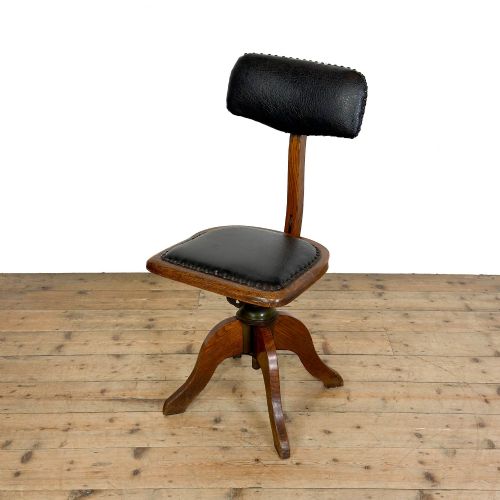
Several chairs include fully rotating mechanisms designed so nineteenth-century clerks could spin quickly between multiple ledgers.
Assessing Quality and Build
Quality in these chairs rests on the solidity of the oak frame and the integrity of any moving mechanisms, such as swivel joints or height adjustment screws. Finer examples display careful turning, robust joinery, and well-executed carving rather than mass-produced simplicity.
The choice of secondary materials also defines the grade of the piece, with heavy cast iron fittings and thick leather upholstery marking out superior examples. Period authenticity in the hardware and the depth of the timber finish separate ordinary utility seating from better workshop output.
The Dark Oak Office Chair Glossary
- Captain's Chair
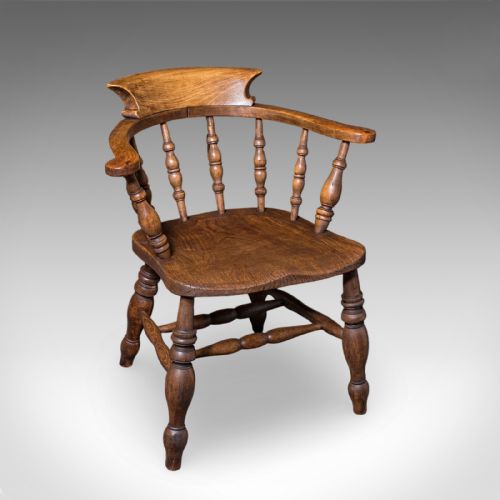
- A sturdy wooden armchair with a rounded back rail supported by spindles, designed for comfort during long hours at a desk. These often feature solid seats or upholstered pads.
- Swivel Chair
- A seat mounted on a central pivot that allows it to rotate fully, commonly paired with adjustable height mechanisms in office settings.
- Smoker's Bow
- A low-backed Windsor-style armchair with a continuous bentwood rail forming the arms and back, originating in the nineteenth century.
- Bentwood
- Wood that has been heated and bent into curved shapes, frequently utilised in Victorian seating frames for lightness and strength.
- Bergere
- A type of upholstered armchair featuring enclosed cane or wicker work on the back and sides, sometimes adapted for swivel office use.
Dark Oak Office Chair: Frequently Asked Questions
Are these chairs comfortable for daily work?
Most variants offer supportive timber backs and broad seats designed for prolonged sitting, though some feature upholstered leather or velvet pads for extra cushioning.
Adjustable swivel models provide the flexibility required for modern desk use while retaining their historic appearance.
How do I adjust the height on these chairs?
Many period swivel chairs utilise a central threaded iron screw column that raises or lowers the seat when turned.
Care should be taken when operating older mechanical parts to ensure smooth movement without forcing the metal threads.
How should I care for the leather upholstery?
Leather seats benefit from occasional cleaning and conditioning to maintain flexibility and prevent the material from drying out over time.
Keeping the studded edges free from moisture helps preserve both the hide and the metal fixings.
How do I identify an Edwardian desk chair?
Edwardian examples often display lighter proportions than their Victorian predecessors while retaining solid oak construction and traditional joinery.
Stylistic cues include simpler turned spindles, subtle carving, and integrated swivel mechanisms dating from around nineteen hundred to nineteen ten.