
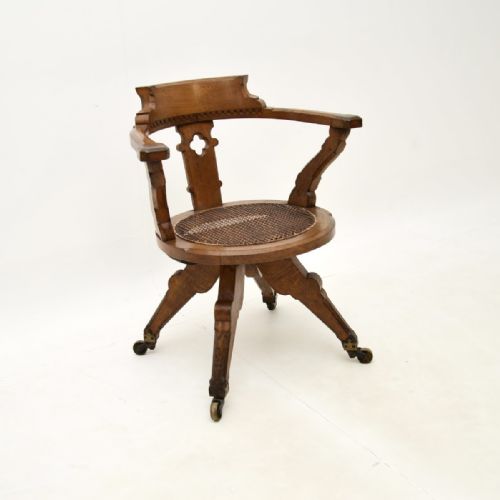


Oak Swivel Office Chair
An oak swivel office chair brings solid timber construction and mechanical ingenuity together for practical daily desk work.
Oak Swivel Office Chair
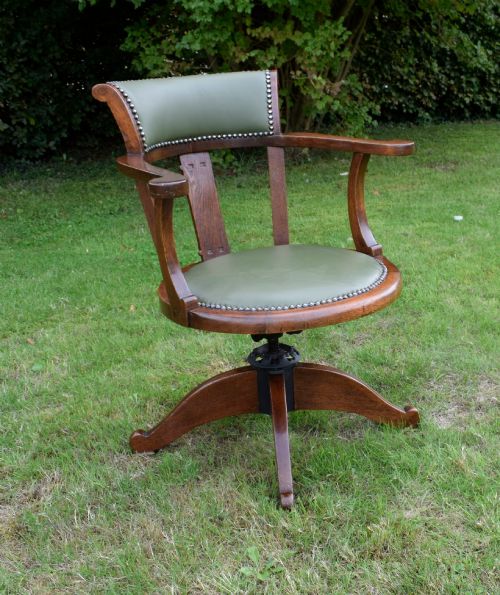
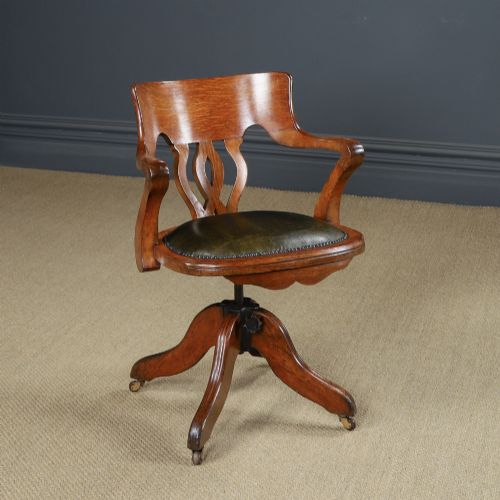
An oak swivel office chair combines a revolving seat mechanism with sturdy timber framing designed for sustained seating at a desk. You will most frequently encounter Edwardian and Victorian iterations featuring four-legged or four-pronged bases.
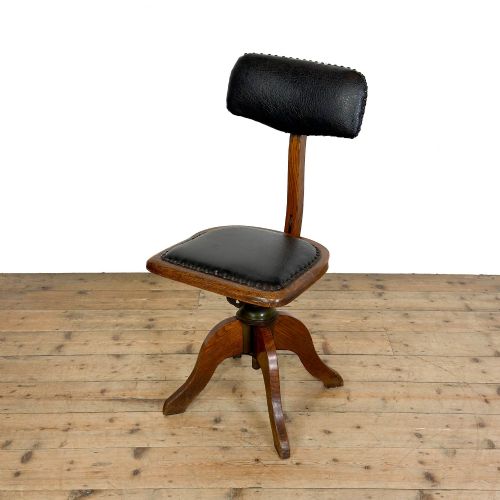
The selections span standard desk chairs, armchairs, and specialised variants like ships chairs and machinist models. These pieces originate from periods ranging from the late nineteenth century through to the early twentieth century.
Makers utilised solid timber frameworks alongside adjustable heights and tilt mechanisms to support prolonged clerical duties. The merging of domestic seating comfort with heavy mechanical bases defines the core category.
Materials and Construction
Carpenters constructed the primary frames using solid oak, often supplemented by beech or bentwood for curved components. Metal components such as iron, brass, and cast iron formed the heavy-duty swivel and tilt mechanisms underneath.
Upholstery typically involved leather or hide pads fastened with brass tacks, while other examples featured plain wooden seats or woven cane panels. The combination of structural timber and metal swivel spindles required robust joinery to withstand daily rotation.
Several heavy oak chairs served aboard passenger liners, built to swivel while the ship rolled.
Quality Factors
Superior examples display heavier carving, substantial gauge ironwork in the revolving mechanism, and high-grade leather upholstery secured carefully to the frame. Lesser models rely on simpler turned spindles and plain wooden seats without supplementary padding.
The complexity of the adjustment mechanisms also dictates the tier of the piece, with simple swivels sitting below fully adjustable swivel and tilt assemblies. Solid construction and depth of timber figuring elevate the stature of an individual chair.
Kendrick & Jefferson
The Oak Swivel Office Chair Glossary
- Revolving
- Capable of turning fully on a central vertical axis. This action allows the seated person to pivot between different parts of a desk workspace without moving the entire base.
- Swivel and tilt
- A mechanical arrangement permitting the seat both to rotate and to lean backward against a tension spring. This added comfort for long hours of administrative work.
- Captain's chair
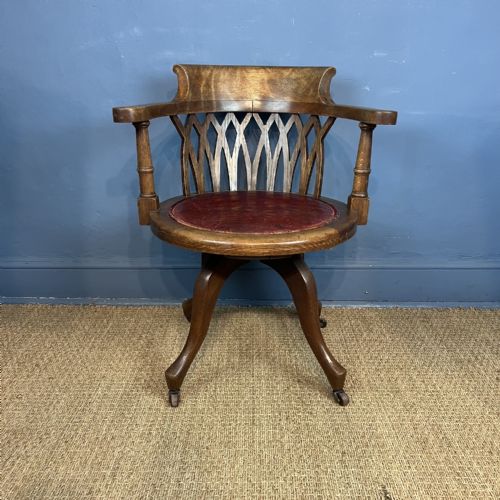
- A sturdy wooden armchair with a rounded back rail supported by spindles above the seat. These often incorporated the revolving base when adapted for office environments.
- Bergere
- A type of upholstered armchair featuring woven cane panels on the back or sides. Examples in this category apply the technique to revolving office seating.
- Gothic Revival
- A design style drawing inspiration from medieval architecture, characterised by pointed arches and heavy carving. Pieces from this movement display pronounced decorative motifs on the wooden crest rails.
Oak Swivel Office Chair: Frequently Asked Questions
How do I adjust the height on these chairs?
Many of these chairs adjust in height by turning the central wooden screw column beneath the seat clockwise or anticlockwise until the desired level is reached.
Other variants utilise iron screw mechanisms or mechanical levers connected to the base to alter the seating position.
Were these chairs used only in offices?
While primarily designed for commercial offices, banks, and libraries, similar revolving chairs found placement aboard ships and in private studies.
Examples originating from maritime contexts often feature heavier frames and weighted mechanisms to account for movement at sea.
How do I care for the leather upholstery?
Leather seats benefit from occasional treatment with appropriate conditioning balms to maintain flexibility and prevent the material from drying out over time.
Regular dusting with a dry cloth keeps the surface clean without harming the historic hide or the surrounding oak frame.
How can I tell a Victorian chair from an Edwardian one?
Victorian models often display darker finishes, heavier carved details, and Gothic Revival influences with robust solid timber framing.
Edwardian versions frequently exhibit lighter golden oak tones, simpler lines, and refined ergonomic proportions geared towards early twentieth-century workspaces.