




Dark Oak Kitchen Hutch
A dark oak kitchen hutch brings honest utility and deep timber grain to a room, offering display space above and deep storage below.
Dark Oak Kitchen Hutch
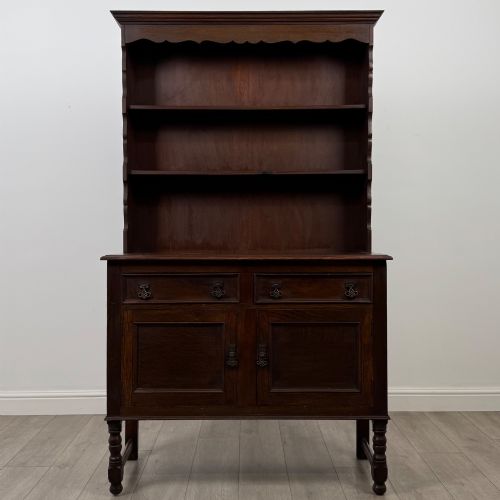
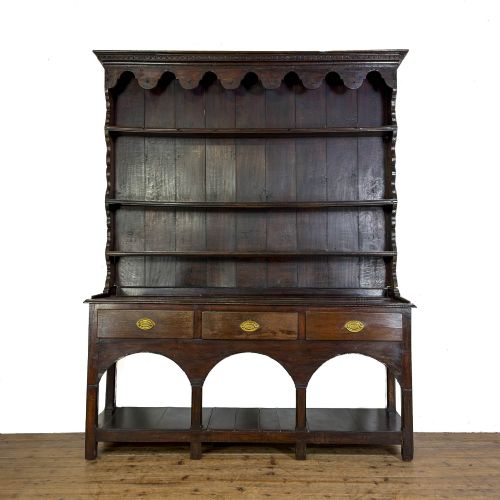
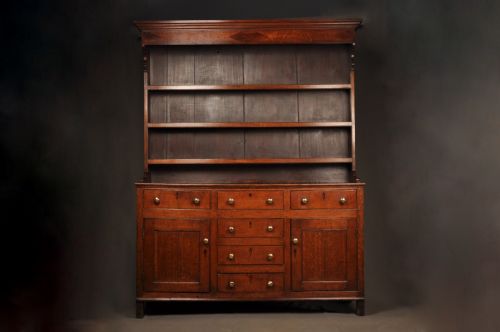
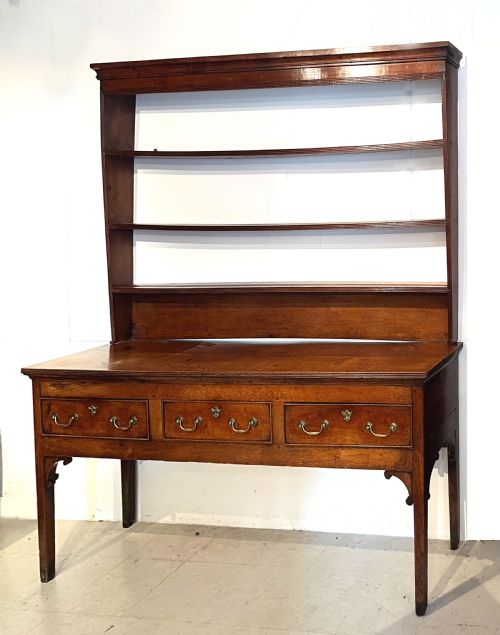
A dark oak kitchen hutch serves as a substantial storage piece, combining lower cupboards or drawers with upper plate racks or shelving. When you search for a dark oak kitchen hutch, you encounter traditional forms built for utilitarian service in domestic spaces. These pieces function as the anchor of a country kitchen or dining area.
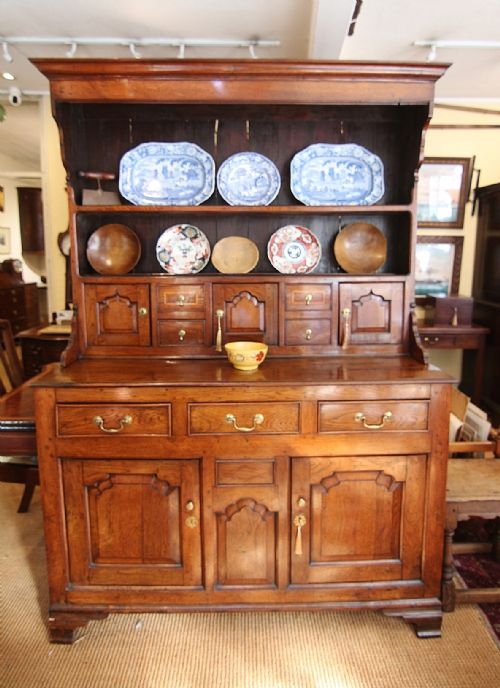
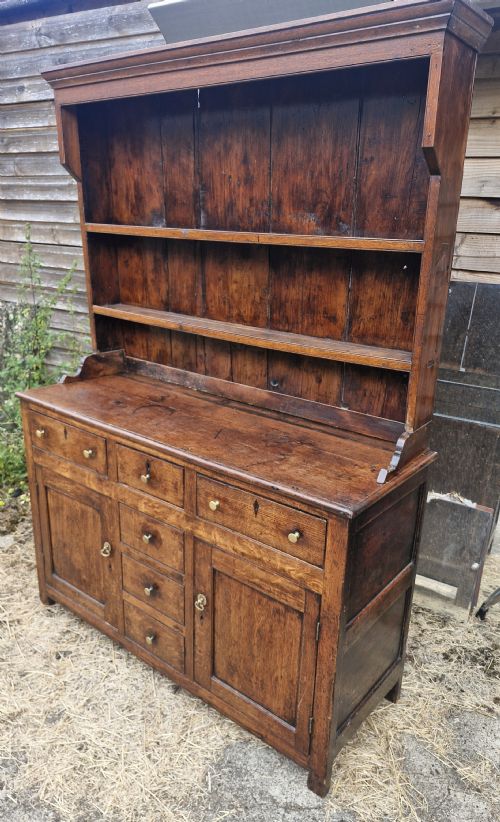
The selections available span several centuries, with particular emphasis on regional British examples and continental variations. Eighteenth-century Welsh dressers and Victorian farmhouse iterations dominate the choices. Each piece demonstrates the practical evolution of domestic storage furniture over generations.
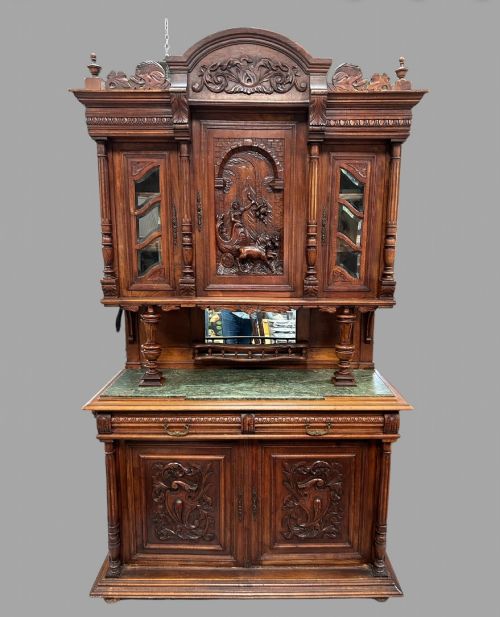
Regional variations alter the presentation, from the low pot-boards of early Welsh designs to breakfront drawers and carved Victorian revival panels. You find both single-piece cottage cupboards and two-part constructions designed for easier transport. The integration of display racks remains a defining characteristic of the form.
Materials and construction methods
Makers relied primarily on solid oak for the primary framework, panels, and top surfaces, sometimes pairing it with secondary woods in hidden areas. This dense timber provides the structural integrity necessary to support heavy ceramic plates and food provisions. Brass or iron hardware secures doors and drawers while adding utilitarian functional detail.
Joinery techniques relied on pegged mortise and tenon frames, hand-cut dovetails for drawer construction, and panel-in-frame assembly for doors. Master carpenters shaped mouldings by hand and applied geometric or figural carvings directly into the solid wood substrate. Surfaces developed rich patination through decades of wax application and daily kitchen use.
Green Man carvings peer out from Victorian panels, watching over centuries of kitchen meals.
Assessing quality and authenticity
Quality rests upon the retention of original surface patination and the survival of matching upper plate racks. Pieces retaining their original backboards, brass handles, and pot-boards command greater interest among collectors. Alterations to the base or a mismatched upper rack diminish the integrity of the ensemble.
Carving execution and structural proportion dictate the hierarchy between standard utility pieces and high-status workshop examples. Crisp geometric details or well-rendered figural carvings indicate superior handwork by skilled cabinetmakers. The weight and thickness of the timber reflect the original investment in materials.
The Dark Oak Kitchen Hutch Glossary
- Pot-board
- An open slatted lower shelf positioned between the legs of early dressers, traditionally used for storing pots and pans. This feature appears most frequently on eighteenth-century Welsh examples.
- Welsh dresser
- A large kitchen sideboard featuring an integrated plate rack superstructure above the main counter. These pieces often incorporate drawers and cupboards in the lower section.
- Plate rack
- The open shelving unit attached to the top of a dresser for displaying ceramics. Original racks show construction methods and timber ageing consistent with the lower base.
- Belly rack
- A regional variant of the dresser featuring a distinct protruding central section or curved lower drawer configuration. This configuration provides expanded storage capacity.
- Breakfront
- A cabinet design where the central section projects forward from the flanking outer sections. This architectural arrangement creates depth and shadow lines across the front elevation.
- Geometric carving
- Decorative surface carving utilising repeating rectilinear patterns, lozenges, or strapwork. Craftsmen carved these motifs directly into the oak panels during the seventeenth and nineteenth revival centuries.
Dark Oak Kitchen Hutch: Frequently Asked Questions
What is a Welsh dresser?
A Welsh dresser is a traditional combination of a base storage cabinet with drawers or cupboards and an open plate rack above.
Originally designed for everyday domestic use in farmhouse kitchens, these pieces served to store and display ceramic tableware.
How do I care for dark oak?
Maintain dark oak surfaces by applying natural beeswax sparingly and buffing with a soft cloth to preserve the timber.
Keep these wooden pieces away from direct heat sources and sudden humidity changes to prevent the timber from splitting.
How old is my oak hutch?
Dating relies upon examining construction marks, hand-cut dovetails, tool traces, and the overall wear patterns on the timber.
Eighteenth-century examples display pegged joinery and hand-planed boards, while Victorian pieces often feature machine-sawn elements and revival carvings.