


Antique Oak Buffet Rack
An antique oak buffet rack brings solid timber and centuries of domestic utility directly into a modern kitchen.
Antique Oak Buffet Rack
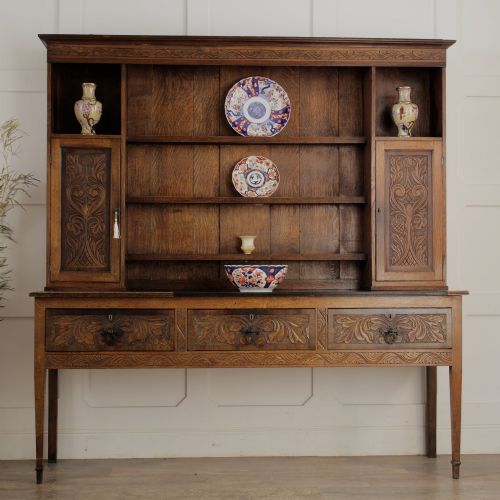
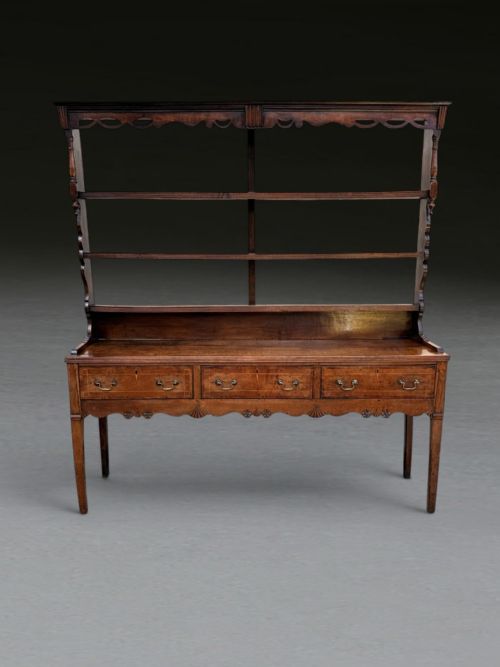
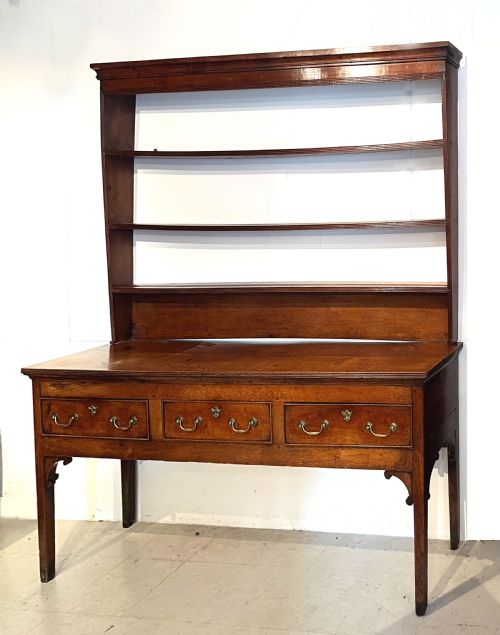
When you search for an antique oak buffet rack, you are looking at substantial storage furniture that combines a lower base with an upper plate rack. The pieces available here span several distinct eras, stretching from the mid-eighteenth century through the Georgian and Victorian periods into the early twentieth century. You will encounter forms labelled variously as Welsh dressers, dresser bases, and sideboards with attached plate shelving.
The English Country and Georgian examples form the backbone of this selection, often displaying robust proportions and practical lower cupboards or drawers. Alongside these traditional British formats, occasional continental variants such as French provincial walnut buffets appear in the listings. These items served historically for storing and displaying tableware, earthenware, and provisions in large domestic kitchens.
The construction typically separates into a two-part format, allowing the upper rack to sit securely upon the lower buffet base. Pot boards and breakfront drawers frequently feature in the base sections of eighteenth-century and nineteenth-century pieces. Buyers meeting these items today gain both surface workspace and vertical display capacity rooted in centuries of vernacular craftsmanship.
What varies in quality
The distinction between standard examples and superior pieces rests largely on the integrity of the timber and the honesty of the construction. Earlier eighteenth-century pieces often exhibit tighter grain selection and more substantial framing in the pot boards and drawer linings. Finer items retain their original brassware, backboards, and upper racks without extensive timber replacement.
Proportion and decorative restraint differentiate regional vernacular pieces from later revival items produced in the nineteenth and twentieth centuries. A balanced relationship between the depth of the buffet base and the height of the plate rack indicates thoughtful design. Pieces that display crisp hand-carving and well-figured oak panels command greater appreciation among collectors than heavily restored or later factory-made interpretations.
The Antique Oak Buffet Rack Glossary
- Buffet rack
- A combination of a lower serving sideboard and an upper tier of open shelving designed for displaying plates.
- Pot board
- The lower slatted or solid shelf built near the floor in traditional dressers, originally intended for storing heavy pots and pans.
- Welsh dresser
- A regional form of kitchen furniture featuring an open plate rack mounted above a base fitted with drawers and cupboards.
- Breakfront
- A cabinet design where the central section projects forward from the flanking outer sections.
- Cabriole leg
- A furniture leg that curves outward and then tapers inward, ending in a pad or foot, seen on mid-eighteenth-century pieces.
Antique Oak Buffet Rack: Frequently Asked Questions
What is the difference between a dresser and a buffet rack?
A dresser traditionally integrates storage drawers and cupboards beneath an open upper shelving unit for plates. A buffet rack focuses specifically on the serving surface aspect combined with vertical display space.
In practical terms within these listings, the terms overlap significantly when describing vernacular kitchen furniture from the eighteenth and nineteenth centuries.
How do I date an oak dresser base?
Dating relies on construction methods, timber characteristics, and style markers such as drawer dovetails and leg forms. Eighteenth-century pieces often show hand-sawn boards and pegged joints.
Later Victorian and Edwardian examples incorporate machine-cut elements, standardised hardware, and revival styling like Arts and Crafts detailing.
Are the upper racks detachable?
Most traditional pieces built in the eighteenth and nineteenth centuries were constructed in two separate parts for ease of transport. The upper rack simply rests upon or fixes lightly to the rear of the lower buffet base.
Checking the specific listing details confirms whether a particular item is a unified single piece or a two-part combination.
Where should I place a large oak dresser?
These substantial pieces suit large farmhouse kitchens, dining rooms, or open-plan living spaces with sufficient wall space and ceiling height. The robust oak construction anchors a room visually.
Ensure the wall behind the piece can support any necessary safety fixings to keep the tall upper rack stable.