

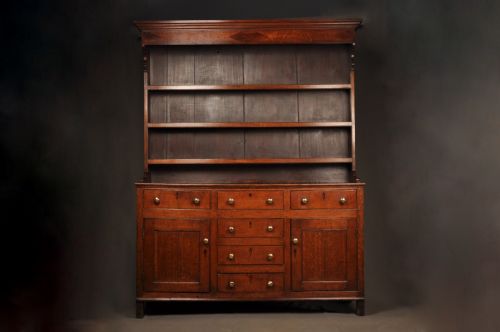

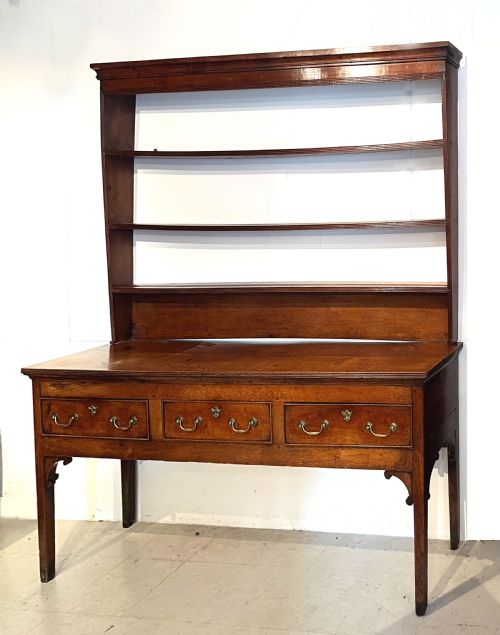


Dark Oak Hutch
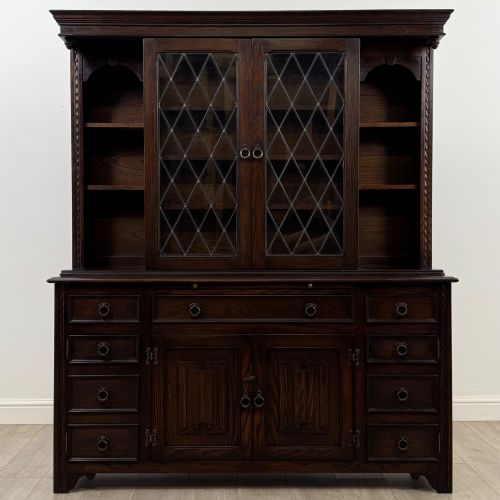
A dark oak hutch brings substantial timber and deep grain into a room, offering both display space and practical storage.
Dark Oak Hutch
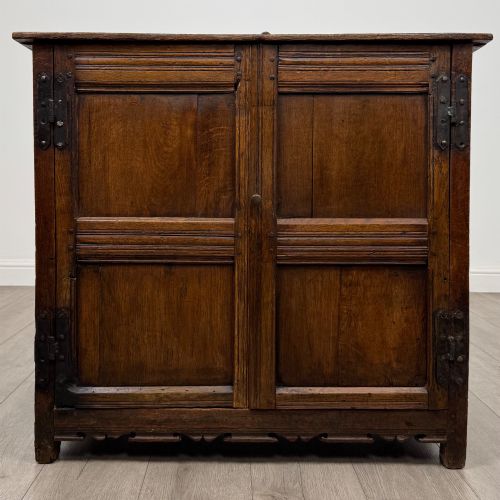
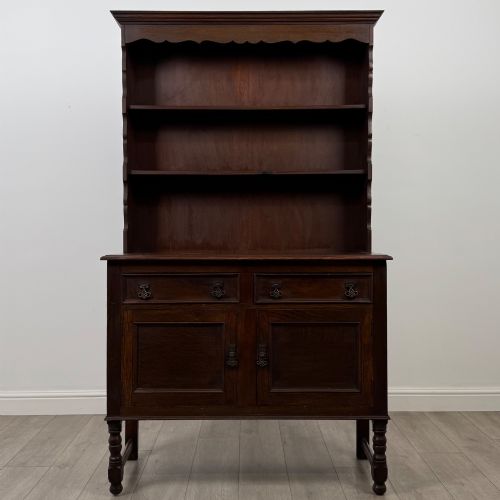
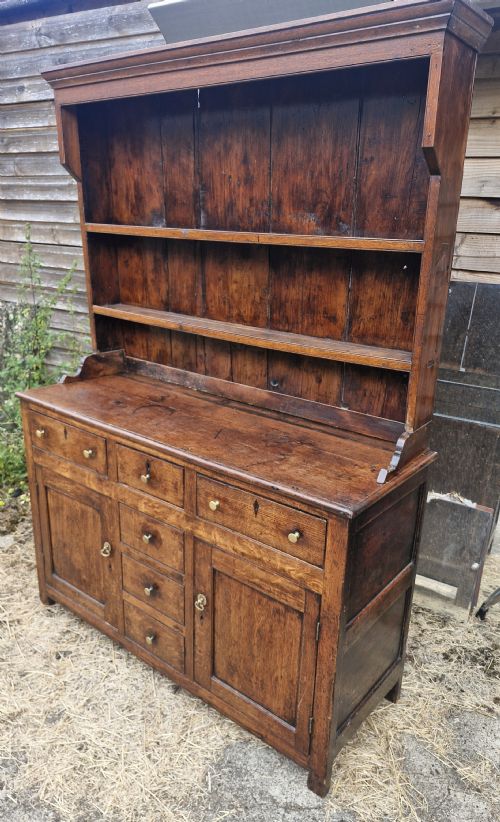
When you search for a dark oak hutch, you encounter sturdy timber storage furniture originating primarily from the seventeenth, eighteenth, and nineteenth centuries. These pieces encompass dressers, cupboards, and cabinets designed for domestic utility and tableware display.
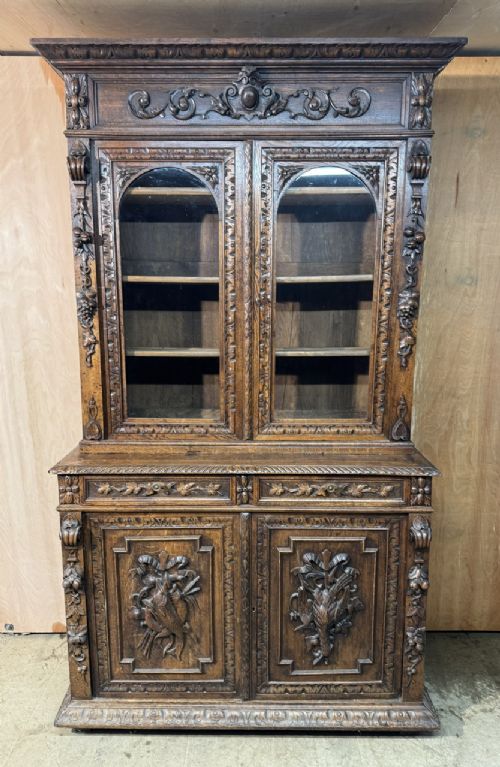
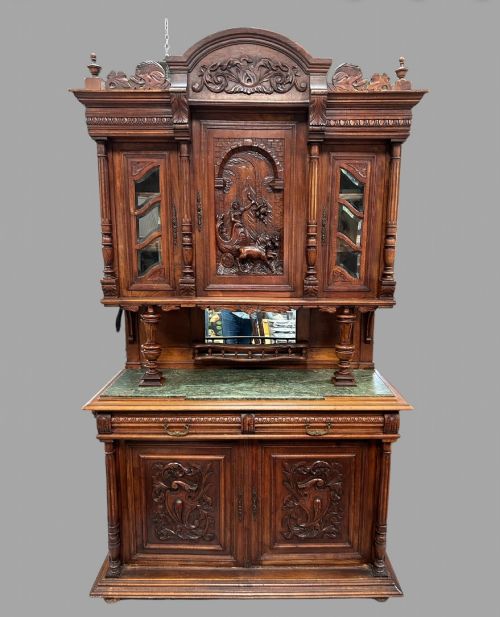
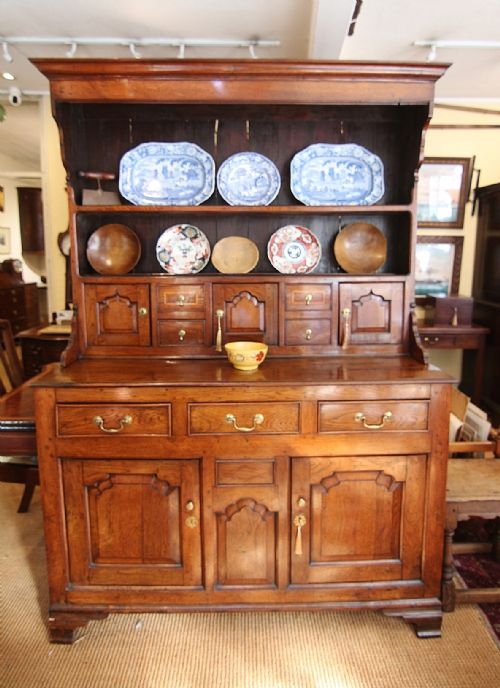
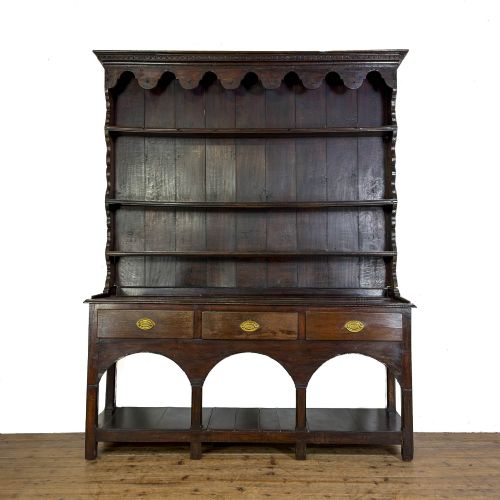
The versions most frequently met on this page include Welsh dressers with plate racks, country cupboards, and cottage dressers. They span English, Welsh, and French provincial origins, showing regional variations in construction and decorative carving.
Judging quality in oak storage furniture
Quality rests upon the integrity of the timber, the depth and crispness of any carved detailing, and the retention of original components such as plate racks and hardware. Pieces exhibiting untouched patination and sound structural joinery stand apart from those with extensive timber replacement.
Proportion and regional character also dictate distinction, where vernacular pieces with unpretentious local charm or sophisticated seventeenth-century geometric carvings demonstrate superior craftsmanship compared to later revival items.
Some nineteenth-century Victorian pieces feature curious Green Man carvings staring out from the timber.
The Dark Oak Hutch Glossary
- Hutch
- An enclosed cabinet or storage piece, often featuring doors or upper shelving for household goods. It serves as a primary ancestor to modern kitchen storage units.
- Welsh dresser
- A traditional form combining base cupboards or drawers with an open tiered plate rack on top. These pieces were utilised in farmhouse kitchens for both storage and display.
- Pot-board
- An open lower shelf built near the floor in seventeenth and eighteenth-century dressers. It originally held heavy pots and earthenware.
- Belly rack
- A regional variation of dresser base featuring a pronounced swelling or convex lower drawer arrangement. This style is particularly associated with eighteenth-century Welsh cabinet making.
- Monks bench
- A multifunctional piece of furniture featuring a hinged top that converts a seat into a table. These versatile items date back to the seventeenth century.
Dark Oak Hutch: Frequently Asked Questions
How do I date an antique oak hutch?
Dating relies on examining the construction marks, joinery techniques, and style of carving present on the timber. Seventeenth-century examples often display geometric mouldings and pegged joints, while eighteenth and nineteenth-century pieces show shifts toward simpler cottage designs or revival styles.
Hardware styles and the presence of original pot-boards or plate racks also offer clear clues to a piece's period of origin.
Where were these pieces originally made?
The items listed here originate from English, Welsh, and French provincial workshops. Regional vernacular styles developed distinct characteristics based on local cabinet-making traditions.
Welsh and English country workshops produced the majority of the oak dressers and cupboards seen in these records.
How should I care for dark oak furniture?
Maintain antique oak by keeping it away from direct heat sources and sudden temperature fluctuations that can dry out the timber. Apply a traditional beeswax polish occasionally to nourish the grain and preserve the finish.
Avoid modern liquid silicone sprays, as they can penetrate the old pores and damage the historic patination.