

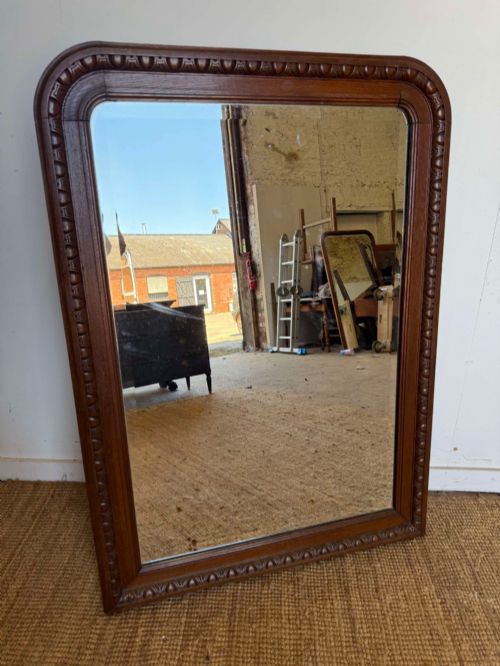
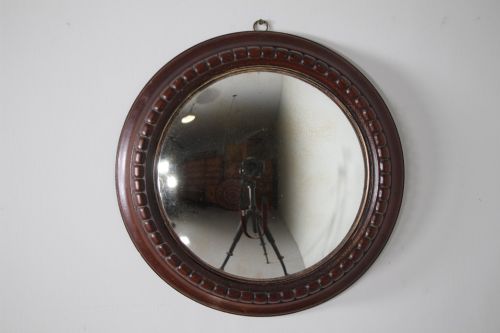
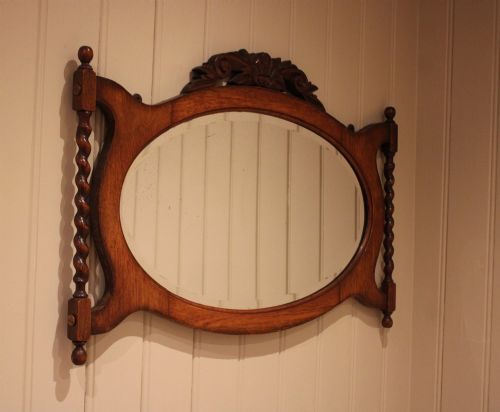
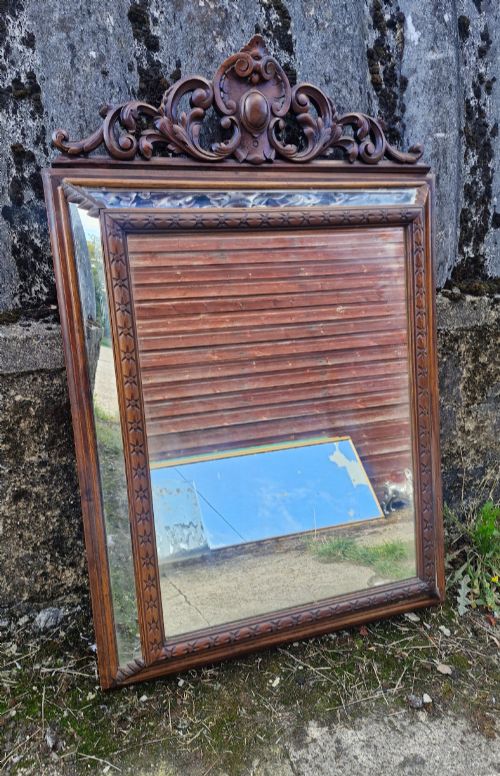
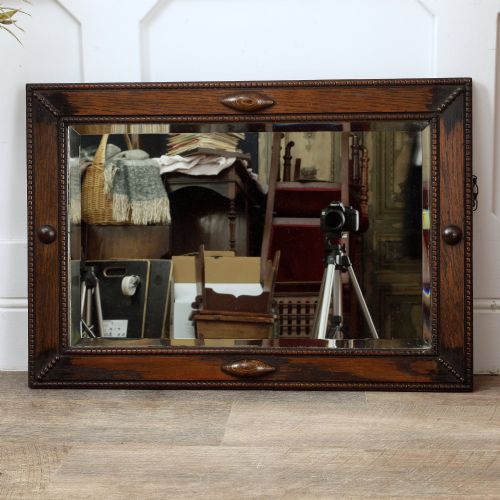
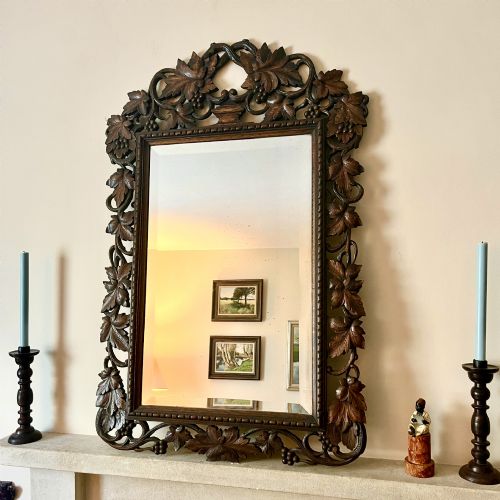

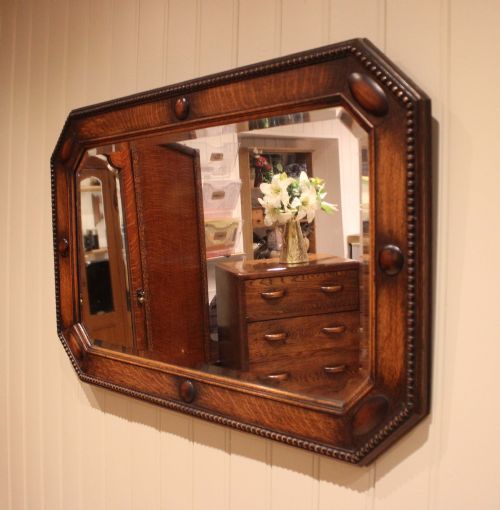
Dark Oak Framed Mirror
A dark oak framed mirror brings heavy grain and deep warmth to a room, ranging from simple domestic wall pieces to grand overmantels.
Dark Oak Framed Mirror
A dark oak framed mirror combines robust timber with reflective glass, appearing primarily in formats such as wall mirrors, overmantels, and hall mirrors. These pieces span multiple decades and centuries, with examples originating from the Victorian and Edwardian eras alongside earlier periods.
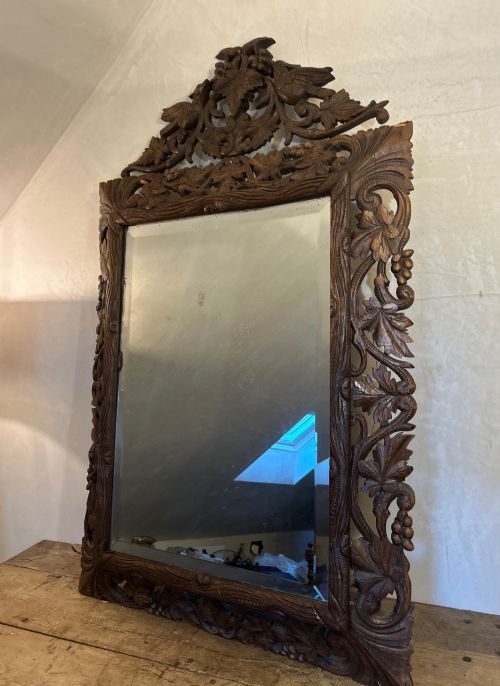
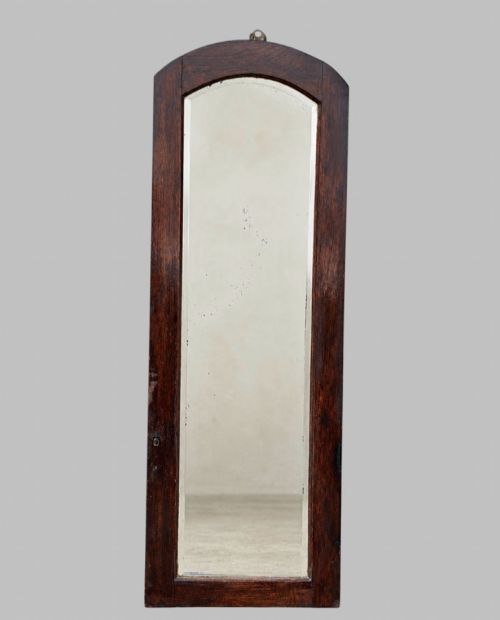
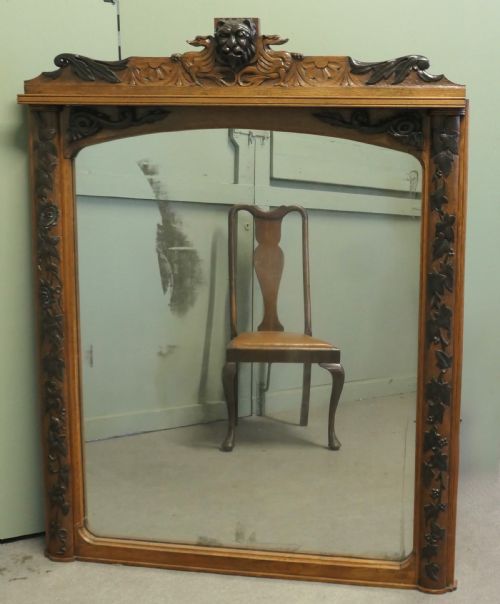
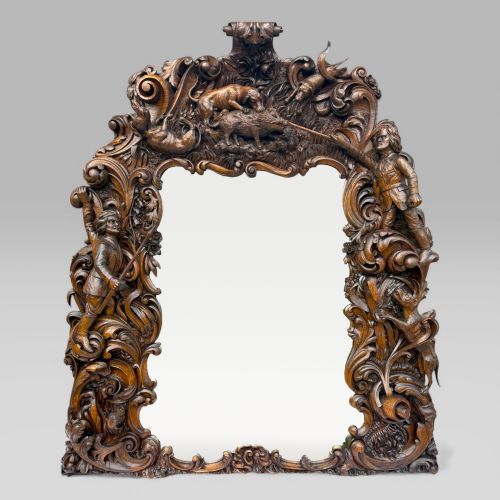
You will frequently encounter wall mirrors and large overmantels designed for domestic interiors, often shaped by revivalist movements. The forms vary from straightforward rectangular frames to elaborate carved structures with arches and cushion moulding.
Materials and construction methods
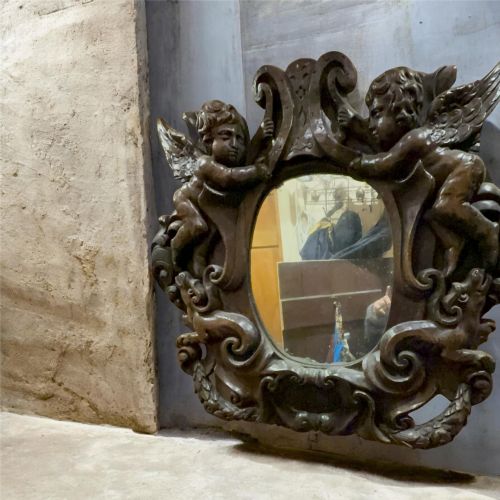
Makers utilised solid oak, carved wood, and occasionally walnut, pairing the timber with heavy mirror glass and bevelled glass plates. Frames often incorporate detailed hand carving, side columns, and applied brass fittings.
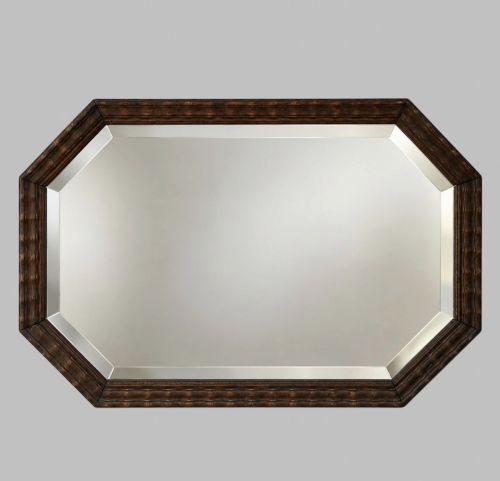
Construction techniques range from straightforward pegged joinery on plain domestic pieces to deep relief carving on revival and Gothic pieces. Bevelled glass edges appear frequently on early twentieth-century examples, secured within heavy wooden rebates.
Dark Oak Framed Mirror Retail Price Guide 2026
Typical asking prices for dark oak framed mirror among the pieces listed under this phrase on Sellingantiques today, from the lower quarter to the upper quarter. They describe what is for sale here now, not the wider market.
Listings feature pieces spanning the eighteenth, nineteenth, and early twentieth centuries, constructed from solid oak, carved wood, and bevelled glass.
Judging the standard of execution
Quality rests in the depth and sharpness of the woodwork, where crisp hand carving distinguishes superior pieces from machine-produced or plain mouldings. The weight of the timber and the integration of the frame joints also indicate the maker's hand.
The clarity and thickness of the mirror glass contribute heavily to the overall standard. Superior examples feature heavy, bevelled plates that sit securely within substantial frames without distortion.
Waring and Gillow
The Dark Oak Framed Mirror Glossary
- Overmantel mirror
- A large mirror designed to hang above a fireplace mantelpiece. These pieces often feature wide oak frames and substantial proportions.
- Bevelled glass
- Mirror glass with an angled edge polished down to a thinner margin. This technique catches the light and adds depth to the perimeter of the glass.
- Gothic Revival
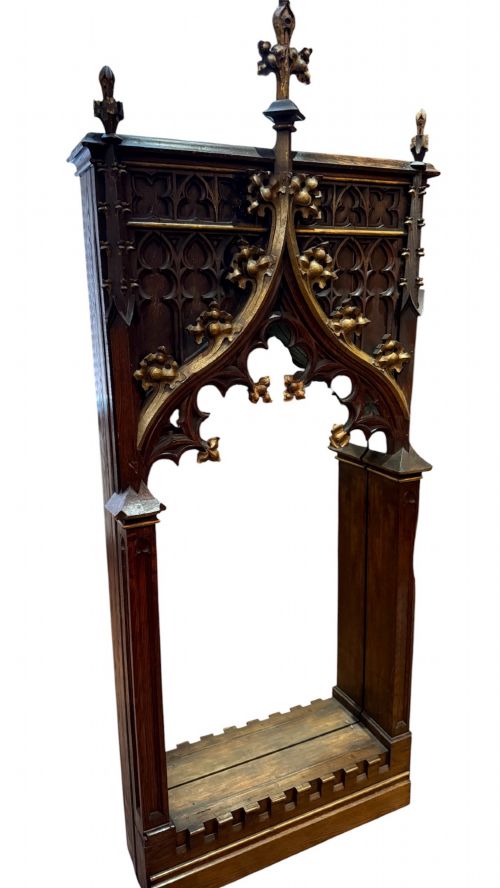
- An architectural and decorative style drawing on medieval forms. Pieces in this style display pointed arches, tracery, and heavy carved oak.
- Cushion frame
- A frame profile that swells outwards in a convex curve toward the outer edge. This style creates a pronounced three-dimensional effect around the mirror glass.
- Cheval mirror
- A freestanding full-length mirror hung on a frame with pivoting side supports. These allow the glass to tilt to various angles.
Dark Oak Framed Mirror: Frequently Asked Questions
Where should I hang an overmantel mirror?
An overmantel mirror traditionally sits directly above a fireplace surround to reflect light and anchor the room's proportions. Ensure the wall fixings match the considerable weight of the solid oak frame and glass.
These large pieces also function effectively on principal walls in dining rooms or hallways where they can capture natural light from opposing windows.
How do I care for dark oak frames?
Maintain the timber by dusting regularly with a dry cloth and applying appropriate beeswax sparingly to nourish the grain. Avoid placing the mirror in areas with direct sunlight or excessive moisture.
Keep glass cleaner away from the wooden edges to prevent staining the timber or seeping behind the plate.
What distinguishes Gothic Revival oak mirrors?
Gothic Revival pieces incorporate architectural elements such as pointed arches, tracery, and heavy moulded panels. The dark oak emphasises the medieval character of these designs.
Such mirrors often feature deeply recessed plates and robust framing that reflect nineteenth-century interest in historic forms.