
Dark Oak Display Dresser
These dark oak display dressers bring solid timber storage and plate display together, built to anchor a dining room or kitchen.
Dark Oak Display Dresser
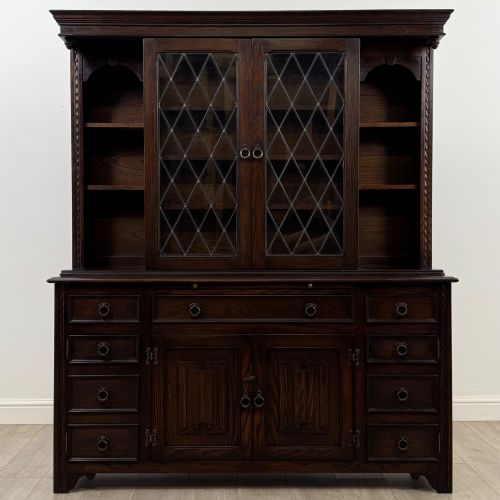
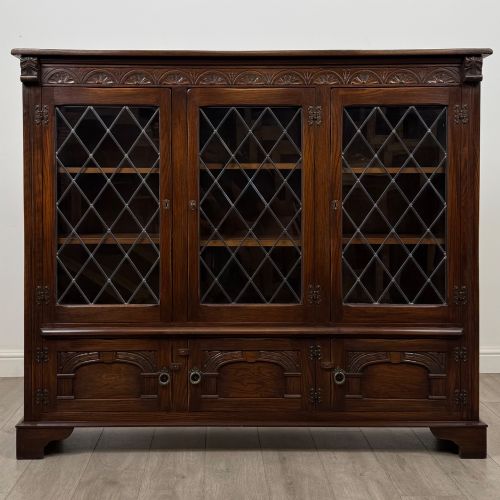
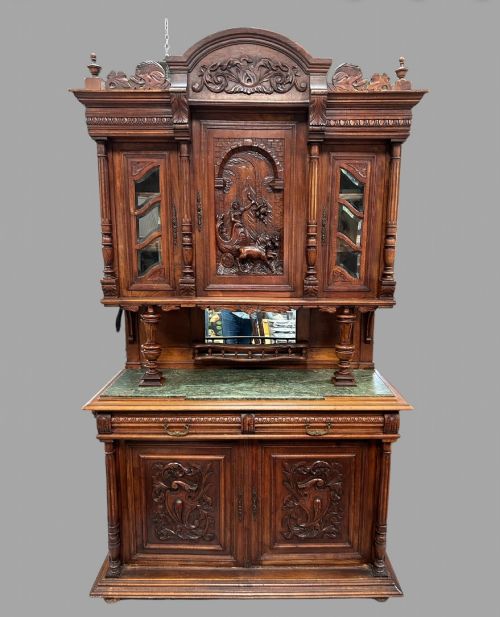
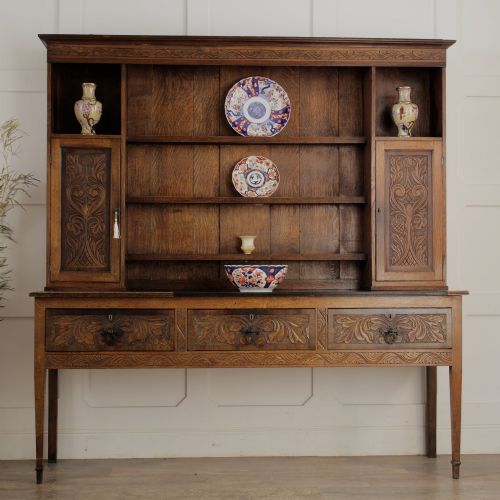
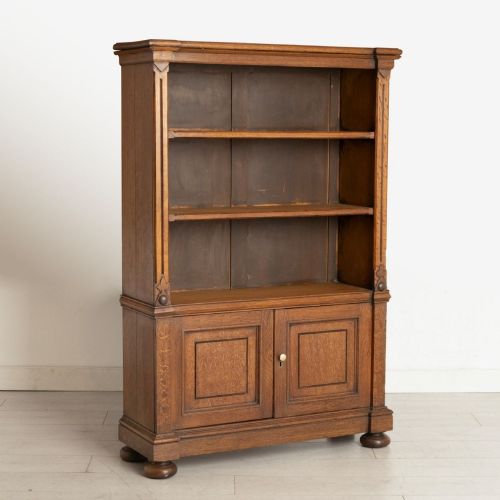
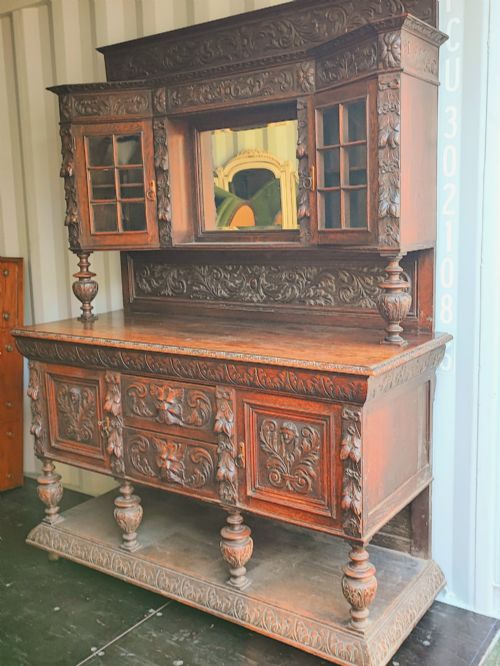
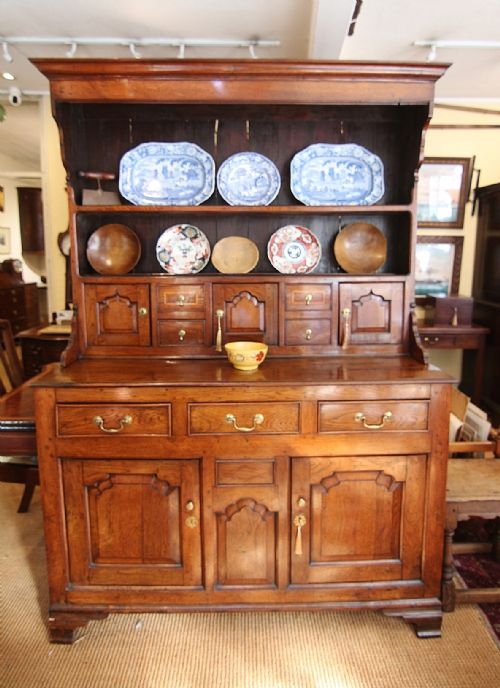
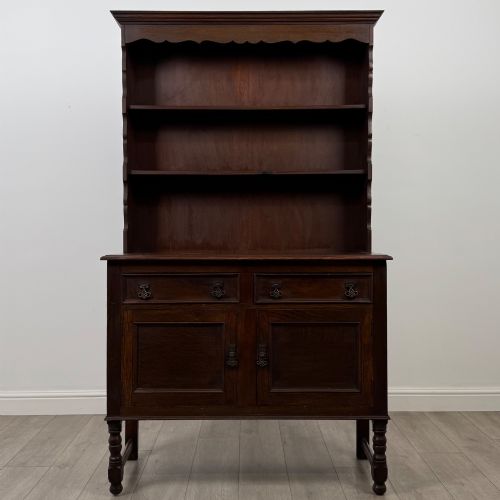
A dark oak display dresser combines a base unit of drawers and cupboards with an upper plate rack or glass-fronted cabinet. These pieces serve as both practical storage and a formal display area for ceramics and glassware.
The selections span the eighteenth, nineteenth, and early twentieth centuries, drawing on Georgian, Victorian, and Edwardian periods. Examples include regional English forms such as Snowdonia pieces alongside French provincial and revival styles.
How they were made
Construction relies heavily on solid oak, paired with secondary timbers like pine, and assembled using traditional joinery. Iron and brass hardware secure the doors and drawers, while lead holds the panes in glazed sections.
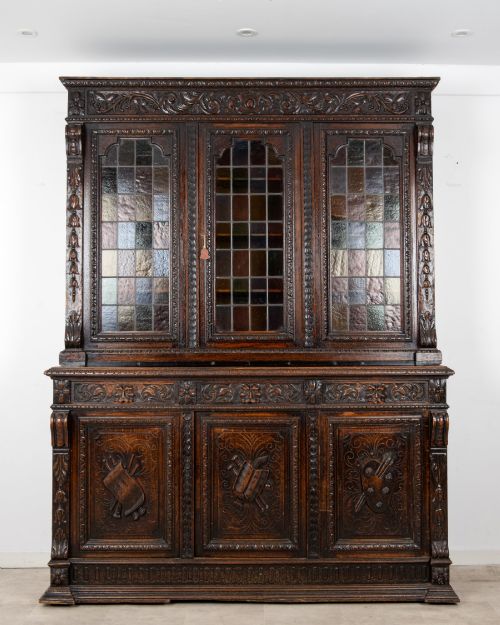
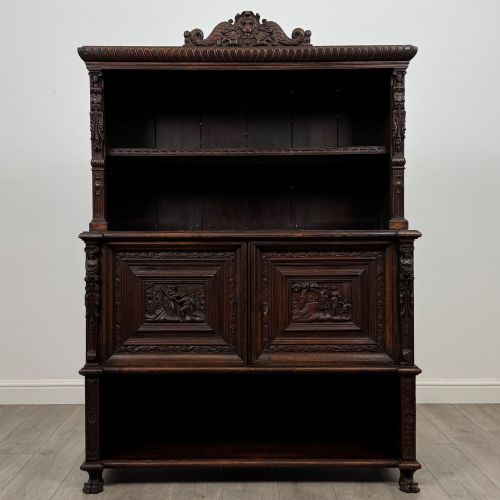
Carving, panelling, and inlay define the surface detail across the centuries. Cabinetmakers incorporated glass panels and mirror plates to open up the display sections for light.
Period pieces span the Georgian, Victorian, and Edwardian eras, alongside Jacobean and French Renaissance revivals.
What varies in quality
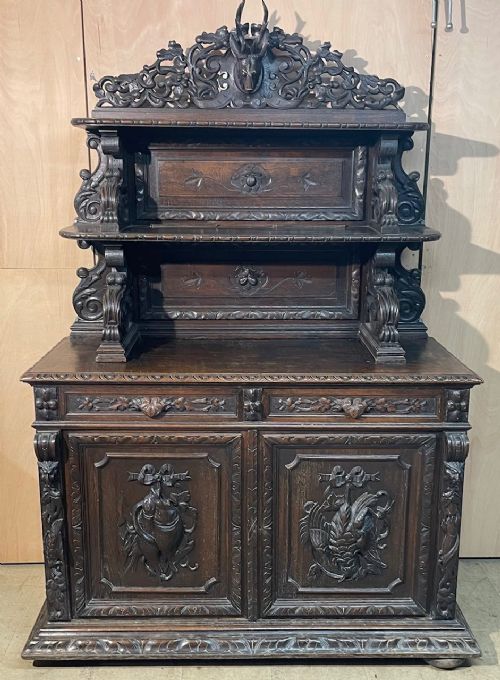
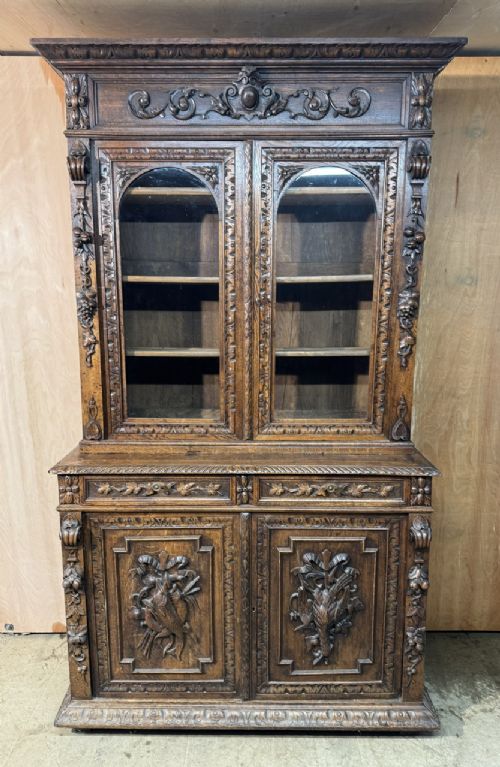
Depth and clarity of the carved detail separate standard production from finer workshop output, particularly in revival pieces. Crisp lines in the foliage, figures, or geometric panels point to skilled hand-tooling.
Integrity of the timber and the retention of original plate racks or brass fittings dictate the standing of a piece. Older items retain character through the natural ageing and warm patina of the oak.
The Dark Oak Display Dresser Glossary
- Welsh dresser
- A traditional kitchen or dining furniture form featuring an open plate rack above a base of drawers and cupboards. This regional type often displays pottery and pewter on stepped upper shelves.
- Plate rack
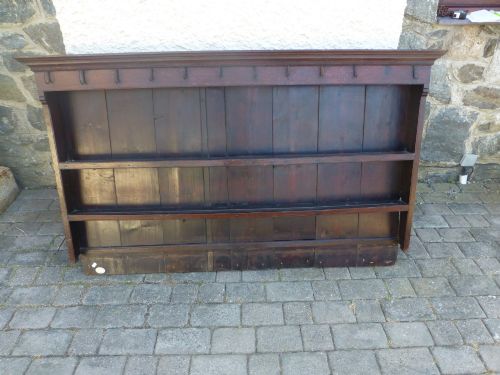
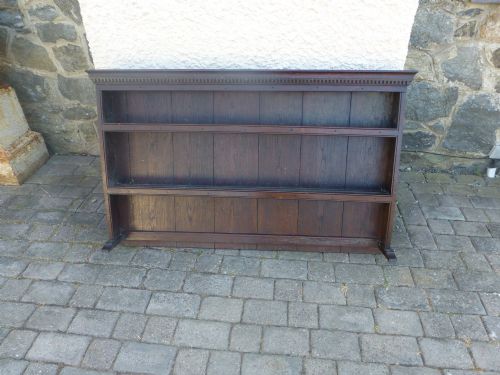
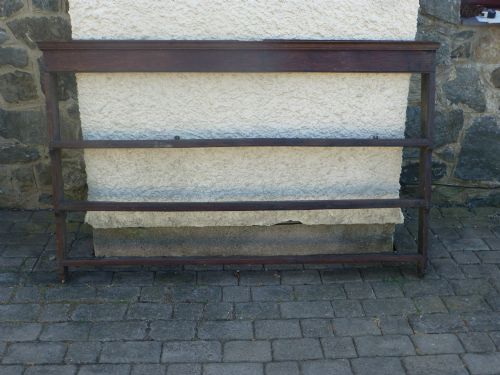
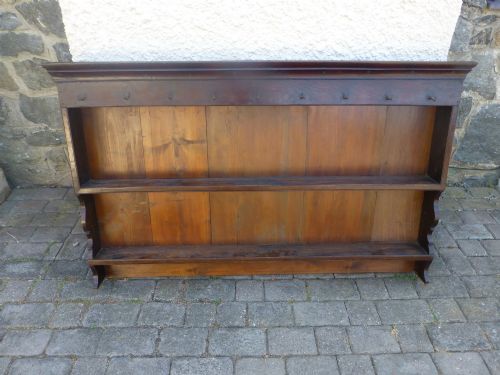
- An open shelving attachment designed to hold plates upright on grooves. These racks form the upper section of many traditional dressers.
- Delft rack
- An alternative term for an open wall rack used to display earthenware and ceramic plates. They appear mounted above dressers or directly onto walls.
- Bowfront
- A curved cabinet front that swells outward in the centre. This shape softens the profile of storage units.
- Breakfront
- A cabinet design where the central section projects forward from the side wings. This architectural arrangement adds depth to large bookcases and sideboards.
Dark Oak Display Dresser: Frequently Asked Questions
What is a Welsh dresser?
A Welsh dresser is a traditional storage item featuring an open plate rack mounted on top of a lower base with drawers and cupboards. They were originally designed for everyday kitchen use to store and display earthenware.
Over time, these pieces moved into dining rooms as furniture craftsmanship grew more formal. The upper shelves hold plates upright, while the lower cabinets house larger kitchenware.
How do I date an oak dresser?
Dating relies on observing construction methods, timber choice, and the overall style of the carving and hardware. Eighteenth-century pieces often show hand-cut joinery and regional variations like Snowdonia framing.
Later Victorian and Edwardian examples frequently incorporate revival styles, machine-sawn elements, and fitted glass or mirror panels. Comparing the secondary woods, such as pine, also helps establish the era.
Are plate racks original to the base?
Many dressers retain their original plate racks, marked by matching timber age, wear patterns, and integrated joinery. Some pieces were paired with racks later, which is common in vernacular furniture.
Checking the colour and grain of the oak across both sections helps determine if they started life together. Both integrated and married racks remain entirely functional for display.
Where should I place a dark oak dresser?
These dressers suit dining rooms, large kitchens, and libraries where their substantial presence anchors the room. Placing them away from direct heat sources protects the solid oak timber from drying out.
The display shelves provide an ideal space for ceramics, glassware, and books while keeping everyday items close at hand.