
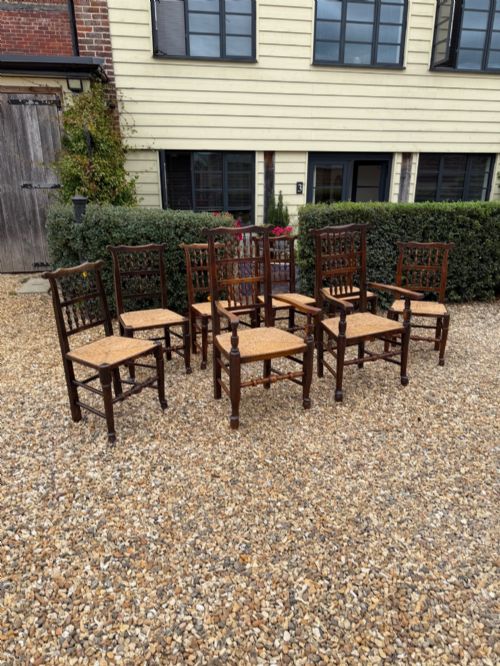
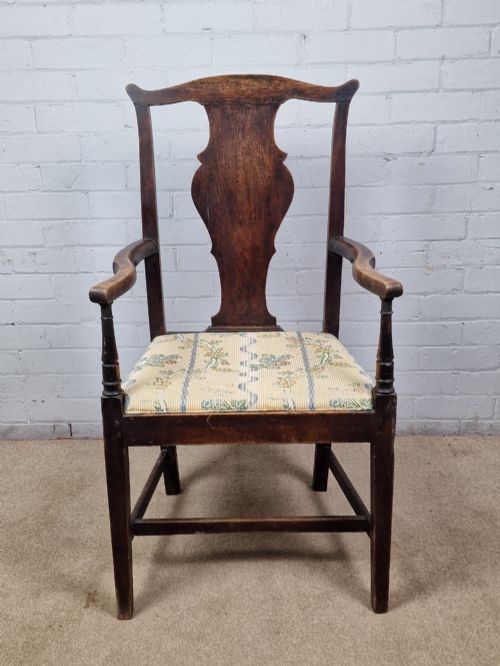

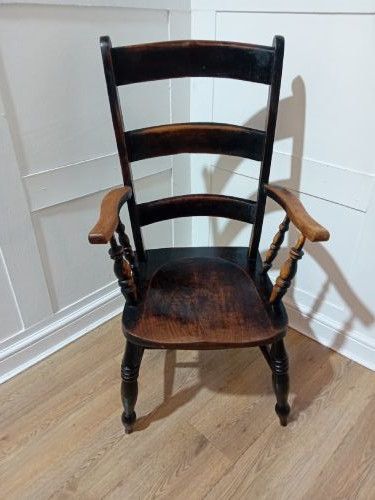


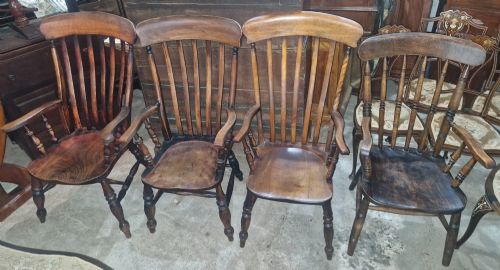
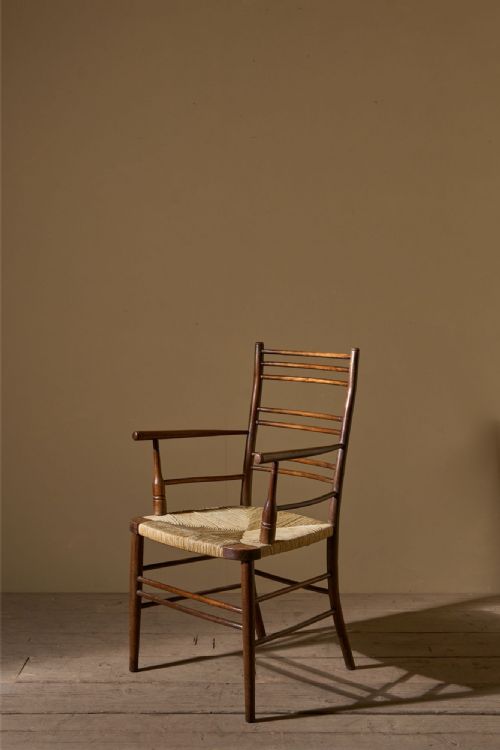
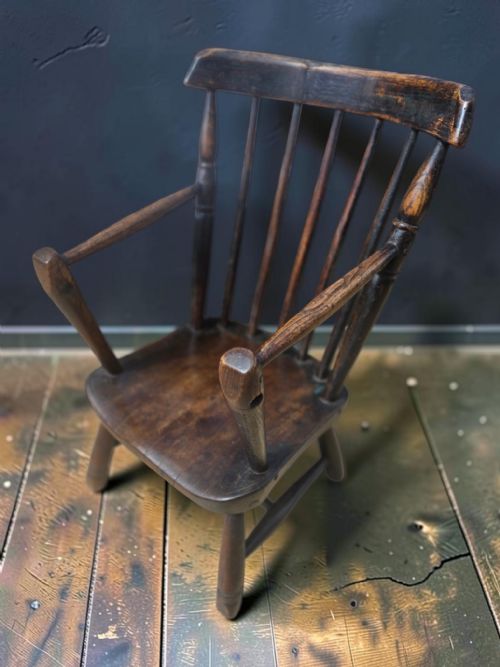
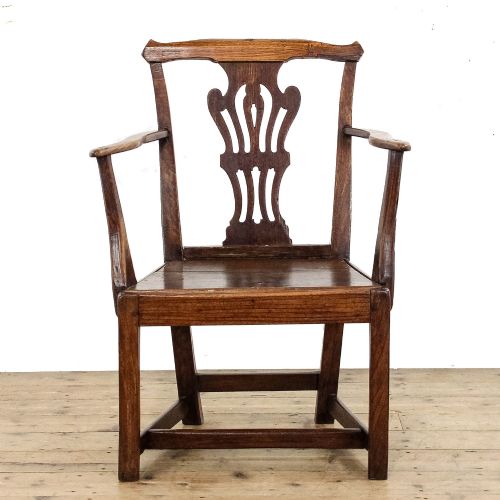
Dark Oak Country Armchair
A dark oak country armchair brings honest regional craftsmanship and heavy timber into a modern interior.
Dark Oak Country Armchair
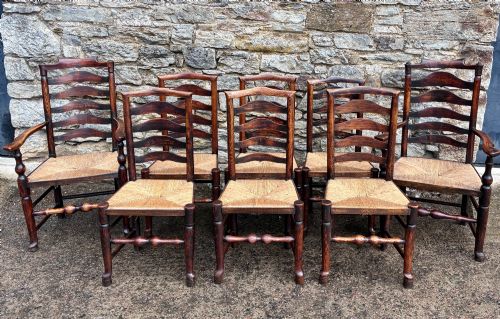
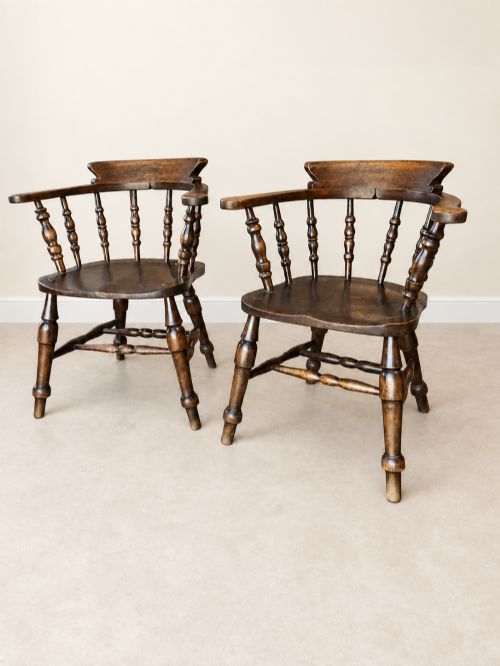
A dark oak country armchair encompasses heavy vernacular seating built across English regions from the seventeenth century onwards. These sturdy seats served domestic and farmhouse life, taking forms such as Windsor chairs, smokers bows, lambing chairs and panel-backed armchairs.
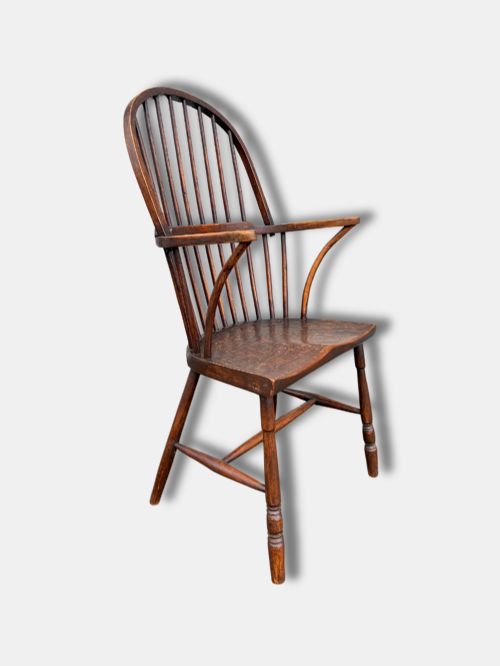
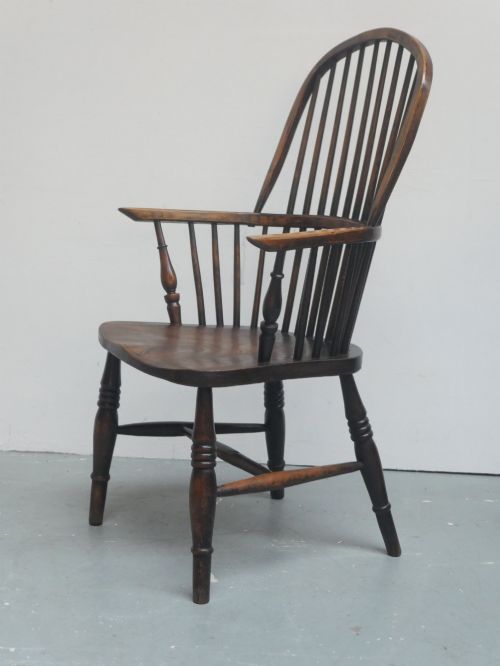
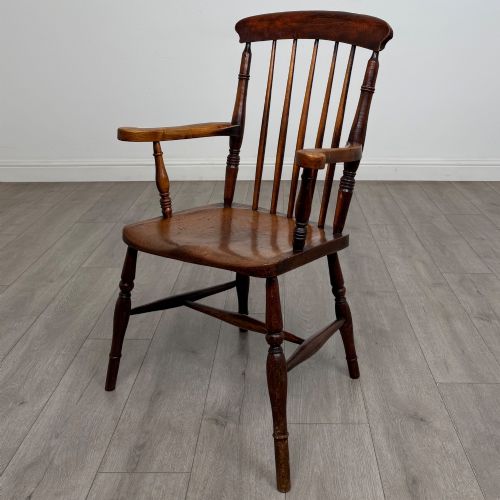
The version most commonly encountered on this page is the nineteenth-century farmhouse Windsor or stick-back armchair in oak and allied timbers. Buyers select these functional seats for their honest construction and deep patination acquired over generations of daily use.
Regional variations appear frequently, including Thames Valley, Yorkshire, Lincolnshire and Scottish interpretations. Each locality developed specific spindle layouts, arm shapes and turning patterns that distinguish one rural workshop from another.
Proportion and Surface
Quality in a dark oak country armchair rests upon the balance of proportion and the integrity of the original timber surface. Chairs with deep, unwatered colour and minimal timber replacement command attention above those with bleached or overly restored dry boards.
Structural honesty separates exceptional pieces from ordinary ones, particularly where comb backs, steam-bent hoops and sculpted saddle seats survive without excessive replacement parts. The crispness of early turnings on arm supports and legs indicates the skill of the regional carpenter who built it.
Listings span multiple centuries, ranging from seventeenth-century wainscot armchairs to twentieth-century rustic farmhouse seating.
The Dark Oak Country Armchair Glossary
- Windsor chair
- A chair built with a solid wooden seat into which the legs and back spindles are separately bored and wedged. These vernacular seats evolved distinct regional styles across the British countryside.
- Smokers bow
- A low-backed Windsor variant featuring a continuous curved arm rail supported by turned spindles above a saddle seat. They were widely used in country houses and rural inns.
- Lambing chair
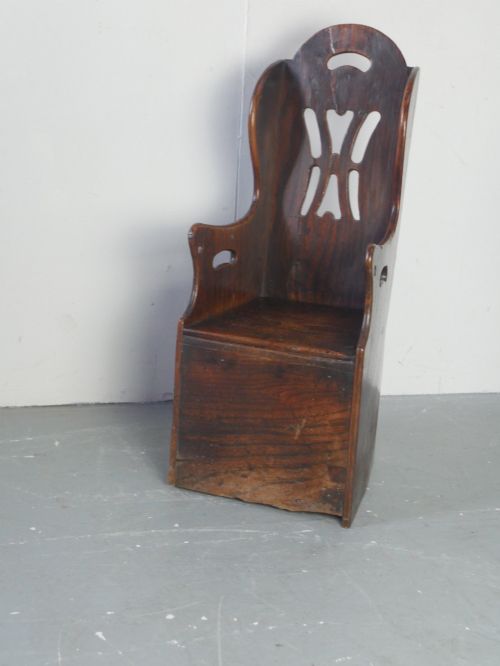
- A high-backed enclosed armchair, often constructed in oak with solid boarded sides designed to block cold draughts. Early examples occasionally incorporate under-seat compartments.
- Wainscot armchair
- A heavy seventeenth-century wooden armchair constructed with panelled backs and joined frames. These formal predecessors to lighter country seating display disciplined carpentry.
- Comb back
- A Windsor chair variation where the central spindle tier extends upward through a low horizontal headpiece resembling a hair comb. This construction provides additional upper back support.
Dark Oak Country Armchair: Frequently Asked Questions
How do I identify an 18th-century country armchair?
Eighteenth-century examples display hand-cut peg joints, wider board seats shaped by adze work, and deeper patination across the oak surfaces. Construction methods rely entirely on manual turning and joinery rather than mass-produced components.
Examination of the underside often reveals tool marks and timber shrinkage characteristic of early seasoning. The grain patterns and nail holes tell a distinct story of long domestic service.
Can I use an antique country armchair daily?
These robust wooden chairs were designed for heavy daily use in farmhouses and cottages, making them surprisingly resilient for modern seating. Solid oak and elm frames easily handle regular weight when joints remain firm.
Checking the stability of leg tenons and arm joints ensures safe use. Occasional waxing maintains the surface moisture of the dry timber without sealing the pores.
Why do country armchairs feature multiple wood types?
Country joiners selected different native timbers for specific structural properties within a single chair. Elm provided a split-resistant solid seat, ash offered flexible strength for steam-bent bows, and oak formed rigid legs.
This functional distribution of materials maximised the longevity of each chair. Makers utilised whatever local timber lay ready in the woodyard.