



Dark Oak Corner Unit
A dark oak corner unit solves the perennial problem of wasted space by turning empty angles into purposeful storage.
Dark Oak Corner Unit
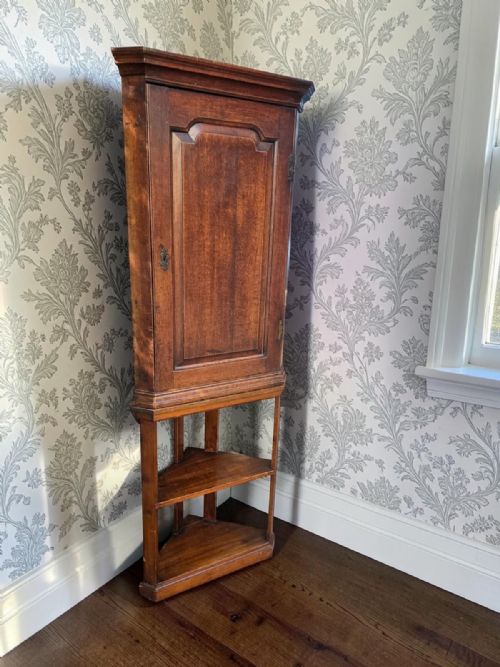
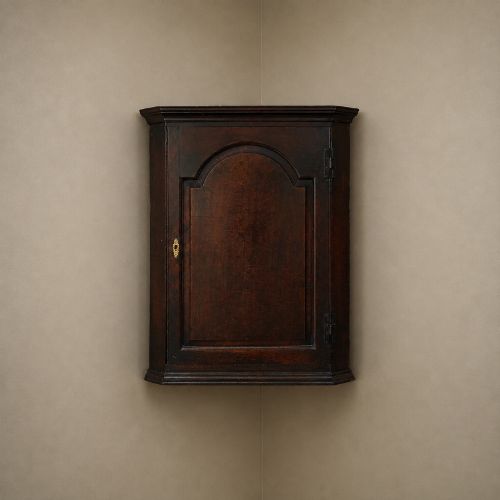
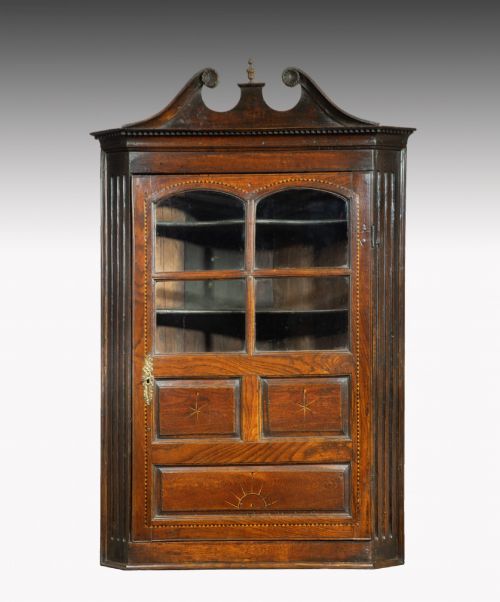
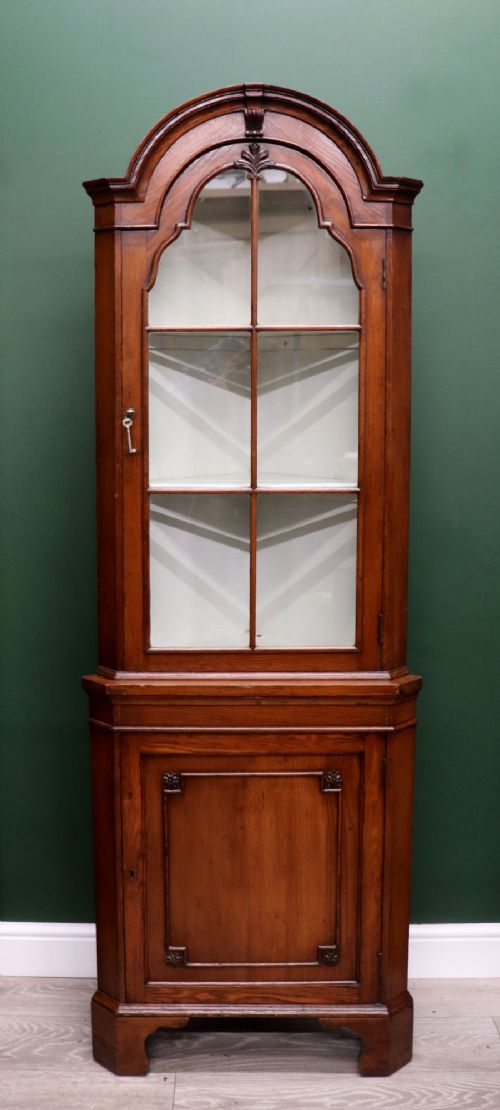
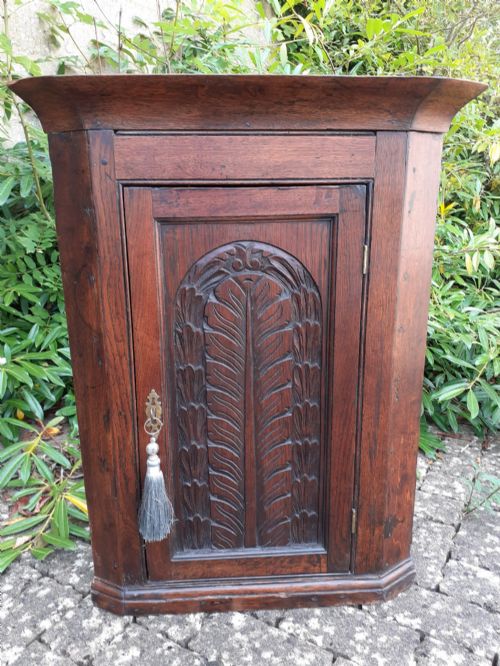
A dark oak corner unit is a timber cabinet built specifically to fit the intersection of two walls, making economical use of neglected angles. The selection spans compact wall hanging versions alongside substantial floor standing and two-part cupboards. Pieces emerge from the eighteenth century, the Georgian era, and the Victorian period, extending through to Edwardian and early twentieth-century revivals.
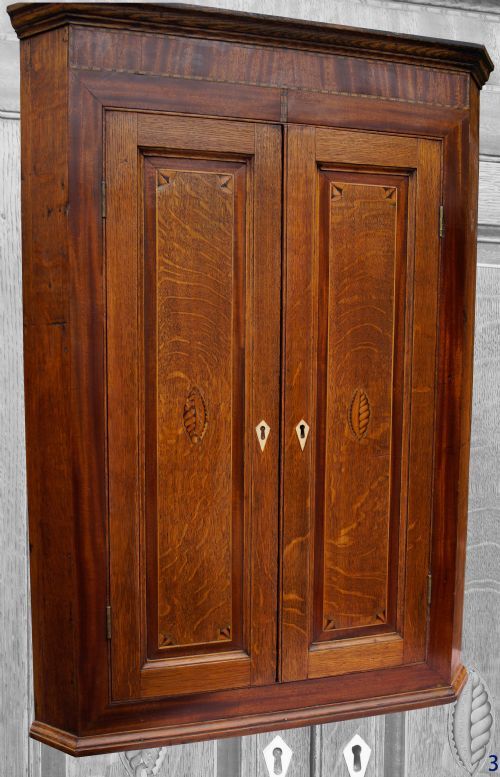
Georgian examples often feature bow fronts or panelled doors, sometimes mounted on stands or crossbanded with mahogany. Regional pieces, particularly Welsh country variants, demonstrate robust regional joinery in solid timber. Later revival items replicate earlier Jacobean and Chippendale styles using similar dense woods.
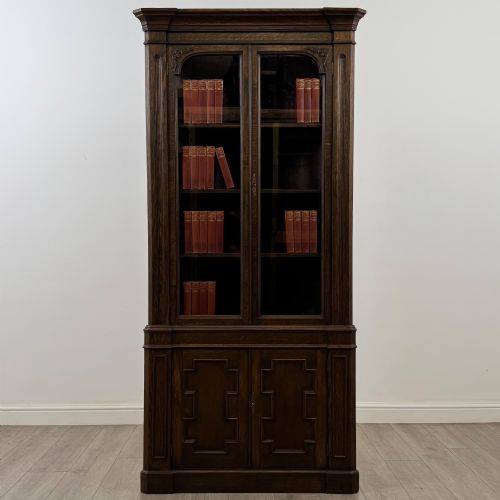
Wall mounted variants predominate in earlier centuries, keeping floor space clear in modest rooms. Standing formats offer greater capacity, occasionally incorporating glazed upper doors or matching open etageres and whatnots for display.
Craftsmanship and distinction
Quality rests in the fidelity of the timber selection, the crispness of hand-cut panels, and the integrity of internal shelving and structural joints. Superior examples display thoughtful grain matching and restrained decorative inlays rather than excessive ornamentation.
Proportion and scale dictate the visual balance of the piece, particularly where bow fronts or projecting cornices are involved. Original brassware, functional doors, and stable standing bases further separate standard utility cupboards from finer cabinet work.
Current listings feature dark oak corner units spanning the 18th century, Georgian period, Victorian era, and early 20th century, incorporating glass, brass, and mahogany.
The Dark Oak Corner Unit Glossary
- Crossbanding
- A decorative border technique where thin strips of veneer, such as mahogany, are laid perpendicular to the grain of the primary oak surface. This creates a contrasting frame around cabinet doors or drawer fronts.
- Bow front
- A convex, outwardly curved front facade that softens the rigid angles of a standard corner cabinet. It requires advanced joinery to bend or shape timber smoothly.
- Etagere
- A set of open shelves designed for displaying small objects, appearing alongside enclosed corner cupboards in twentieth-century listings. They maximise vertical space in tight corners.
- Escutcheon
- A protective plate surrounding a keyhole, usually cast in brass and secured to the cabinet door. These small fittings often provide clues to the period of the hardware.
- Panel
- A central section of wood fitted within a grooved frame to allow for natural expansion and contraction of the timber. Early eighteenth-century examples frequently utilise raised panel construction.
Dark Oak Corner Unit: Frequently Asked Questions
How do I hang a wall cabinet?
Wall hanging versions require secure fixing to solid masonry or internal wall studs using appropriate brackets suited to the weight of dense oak timber.
Professional installation is recommended because antique corner units carry considerable weight even when empty.
Are these cabinets difficult to clean?
Routine maintenance requires only a soft, dry cloth to remove dust from carved details, panels, and brass hardware.
Wax polish can be applied sparingly once or twice a year to nourish the dark oak surface without building up excessive residue.
How do I date an oak cupboard?
Dating relies on examining construction methods, such as hand-cut dovetails, panel thickness, and the presence of original iron or brass fixings. Stylistic cues like Georgian bow fronts or Victorian revival carving also indicate the likely era of manufacture.
Internal secondary woods and backboards further reveal whether a piece originates from the eighteenth century or later revival periods.
Do standing cabinets need wall anchoring?
Floor standing corner units are generally stable due to their triangular footprint fitting snugly into wall angles.
However, tall or two-part cupboards benefit from discreet safety restraints if placed in busy hallways or homes with children.