


Corner Cupboard Glazed Doors
These corner cupboard glazed doors pieces solve the problem of empty dead space by putting your best glassware on display.
Corner Cupboard Glazed Doors
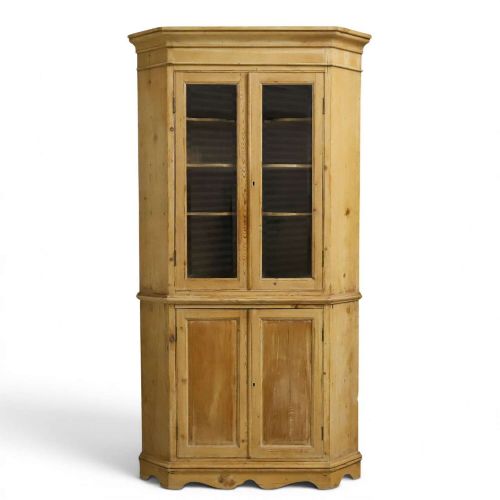
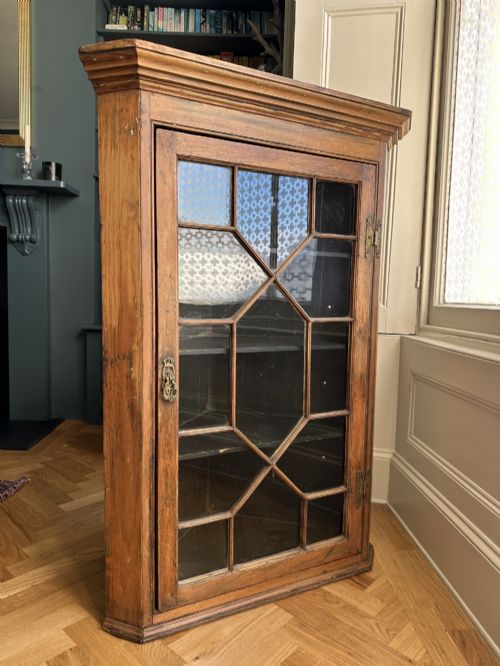
When you search for corner cupboard glazed doors, you are looking at fitted or free-standing triangular furniture designed to tuck neatly into the junction of two walls. These cabinets utilise otherwise wasted room while protecting precious contents behind transparent panes. The forms on this page range from compact single-door hanging units to towering two-part floor-standing furniture.
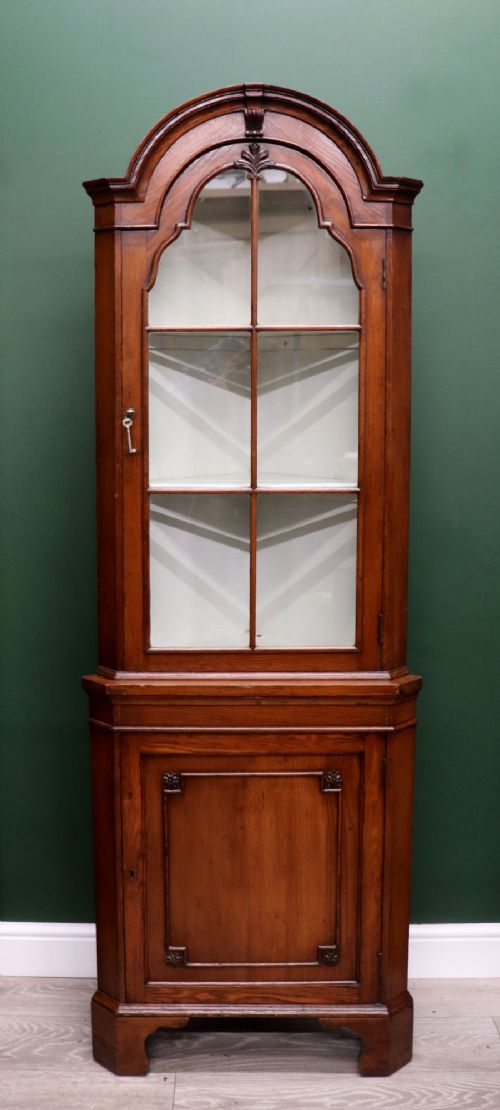
You are most likely to meet Edwardian and nineteenth-century examples on this page, often shaped from mahogany, oak, pine, or walnut. Many pieces employ slender glazing bars to divide the glass panels into geometric panes, allowing light to flood the shelved interior. Some items feature bowed glass doors that curve outwards into the room, while others present a straightforward flat front.
The regional variety spans English and Welsh workshops, taking in styles from rustic farmhouse pieces to polished Sheraton Revival designs with inlaid timber stringing. Certain cabinets divide vertically into a double-height format, stacking a glazed upper display section above a solid lower cupboard. Whichever proportion you choose, the primary function remains the exhibition and storage of tableware or decorative objects.
How they were made
Cabinetmakers constructed these corner cabinets using solid native and imported timbers, frequently applying figured veneers like flame mahogany or walnut to the exterior faces. Joinery traditions dictated dovetailed carcases and mortise and tenon frame construction to ensure the heavy triangular structure remained stable over centuries. Secondary timbers such as pine or oak formed the internal shelving and backboards.
Glazing required precise hand-cutting of timber glazing bars, known as astragals, to hold individual panes of glass securely in place. Brass hardware including hinges, escutcheons, and working locks secured the doors, whilst interior surfaces sometimes received an original painted finish to contrast with the displayed items.
Some nineteenth-century pine cupboards hide brightly painted interior shelves behind their heavy outer doors, offering a cheerful surprise when opened.
What varies in quality
The distinction between standard utility furniture and superior cabinetwork lies in the selection of timbers and the finesse of the surface ornament. Finer pieces display carefully matched veneer grains and delicate string inlay, whereas utilitarian pine or oak versions rely on robust construction rather than decorative display.
Proportion and glazing detail also separate the tiers of craftsmanship. Cabinets with slender, hand-carved astragals and original curved bowed glass represent a higher level of joiner skill than plain rectangular panes set into heavy frames.
The Corner Cupboard Glazed Doors Glossary
- Astragal
- A narrow timber moulding used to divide glass panes within a door frame. These bars provide structural support whilst creating decorative geometric patterns.
- Bow front
- A cabinet front that curves outwards in a convex sweep. This shaping requires specialised glass-bending techniques or careful segmenting.
- Stringing
- A thin linear inlay of contrasting wood inserted into the primary timber surface. It defines the edges of panels on Sheraton Revival and Georgian pieces.
- Two-part form
- A cabinet constructed in two separate stacked sections for easier transport and positioning. The upper glazed display sits directly upon a lower cupboard base.
- Escutcheon
- A protective metal plate surrounding a keyhole. Brass examples are typical on better quality period cabinet doors.
Corner Cupboard Glazed Doors: Frequently Asked Questions
Where should I place a corner cabinet?
These cabinets fit directly into ninety-degree room junctions where standard rectangular furniture cannot sit flush. They turn neglected dead space into a deliberate focal point.
Ensure the adjacent walls offer enough clearance for the door to swing open fully without striking surrounding mouldings or furniture.
How do I secure a tall corner cupboard?
Due to their triangular footprint and height, floor-standing models benefit from being anchored to the wall studs using discreet brackets. This prevents any tipping risk especially if the heavy timber doors are left open.
Shorter hanging variants require heavy-duty fixings driven directly into solid masonry or timber framing to bear the combined weight of the cabinet and its glass contents.
What items look best inside?
The interior shelves suit collections of ceramics, glassware, and silver that benefit from being kept dust-free while remaining visible. The enclosed nature of the glazed compartment protects delicate items from accidental knocks.
Avoid overloading the internal wooden shelves beyond their historical capacity, distributing heavier ceramic pieces toward the lower tiers.
How do I clean the glass safely?
Use a soft microfiber cloth and a mild glass cleaner applied directly to the cloth rather than sprayed at the wood. This protects antique timber finishes and painted interiors from moisture damage.
Take care around older hand-blown glass panes which can possess uneven thickness or small bubbles within the material.