
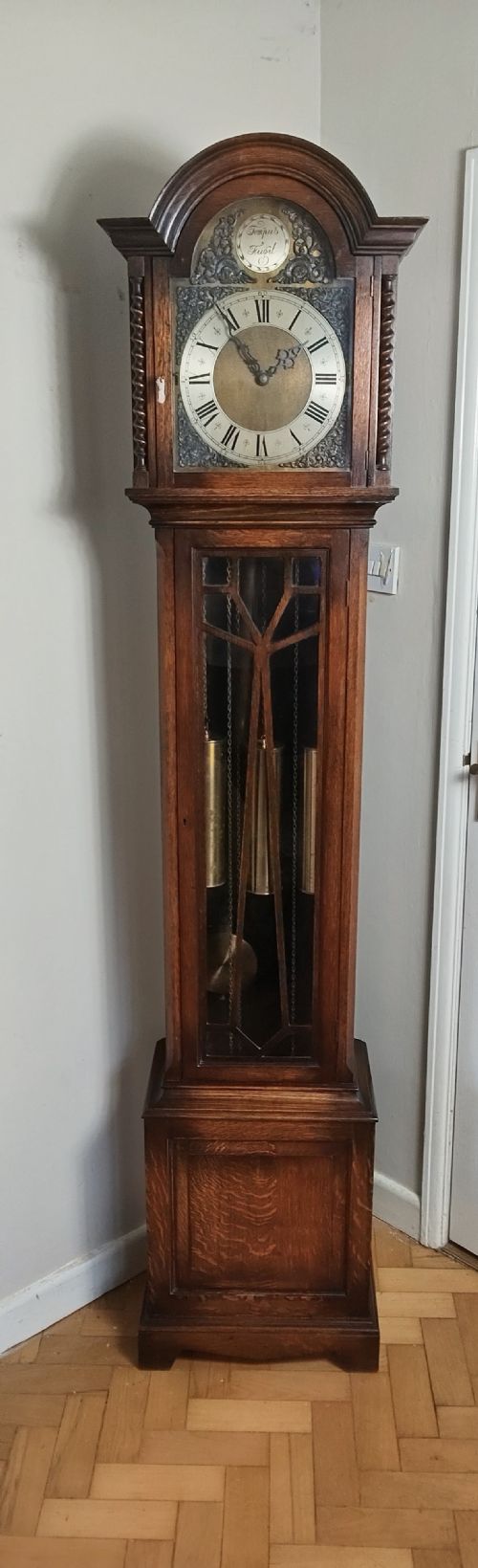
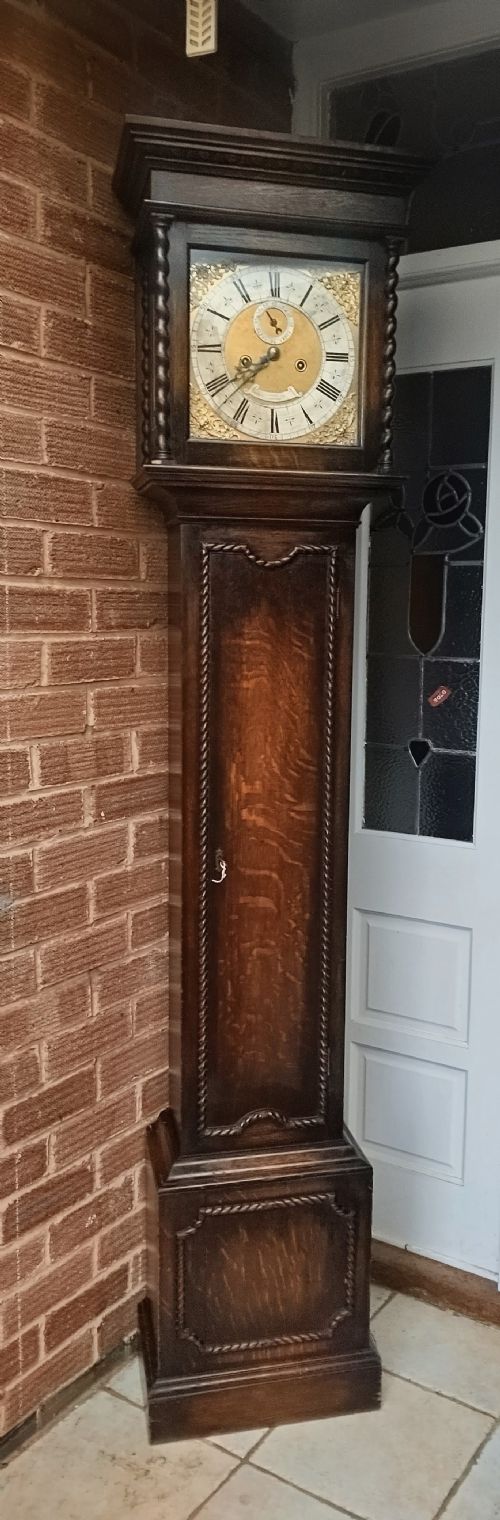
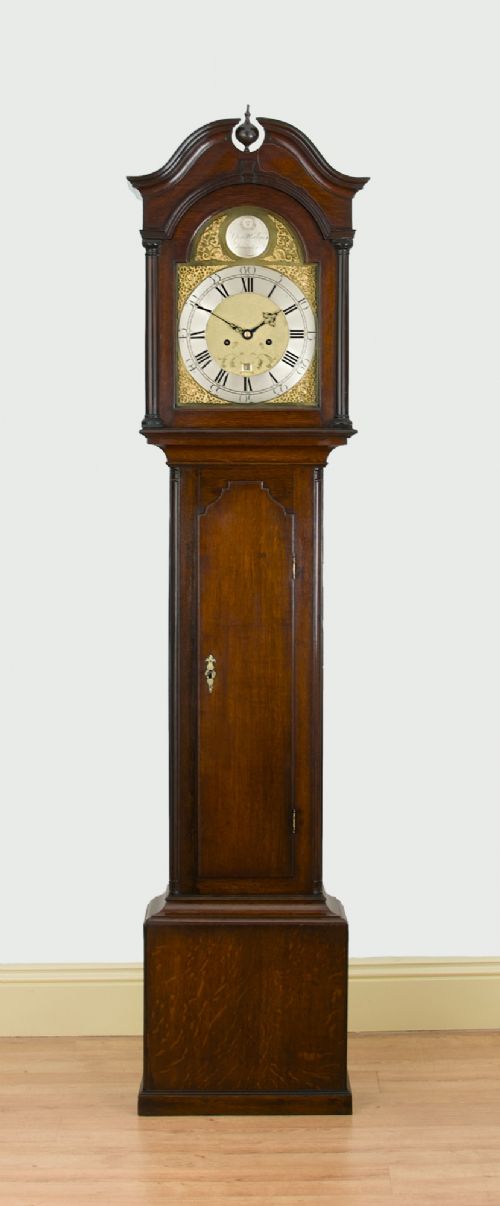


Dark Oak Clock Case
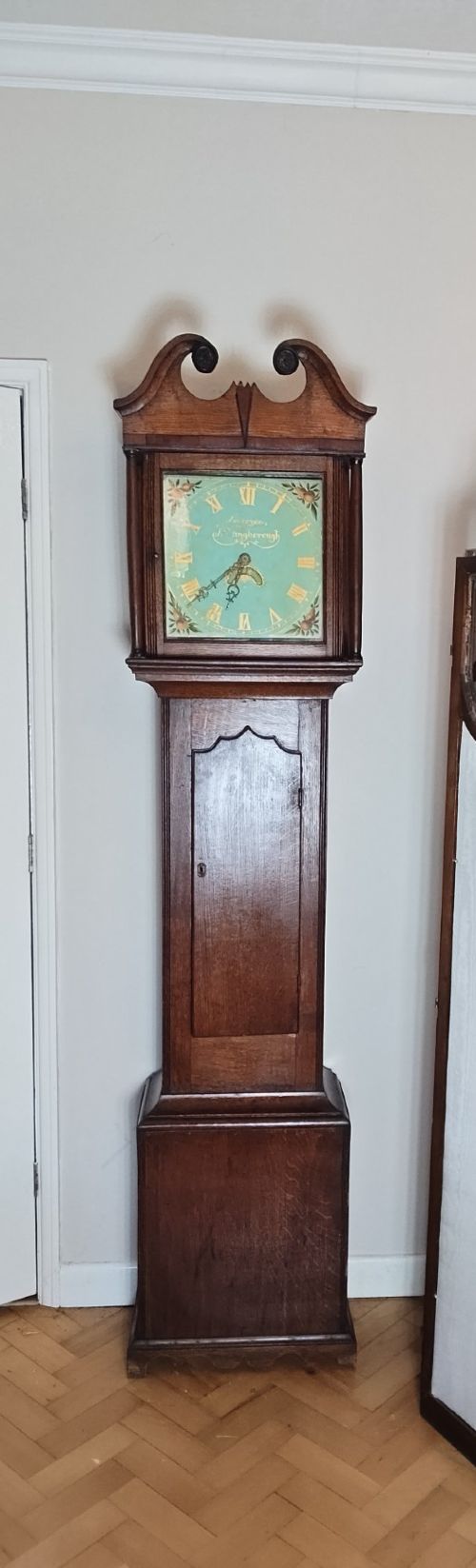
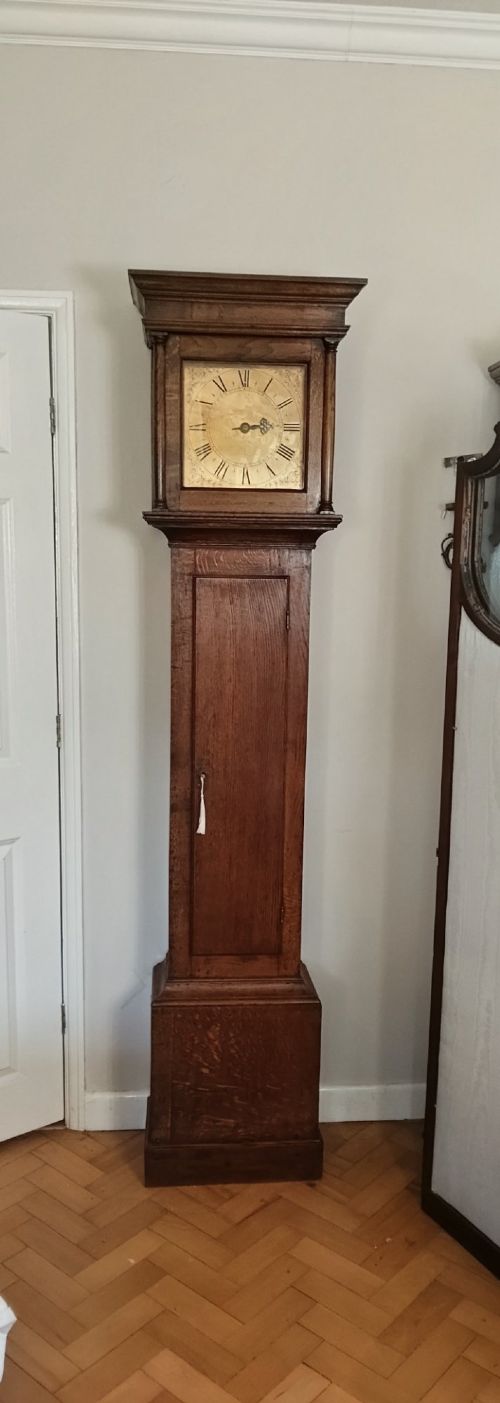
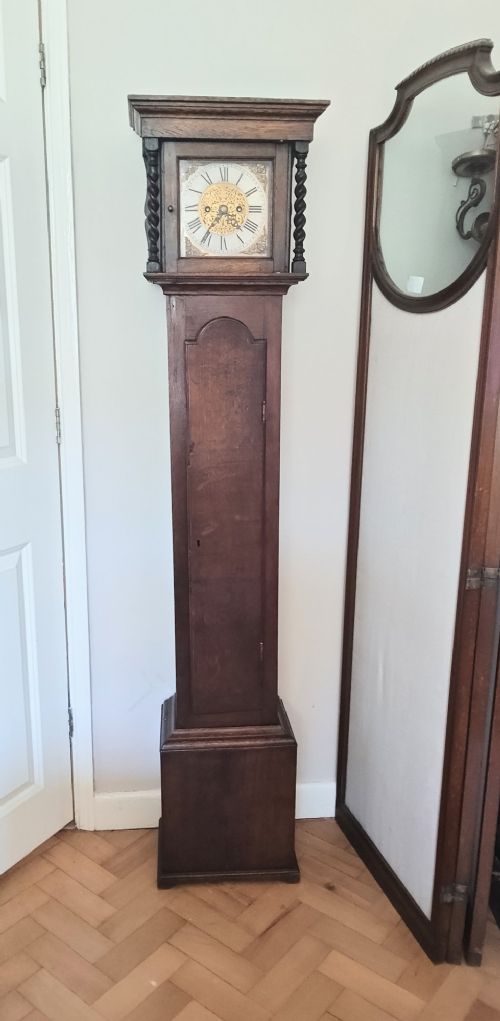
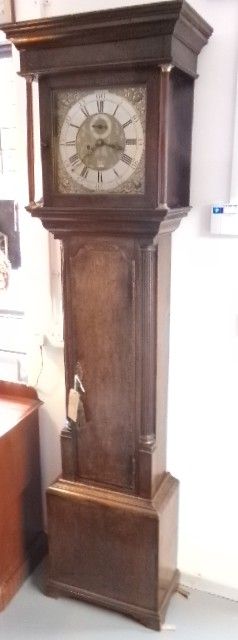
A dark oak clock case provides a robust, timber-rich housing for tall case and bracket timepieces spanning Georgian to early twentieth-century eras.
Dark Oak Clock Case
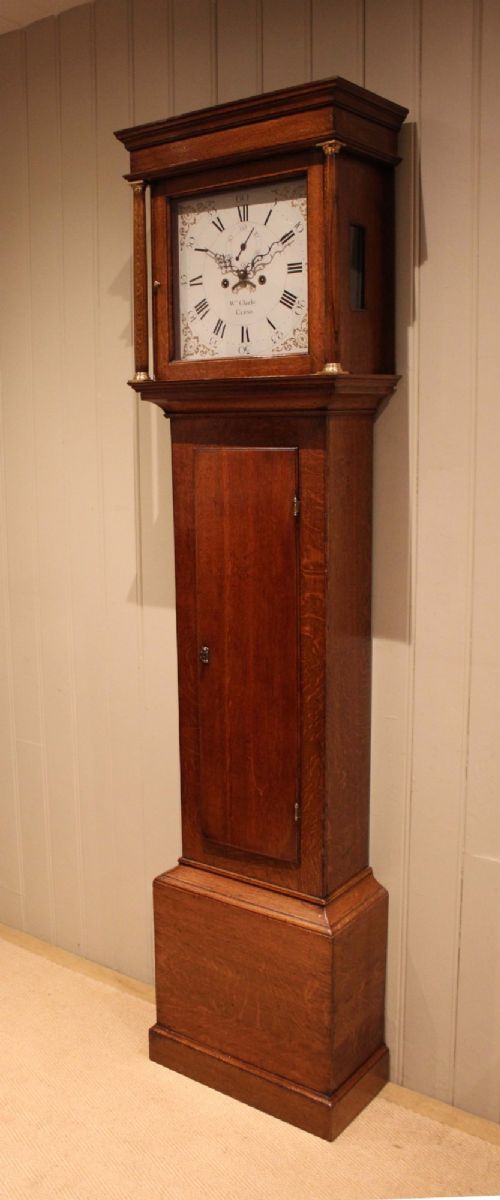
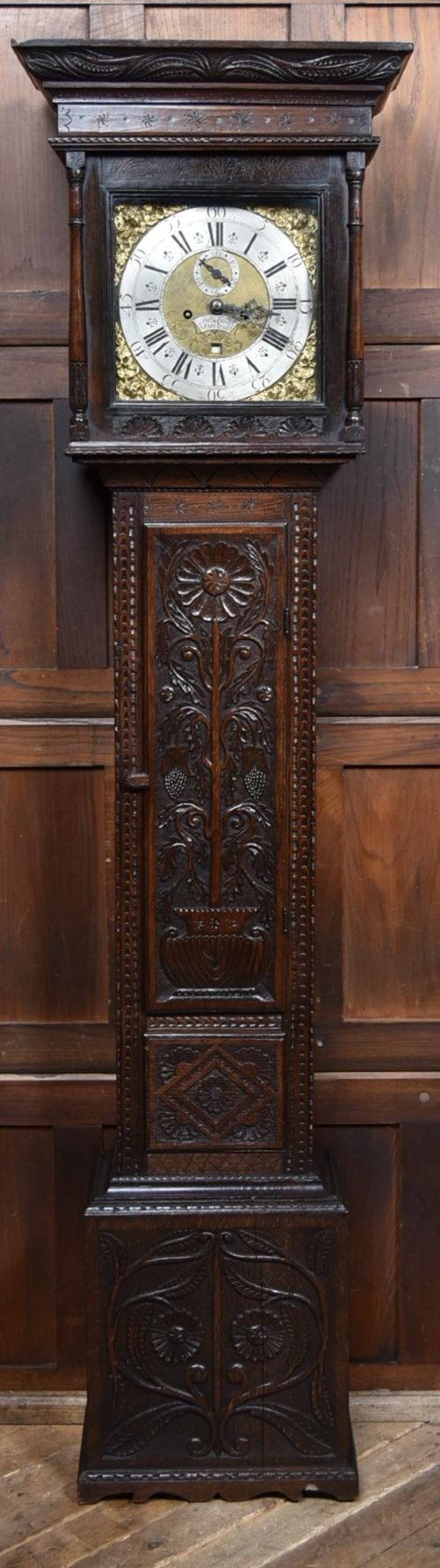
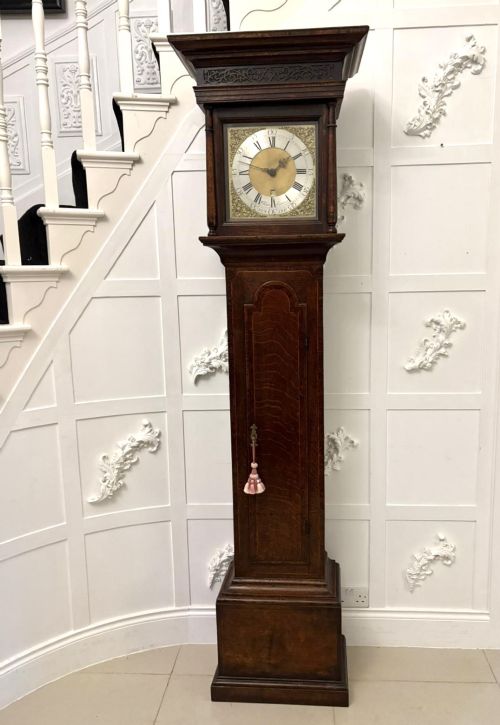
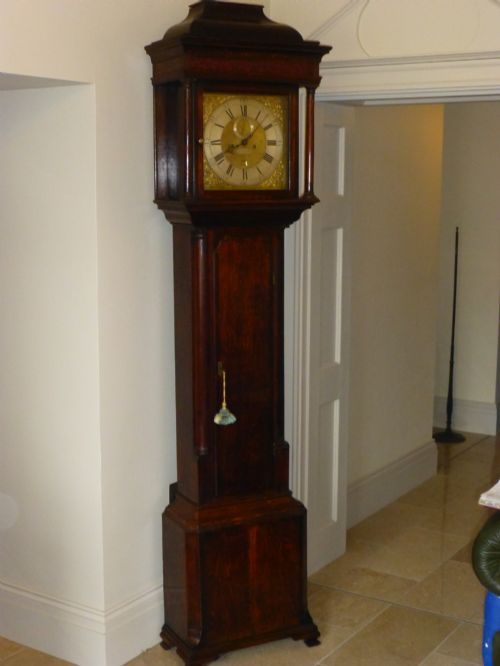
A dark oak clock case primarily manifests as a longcase, grandfather, or grandmother clock, alongside bracket clocks and barographs. These enclosures protect intricate weight-driven or spring-driven mechanisms while serving as architectural furniture.
The selections span Georgian, George III, Victorian, Edwardian, and early twentieth-century periods. British provincial makers and continental workshops produced these housings, often incorporating proportions suited for domestic halls and parlours.
Buyers encounter traditional tall floor models alongside smaller scaled variants, reflecting shifting interior fashions from the eighteenth century through the art deco era.
Materials and Construction
Makers utilised solid oak as the primary structural timber, frequently enhancing surfaces with burr oak, walnut, or mahogany crossbanding and brass dial fittings. Glass panels protect the clock face, while iron and brass components govern the internal weights and movements.
Carpenters joined panels using traditional framing techniques suited to heavy timber, housing brass-faced or painted dials within glazed trunk doors and hooded upper sections.
Listings feature oak combined with mahogany, walnut, burr oak, brass, glass, and iron across Georgian to Art Deco periods.
Assessing the Pieces
Quality rests in the depth of timber grain, the crispness of brass dial engraving, and the proportion of the hood and trunk. Finer examples display harmonious secondary woods such as walnut or mahogany inlay rather than plain uniform surfaces.
The integration between the timber case and the signed movement determines the integrity of the ensemble, where proportion and period-correct fittings elevate the piece.
Jn Smith Macclesfd·Richard Corless of Stockport·Fisher Of Preston·George Hallifax Of Doncaster·Bravingtons·Edward White Birmingham·Thomas May Of Witney·Mappin Webb London·Thomas Utting of Yarmouth·John Wylde Nottingham·John Salmon Nantwich·Samuel Young Nantwich
The Dark Oak Clock Case Glossary
- Longcase clock
- A tall pendulum clock enclosed in a wooden case standing directly on the floor. These tall enclosures protect the swinging pendulum and driving weights.
- Bracket clock
- A portable clock designed to sit on a bracket or table. These spring-driven pieces often feature glazed side panels and carrying handles.
- Grandmother clock
- A smaller, more slender version of the traditional longcase clock. This scaled-down form emerged to fit modest domestic spaces in the twentieth century.
- Dial
- The face of the clock where time is indicated. These brass or painted plates frequently bear the signature of the maker and the town of origin.
- Barograph
- A mechanical instrument that records barometric pressure over time. These devices are housed in glazed wooden cases similar in finish to contemporary clock enclosures.
Dark Oak Clock Case: Frequently Asked Questions
How do I date a clock case?
Dating relies on stylistic clues such as the form of the hood, the presence of flat or arched trunk doors, and secondary woods like burr oak or mahogany. Georgian and eighteenth-century examples display different proportions compared to Edwardian or Art Deco pieces.
Maker signatures inscribed on the brass or painted dial also help anchor the piece to a specific decade or regional workshop.
Where were these clock cases made?
Many clock cases originated in British provincial towns and cities through the hands of regional clockmakers and cabinet makers. Workshops in locations such as Nottingham, Nantwich, Stockport, and Preston produced sturdy oak housings.
Continental makers, particularly in Germany, also contributed oak-cased bracket and chiming mechanisms during the early twentieth century.
How should I maintain the oak finish?
Maintain the timber by keeping the case away from direct heat sources and sudden humidity changes that affect old wood. Regular dusting with a dry, soft cloth preserves the natural grain and patina of the oak.
Avoid heavy silicone polishes, opting instead for traditional wax applications sparingly applied when the timber appears dry.