
Dark Oak Carving
Dark oak carving brings deep colour and historic weight into a room, appearing on coffers, sideboards and tables from the seventeenth century onward.
Dark Oak Carving
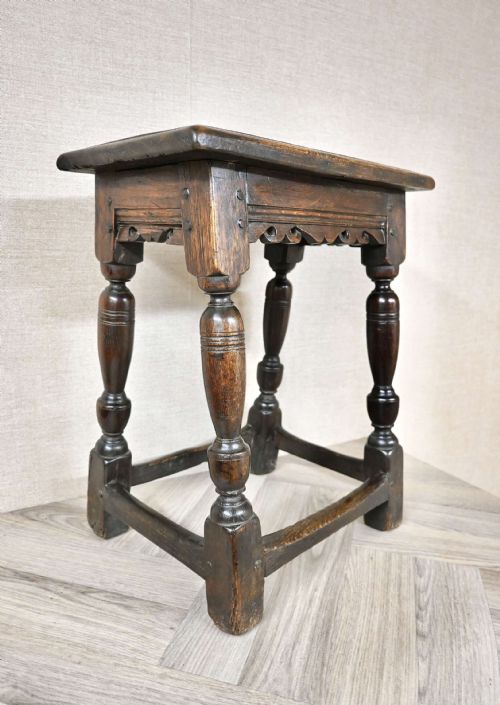
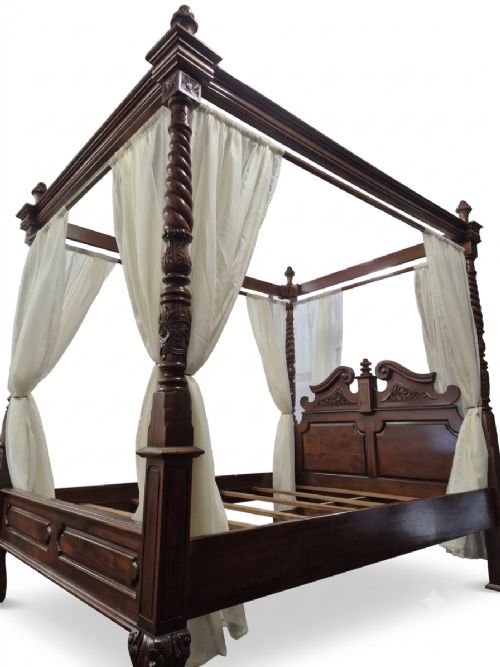
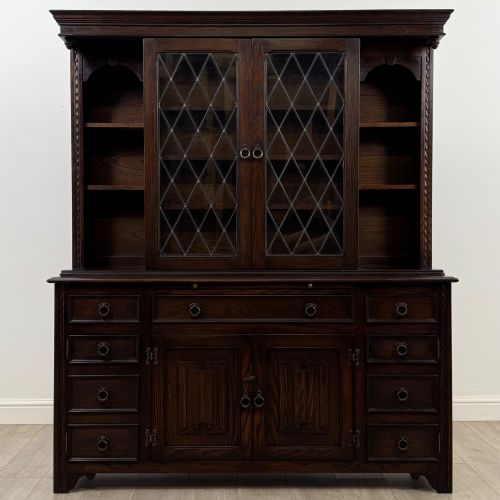
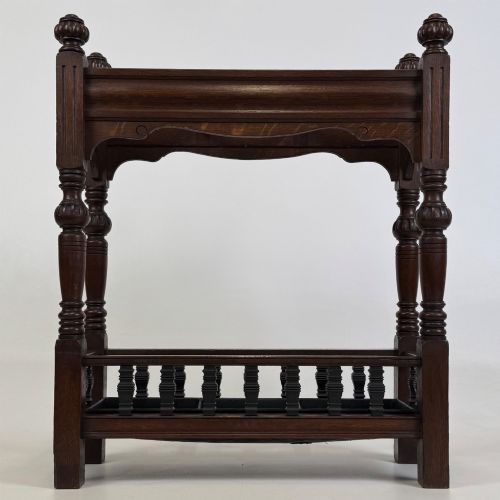
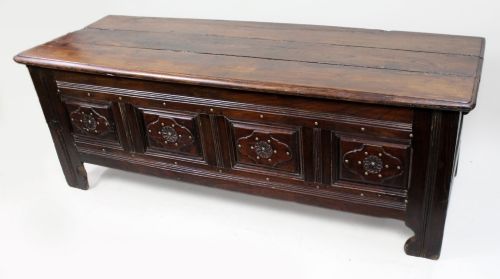
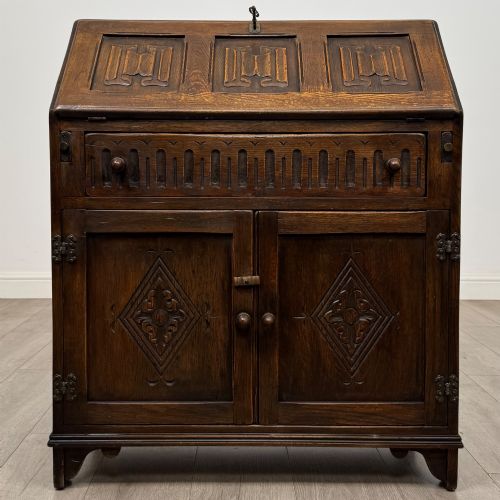
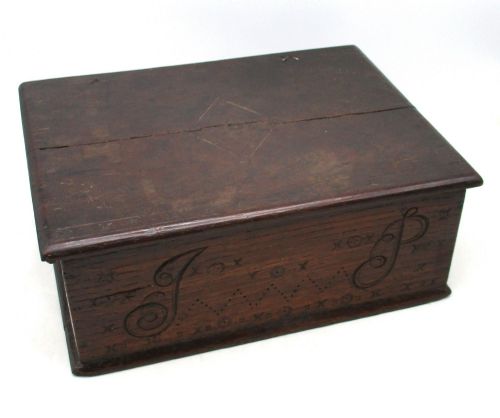
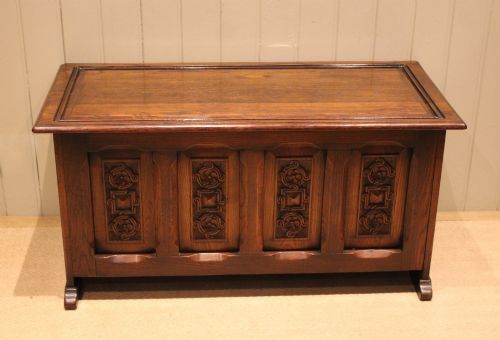
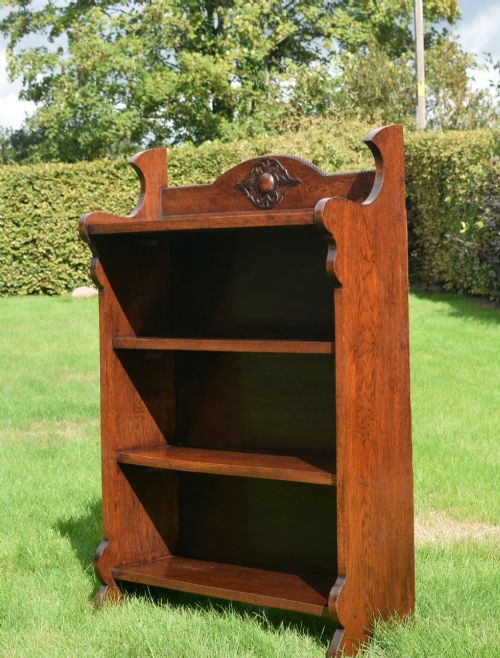
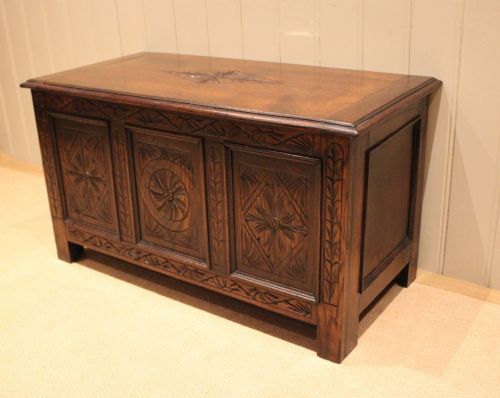
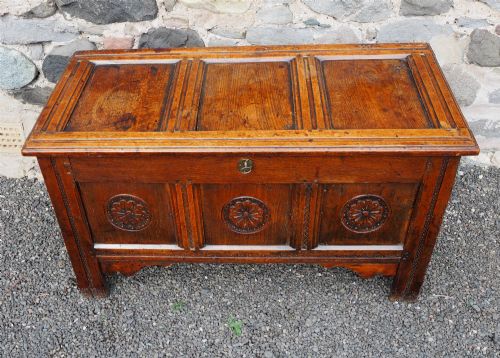
Dark oak carving encompasses substantial household furniture and architectural fragments originating from the seventeenth, eighteenth, nineteenth and early twentieth centuries. Pieces span utilitarian storage forms such as coffers, document boxes and blanket boxes alongside functional furniture like dining tables, sideboards, bookcases, chests of drawers and longcase clocks.
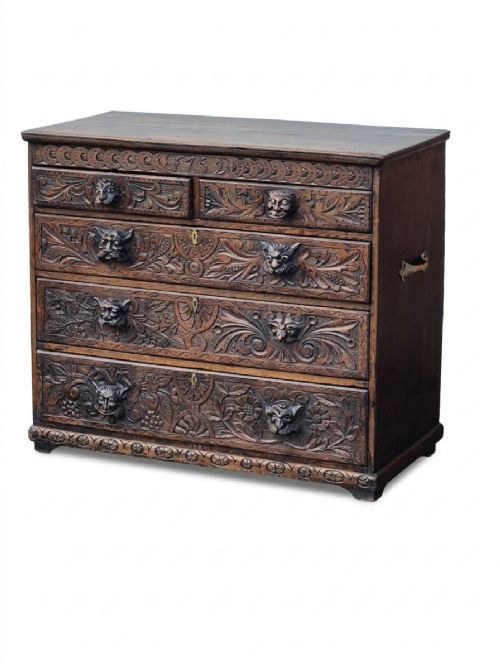
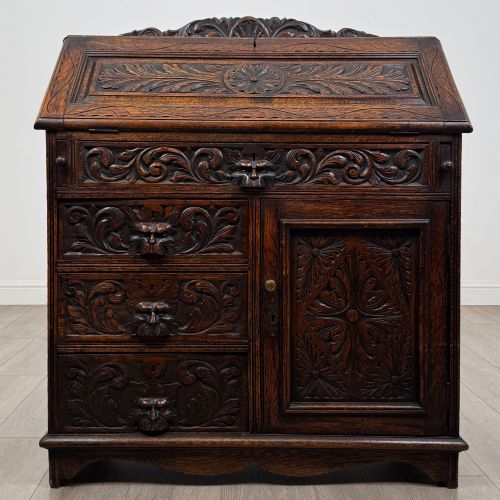
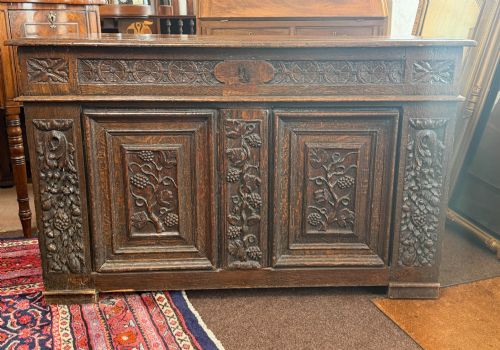
The material leans heavily toward solid oak, occasionally paired with iron, brass, glass or lead, taking stylistic cues from Jacobean Revival, Gothic Revival, Tudor Revival, Arts & Crafts and Edwardian design. Many examples meet the eye as panels bearing linenfold motifs, grotesques or geometric strapwork.
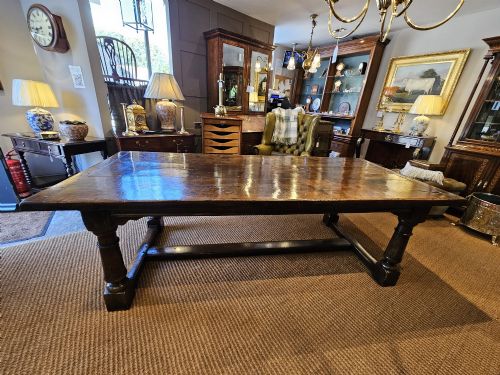
Coffers, chests and refectory tables dominate the selection, offering practical utility alongside deep historic character. Whether dating from the seventeenth-century Welsh coast or the Edwardian era, each item displays the dark, dense grain characteristic of mature timber.
What varies in quality
Quality rests upon the crispness of the chisel work and the depth of the relief carving, where sharp, confident incisions distinguish superior craftsmanship from soft, hurried execution. The proportion and integrity of the timber frame dictate whether a piece maintains its structural harmony over centuries.
Originality of surface finish and hardware plays a decisive role, as untouched patination and period-correct brass or iron fixtures elevate an object above later alterations or heavy refinishing. The architectural ambition of the design, from simple panelled coffers to elaborate Gothic Revival sideboards, separates standard utilitarian output from exceptional workshop production.
Listings span periods from the sixteenth century through the Edwardian era, featuring solid oak alongside brass, iron and glass.
The Dark Oak Carving Glossary
- Linenfold
- A style of relief carving imitating folded linen, frequently seen on sixteenth and seventeenth-century panels. This motif creates a textile-like texture across rigid wooden surfaces.
- Coffer
- A large wooden chest used historically for storing valuables, documents or textiles. Early examples feature heavy oak construction and robust iron locking mechanisms.
- Refectory table
- A long, narrow dining table originally built for communal dining in monasteries or large country houses. These tables utilise sturdy solid oak frames with substantial stretchers.
- Green Man
- A sculptural motif representing a human face engrafted with leaves, vines or branches. This pagan symbol recurs frequently in Gothic Revival and Victorian architectural carving.
- Strapwork
- A carved decorative pattern resembling intertwined flat bands or leather straps, popular in Elizabethan and Jacobean joinery. It adds geometric complexity to flat wooden friezes and panels.
Dark Oak Carving: Frequently Asked Questions
What is a dark oak coffer used for?
A dark oak coffer served as a secure chest for storing valuable household goods, linens and important documents in centuries past. Today, these sturdy pieces function effectively as blanket boxes or coffee tables in living spaces.
Their heavy construction and hinged lids provide concealed storage while anchoring a room with deep historic presence.
How do I date a carved oak sideboard?
Dating a carved oak sideboard involves examining the joinery methods, tool marks and stylistic vocabulary present in the woodwork. Hand-cut peg joints and seventeenth-century strapwork differ substantially from nineteenth-century Gothic Revival proportions.
Hardware placement and the natural patination of the timber offer further clues to the manufacturing period.
Are these oak tables suitable for daily dining?
Refectory and draw-leaf oak tables provide exceptionally stable surfaces designed to endure heavy daily use. Their solid wood construction handles regular family gatherings with ease.
Placing heat-resistant mats beneath hot dishes protects the historic polished surface from moisture and thermal shock.
What distinguishes Gothic Revival oak furniture?
Gothic Revival oak furniture incorporates architectural elements such as pointed arches, tracery and grotesque masks inspired by medieval buildings. Nineteenth-century makers revived these medieval forms to create dramatic bookcases, pulpits and sideboards.
This aesthetic values strong vertical lines and heavy, theatrical ornamentation over understated domestic simplicity.