
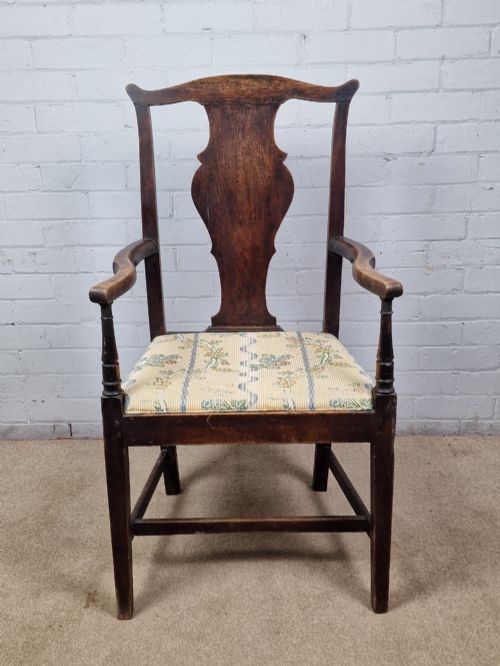

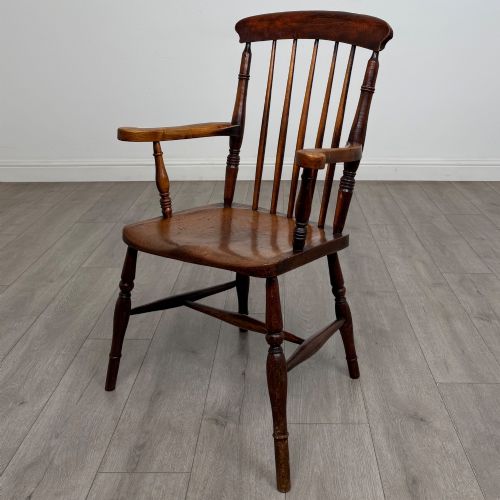
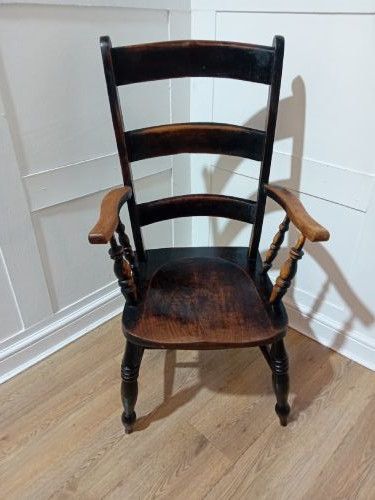

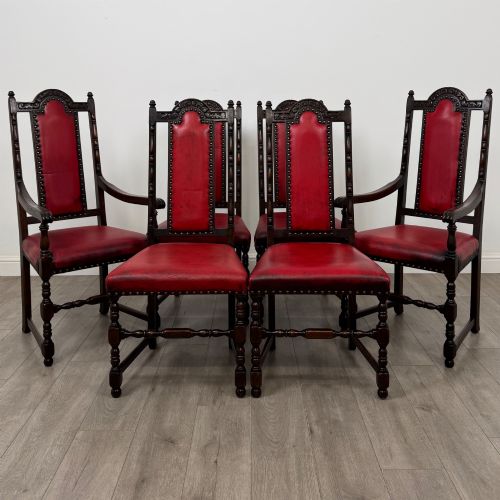
Dark Oak Carver
Dark oak carver armchairs bring solid timber presence and centuries of seating tradition straight to the dining table.
Dark Oak Carver
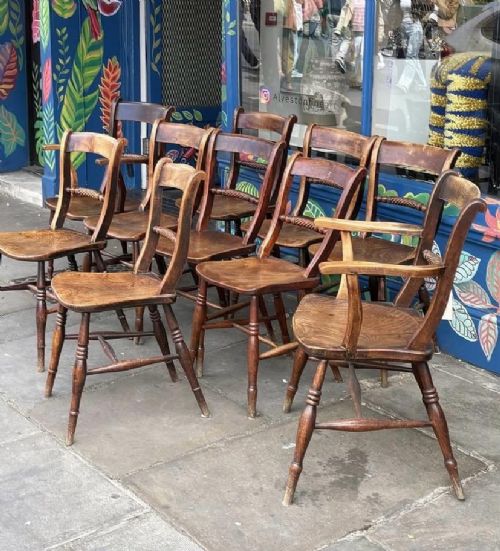
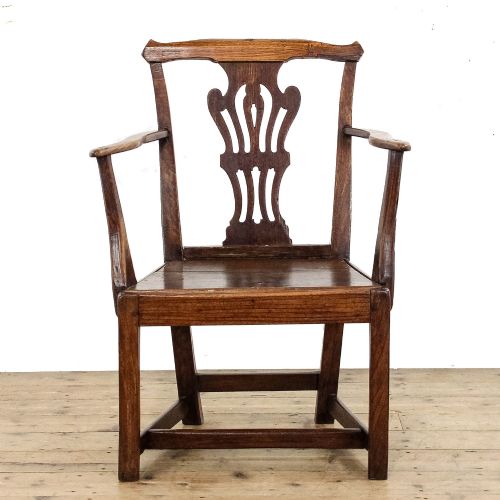
A dark oak carver serves as the substantial armed seat at the head of a dining table or within a panelled room. Buyers searching for a dark oak carver encounter robust timber framing, high backs, and structural armrests designed for daily utility. The selection spans centuries of regional and revival craftsmanship, uniting functional seating with heavy wood construction.
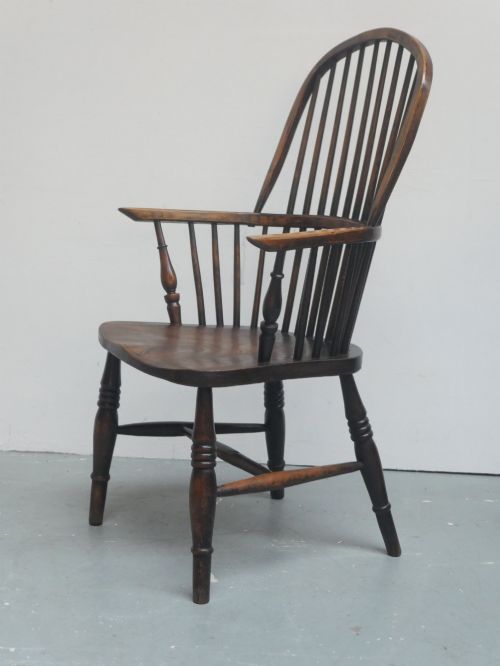
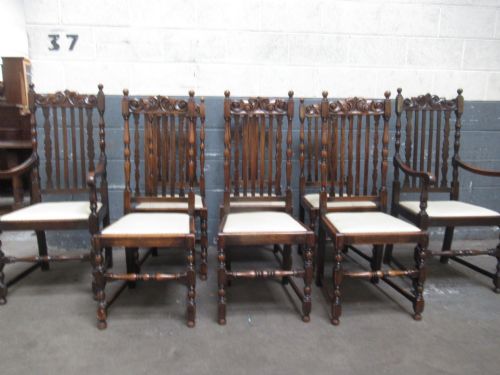
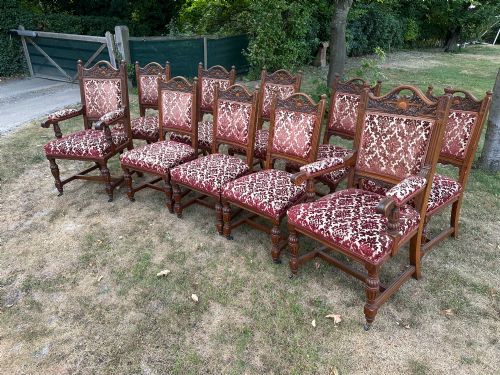
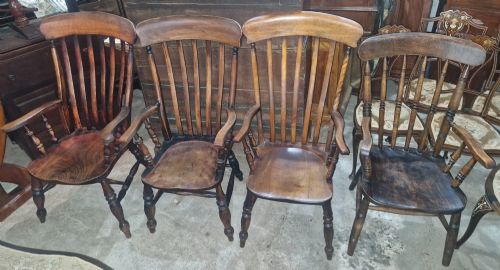
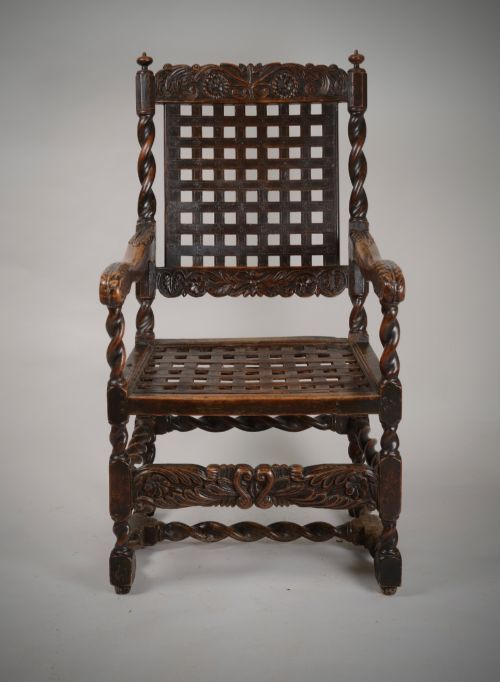
The material record highlights sturdy timbers shaped into Windsor, ladder-back, and panelled forms. Many examples adopt Jacobean, Gothic, or Arts and Crafts styling, combining structural rigidity with period character. These seating pieces survive from diverse eras including the seventeenth century, Georgian period, and later revival decades.
Most pieces on display reflect domestic dining and kitchen use from the nineteenth and early twentieth centuries. Regional vernacular pieces sit alongside formal revival dining sets and bespoke workshop creations. Every dark oak carver offers a distinct combination of turned supports, pegged joints, and aged patination.
Materials and construction methods
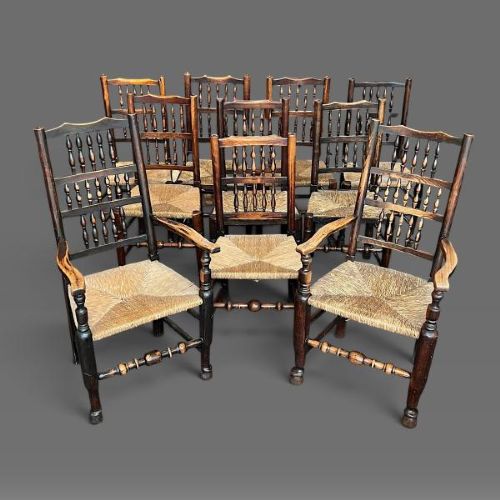
Makers relied primarily on native hardwoods such as oak, elm, and ash to build these durable armchairs. Timber was frequently quarter-sawn to expose striking grain patterns and ensure maximum structural stability over generations of use. Secondary seating components often integrated rush, woven leather, or studded leather inserts.
Joinery depended on traditional mortise and tenon connections secured with wooden pegs rather than modern metal fasteners. Turned spindles, curved armbows, and shaped crest rails were formed using drawknives, lathes, and hand chisels. Surfaces were finished with oils, waxes, or traditional paints that developed deep patinas through handling and age.
Generations of resting elbows have polished the wooden armrests of these chairs into buttery, tactile smooth surfaces.
Assessing quality and craftsmanship
Quality rests upon the integrity of the timber selection and the precision of the hand-cut joinery. Superior examples maintain rigid frames without excessive wobble, retaining original pegging and untouched surface patination. Finer pieces demonstrate careful carving on back panels and well-balanced proportions in the arm supports.
The sophistication of the turning and the harmony of secondary materials like rush or leather distinguish workshop standards. Pieces that retain their original finish and structural harmony command greater appreciation than heavily altered examples. Original components, from rush seats to turned stretchers, preserve the authentic integrity of the design.
The Dark Oak Carver Glossary
- Carver
- An armchair, traditionally placed at the head of a dining table, featuring integrated armrests that match a set of smaller dining chairs.
- Windsor
- A traditional chair construction featuring turned legs and spindles wedged directly into a solid sculpted wooden seat rather than a framed back.
- Ladder-back
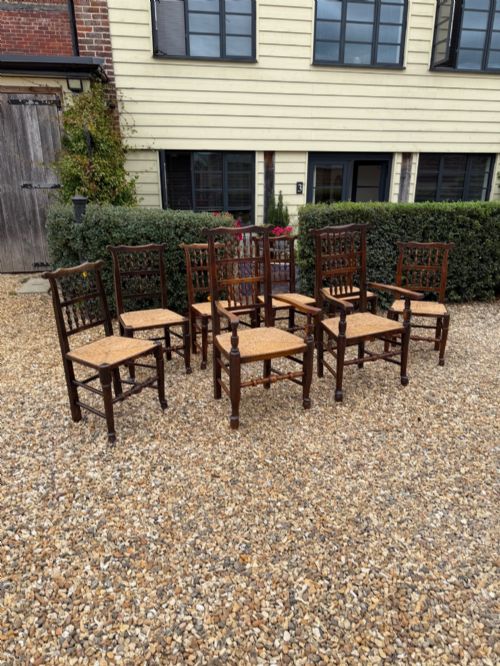
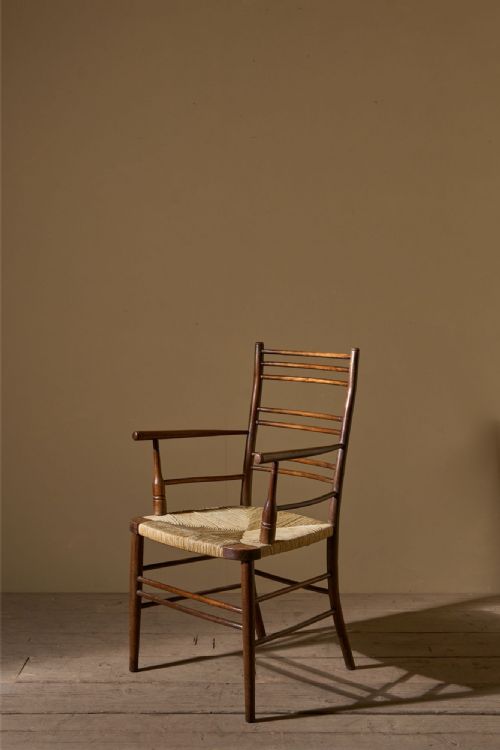
- A chair back composed of several horizontal curved wooden slats spanning between two vertical rear upright posts.
- Rush
- Dried marsh grass twisted into cords and hand-woven to create durable, textured flat seating surfaces.
- Spindleback
- A chair design utilising numerous slender turned vertical wooden rods to form an open, supportive backrest.
Dark Oak Carver: Frequently Asked Questions
What is a dark oak carver?
A dark oak carver is a substantial armchair with wooden armrests, designed to sit at the head of a dining table. These chairs combine sturdy oak framing with traditional joinery.
They appear across various historical periods, ranging from early country vernacular pieces to deliberate revival styles from the nineteenth and twentieth centuries.
How do I care for antique oak?
Maintain antique oak furniture by dusting gently with a dry, soft cloth and avoiding harsh chemical cleaning agents. Keep pieces away from direct heat sources and strong sunlight to prevent timber splitting.
Applying occasional natural beeswax preserves the moisture in the wood and enhances the natural dark patination built up over centuries.
Are these chairs comfortable for daily use?
Many traditional carvers provide supportive upright seating suited for long dining sessions, especially designs featuring upholstered or rush seats. Ergonomics varied significantly depending on the historical era and intended domestic function.
Country vernacular and Arts and Crafts examples often prioritise ergonomic comfort through gently angled backs and supportive arm heights.
How do I date an oak carver?
Dating relies upon examining construction methods, tool marks, timber selection, and stylistic details such as turnings and carved motifs. Hand-cut joinery, peg construction, and wear patterns offer reliable indicators of age.
Comparing the proportions and hardware against documented period examples helps confirm whether a piece originates from the seventeenth century or a later revival.