
Antique Hall Throne
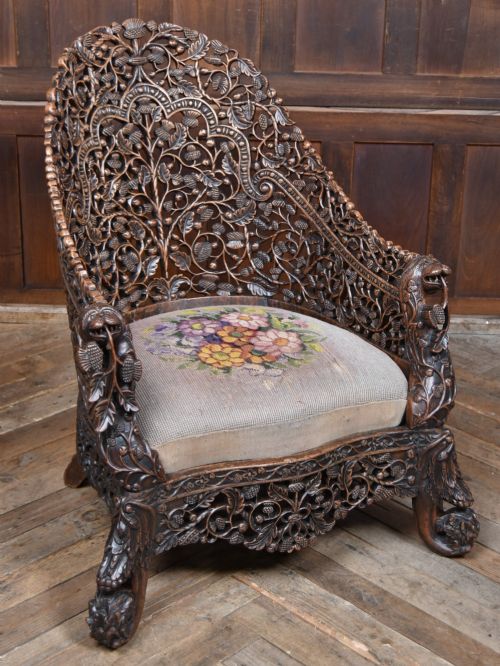
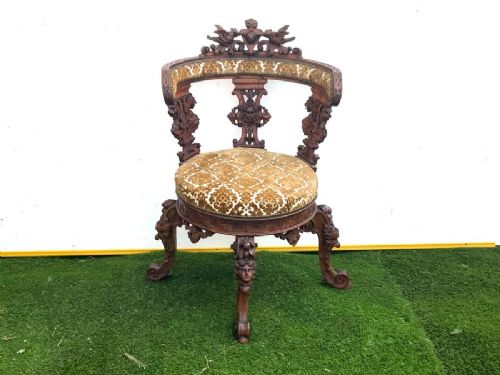
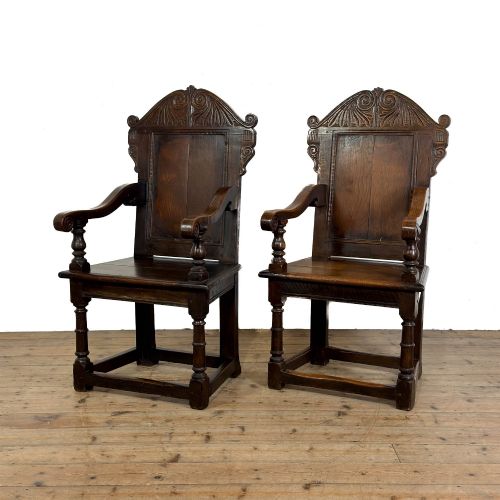
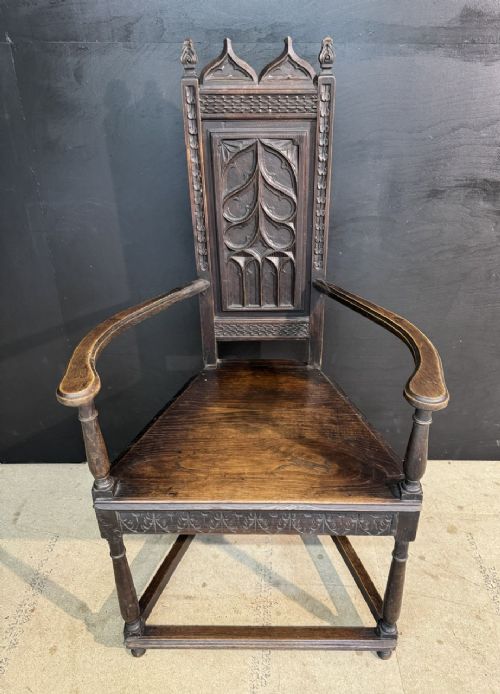
An antique hall throne commands the room with high backs, heavy timber, and deep carving.
Antique Hall Throne
An antique hall throne serves as a commanding seat for an entrance hall or reception space, drawing on centuries of architectural design. Buyers encounter pieces ranging from seventeenth century originals to nineteenth century revival interpretations in heavy oak and walnut.
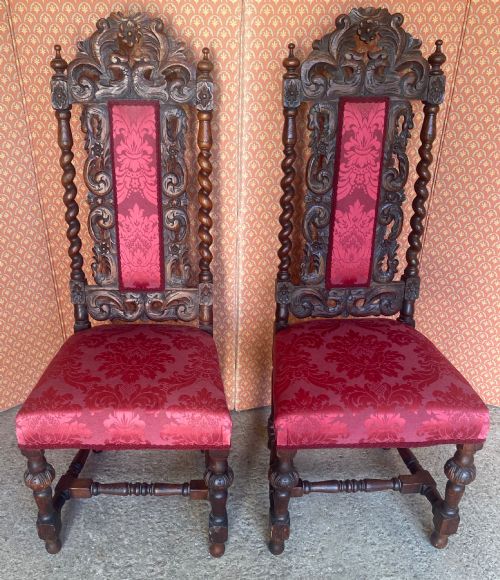
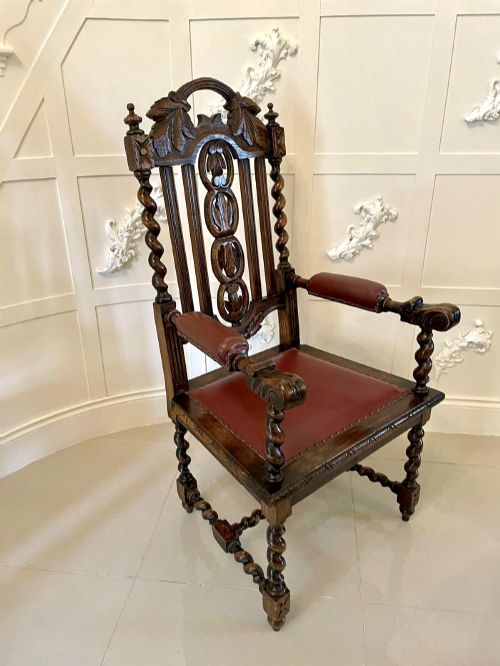
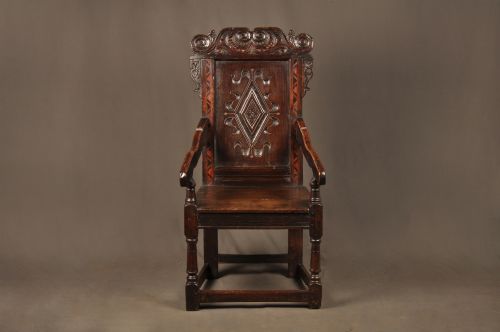
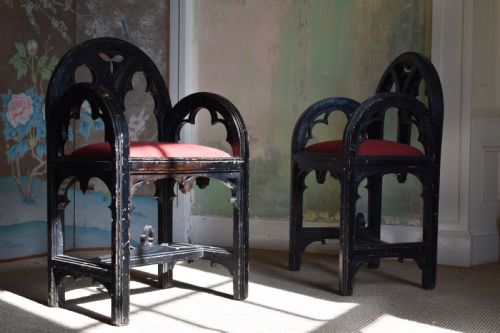
The category encompasses wainscot chairs, high-backed armchairs, and settles built to project status and authority. Most items on this page date from the Victorian era and the nineteenth century, often channelling Gothic Revival or Jacobean styles through elaborate woodcarving.
Materials and construction
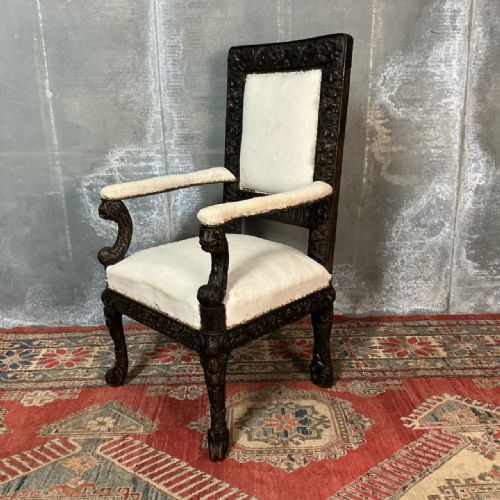
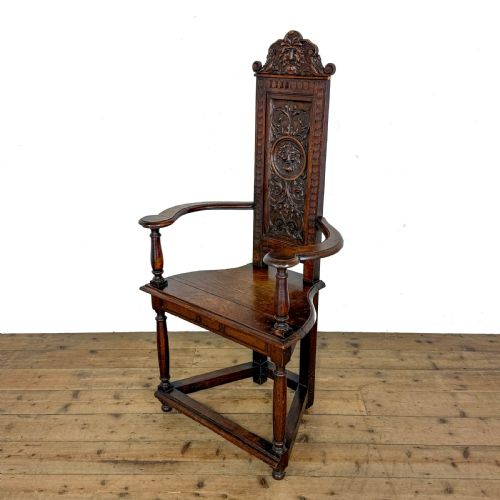
Cabinet makers built these seats primarily from solid oak and walnut, using traditional mortise and tenon joints to bear the weight of heavy timber frames. Panels were carved by hand with motifs such as green men, tracery, and strapwork.
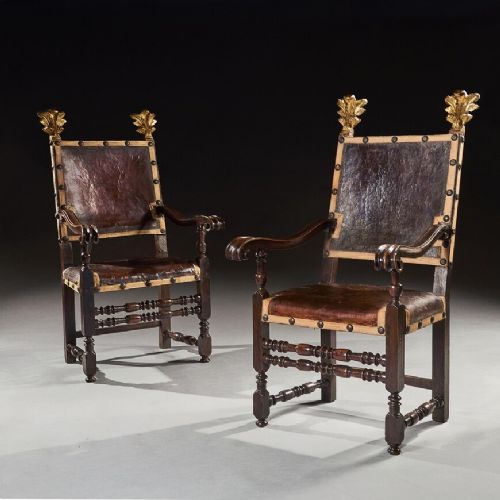
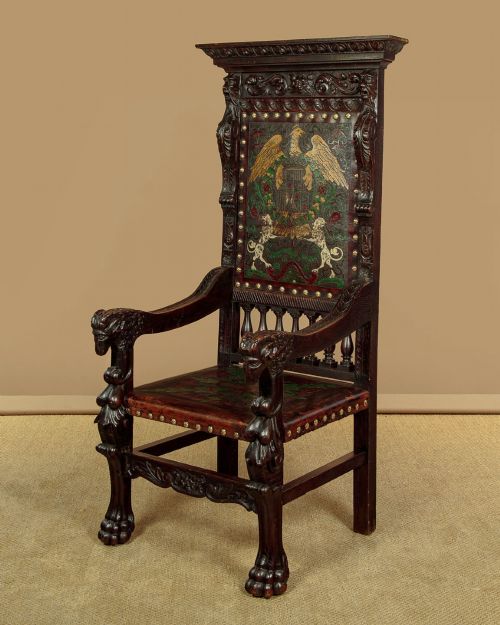
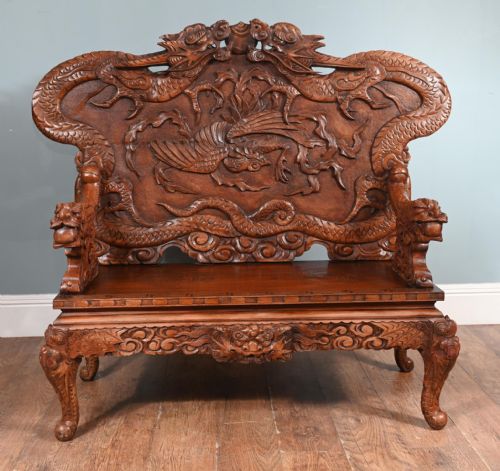
Upholstery materials such as leather, velvet, and painted textile were secured with brass tacks to wooden backrests and seats. Cane and cinnabar lacquer also appear on specific export pieces from the selection.
Green men peer out from the carved oak leaves of Victorian throne chairs, watching over every hallway they inhabit.
Distinctions in quality
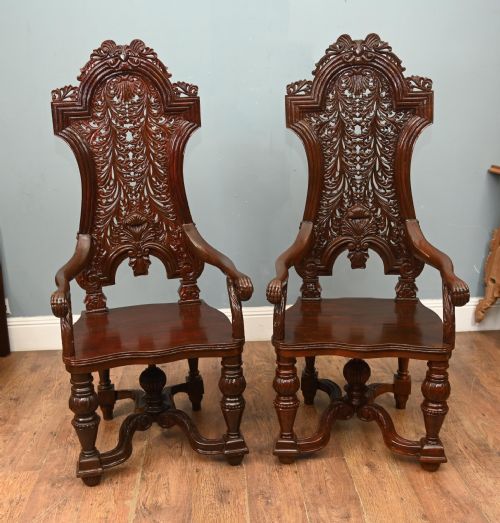
Quality rests upon the depth and crispness of the hand carving, where skilled carvers achieved sharp relief in dense oak or walnut rather than shallow, mechanical shaping. The balance of proportions in high back structures determines the visual authority of the piece.
The integrity of the timber joints and the retention of original upholstery materials, such as embossed leather or buttoned textile, separate standard revival examples from superior artisan commissions.
The Antique Hall Throne Glossary
- Wainscot chair
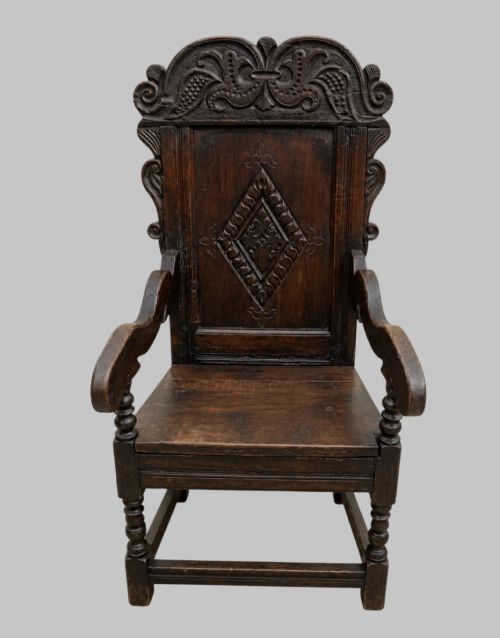
- A heavy wooden armchair of seventeenth century origin featuring panelled backs and solid armrests. This form provides a sturdy seat designed to keep draughts away from the sitter.
- Gothic Revival
- An architectural and decorative style popular during the nineteenth century that mimics medieval pointed arches, tracery, and solemn ecclesiastical motifs. It dominates many of the oak armchairs listed here.
- Jacobean Revival
- A style drawing on seventeenth century English design characteristics, notable for rectilinear panels, split spindles, and heavy geometric mouldings. It appears frequently in nineteenth century seating.
- Settle
- A wooden bench with a high panelled back and enclosed storage or solid armrests, intended for placement in halls. It offers a wide seat for multiple occupants.
- Parcel-gilt
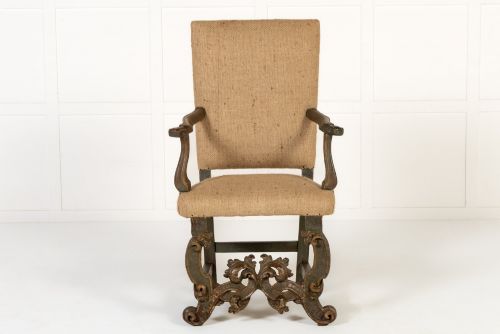
- Wood or gesso surface detail partially covered in thin gold leaf. This technique highlights carved mouldings on baroque armchairs.
Antique Hall Throne: Frequently Asked Questions
Where should I place an antique hall throne?
These imposing seats suit large entrance halls, landings, or high-ceilinged reception rooms where their elevated backs create a strong focal point. They need adequate physical space to balance their substantial visual weight.
Avoid tight corridors where the projecting arms or deep carved crests might suffer knocks from passing foot traffic.
How do I care for leather and oak?
Feed wooden frames with a quality beeswax periodically to nourish the dry grain of historic oak and walnut. Keep the furniture away from direct heat sources and strong sunlight to prevent timber splitting.
Treat leather panels with a specialist conditioner to maintain suppleness and prevent the surface from cracking over time.
Are these seats comfortable for daily use?
Most antique hall thrones were designed for architectural presence and posture rather than lounging, featuring upright wooden backs and firm squabs. They work well for short seating periods in hallways or as statement armchairs.
Some Victorian and Edwardian iterations incorporate padded leather or buttoned upholstery that offers a softer sit than solid timber.
How do I date a revival throne?
Examine the tool marks, timber shrinkage, and construction methods to distinguish a nineteenth century revival piece from a seventeenth century original. Revival items often feature machine-sawn elements hidden beneath hand-finished surfaces.
Stylistic cues such as Victorian Gothic proportions or nineteenth century brass tacks help confirm the actual period of manufacture.