
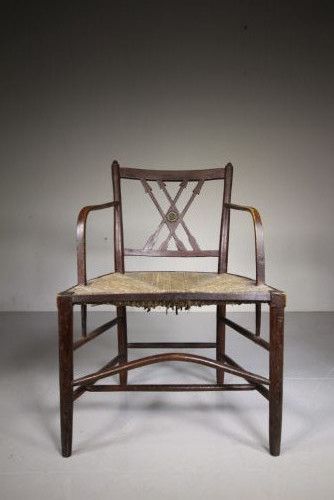
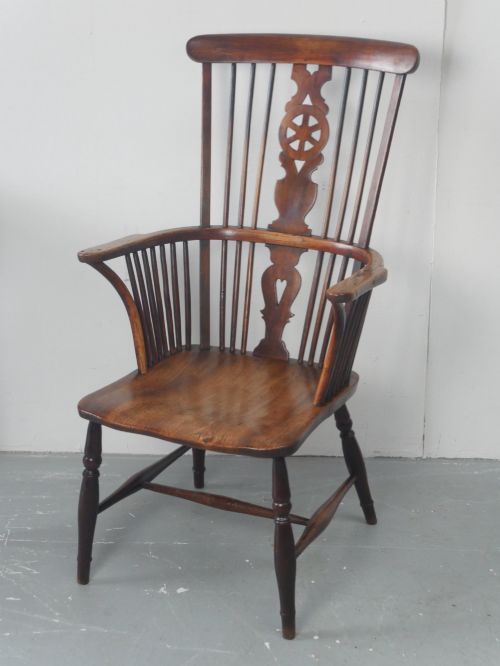
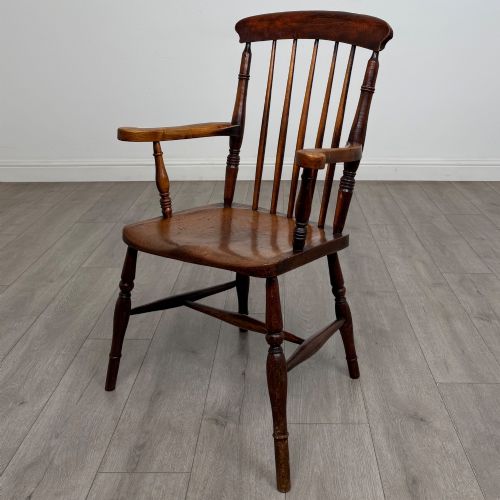
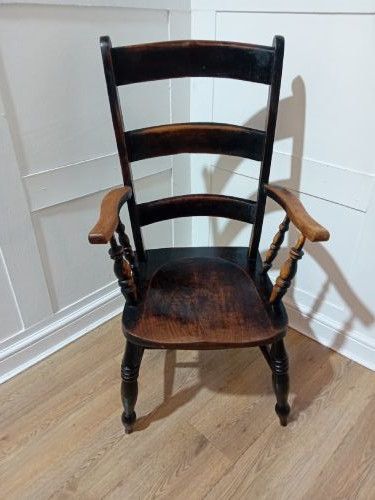

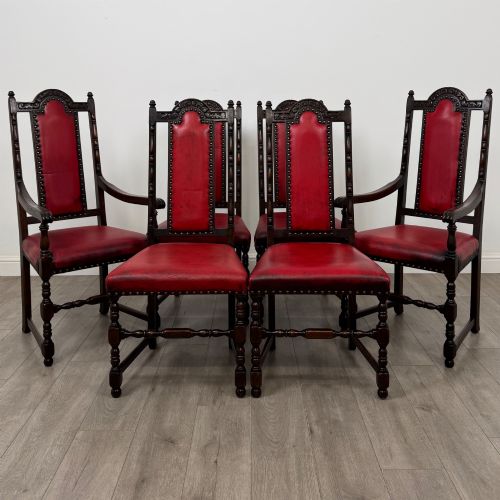
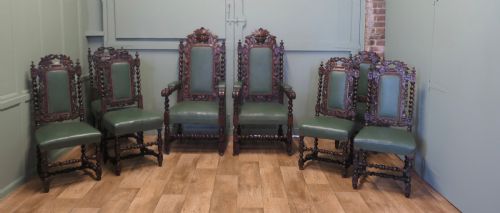
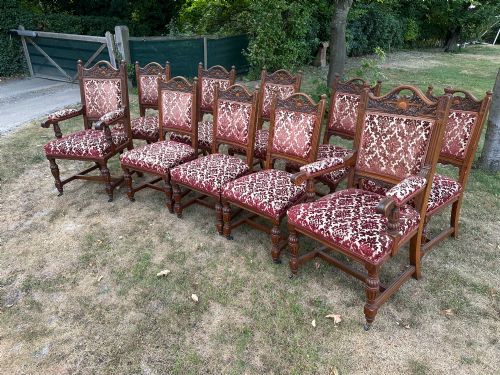
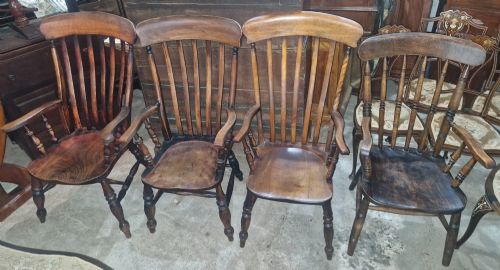
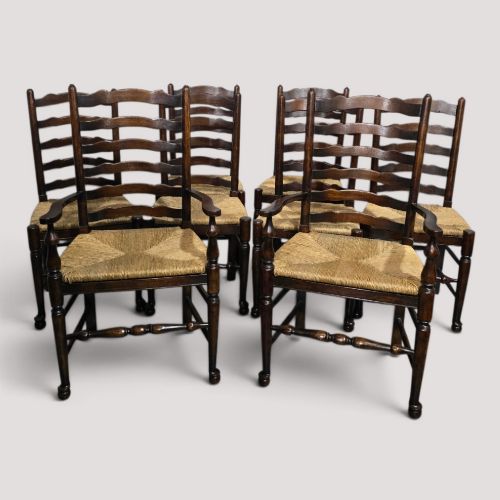
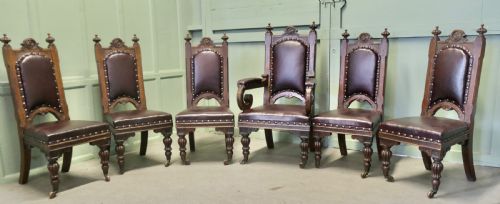
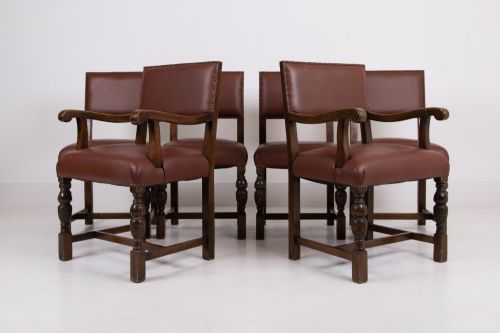
Dark Oak Carver Chair
A dark oak carver chair anchors a room with timber presence, offering sturdy arm support and solid vernacular craft.
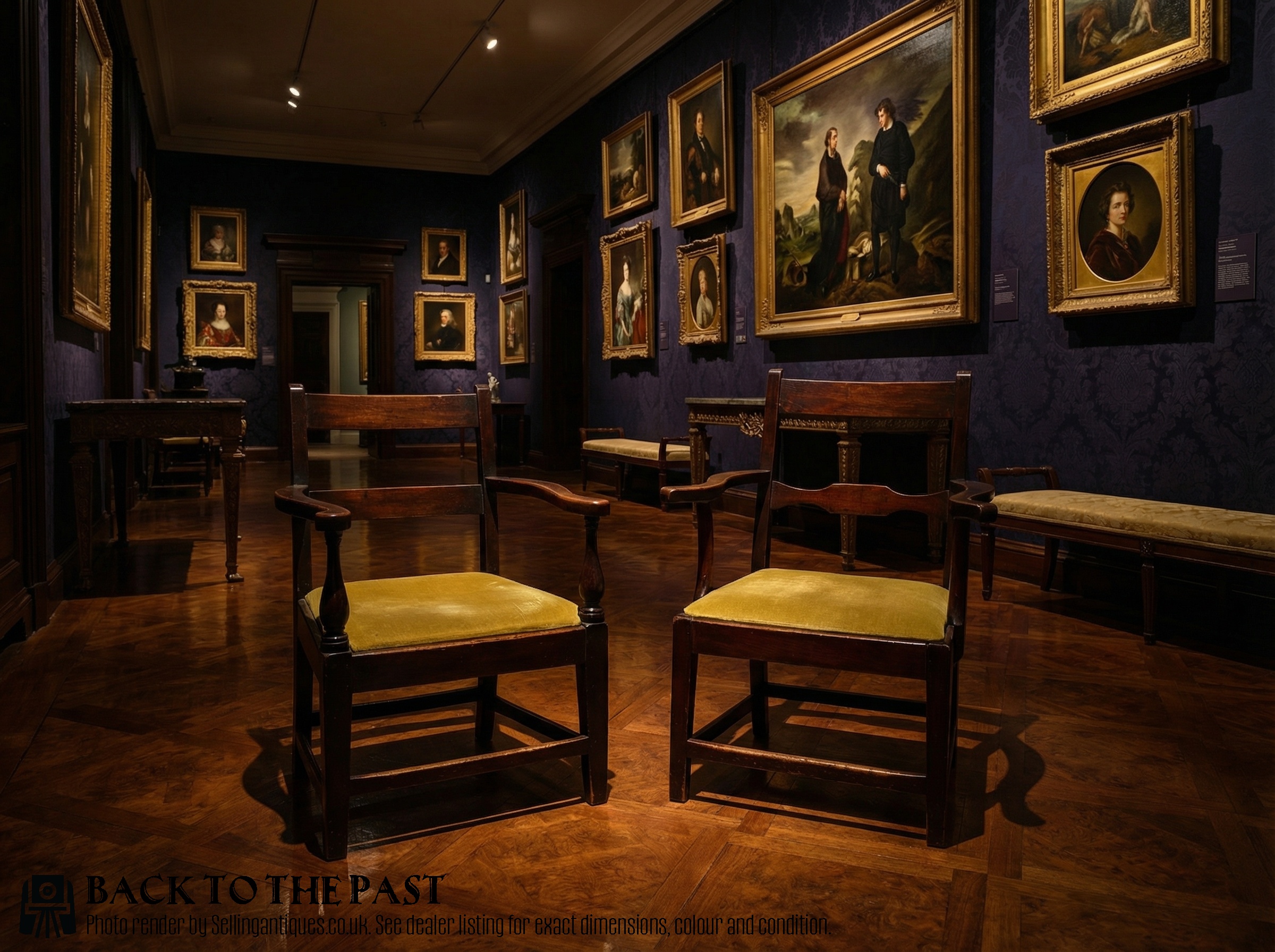
Dark Oak Carver Chair
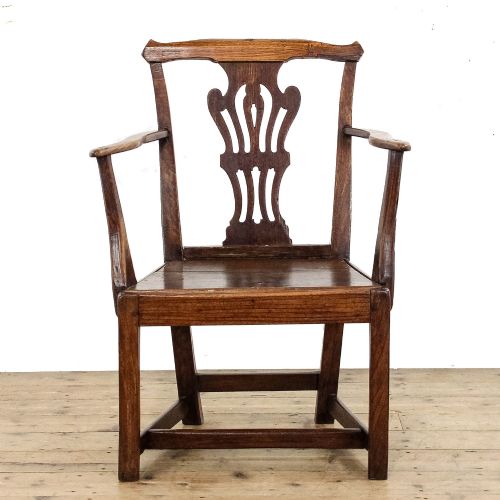
A dark oak carver chair combines sturdy timber construction with integral armrests, serving primarily as a substantial seating option for dining tables or studies. These pieces draw upon regional traditions, appearing in styles that range from plain country forms to elaborate revival designs.
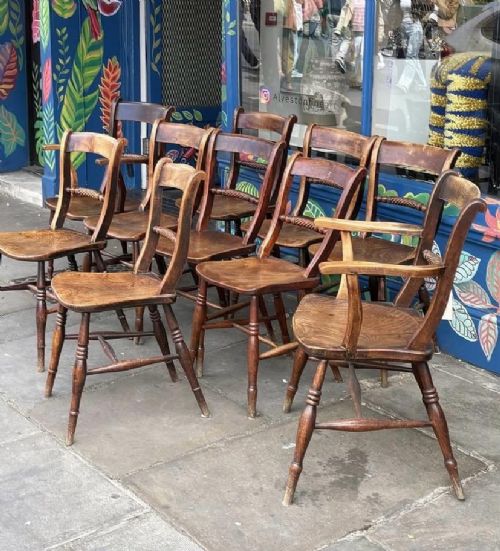
The selections available here span multiple periods, including Georgian, Victorian, Edwardian, and early twentieth-century decades. Buyers encounter both singular farmhouse armchairs and matched sets featuring elbow chairs alongside side chairs.
Originating largely from domestic workshops, these chairs utilise dense native timber and traditional joinery. The dark oak carver chair remains a functional anchor for interiors that favour traditional British furniture.
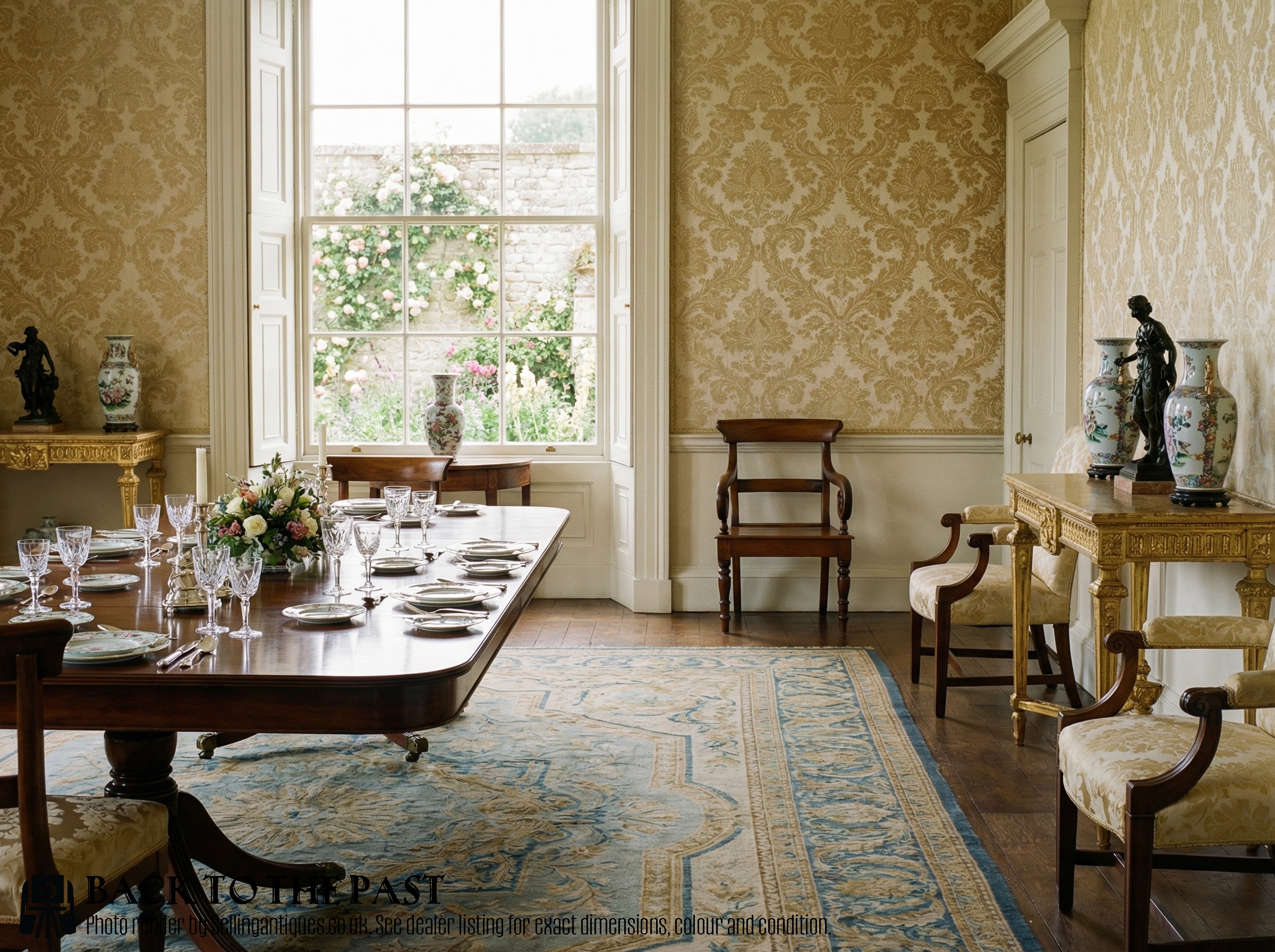
How they were made
Makers built these chairs using solid oak timbers, often supplemented with elm, ash, and beech for secondary framing or spindles. Structural integrity relied on mortise and tenon joints secured by wooden pegs rather than metal fasteners.
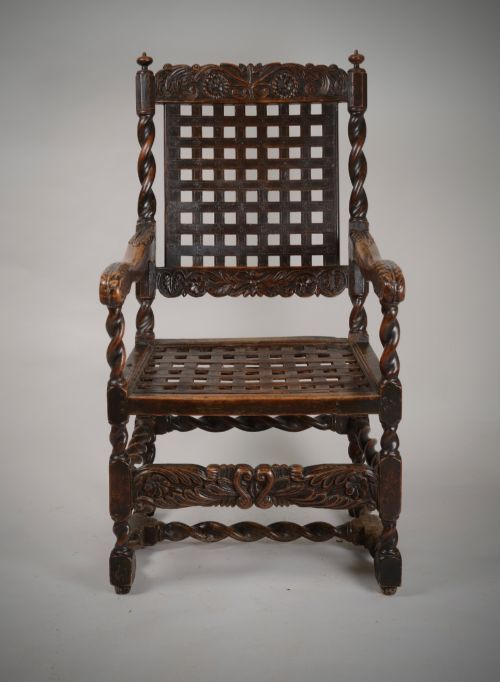
Seat construction varied widely across regions and periods, incorporating solid timber planks, woven rush, or upholstered pads finished in leather, velvet, and tapestry. Turnings and spindle backs were shaped on lathes, while high backs and splats received hand-carved detailing.
Dark Oak Carver Chair Retail Price Guide 2026
Typical asking prices for dark oak carver chair among the pieces listed under this phrase on Sellingantiques today, from the lower quarter to the upper quarter. They describe what is for sale here now, not the wider market.
Listings feature oak alongside elm, ash, and beech, spanning periods from the seventeenth century through the Edwardian era.
What varies in quality
The calibre of a dark oak carver chair rests upon the selection of timber and the precision of its structural joinery. Dense grain patterns and heavy stock timber indicate superior material choice, whereas loose joints and excessive replacement parts diminish integrity.
Surface finish significantly influences character, with original patination and honest wear distinguishing better examples from heavy restorations or unsympathetic stripping. The crispness of carved ornamentation and the tightness of rush or leather work further separate fine pieces from standard utility items.
The Dark Oak Carver Chair Glossary
- Carver chair
- An armchair, typically designed with arms to match a set of smaller dining chairs. These pieces served as the primary seat at a table.
- Ladder back
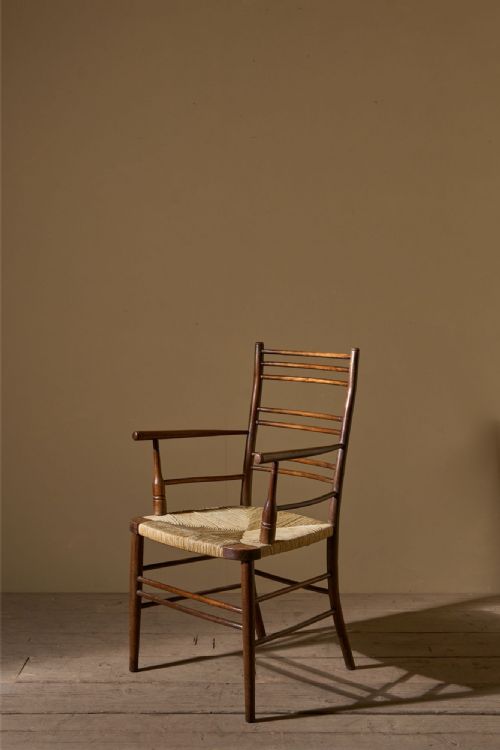
- A chair back constructed with horizontal arched slats between the upright posts. This traditional form provided sturdy back support in vernacular seating.
- Rush seat
- A seating surface woven from dried marsh reeds over a wooden frame. This technique creates a resilient and flexible platform for the sitter.
- Spindle back
- A chair back filled with numerous thin, turned wooden rods. These uprights distribute weight evenly and lighten the visual mass of the frame.
Dark Oak Carver Chair: Frequently Asked Questions
How do I identify a genuine period chair?
Examine the timber for natural patination, tool marks, and construction methods consistent with historical joinery. Pegs should appear hand-cut and timber movement should align with age.
Compare the framing details against known regional styles like Windsor or ladder back forms. Consistency in wear helps confirm authenticity.
Are these chairs suitable for daily dining use?
Solid oak construction and sturdy arm supports make these chairs well-suited for regular seating around a dining table. Ensure joints remain tight before heavy daily deployment.
Protect rush or leather surfaces from excessive moisture and sharp objects to maintain their condition over years of use.
What is the difference between a carver and an armchair?
In British furniture terminology, a carver specifically denotes an armchair designed to match a set of smaller dining chairs. Standard armchairs may follow distinct standalone parlor or library patterns.
Both types feature supportive armrests, but carvers traditionally sat at the head of a dining arrangement.
How should I care for dark oak timber?
Maintain the finish by applying natural beeswax periodically and buffing with a soft cloth to preserve the surface sheen. Avoid placing timber near direct heat sources.
Keep indoor humidity stable to prevent the oak from drying out, which can cause historical joints to loosen over time.