
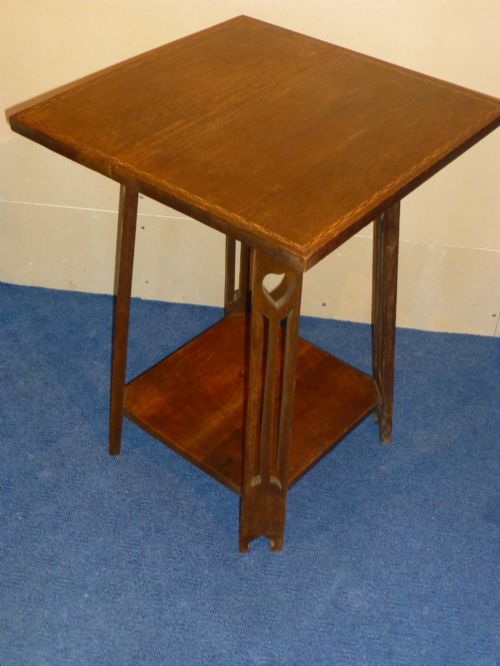
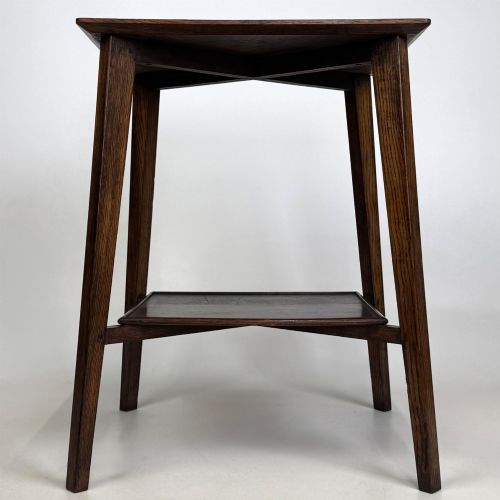
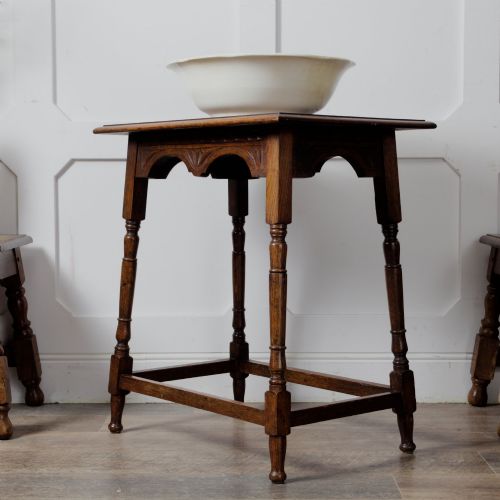
Dark Oak Accent Table
A dark oak accent table brings rich grain and practical surface space to a room, spanning periods from the seventeenth century onward.
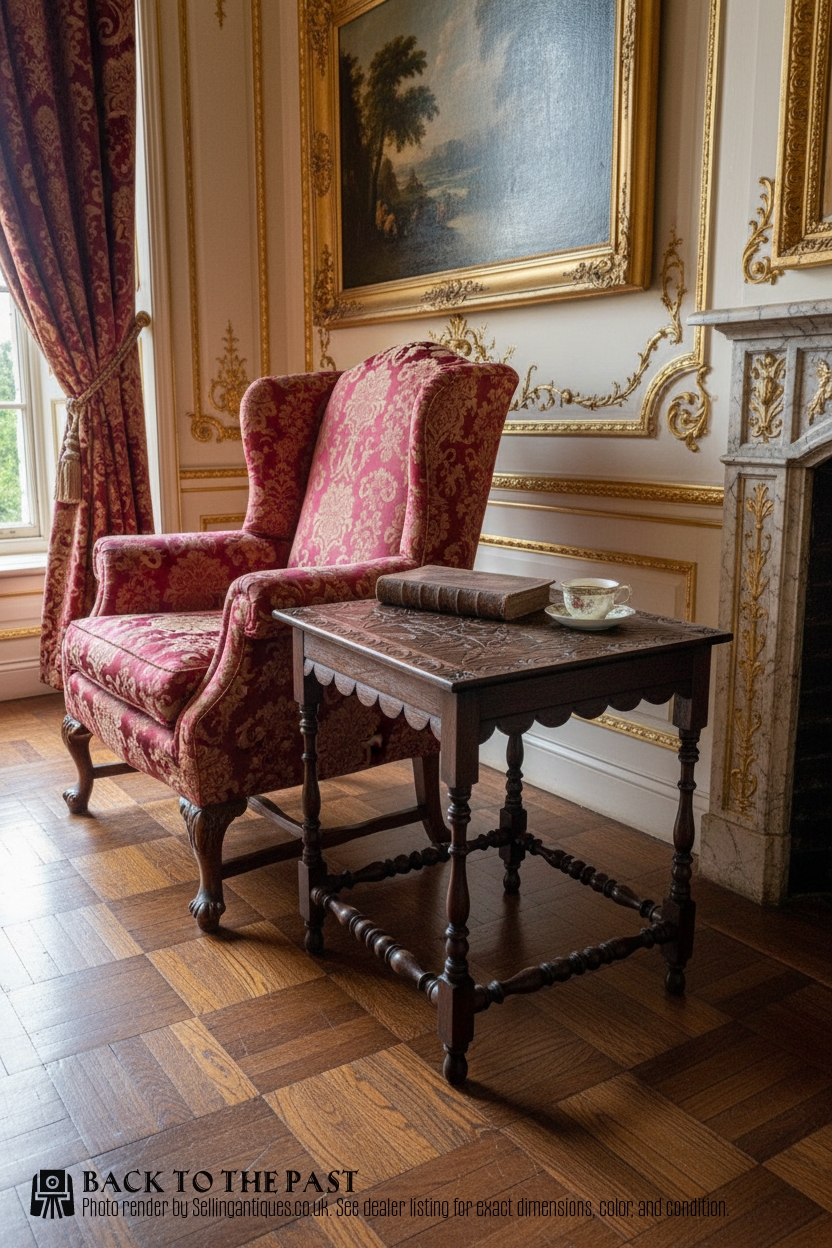
Dark Oak Accent Table
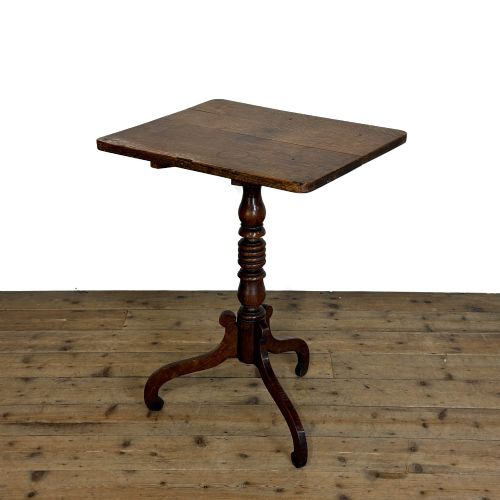
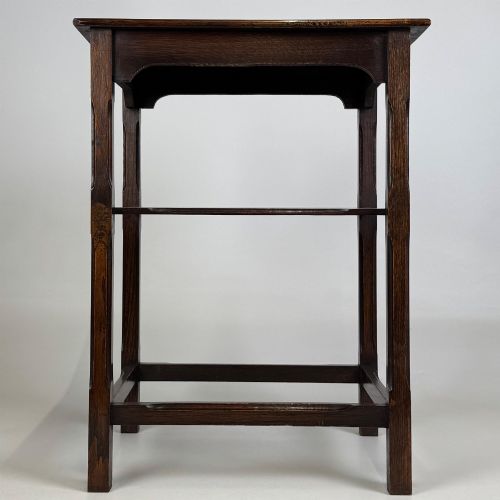
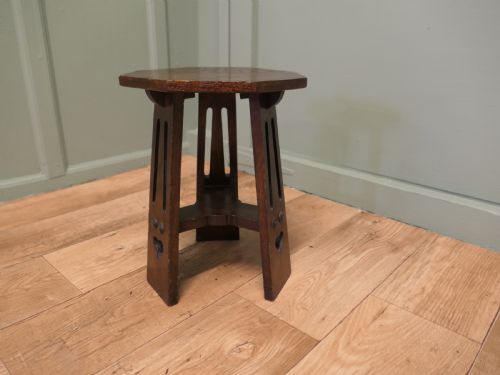
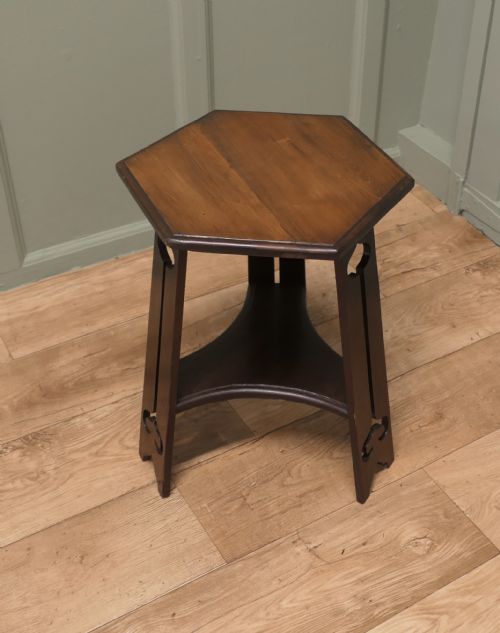
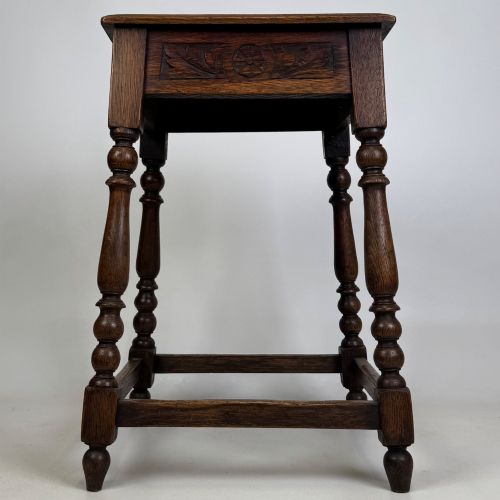
A dark oak accent table encompasses compact occasional pieces designed for smaller spaces, resting beside seating or in hallways. Side tables, plant stands, and cricket tables dominate the selection, offering functional surfaces with modest footprints.
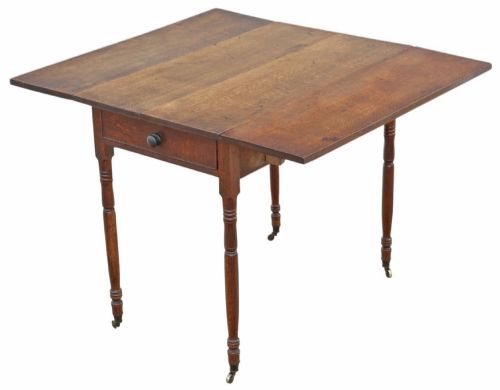
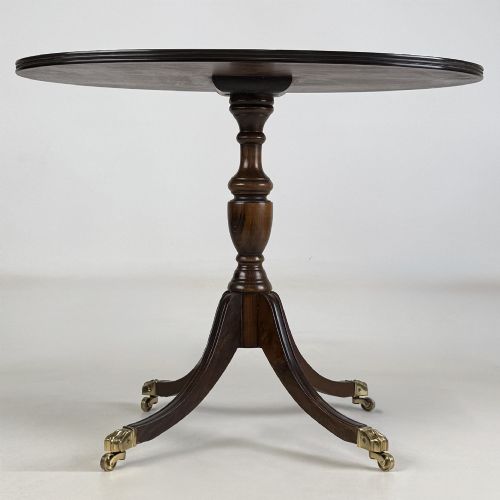
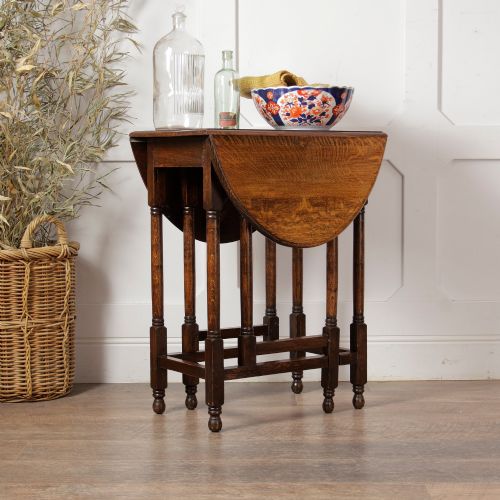
Edwardian side tables appear frequently in the selection, alongside earlier forms from the seventeenth and eighteenth centuries such as gateleg and drop-leaf tables. These pieces provide varied structural forms, from tripod bases to six-leg gateleg frames.
Originating largely from British workshops, these tables reflect regional cabinet-making traditions spanning the Jacobean, Georgian, and Arts and Crafts movements. The material anchors each piece with a deep, dark timber tone.
Materials and Construction
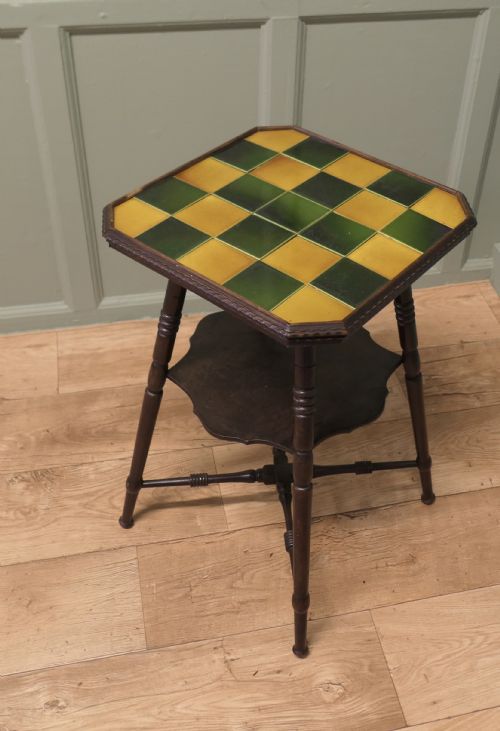
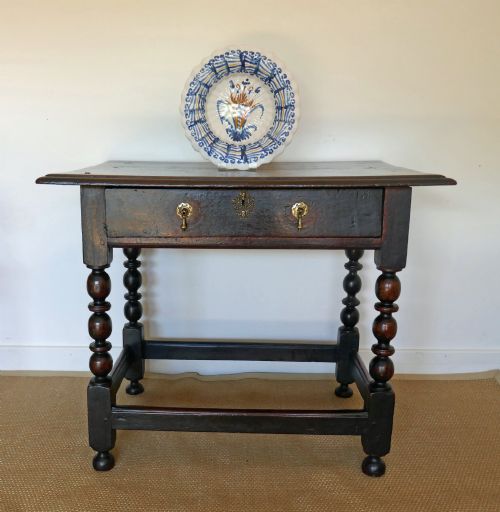
Solid oak and burr oak veneer form the primary structural timbers, providing the characteristic dark hue and prominent grain patterns seen across the inventory. Workshops also integrated brass fittings, iron elements, ceramic tiles, and contrasting wood inlay for decorative detail.
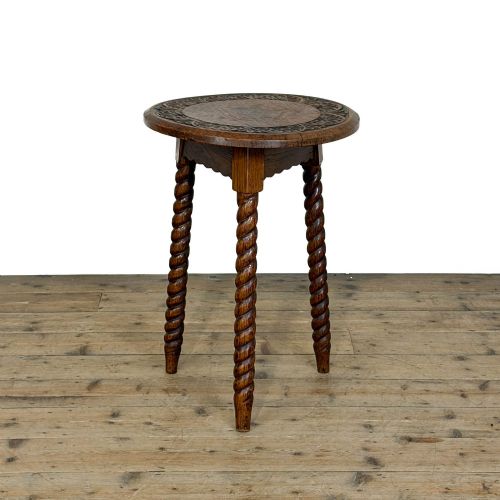
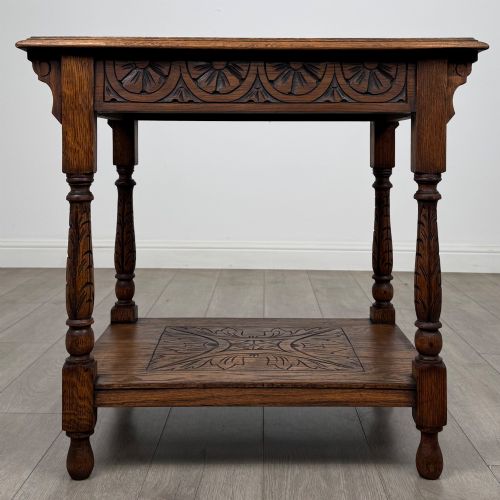
Joinery techniques range from early jointed and pegged construction on seventeenth-century pieces to later turned supports like barley twists and pedestal columns. Carved surface details, chip carving, and tilt-top mechanisms demonstrate the varied manual skills applied by makers.
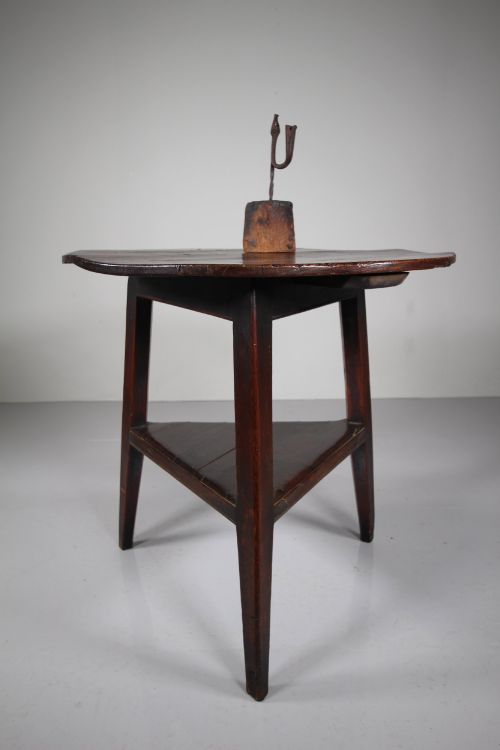
Early three-legged cricket tables gained their stable tripod design to sit level on uneven flagstone floors in historic cottages.
Judging Quality and Execution
Quality rests upon the crispness of the carving, the integrity of the timber joints, and the retention of original surfaces. Tables displaying clean, deep chip carving or balanced proportions command attention through their physical execution.
The choice of materials also distinguishes the pieces, particularly where burr oak veneer, decorative chequered inlay, or inset ceramic tiles are integrated with precision. Unaltered construction and period-appropriate hardware elevate an item's standing.
Shapland & Petter·Liberty & Co.·William Birch·Liberty of London
The Dark Oak Accent Table Glossary
- Cricket table
- A small three-legged wooden table, typically with a round top, originating in early domestic settings.
- Gateleg table
- A drop-leaf table with hinged legs that swing out to support the folding flaps when raised.
- Burr oak veneer
- A thin slice of figured oak timber with swirling grain patterns applied to a primary wood surface.
- Tilt-top table
- A pedestal table featuring a mechanism that allows the top to pivot to a vertical position when not in use.
Dark Oak Accent Table: Frequently Asked Questions
Where should I place a dark oak accent table?
These compact tables fit well beside armchairs, in hallways, or as plant stands in corner spaces. Their modest proportions allow them to integrate into rooms without dominating the floor plan.
Selecting a piece like a cricket table or a small side table provides a sturdy surface for lamps or decorative items while introducing historical character to an interior.
How do I date an antique oak table?
Dating relies on observing construction methods, timber characteristics, and stylistic details associated with specific periods like the seventeenth century or the Edwardian era. Pegged joints and heavy turnings point toward earlier centuries.
Later pieces often feature machine-sawn components, lighter frames, or characteristic Arts and Crafts motifs. Comparing the hardware and finish helps narrow the timeframe of manufacture.
What is a gateleg table used for?
A gateleg table offers an expandable surface by utilising hinged flaps supported by pivoting legs. This design allowed households to save space when the leaves dropped down.
In modern rooms, smaller gatelegs function effectively as side tables or occasional surfaces that can be opened when extra space is required.
How do I care for solid oak furniture?
Maintaining dark oak involves keeping the timber away from direct heat sources and excessive moisture to prevent warping. Regular dusting with a soft cloth preserves the finish.
Applying occasional appropriate wax polish helps nourish the wood and maintain its deep lustre without building up heavy residue on the carved surfaces.