




Dark Mahogany Writing Slope
A dark mahogany writing slope offers a portable desk surface, bringing period craftsmanship and rich timber grain to modern writing spaces.
Dark Mahogany Writing Slope
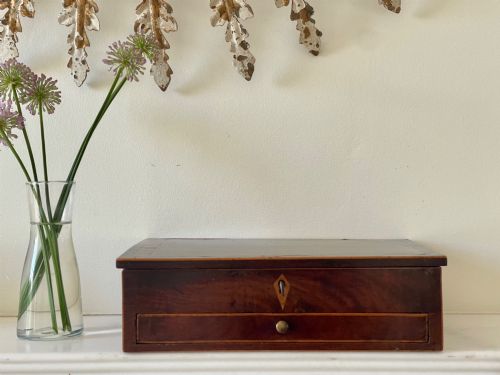
A dark mahogany writing slope is a compact, sloping desk box designed for correspondence and storage, appearing frequently across Georgian, Regency, and Victorian periods. Buyers search for these pieces to secure traditional timber construction with fitted internal compartments, inkwells, and leather or baize writing surfaces.
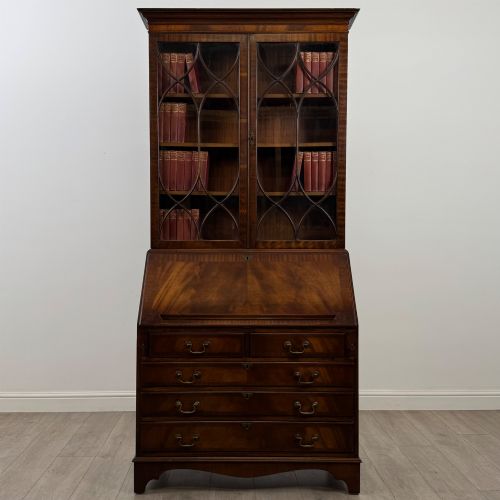
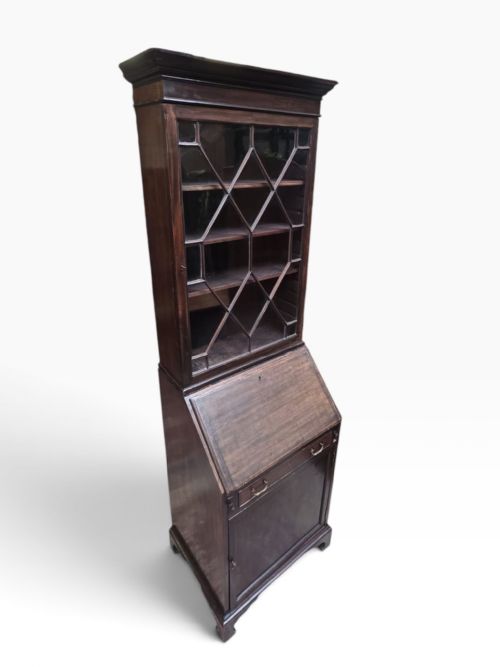
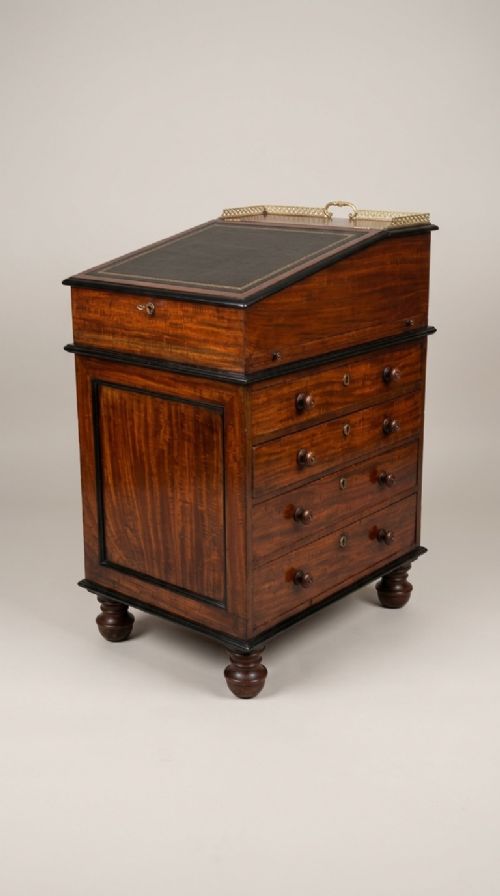
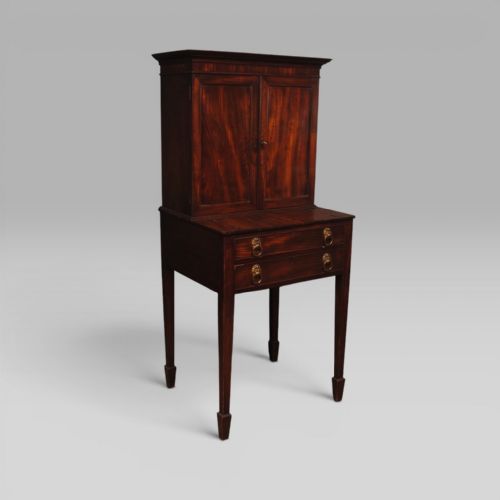
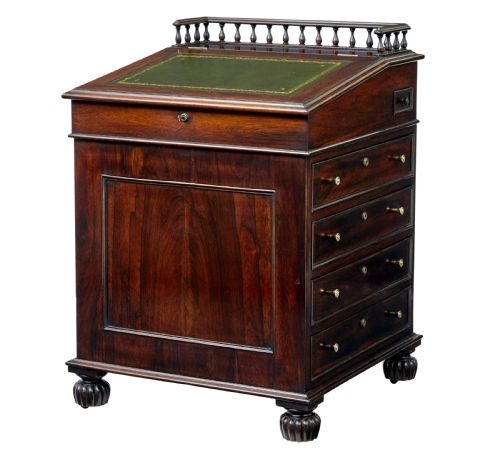
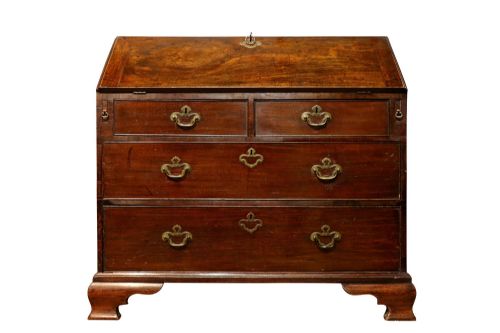
The selections span tabletop boxes with hinged lids to larger Davenport desks and bureau bookcases, though portable campaign boxes remain typical. These pieces originate from workshops operating through the eighteenth and nineteenth centuries, utilising dense tropical hardwoods.
Examples from the Georgian and Regency eras demonstrate precise cabinetmaking, whilst later Victorian iterations often incorporate brass binding for travel durability. Examining the interior fittings reveals secret drawers, pen trays, and compartment layouts intended for personal correspondence.
Materials and Construction Methods
Makers constructed these slopes primarily using solid mahogany and Cuban mahogany, often selecting timber with pronounced figure and deep natural colour. Secondary woods such as oak appeared internally for drawer linings and structural framing.
Brass corners, escutcheons, and banding reinforced the edges of travel boxes, protecting vulnerable joints during transit. Leather inserts provided a smooth writing plane, whilst satinwood and rosewood crossbanding occasionally accented the primary mahogany surfaces.
Listings feature mahogany, Cuban mahogany, rosewood, and satinwood, supported by brass hardware and leather inserts across Georgian and Victorian periods.
Markers of Quality and Craft
Superior examples distinguish themselves through the choice of timber figure, such as flame or Cuban mahogany selected for the exterior surfaces. Dovetail joints on the internal drawers and the precision of the brass hardware indicate the skill of the original workshop.
The complexity of the interior arrangement, including secret compartments and well-fitted ink storage, reflects the standard of commissioning. Original locks, keys, and untouched patination further separate standard production boxes from exceptional cabinetmaker pieces.
Gillows·William Trotter
The Dark Mahogany Writing Slope Glossary
- Writing slope
- A portable box with a hinged sloping lid that opens to reveal a writing surface and storage compartments. These boxes were designed for travel and home correspondence.
- Davenport
- A compact pedestal desk featuring a sloping writing surface above a bank of drawers. This form became popular during the Regency and Victorian periods.
- Cuban mahogany
- A dense, heavy timber harvested in the Caribbean, prized for its rich colour and distinctive grain figure. Cabinetmakers utilised this material for high-status eighteenth-century furniture.
- Escutcheon
- A protective plate surrounding a keyhole, usually fashioned from brass. It secures the wood around the lock and adds decorative detail to the exterior.
- Campaign
- A style of furniture designed for military officers on the move, characterised by brass corners, inset handles, and portable construction.
Dark Mahogany Writing Slope: Frequently Asked Questions
How were writing slopes used historically?
Owners placed these portable boxes on tables or desks to provide an angled writing surface for letters and bookkeeping.
Internal compartments kept inkwells, quill pens, sealing wax, and paper organised securely during transit.
What is the difference between a slope and a bureau?
A writing slope is a portable box designed to sit on top of furniture, opening to reveal a slanted writing plane.
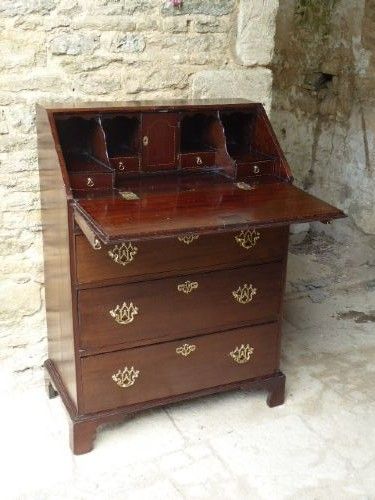
A bureau is a larger, freestanding piece of furniture that incorporates a sloping fall-front desk above drawer storage.
How do I identify a campaign writing slope?
Campaign pieces feature flush-fitting brass handles, reinforced brass corners, and durable construction intended for military travel.
These boxes often split or include specific locking mechanisms to secure contents during rough journeys.
How should I care for mahogany surfaces?
Keep wooden pieces away from direct sunlight and excessive heat sources to prevent the timber from drying out or fading.
Apply natural beeswax periodically and buff gently with a soft cloth to maintain the lustre of the polish.