
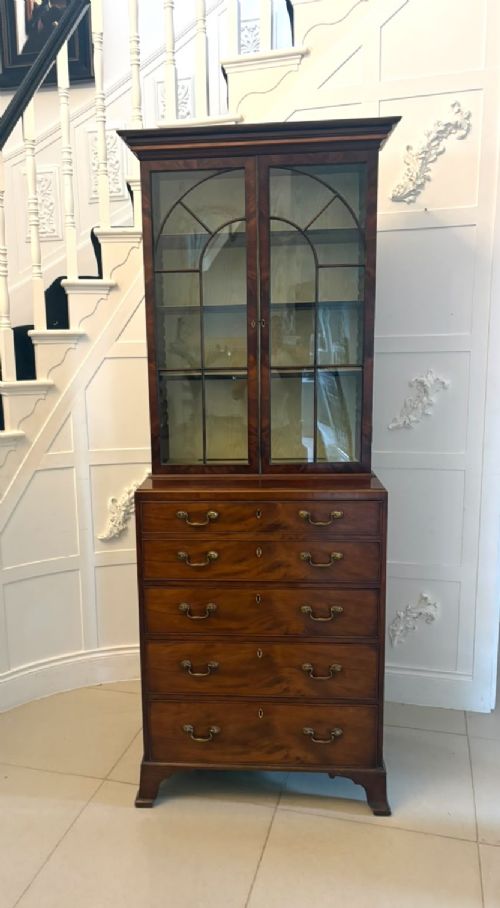
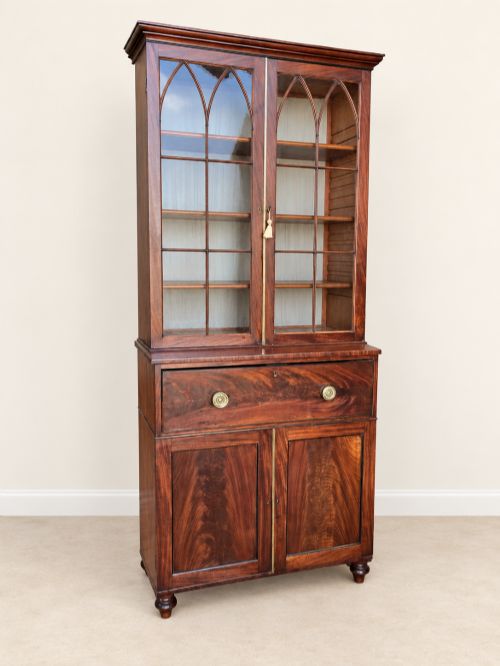
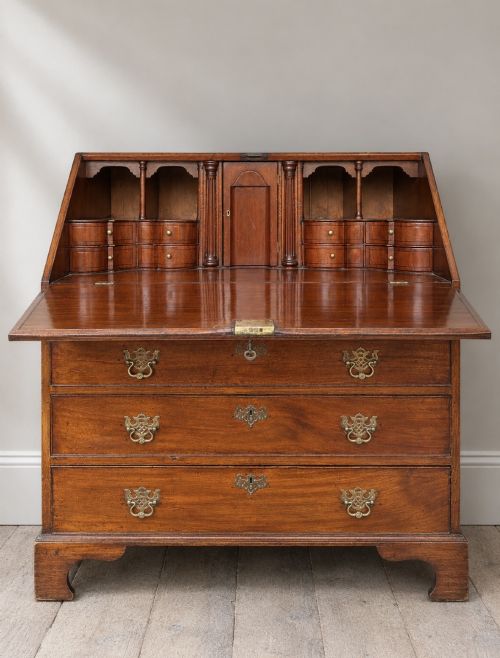
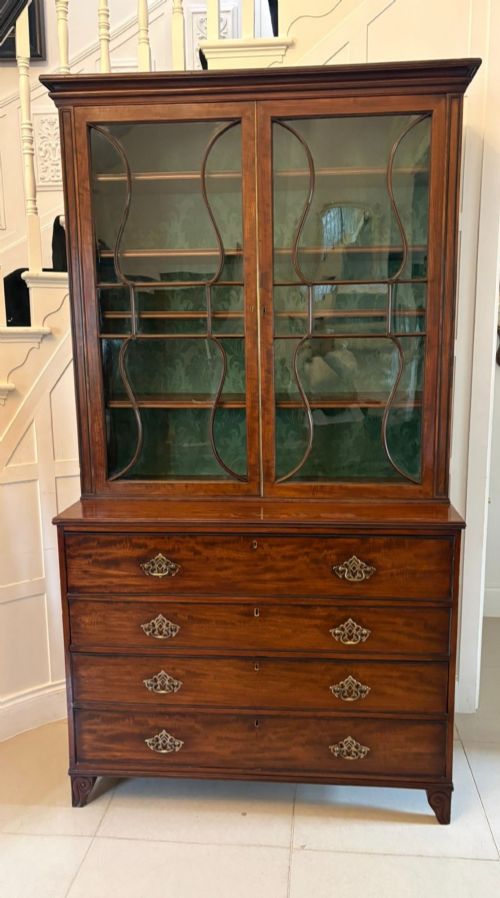
Dark Mahogany Writing Bureau
A dark mahogany writing bureau brings disciplined workspace and rich timber figure into a room through drop-front writing slopes and fitted compartments.
Dark Mahogany Writing Bureau
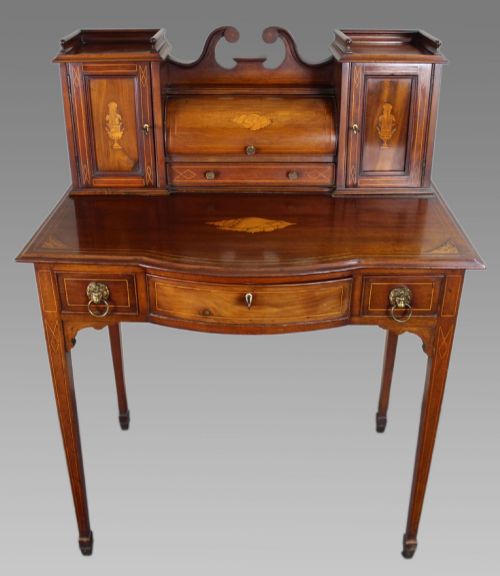
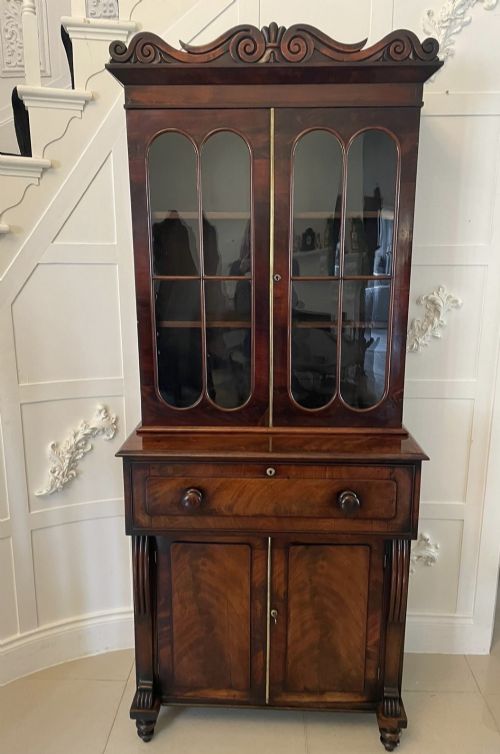
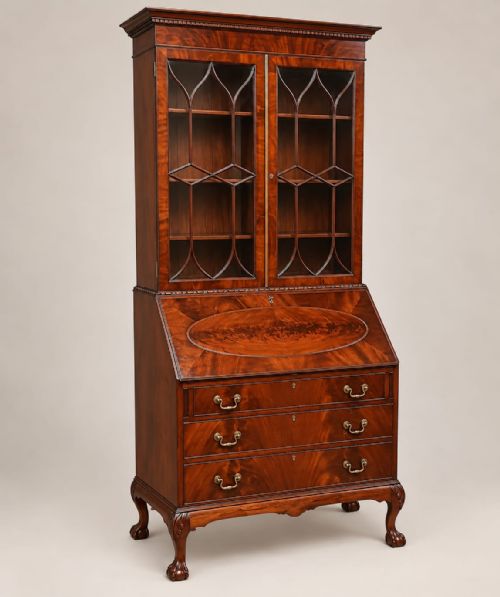
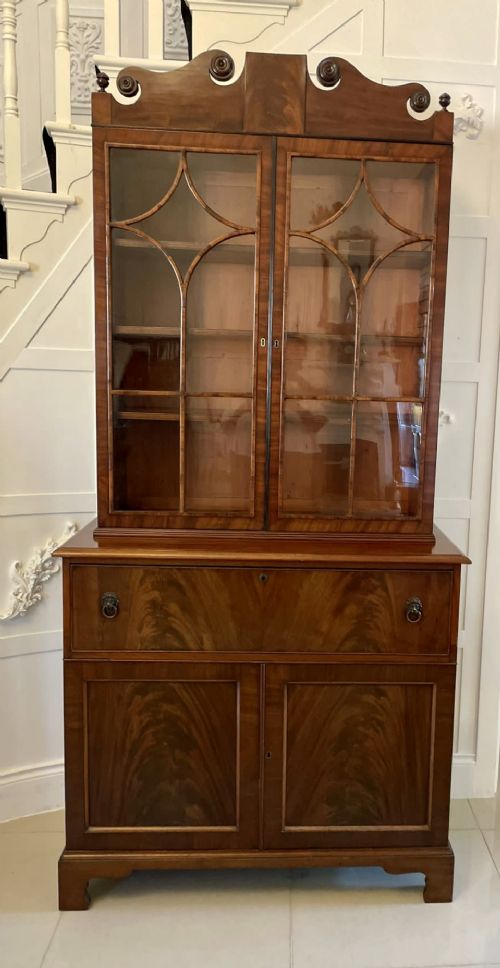
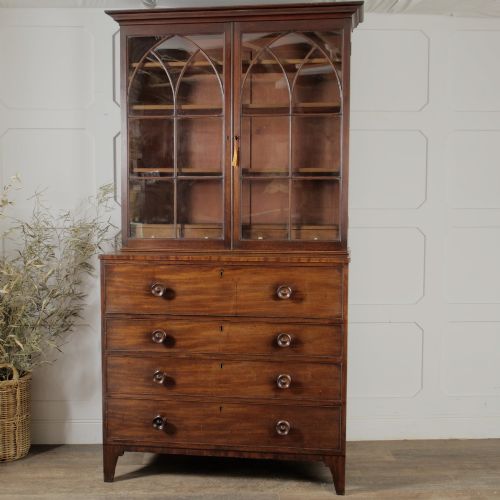
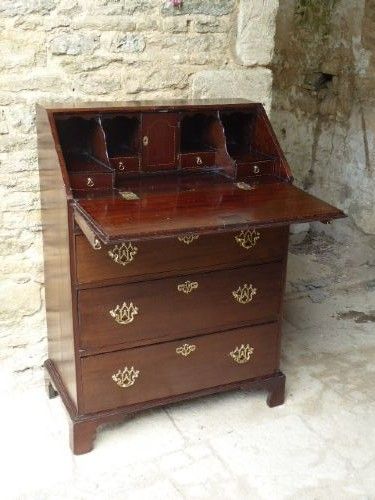
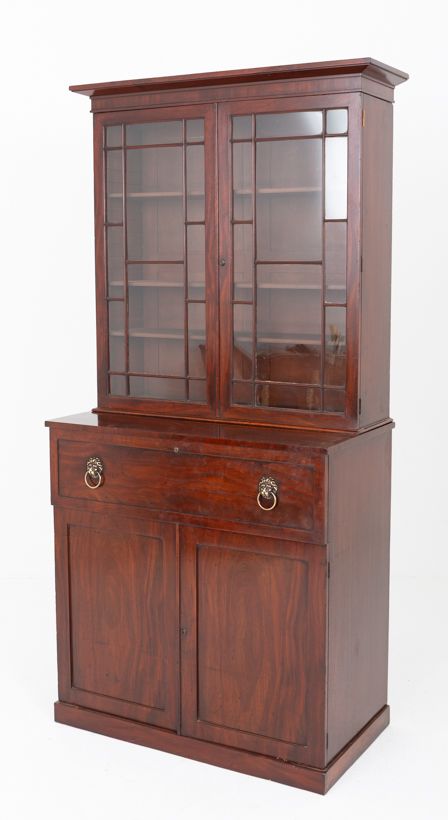
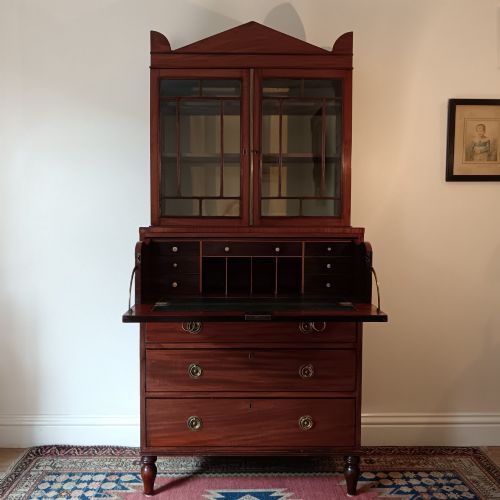
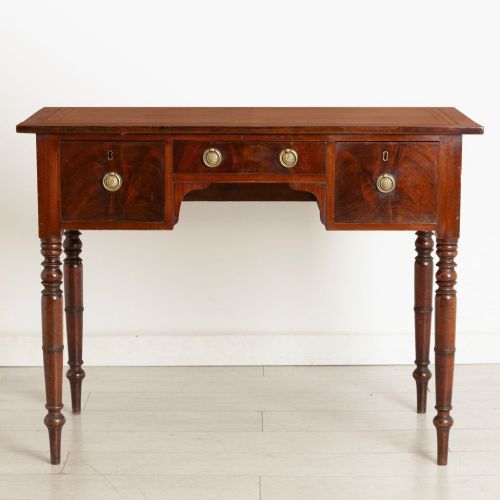
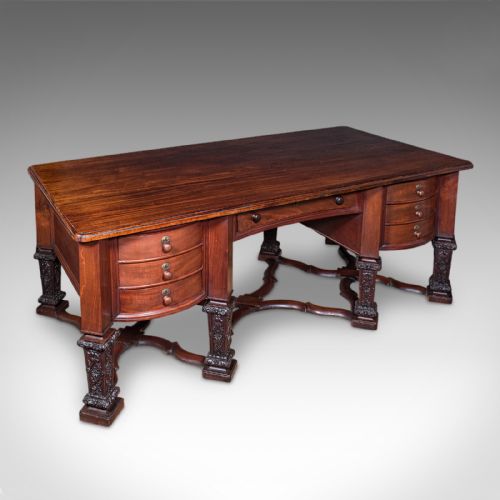
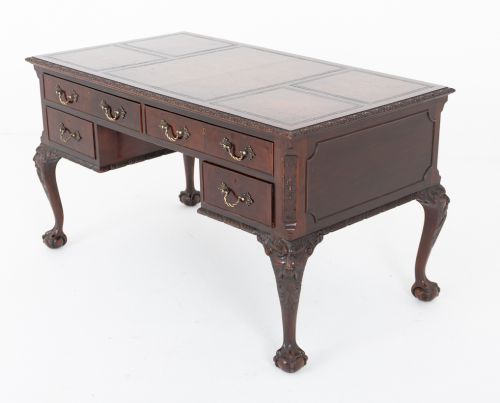
A dark mahogany writing bureau spans compact drop-front writing desks, extensive bureau bookcases with glazed library cabinets, and cylinder desks with pull-out writing slides.
The periods represented stretch from mid-eighteenth-century Georgian and George II examples through Regency and William IV pieces to Victorian, Edwardian, and later revivals.
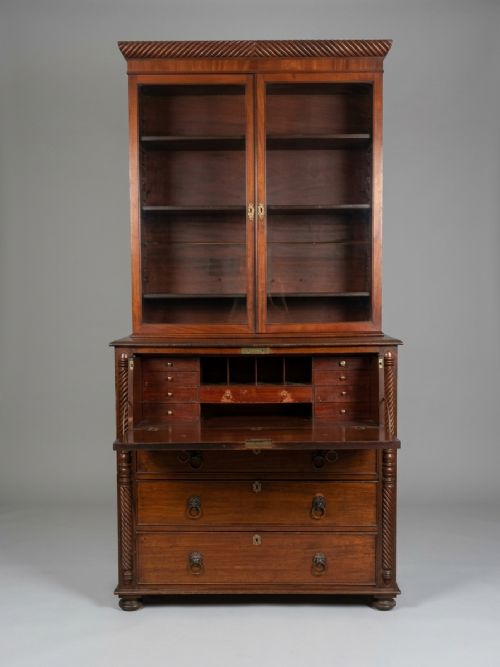
Buyers meet everything from simple small slope-front desks on bracket feet to tall secretaire bookcases featuring fitted interior drawers and pigeonholes.
Materials and construction
Makers utilised solid mahogany and flame mahogany veneer laid over secondary timbers, often accentuating the darker timber grain with ebonised wood or contrasting details.
Functional elements integrate brass handles, leather writing surfaces, and glass panes within glazed doors on larger bookcase tops.
Internal compartments rely on intricate small drawers and pigeonholes constructed with traditional joinery.
Several desks include hidden compartments and secret drawers designed for private papers.
Judging quality
Quality rests upon the depth of the mahogany figure, the crispness of internal drawer arrangement, and the integrity of original feet and handles.
Finer examples display superior timber selection, particularly in flame mahogany veneers, and precise internal joinery that survives intact over centuries of use.
George Oakley·Gillows
The Dark Mahogany Writing Bureau Glossary
- Bureau
- A desk featuring a sloping lid that opens to form a writing surface above a chest of drawers.
- Secretaire
- A piece of furniture containing a drawer or compartment that pulls down to reveal a writing desk and fitted interior.
- Tambour
- A sliding surface made of narrow strips of wood glued to a canvas backing, used on cylinder desks.
- Davenport
- A small desk with a sloped writing surface and drawers opening to the side.
Dark Mahogany Writing Bureau: Frequently Asked Questions
How do I use a bureau daily?
Lower the sloping front to create an immediate writing surface while keeping stationery stored in the internal pigeonholes.
Close the fall-front when finished to conceal papers and maintain a tidy room.
What is a secretaire bookcase?
A secretaire bookcase combines a tall display cabinet with glazed doors above a pull-down writing drawer.
This multi-functional form provides both library storage and a concealed desk space within one tall piece.
How do I date a mahogany bureau?
Examine the construction of the internal drawers, foot styles such as bracket feet, and the grain of the mahogany timber.
Georgian pieces often display simpler internal layouts and solid timber construction, while later revivals incorporate specific period revival details.
Where should I place a bureau?
Position the desk against a sturdy wall with adequate natural light falling across the open writing slope.
Ensure there is sufficient clearance in front of the piece for a chair when the writing flap is lowered.