
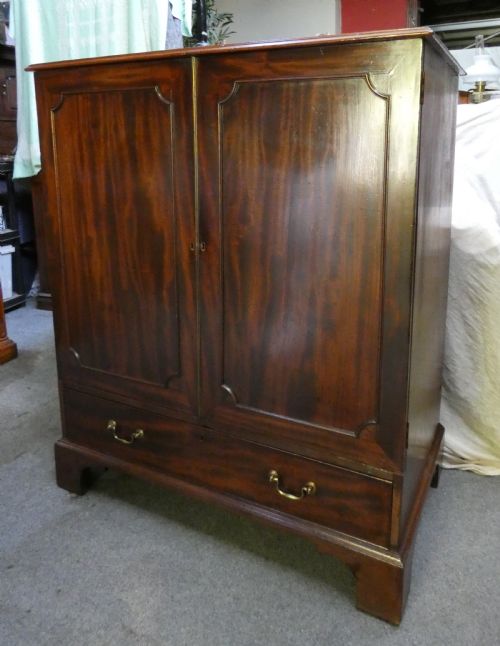
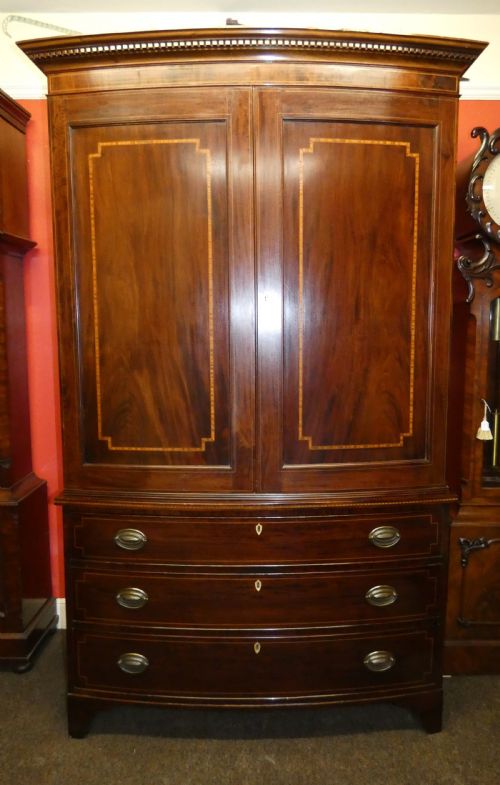
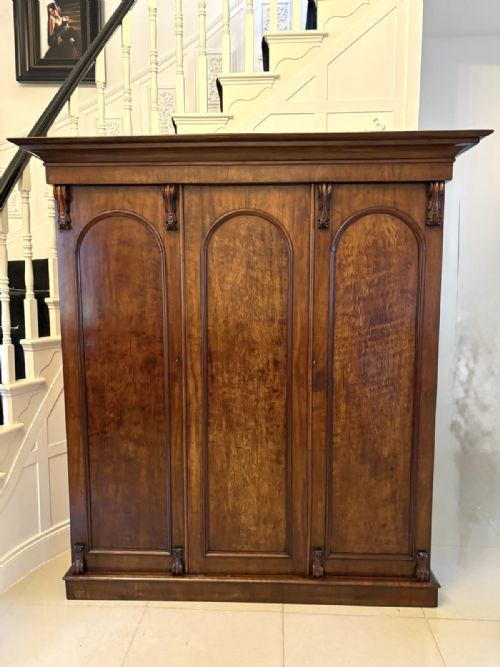
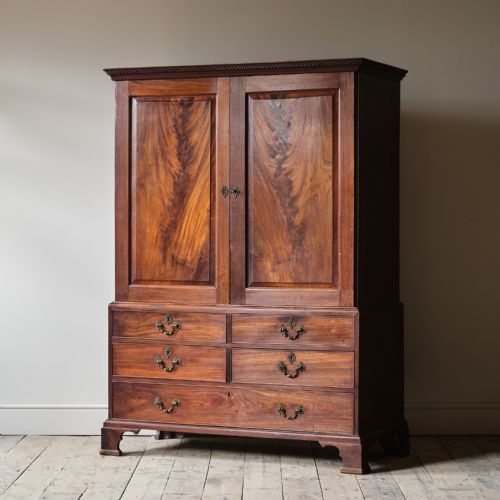
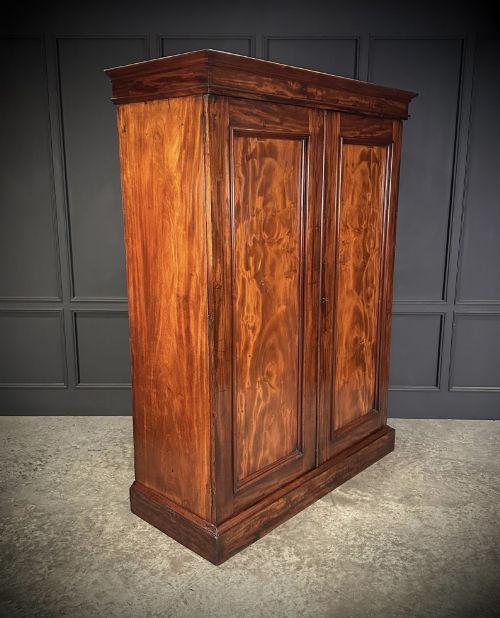
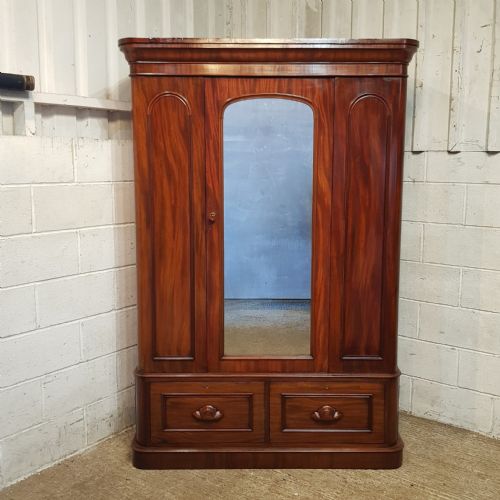
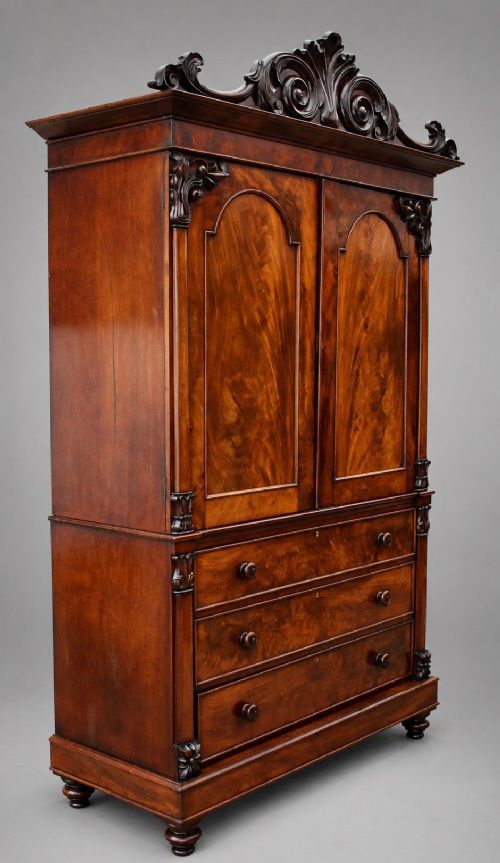
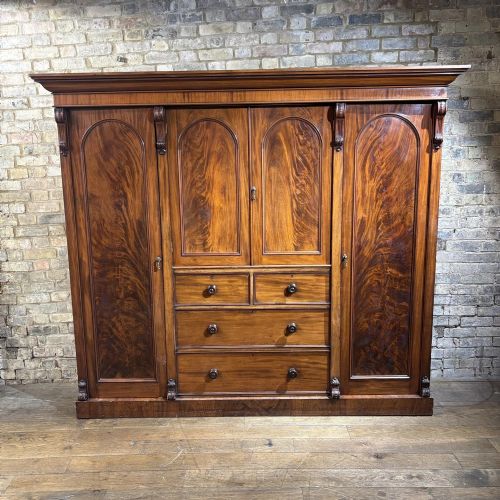
Dark Mahogany Linen Press
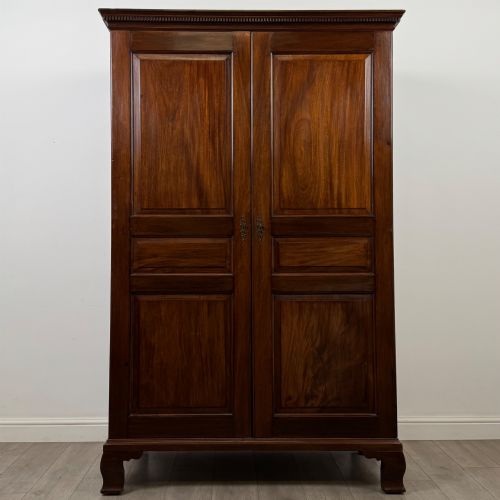
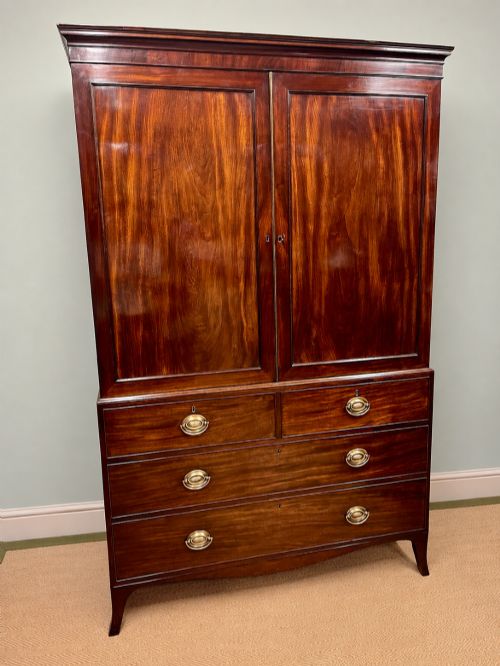
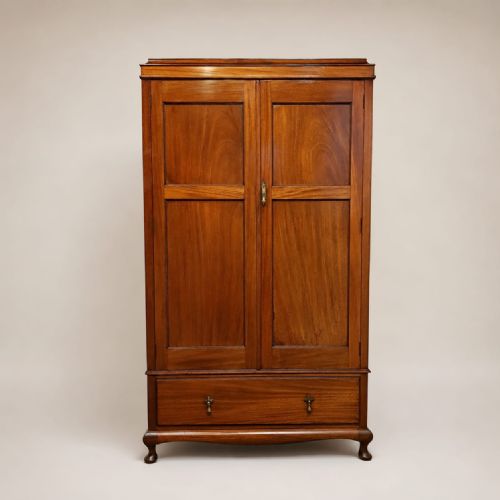
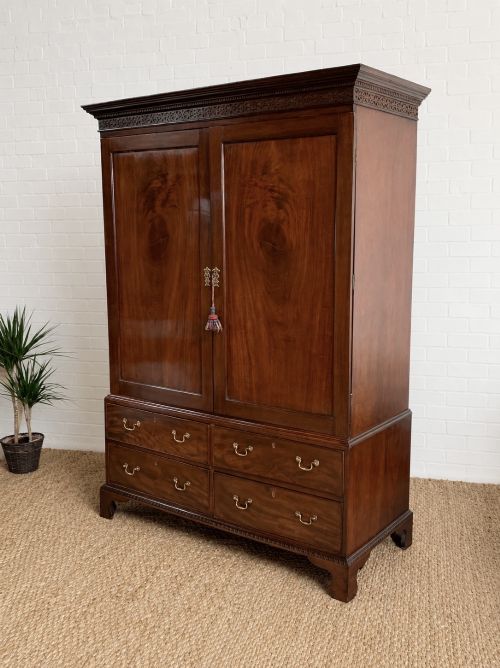
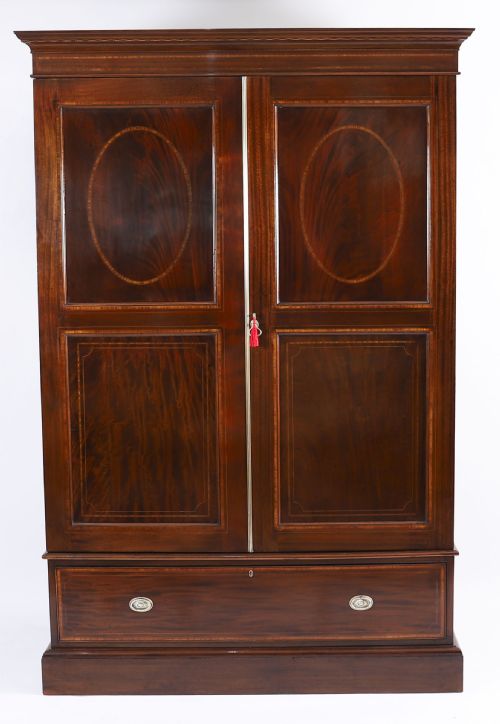
A dark mahogany linen press provides substantial storage through deep timber panels and structured internal sliding trays.
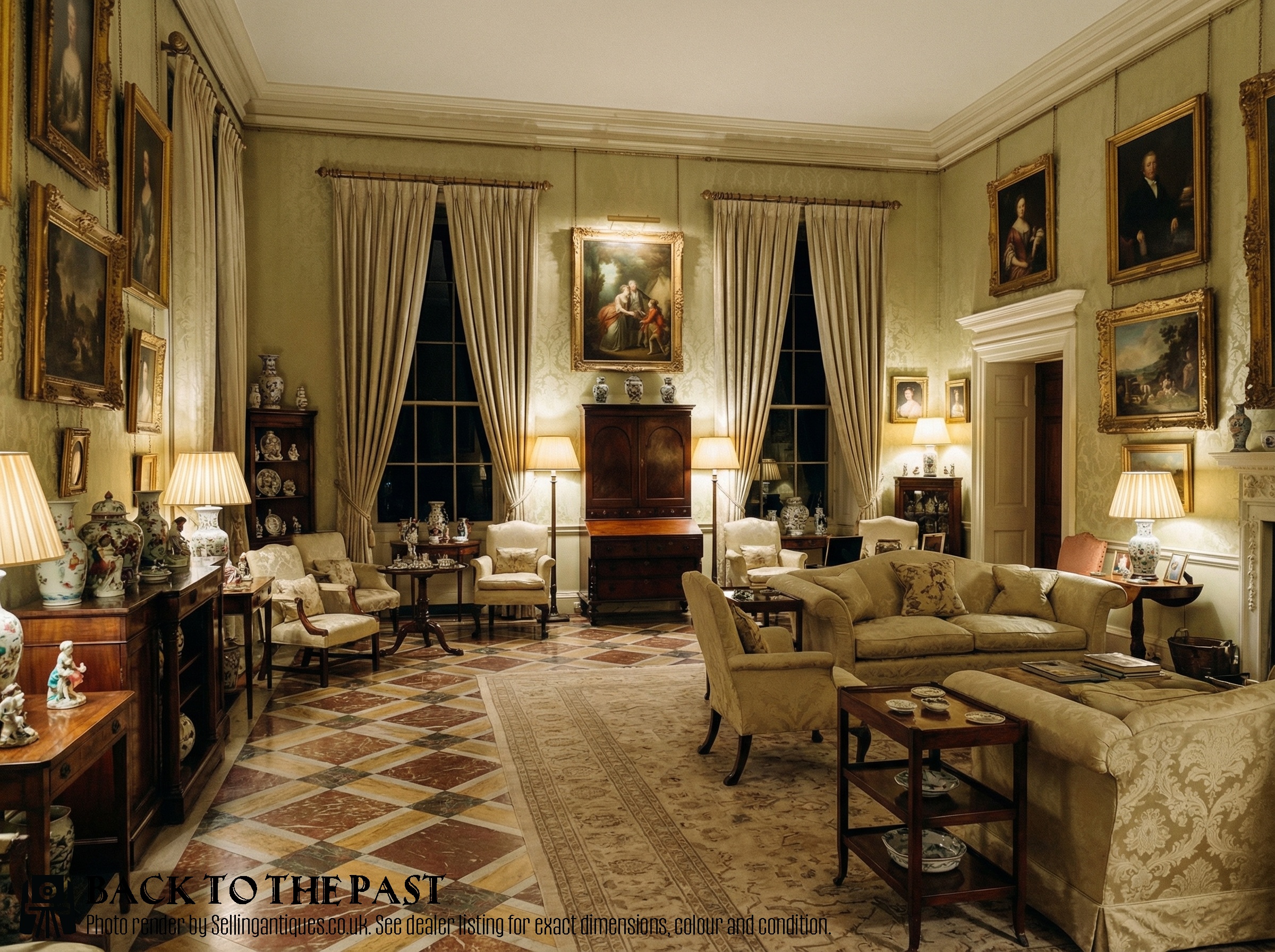
Dark Mahogany Linen Press
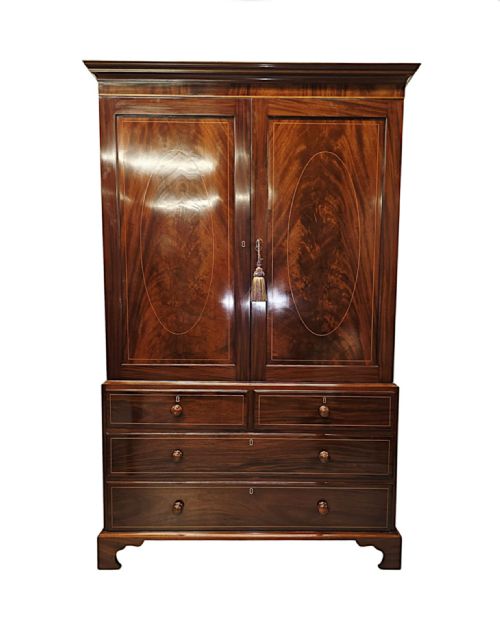
A dark mahogany linen press combines a hanging wardrobe or shelf section above a chest of drawers to hold folded textiles. Buyers searching this phrase meet substantial case furniture originating across the eighteenth, nineteenth, and early twentieth centuries.
The form appears in Georgian, Regency, and Victorian iterations, frequently displaying architectural cornices and panelled doors. Many examples rest upon a base of functional drawers ranging from compact two-drawer layouts to wide bowfront chests.
Materials and Construction Methods
Cabinetmakers constructed these pieces primarily from solid mahogany and flame mahogany veneers, sometimes enhanced by satinwood, boxwood, and rosewood crossbanding. Brass hardware, including drop handles and escutcheons, secures doors and internal components.
Joinery techniques involve heavy timber frames supporting internal sliding trays, known as slides, alongside hand-cut dovetails on the drawer constructions. Glass panels and blind fretwork occasionally embellish the upper cornices and door fronts.
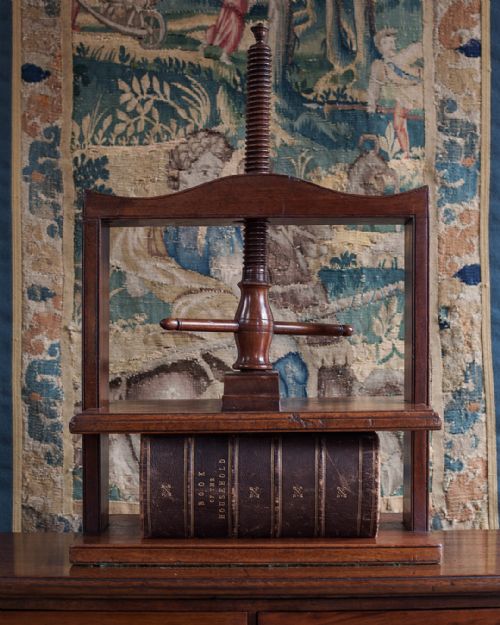
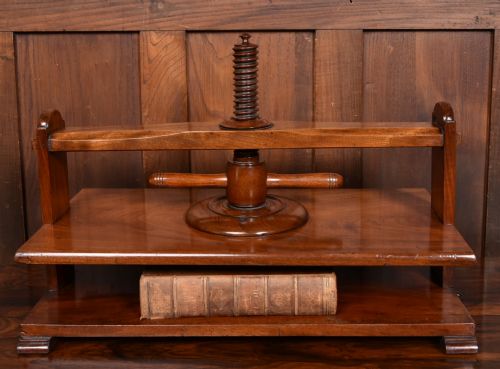
One persistent eighteenth-century press includes a clever screw mechanism originally designed to keep table linen impeccably flat.
Distinctions in Quality
The depth of figure within the timber grain dictates visual hierarchy, with book-matched flame mahogany veneers marking superior execution. The crispness of carved details, such as blind fretwork and panel mouldings, separates standard workshop production from finer cabinet work.
Internal architecture defines structural merit, distinguishing basic shelf conversions from pieces retaining their original sliding linen trays and fitted interior compartments. The integrity of the timber panels and the precision of the drawer dovetailing reveal the original maker's skill.
Heals·Francis Brodie
The Dark Mahogany Linen Press Glossary
- Linen press
- A large piece of case furniture featuring upper cabinet doors enclosing sliding shelves for textiles, set above a lower chest of drawers. This form evolved to store household linen flat before modern wardrobe hanging space became standard.
- Flame mahogany
- A veneer cut from the branch forks of the mahogany tree, creating a distinctive flickering flame pattern. Cabinetmakers utilised this timber on prominent exterior surfaces to catch the light.
- Compactum
- A multi-functional fitted wardrobe combining hanging space, drawers, and shelving within a single unified carcass. These units offer maximal storage efficiency.
- Blind fretwork
- Carved decorative ornamentation applied to a solid flat background without piercing right through the timber. This technique adds texture to cornices and friezes.
- Crossbanding
- A narrow strip of veneer laid perpendicular to the grain of the main surface panel. It forms a decorative border around drawer fronts and tabletops.
Dark Mahogany Linen Press: Frequently Asked Questions
What is a dark mahogany linen press used for?
These large cabinets serve as statement storage furniture for bedrooms and dressing rooms. The upper section typically contains sliding trays for folded garments, whilst the lower drawers organise smaller apparel.
Historically designed for household linen, modern owners utilise them to store clothing, bedding, and personal collections within deep timber compartments.
How do I date a mahogany linen press?
Dating relies on architectural styles, handle hardware, and construction methods visible in the drawers and interior carcass. Georgian pieces exhibit classical proportions and hand-cut dovetails, while Victorian examples often feature heavier breakfront designs or elaborate flame veneers.
Secondary woods used inside the drawers, such as oak or pine, also provide clues to the period and regional origin of the workshop.
Can the internal sliding trays be removed?
Most original sliding trays rest on internal timber runners and lift out easily to create open hanging space. This modification allows owners to convert old linen storage into a modern wardrobe.
Retaining the original trays preserves the structural integrity and historical function of the piece for collectors of antique furniture.
How do I care for antique mahogany surfaces?
Maintain the timber by dusting regularly with a soft, dry cloth and applying natural beeswax polish sparingly to nourish the grain. Avoid placing furniture in direct sunlight or near heat sources to prevent the mahogany veneers from drying out or splitting.
Keeping room humidity stable protects the antique joinery and preserves the deep lustre of the dark wood finish.