

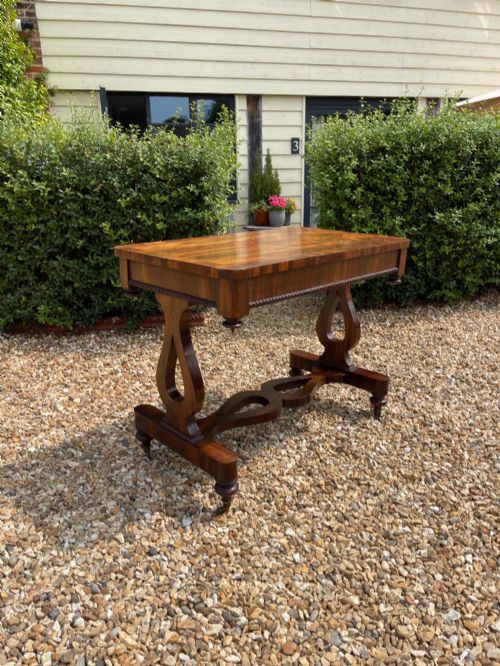

Dark Mahogany Library Table
A dark mahogany library table brings deep timber colour and sturdy working space into a room, spanning periods from Regency to Edwardian.
Dark Mahogany Library Table
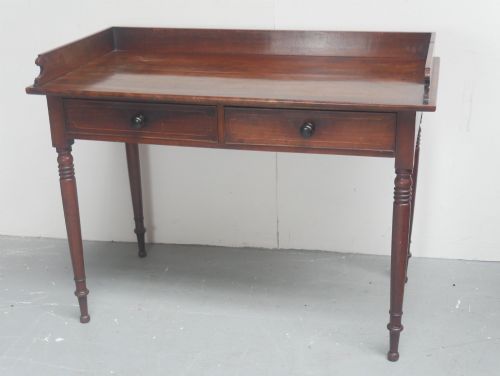
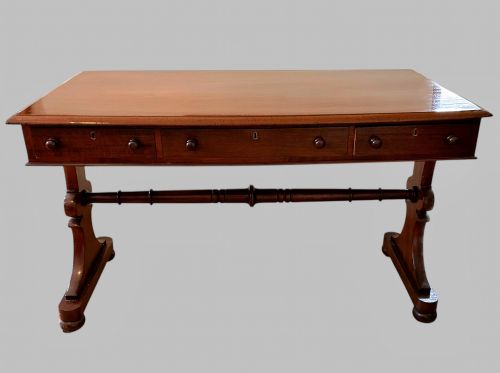
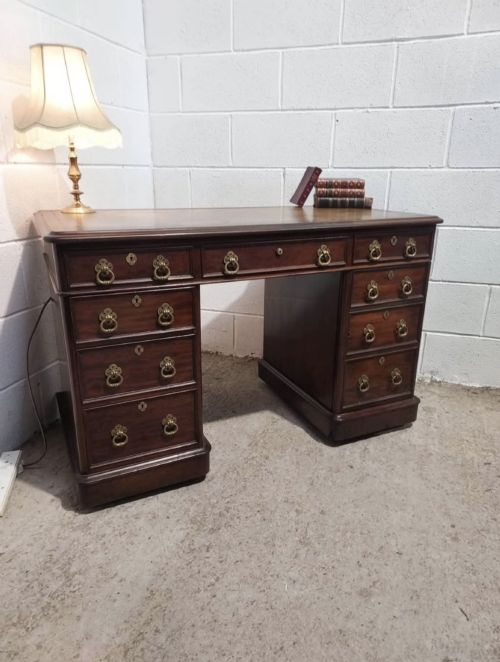
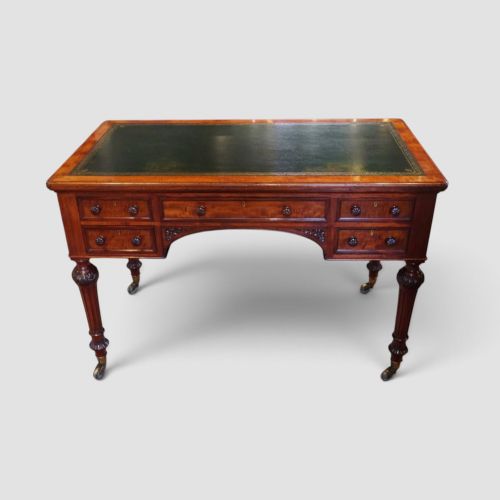
A dark mahogany library table serves as a substantial writing surface or central workspace, often fitted with drawers or drop leaves. These pieces emerge primarily from the nineteenth century, including Regency, Victorian, William IV, and Edwardian eras, alongside Georgian examples.
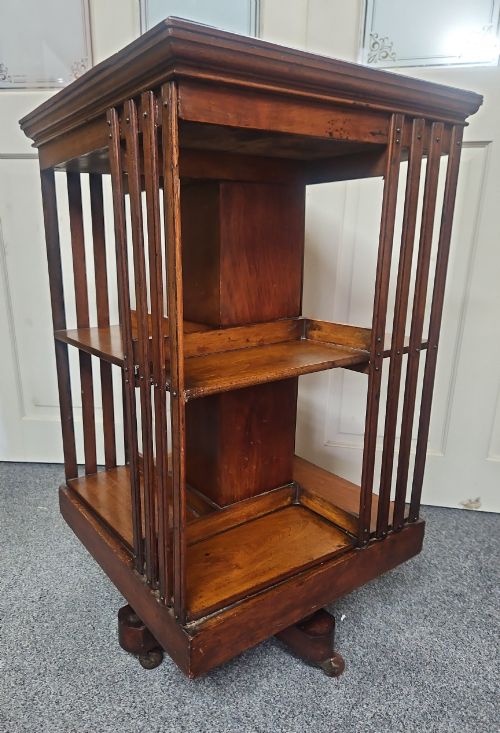
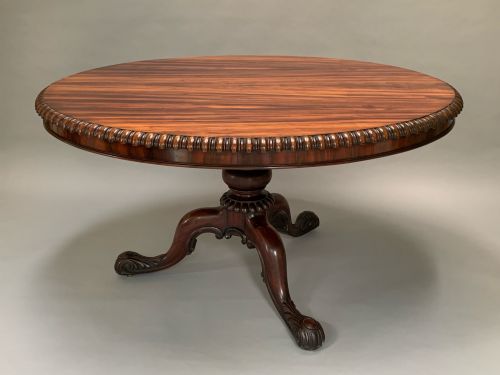
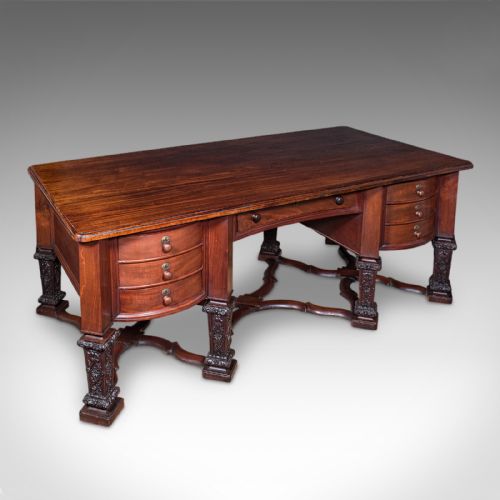
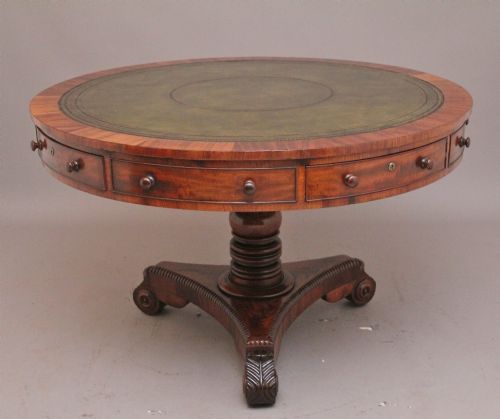
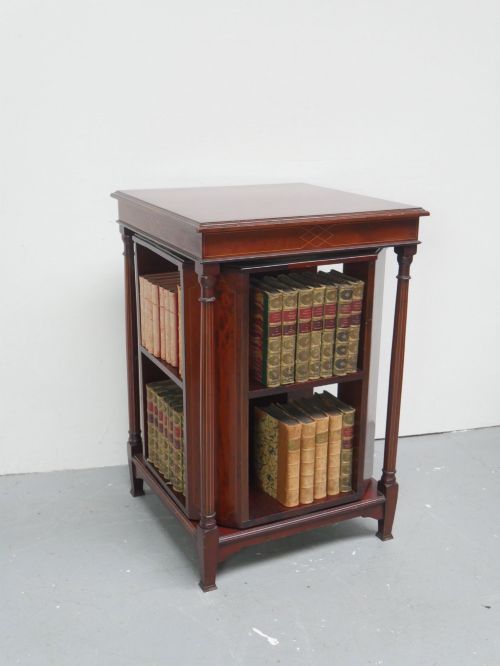
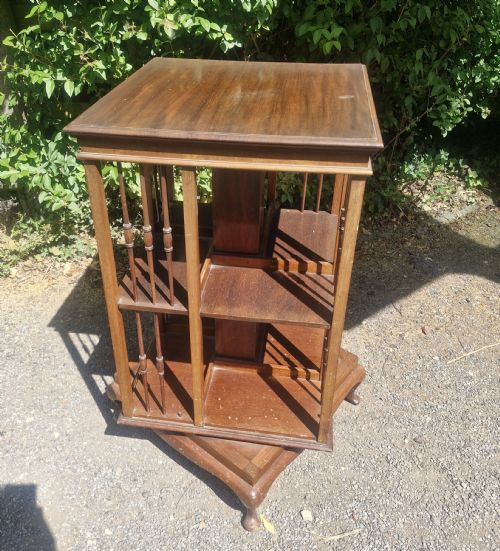
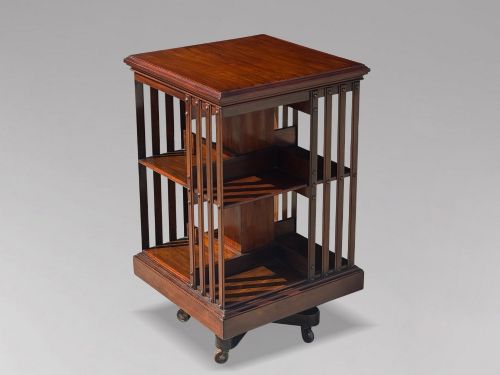
Beyond standard writing desks, the form extends to drum tables, revolving bookcases, partners desks, and sofa tables. Buyers encounter forms ranging from simple rectangular writing tables to rotating drum tables and large partners desks designed for two sides of work.
Originating predominantly in British workshops, these tables showcase the heavy reliance on dense tropical timber favoured by cabinet makers of the past. The selection on this page captures desks and tables built for studies, libraries, and principal reception rooms.
How they were made
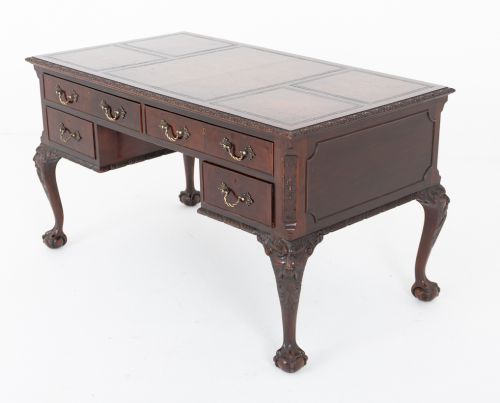
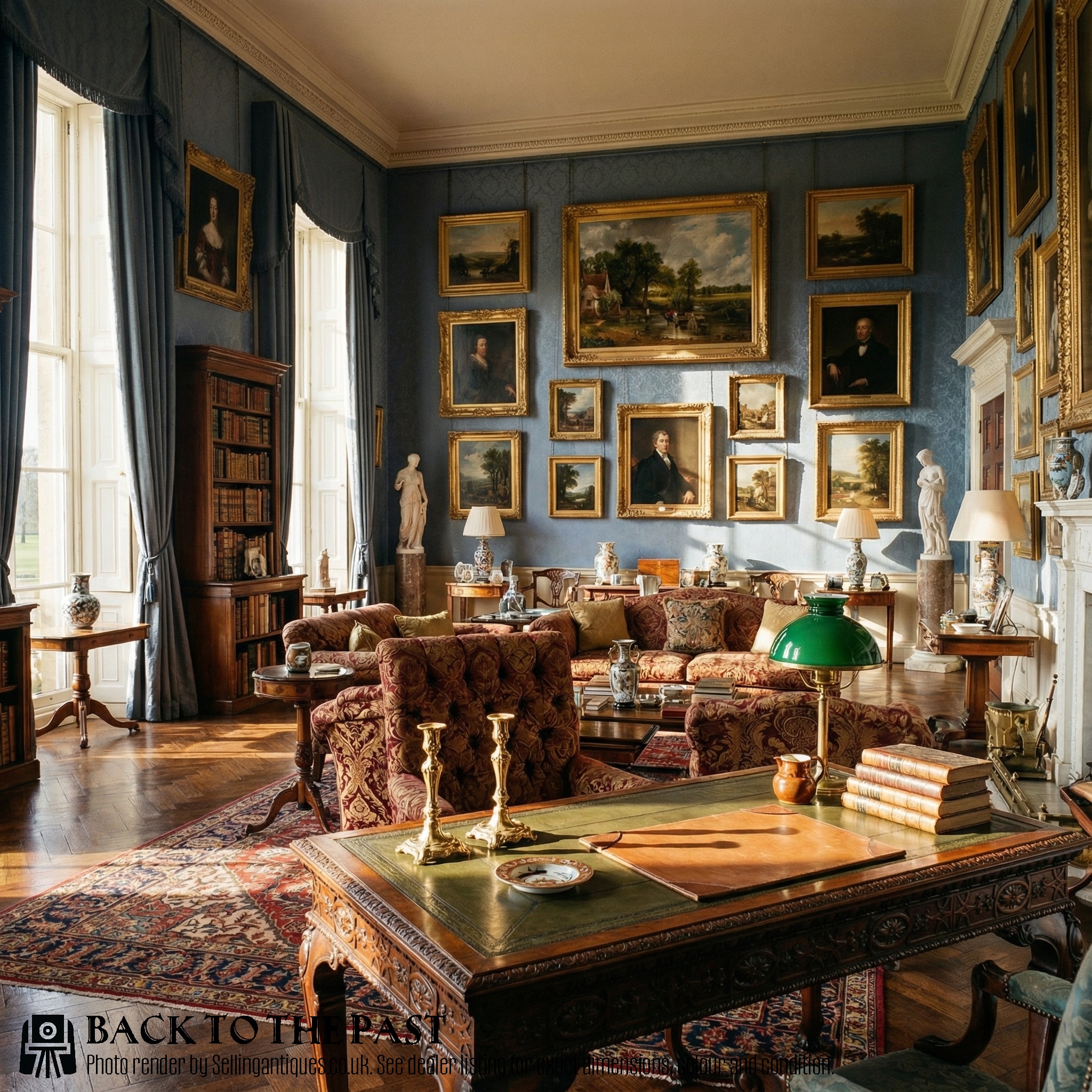
Makers constructed these tables using solid mahogany and mahogany veneers over secondary timbers, frequently incorporating brass handles, locks, and casters. Many surfaces feature inset panels of leather to provide a smooth writing plane.
Cabinet makers utilised secondary woods such as oak and rosewood alongside specialised timbers like Albuera wood for specific decorative banding and structural frames. Joinery relied on traditional methods including dovetailing for drawer construction and mortise and tenon frames.
Dark Mahogany Library Table Retail Price Guide 2026
Typical asking prices for dark mahogany library table among the pieces listed under this phrase on Sellingantiques today, from the lower quarter to the upper quarter. They describe what is for sale here now, not the wider market.
Some tables double as reading stations, proving that nineteenth-century scholars also struggled with holding heavy books open while writing.
What varies in quality
Quality rests in the depth of the mahogany grain, the crispness of any carved detailing such as Chippendale style motifs, and the integrity of secondary timbers. Superior pieces maintain their original brass hardware, functional drawer linings, and well-preserved leather inserts.
The distinction between workshop production and standard output shows in the precision of the joinery and the selection of figured timber veneers. Maker attributions or stamps provide clear evidence of workshop origin, elevating the standing of a piece.
Trollope & Sons·Gillows·Holland & Sons·Williams and Gibton·Cookes of Finsbury London·Jean-Joseph Chapuis
The Dark Mahogany Library Table Glossary
- Partners desk
- A large double-sided desk designed for two people to work opposite one another, featuring drawers and cupboards on both faces.
- Drum table
- A circular library table containing a revolving or fixed top with multiple drawers set into the deep frieze.
- Sofa table
- A rectangular drop-leaf table traditionally placed in front of a sofa, supported by pillar and trestle feet.
- Frieze
- The horizontal band situated directly beneath the top surface of a table, frequently housing one or more drawers.
- Bureau plat
- A flat-topped freestanding French writing desk, often ornamented with brass or gilt mounts.
Dark Mahogany Library Table: Frequently Asked Questions
How do I care for the leather top?
Clean the leather surface gently with a slightly damp cloth, avoiding harsh chemical cleaners that strip the original dye.
Apply a specialist leather wax or balsam periodically to prevent cracking and preserve the supple texture of the writing surface.
Where should I place a library table?
Position freestanding models in the centre of a study or library so the finished back and sides remain fully visible.
Ensure the table sits away from direct sunlight and heat sources to protect the mahogany polish and prevent timber shrinkage.
How do I identify a Regency period table?
Look for classical architectural lines, sabre legs, and brass inlay or paw feet typical of the early nineteenth century.
Regency pieces often display rich dark mahogany finishes combined with restrained brass mounts rather than heavy carving.