
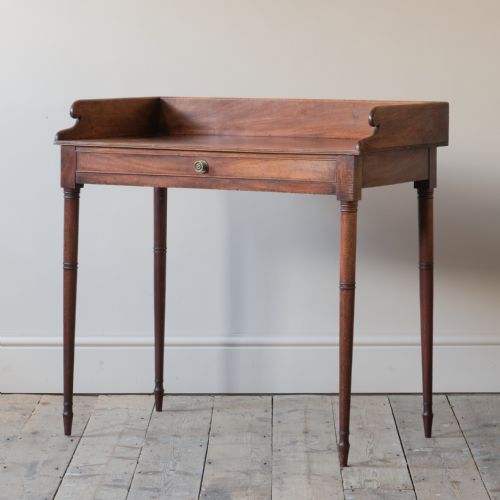
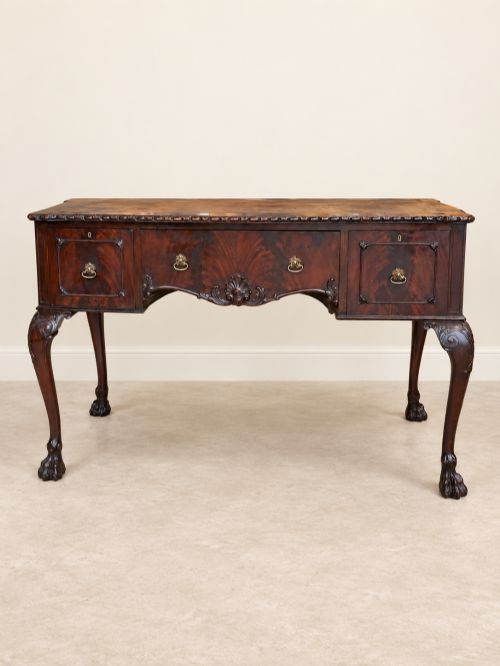
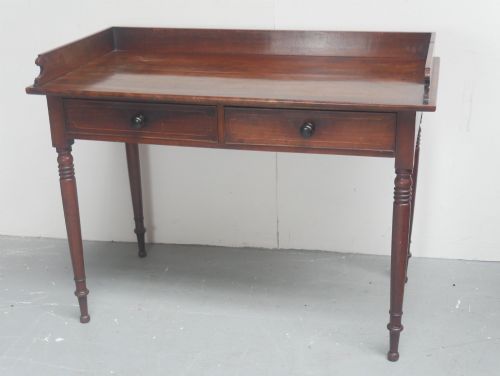
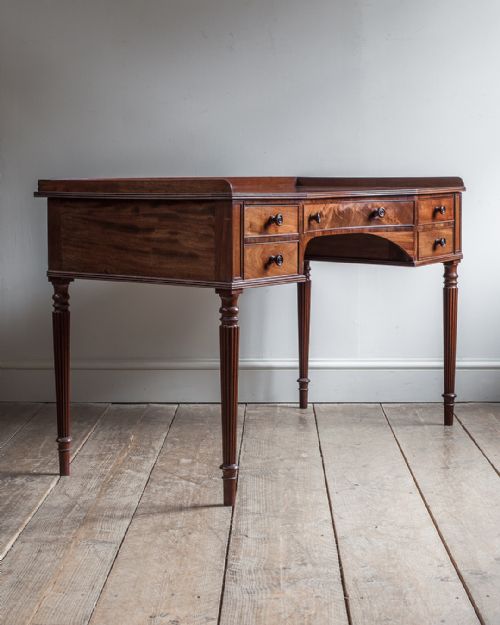
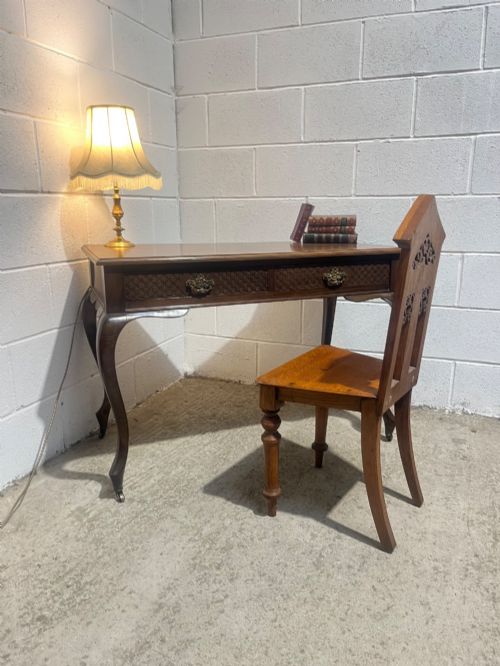
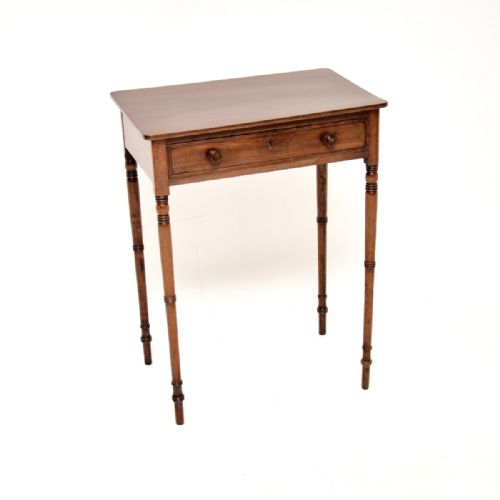
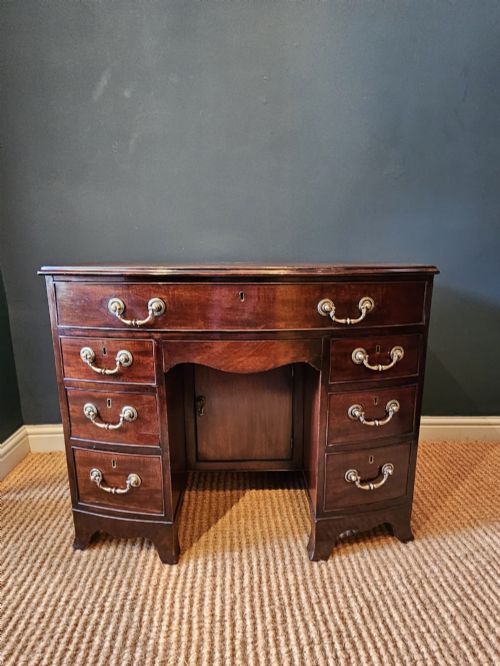
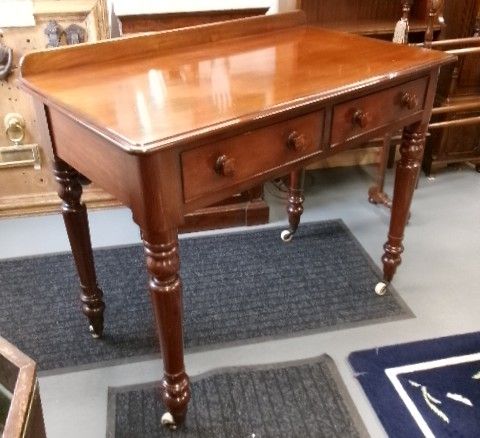
Dark Mahogany Dressing Desk
Dark mahogany dressing desk pieces combine utility and rich timber grain, offering enduring surface space for daily writing and grooming.
Dark Mahogany Dressing Desk
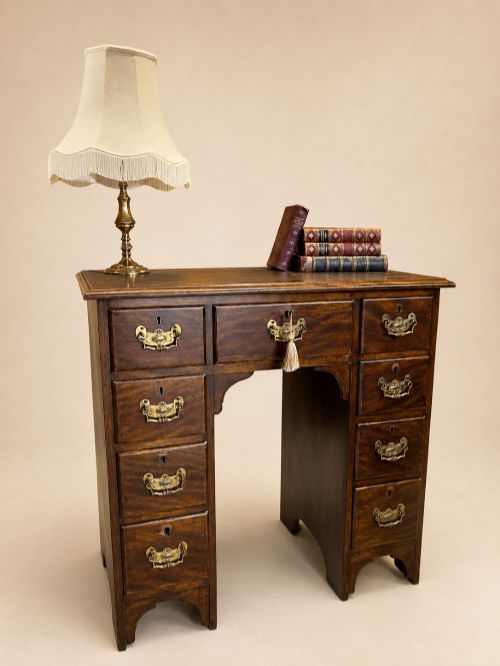
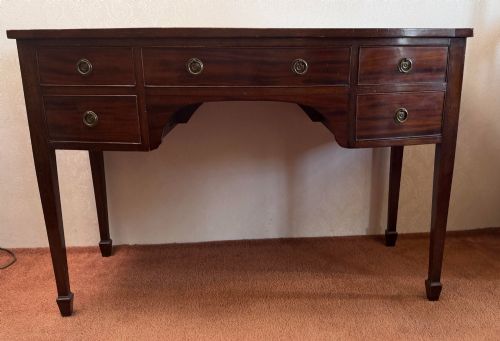
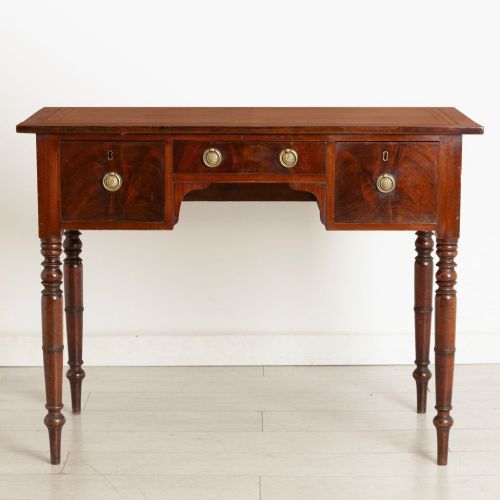
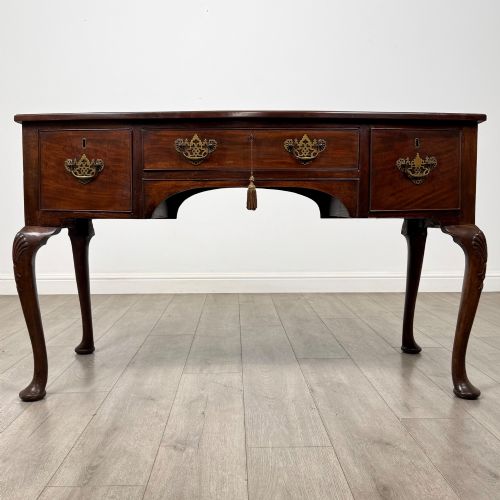
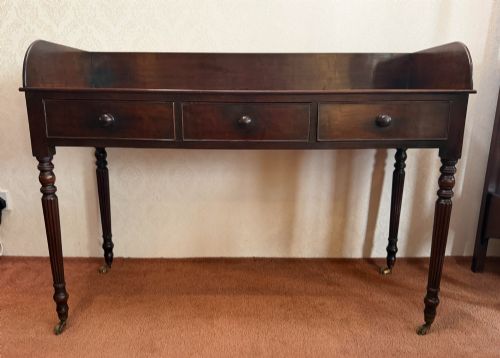
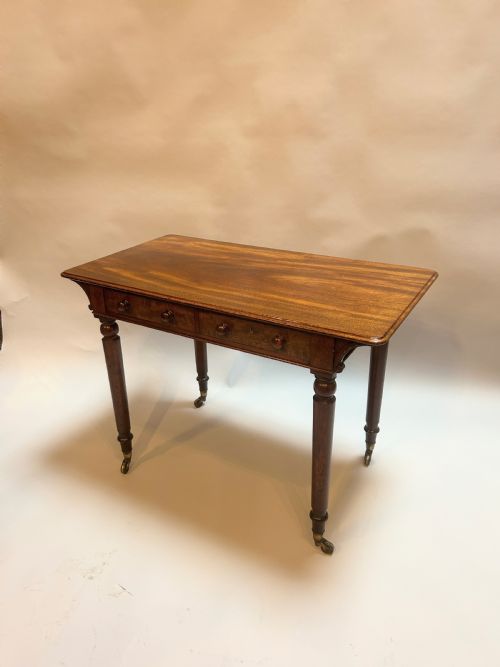
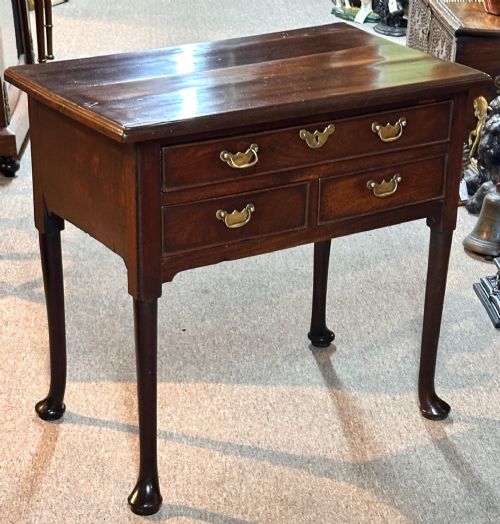
A dark mahogany dressing desk brings together the practical functions of a writing table and a dressing surface within a single piece of furniture. When exploring this category, buyers encounter forms ranging from compact Georgian lowboys and George III washstands to elaborate Victorian kneehole desks and Edwardian writing tables.
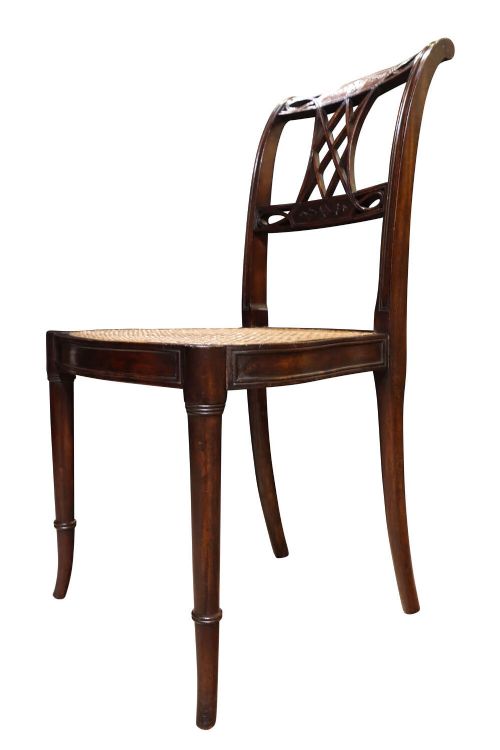
The pieces on this page span the eighteenth, nineteenth, and early twentieth centuries, reflecting changing domestic habits across the Georgian, Regency, Victorian, and Edwardian periods. Alongside dedicated dressing tables and writing desks, the selection includes side tables, secretaire chests, and related bedroom seating constructed in dark hardwoods.
What separates the best pieces
Quality in these items is determined by the selection of the timber figures, the crispness of any carved detailing, and the integrity of the original construction. Superior examples display balanced proportions, well-figured mahogany grain, and harmonious integration of secondary materials like brass hardware or leather inserts.
The degree of preservation and the retention of original components, such as handles, drawer linings, and glass mirrors, heavily influence the standing of an individual piece. Master cabinet work shows in the smooth operation of drawers and the precision of the joinery rather than excessive ornamentation.
Several pieces double as washstands, proving our ancestors washed their faces right where they wrote their letters.
Gillows·J A Mein Edinburgh Cabinet Maker
The Dark Mahogany Dressing Desk Glossary
- Lowboy
- A small mahogany table with one or more rows of drawers, commonly used as a dressing or side table during the eighteenth century.
- Kneehole desk
- A writing desk featuring a recessed central space for the legs, flanked by pedestals of small drawers.
- Secretaire dressing chest
- A dual-purpose case furniture piece combining a writing drawer with compartments and a chest of drawers or dressing surface.
- Washstand
- A wooden table designed to hold a basin and jug for personal washing, frequently adapted or associated with bedroom dressing areas.
Dark Mahogany Dressing Desk: Frequently Asked Questions
What is the difference between a lowboy and a dressing desk?
A lowboy is a compact, low table with drawers usually standing on four tall legs, designed for grooming or light writing in the eighteenth century.
Dressing desks and writing tables offer structured surface areas and multiple drawer configurations tailored specifically for seated writing or vanity use across various periods.
How do I identify a Georgian mahogany dressing desk?
Georgian pieces generally exhibit clean architectural lines, solid mahogany construction, hand-dovetailed drawer boxes, and subtle brass hardware without heavy Victorian ornamentation.
Look for period specific proportions, traditional timber ageing, and construction traits typical of eighteenth-century workshop practices.
Were leather tops original to these desks?
Many nineteenth-century writing tables and desks incorporated leather inserts to provide a smooth, glare-free writing surface for correspondence.
Original or period replacement leather is typically tooled around the edges with gilt or blind stamping, complementing the dark mahogany frame.
Where should I place a dressing desk in a modern home?
These versatile pieces function effectively as compact writing desks in studies, dressing tables in bedrooms, or decorative side tables in hallways.
Their restrained depth and finished backs in many instances allow them to sit comfortably against walls or float within room layouts.