
Dark Mahogany Dresser
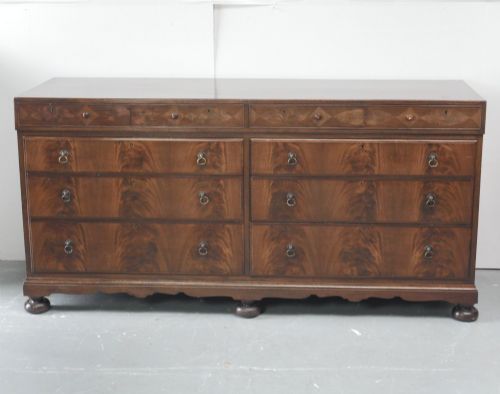
A dark mahogany dresser brings deep timber tones and traditional storage into a room, spanning periods from the eighteenth century onwards.
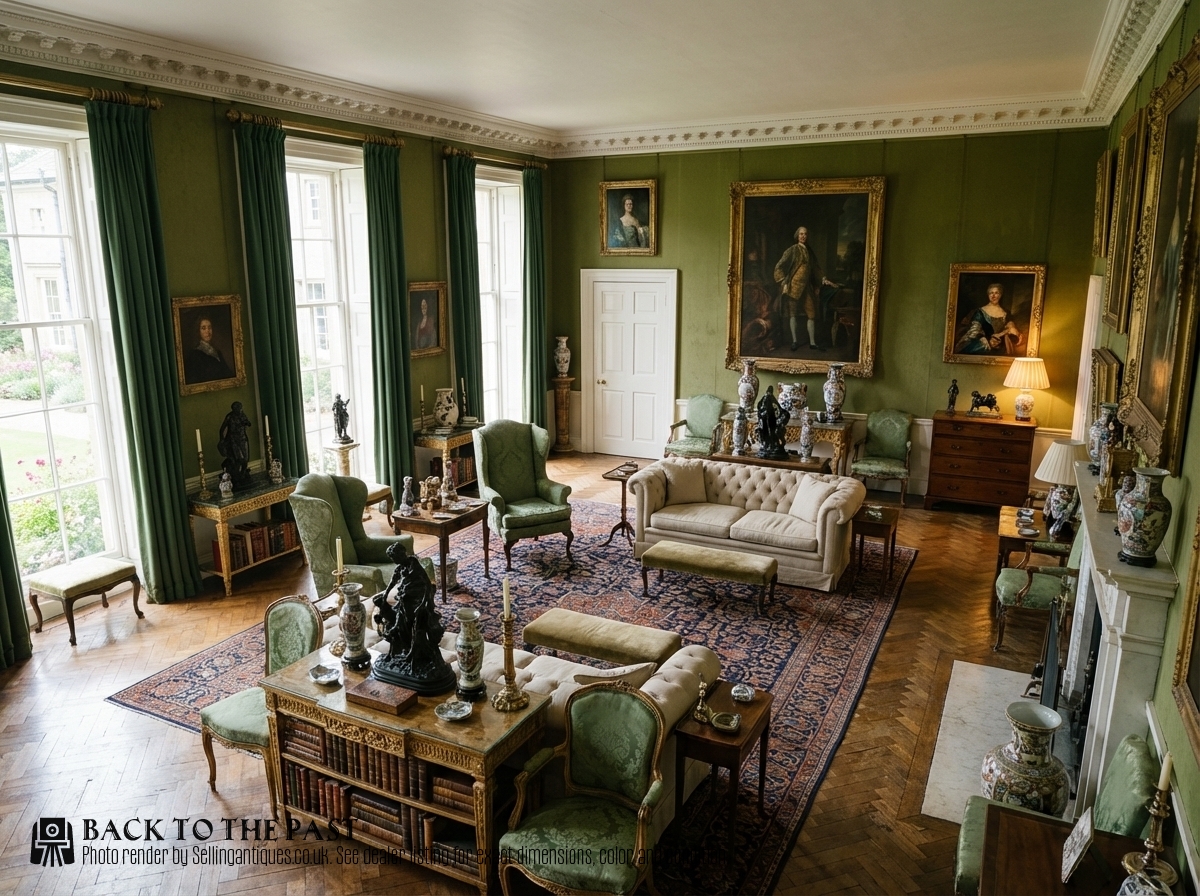
Dark Mahogany Dresser
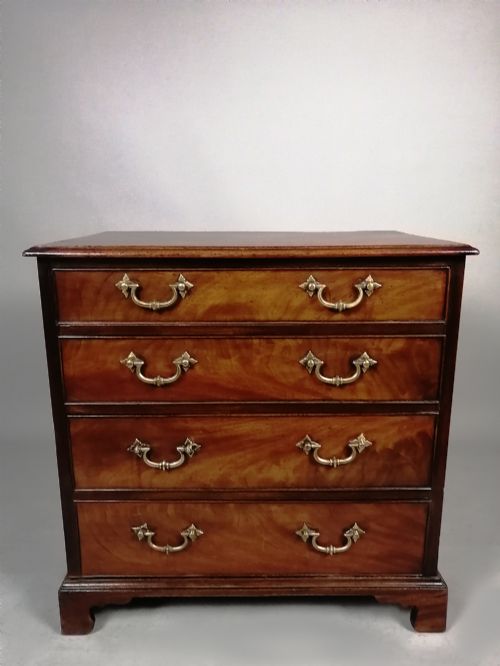
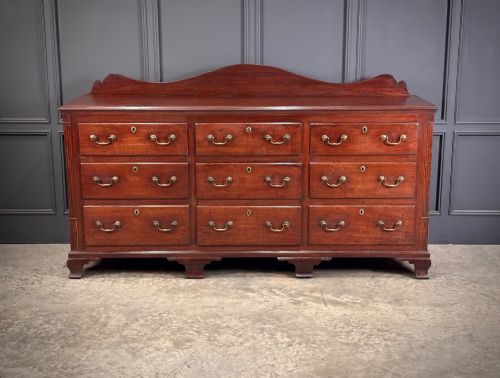
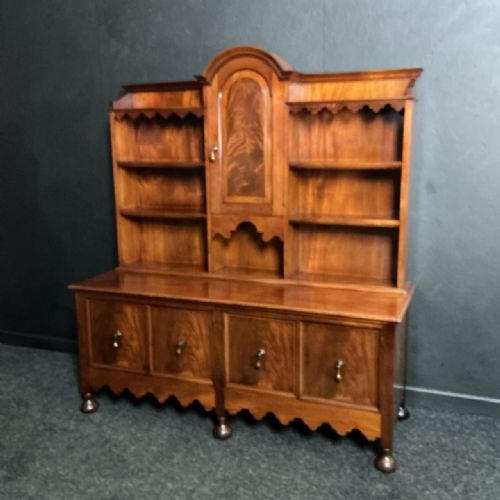
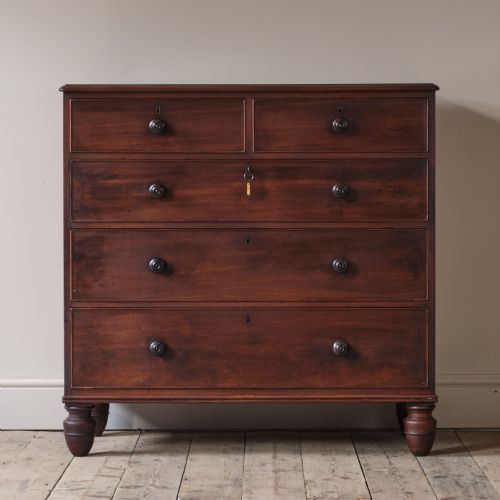
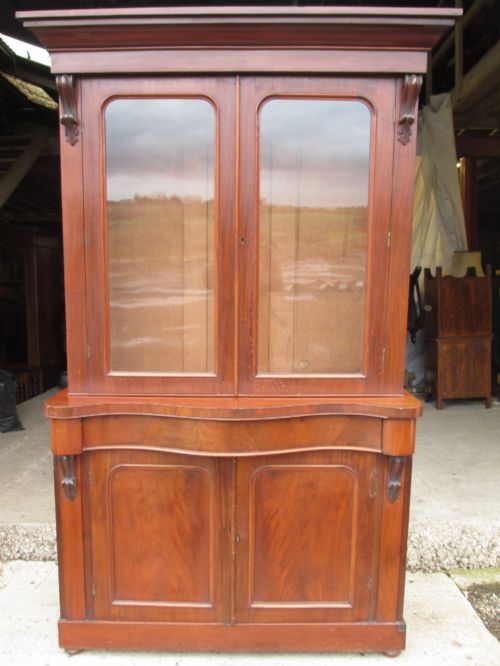
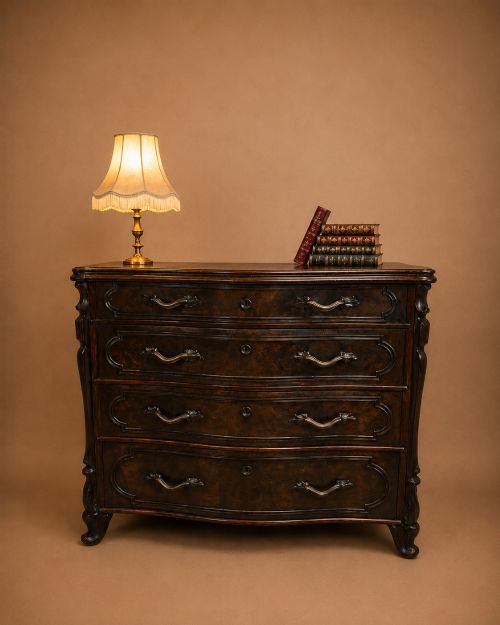
A dark mahogany dresser encompasses chests of drawers, sideboards, and cabinets originating across the Georgian, Victorian, and Edwardian eras. Buyers searching for a dark mahogany dresser encounter substantial case furniture built for domestic utility and formal reception rooms.
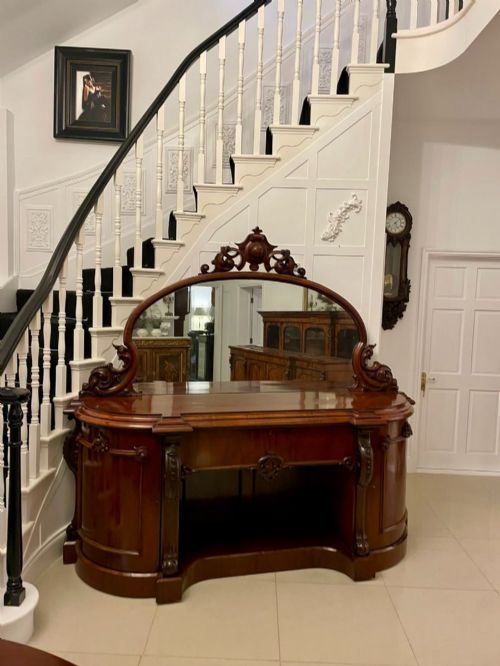
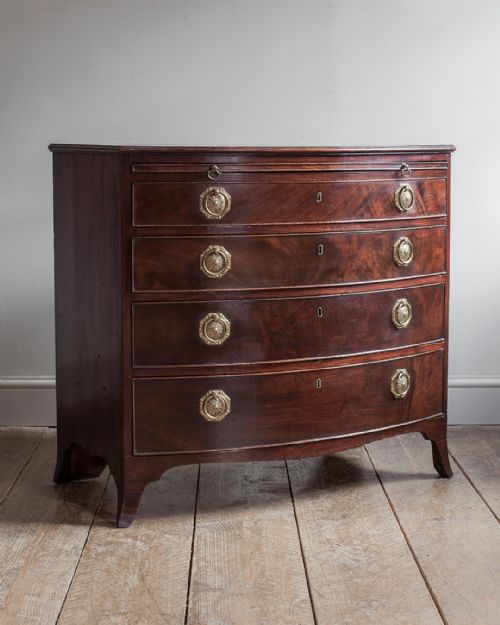
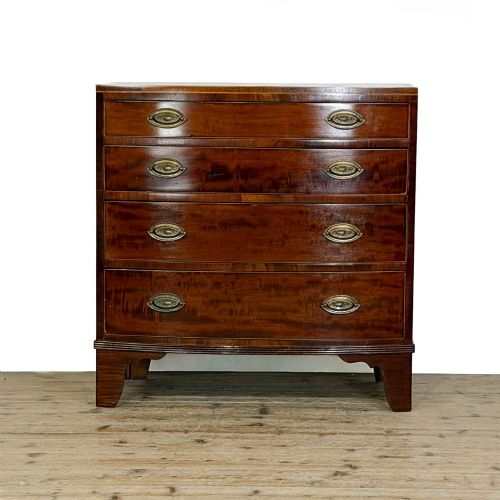
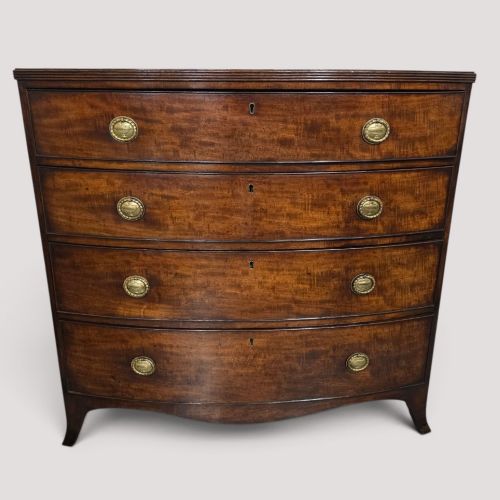
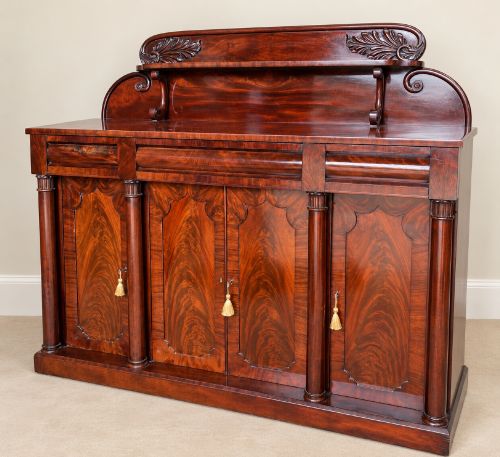
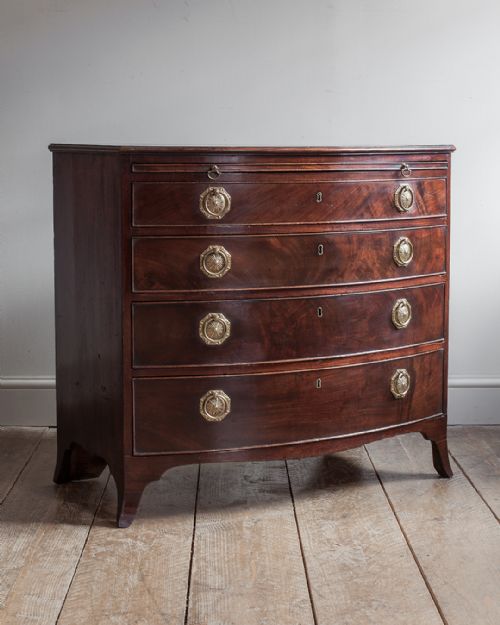
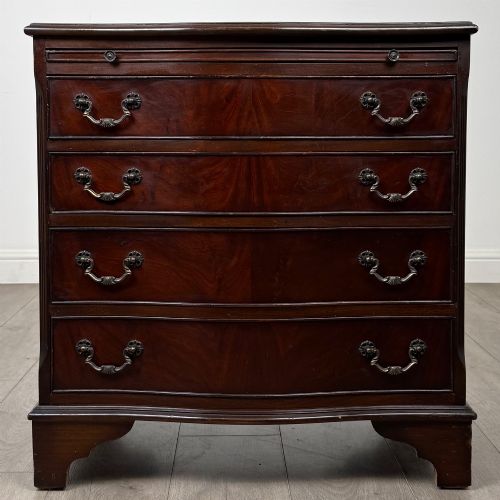
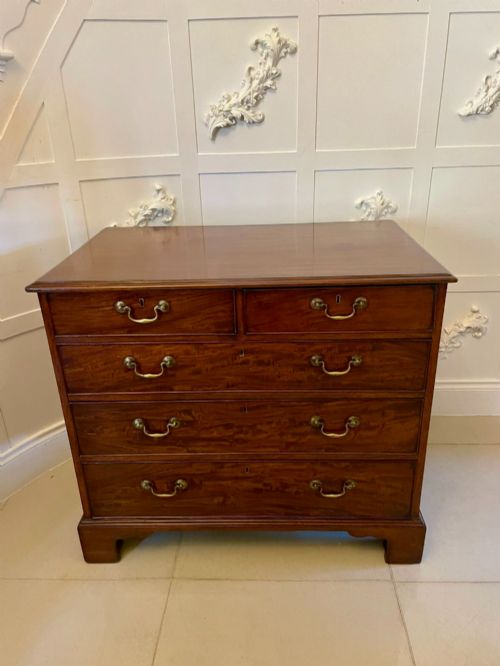
The selection here draws heavily upon nineteenth-century pieces alongside eighteenth-century George III examples and twentieth-century Edwardian adaptations. Formats range from bow-front and serpentine chests to glazed bookcases and carved mirror-back sideboards.
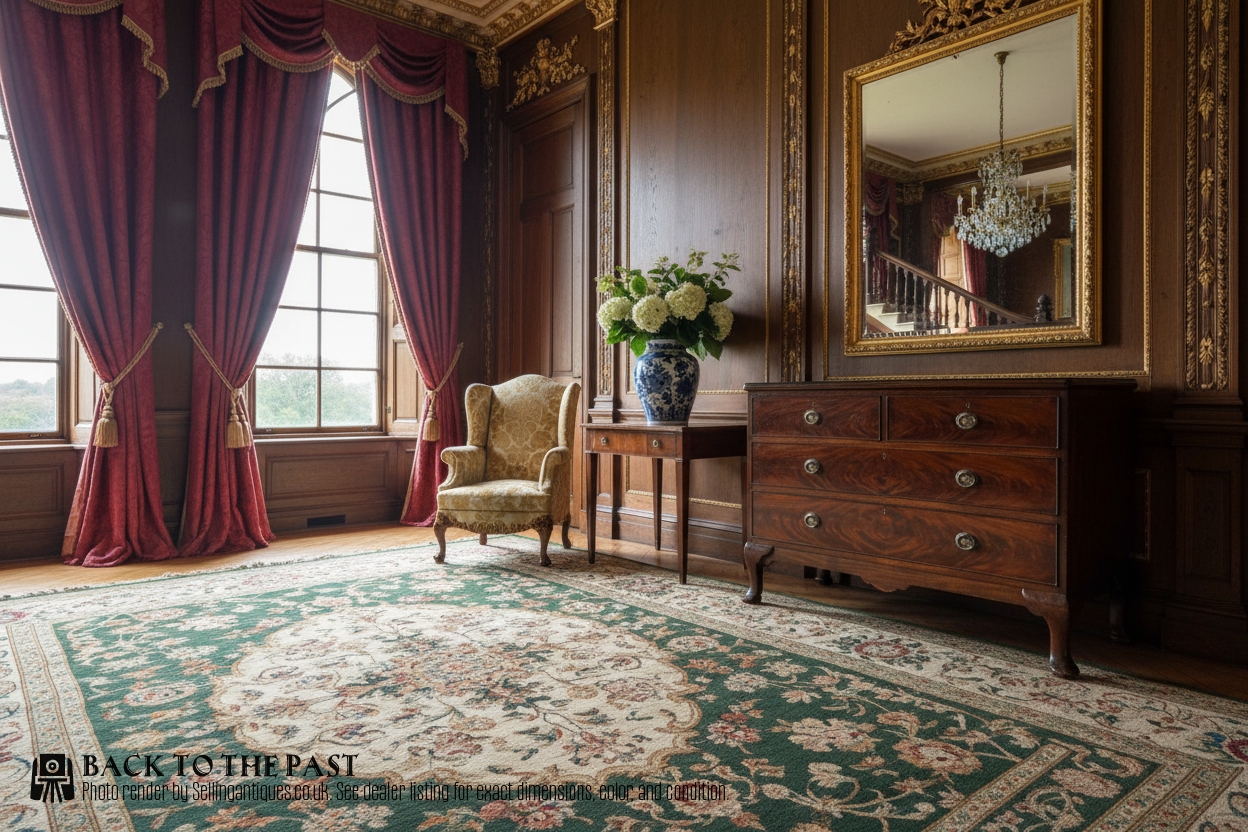
Materials and Construction
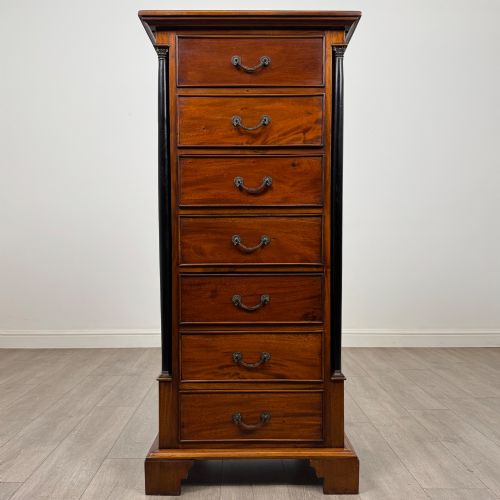
Cabinet makers utilised solid mahogany and flame mahogany veneer laid over secondary timbers such as oak and pine. Brass hardware, including drop handles and escutcheons, provides functional contrast to the dark timber surfaces.
Construction techniques involve dovetailed drawer boxes and frame-and-panel assemblies designed to handle heavy domestic use. Crossbanding and careful grain matching appear on finer Georgian and Regency surfaces.
Dark Mahogany Dresser Retail Price Guide 2026
Typical asking prices for dark mahogany dresser among the pieces listed under this phrase on Sellingantiques today, from the lower quarter to the upper quarter. They describe what is for sale here now, not the wider market.
Certain Georgian drawers conceal sliding wooden writing surfaces designed for quick correspondence before fountain pens existed.
Assessing Quality
Quality rests upon the selection of timber, particularly the depth and figure of flame mahogany veneers, alongside the crispness of carved details. Superior examples display thoughtful proportions and harmonious grain alignment across drawer fronts.
Internal construction and timber choice for secondary parts, such as oak drawer linings rather than deal, distinguish high-workshop output from standard commercial production.
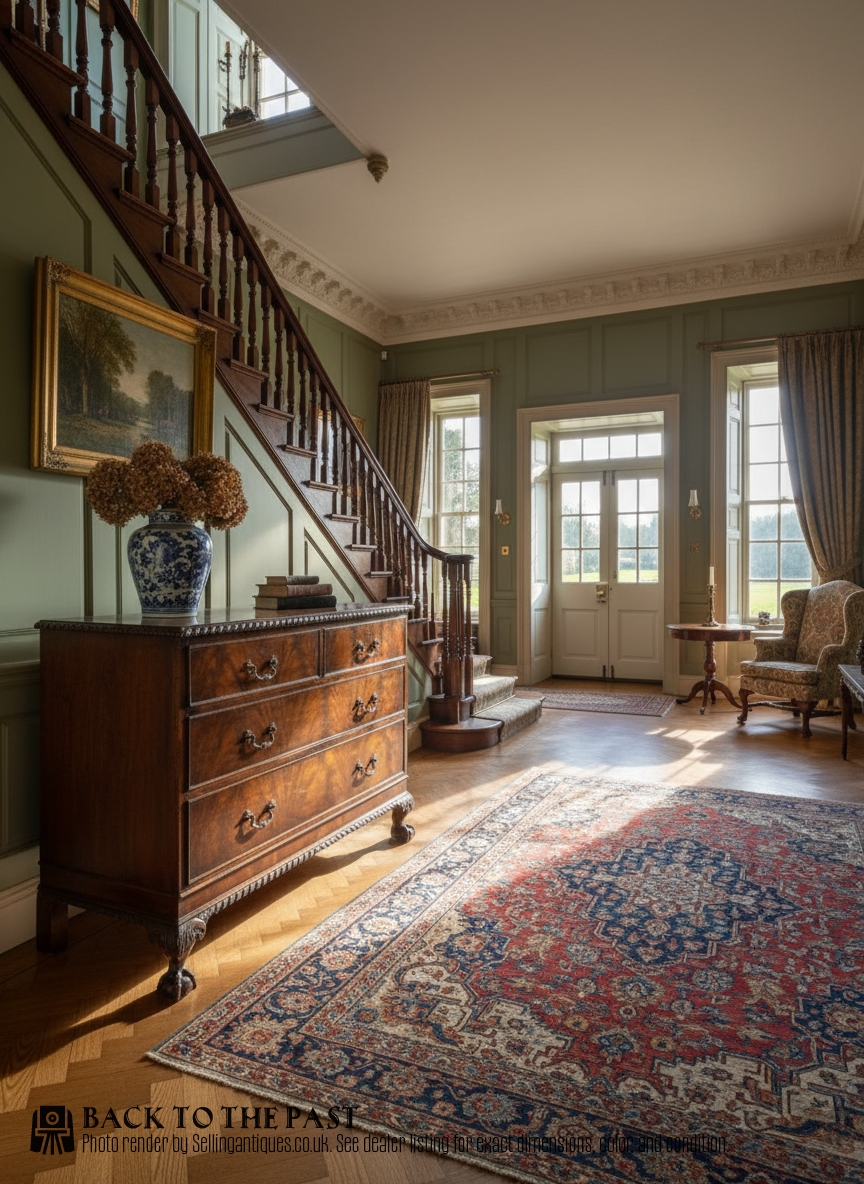
Whytock & Reid·T & G Seddon
The Dark Mahogany Dresser Glossary
- Bow front
- A convex curved cabinet or chest front popular in the Georgian and Victorian periods. This shape softens the profile of large case furniture.
- Serpentine
- A gently undulating front with a convex centre flanked by concave curves. It requires advanced carpentry skills to execute successfully.
- Crossbanding
- A narrow strip of veneer laid perpendicular to the surrounding grain as a decorative border. It frames the primary timber panels on tabletops and drawer fronts.
- Flame mahogany
- A veneer cut from the branch junction where the grain pattern resembles flickering flames. Cabinet makers reserved this striking figure for principal display surfaces.
Dark Mahogany Dresser: Frequently Asked Questions
How do I date a mahogany chest?
Dating relies on examining construction methods, timber choices, and hardware styles across different eras. Hand-cut dovetails and oak secondary woods often point to eighteenth-century Georgian origins.
Later Victorian and Edwardian pieces frequently incorporate machine-sawn elements and different interior arrangements. Comparing drawer linings and backboards helps clarify the period of manufacture.
What is flame mahogany?
Flame mahogany is a highly figured veneer sliced from specific sections of the timber tree. The grain creates a distinctive pattern resembling flickering flames.
Cabinet makers used this decorative veneer on prominent drawer fronts and tabletops to catch the light. It remains a hallmark of finer case pieces.
Where were these pieces used?
These items served primarily in bedrooms, dining rooms, and hallways for household storage and display. Sideboards and serving tables stood in dining spaces for tableware and linens.
Chests of drawers and cabinets provided essential wardrobe capacity in domestic chambers. Their robust construction suited daily family life.
How do I care for dark mahogany?
Maintaining dark mahogany involves keeping timber away from direct sunlight and sudden temperature changes. Gentle dusting with a dry cloth preserves the polished finish.
Occasional application of appropriate wax feeds the wood without building up heavy residues. Proper humidity levels prevent the solid timber and veneers from splitting.