
Dark Mahogany Display Shelves
Dark mahogany display shelves bring rich grain and tiered utility to a room, ranging from compact hanging wall shelves to towering bookcases.
Dark Mahogany Display Shelves
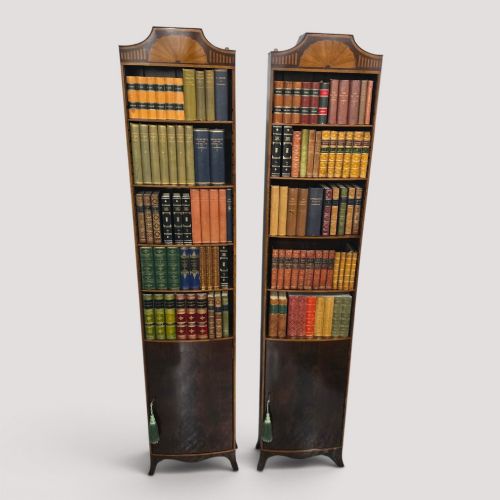
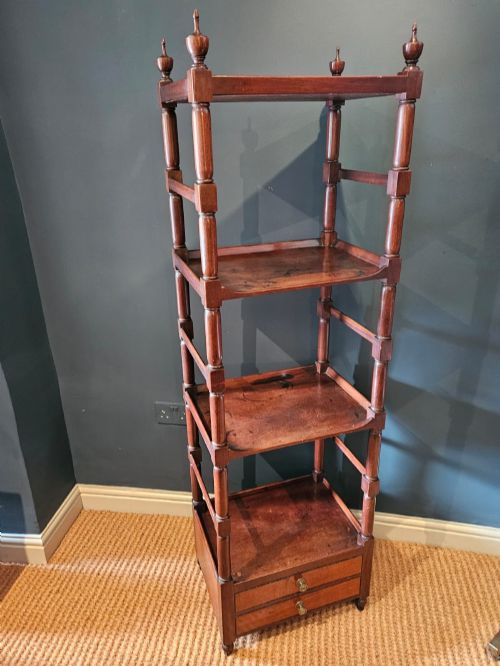
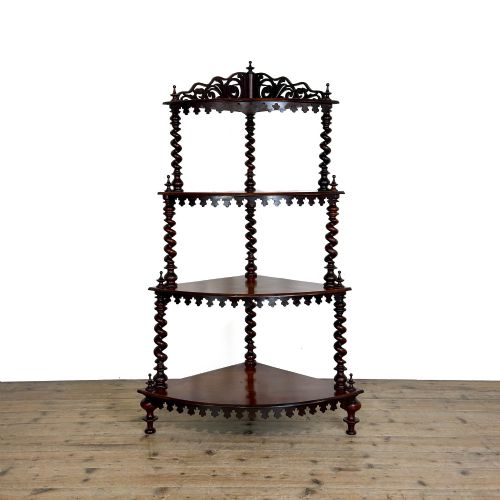
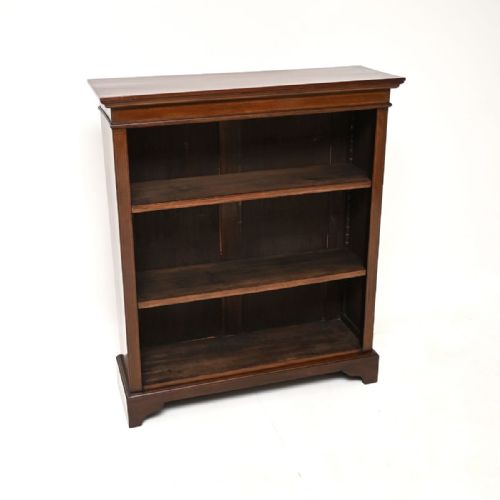
Dark mahogany display shelves encompass open bookcases, tiered whatnots, hanging wall shelves, and corner cabinets originating across the Georgian, Regency, Victorian, and Edwardian periods. Buyers search for these pieces to exhibit books and decorative objects while introducing deep wood tones into an interior.
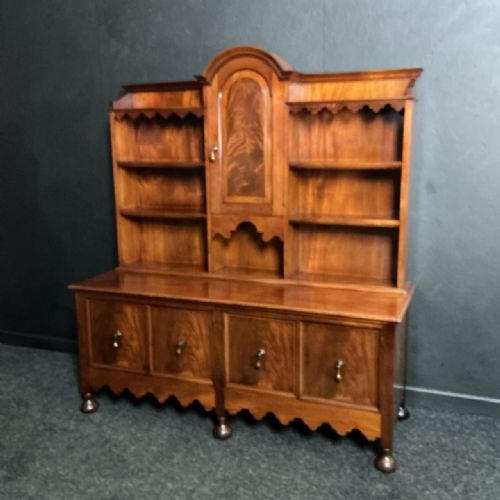
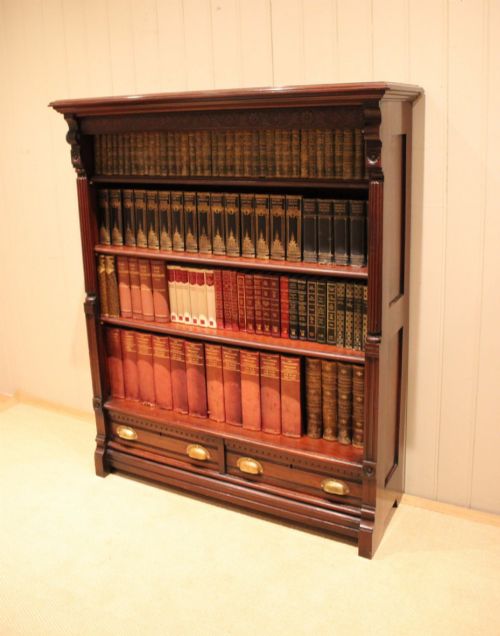
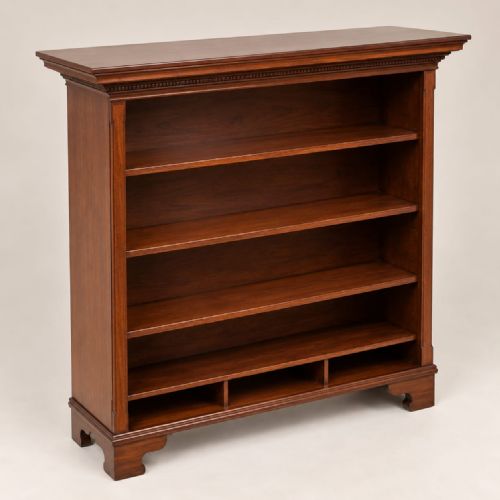
The most common formats on this page are open bookcases and multi-tiered whatnots dating from the nineteenth and early twentieth centuries. These range from simple, utilitarian shelving units to refined architectural pieces incorporating glazed cabinets and inlaid satinwood details.
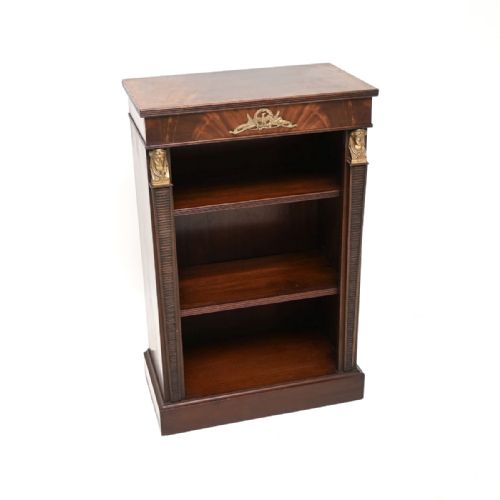
Origins span formal revival styles alongside genuine period pieces, including George III designs and later Edwardian interpretations. Pieces often integrate brass fittings, glass panels, and tiered stands designed for corner placement or wall hanging.
Distinctions in construction and design
Quality rests in the selection of timber figures, such as flame mahogany veneer, and the crispness of inlaid satinwood details or carved elements. Superior examples display thoughtful proportions, integrated adjustable shelving systems, and robust structural joinery that withstands heavy loading.
The refinement of brass fittings, the clarity of glass panels, and the complexity of tiered or breakfront forms separate standard utility pieces from high-status workshop productions.
Object types span bookcases, wall shelves, whatnots, side tables, shelving units, dressers, and tiered stands.
Gillows·Edwards and Roberts
The Dark Mahogany Display Shelves Glossary
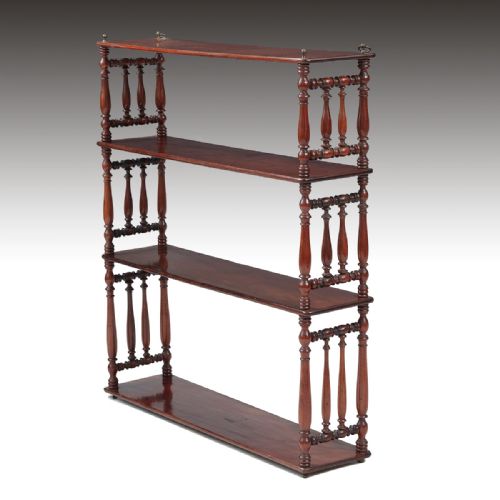
- Whatnot
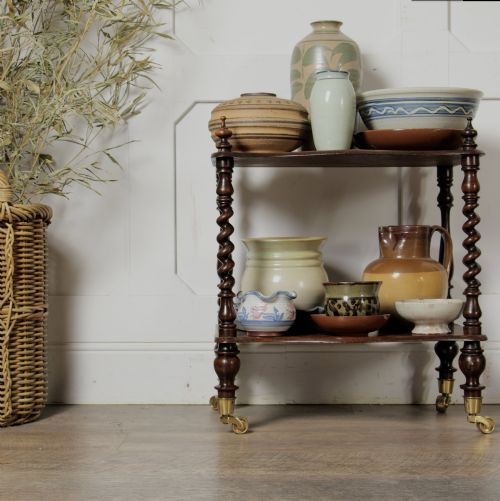
- An open, multi-tiered piece of freestanding furniture designed for displaying ornaments or books. These typically feature three or four shelves supported by slender uprights.
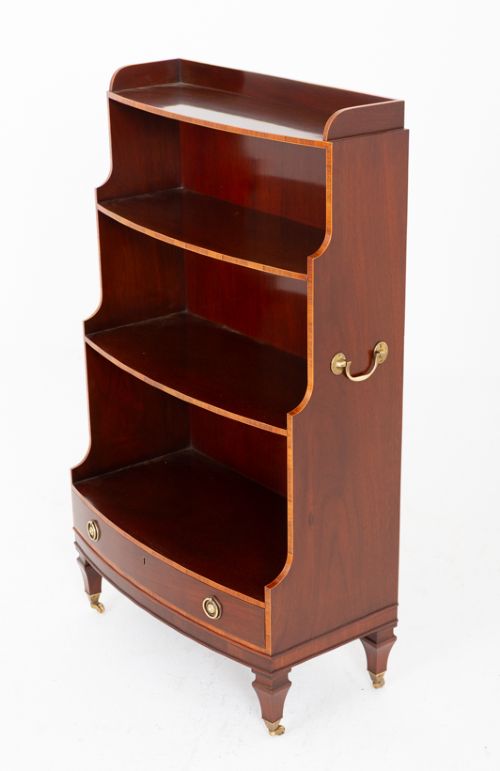
- Waterfall bookcase
- A graduated set of open shelves where each tier steps back from the one below it. This form creates a descending profile popular in Georgian and later revival periods.
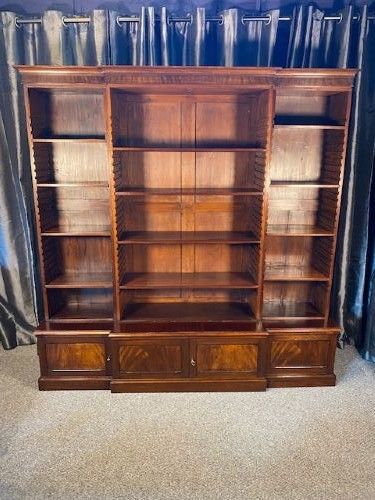
- Breakfront
- A cabinet or bookcase whose central section projects forward from the flanking wings. This architectural arrangement adds depth and formal presence to larger display furniture.
- Bonheur du jour
- A light lady's writing desk often incorporating small display shelves, drawers, or a cabinet above the writing surface. These compact pieces emerged during the Georgian period and continued through the Edwardian era.
- Étagère
- A set of open shelves for displaying small objects or china. The term originates from French furniture design and describes tiered standing display furniture.
Dark Mahogany Display Shelves: Frequently Asked Questions
How do I style dark mahogany display shelves?
Dark mahogany display shelves provide a strong visual anchor in a room, making them ideal for contrasting against lighter walls. Balance heavy book collections with ceramics, glassware, and framed objects across the tiers.
Allow negative space around display items to let the rich mahogany grain and timber framing remain visible. Adjustable shelves allow you to vary the height intervals to accommodate larger folios alongside smaller decorative pieces.
What is the difference between a whatnot and a bookcase?
A whatnot is primarily an open, multi-tiered stand designed for exhibiting decorative objects, porcelain, or loose volumes across several open levels. They frequently feature slender corner posts or turned uprights.
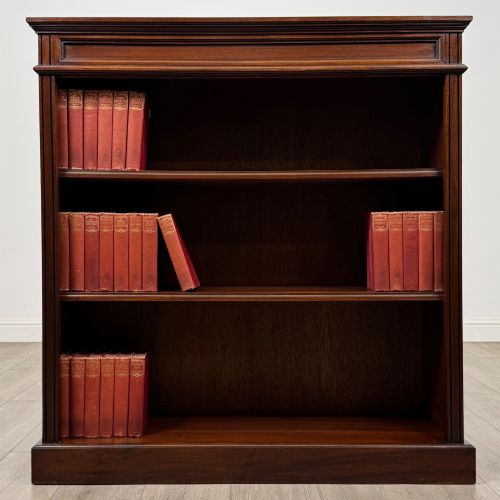
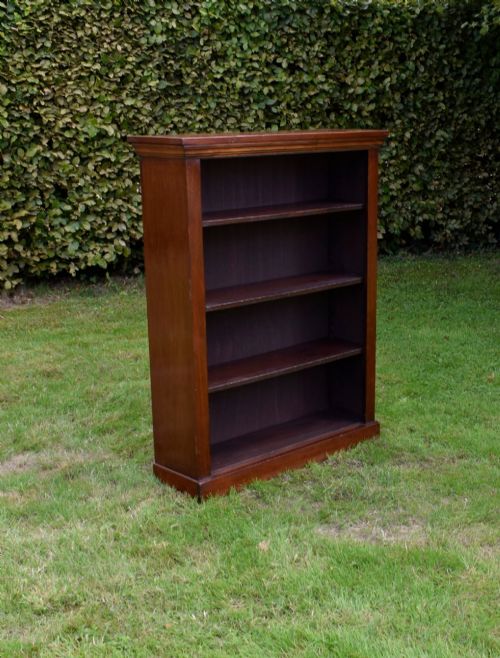
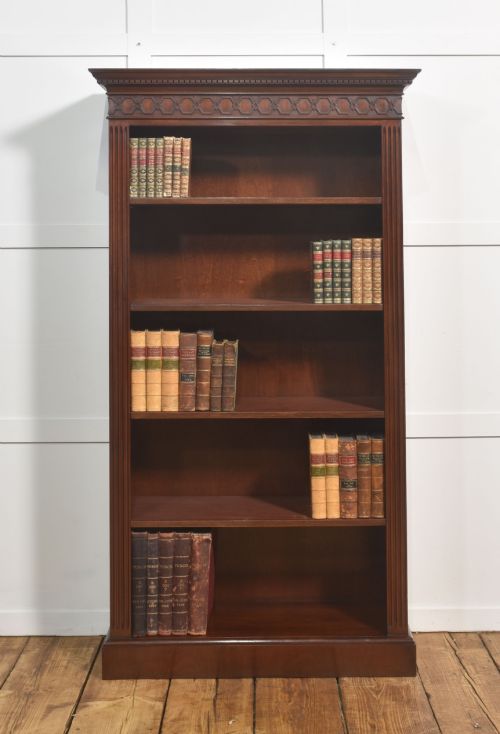
Bookcases focus on structural book storage, often featuring solid sides, fixed or adjustable internal shelving, and sometimes lower cupboards or upper glazed display doors.
Where should I place hanging wall shelves?
Hanging wall shelves suit smaller rooms or empty wall spaces where floor standing furniture would crowd the layout. Position them securely into structural wall studs to support the weight of timber and books.
They work effectively above side tables, desks, or in alcoves, creating vertical display capacity without taking up floor space.
How do I date an antique mahogany bookcase?
Dating relies on architectural styles, construction methods, and hardware types present in the piece. Georgian and Regency pieces often show clean classical lines or neoclassical proportions, while Victorian items introduce heavier turning and robust proportions.
Edwardian pieces frequently display lighter inlaid satinwood motifs and revival styling reflecting earlier eighteenth-century tastes.