
Dark Mahogany Buffet Table
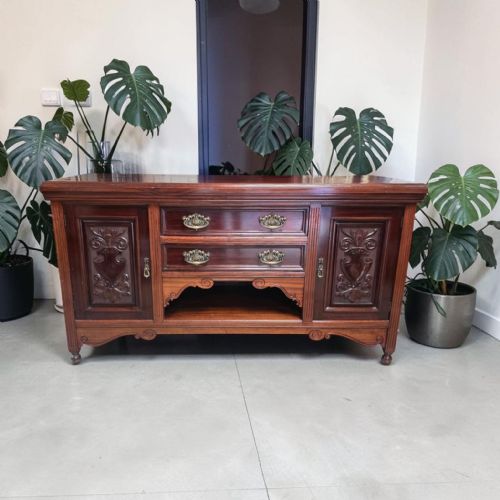
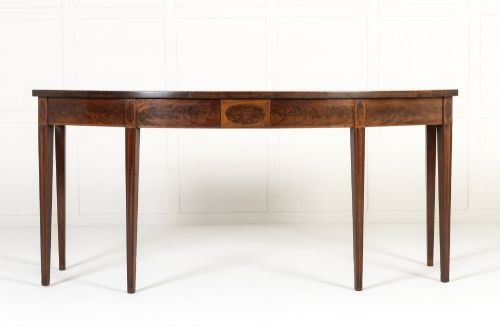
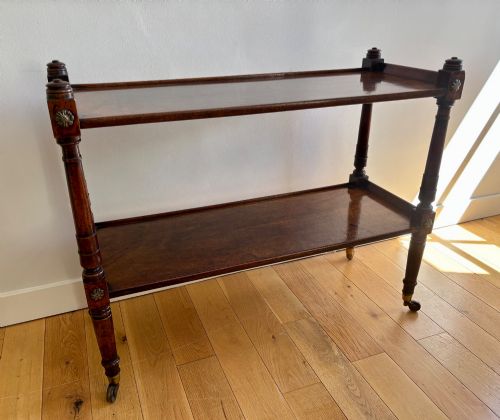
A dark mahogany buffet table offers rich timber tones and enduring service, forming the focal point of a traditional dining room.
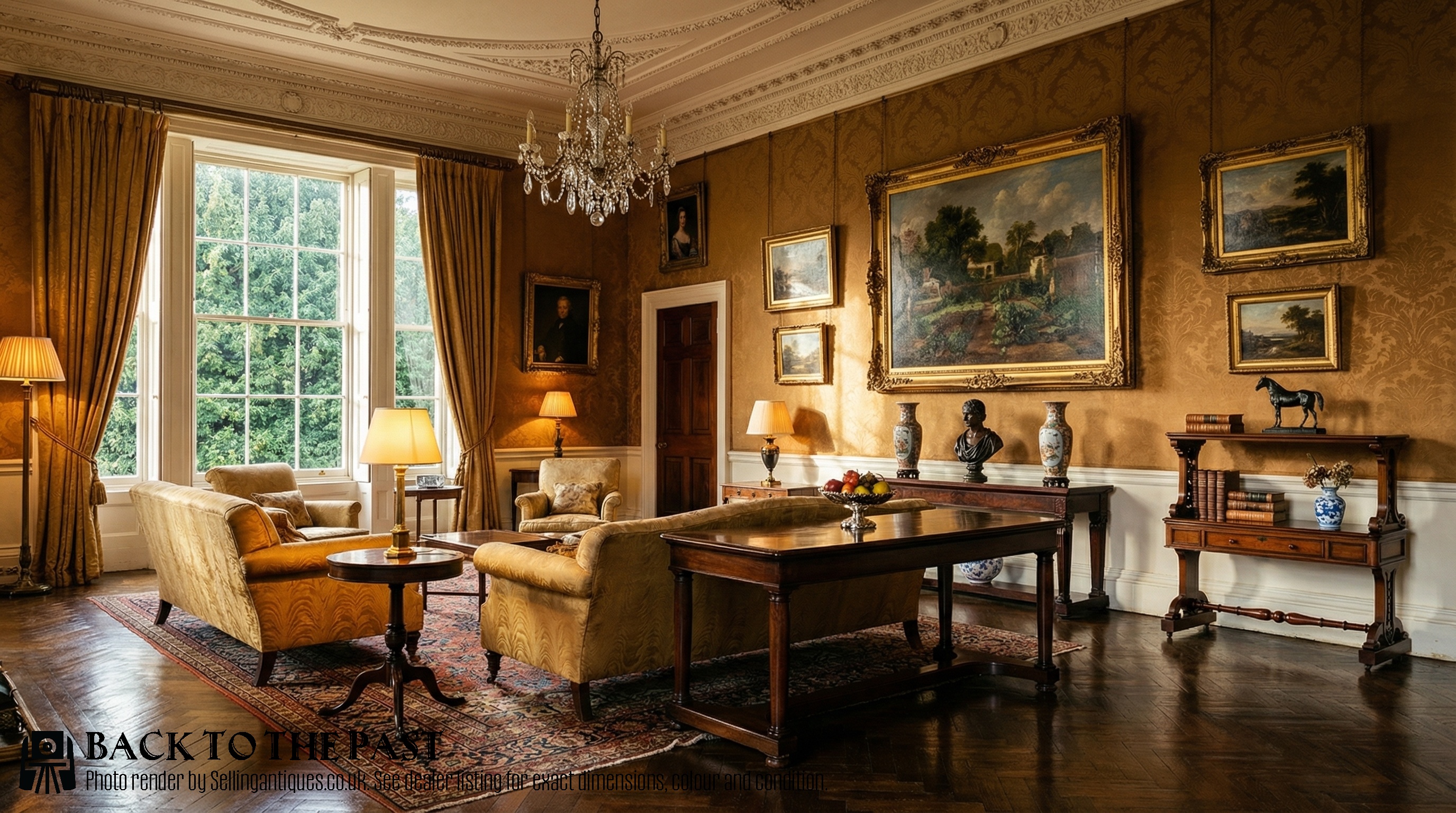
Dark Mahogany Buffet Table
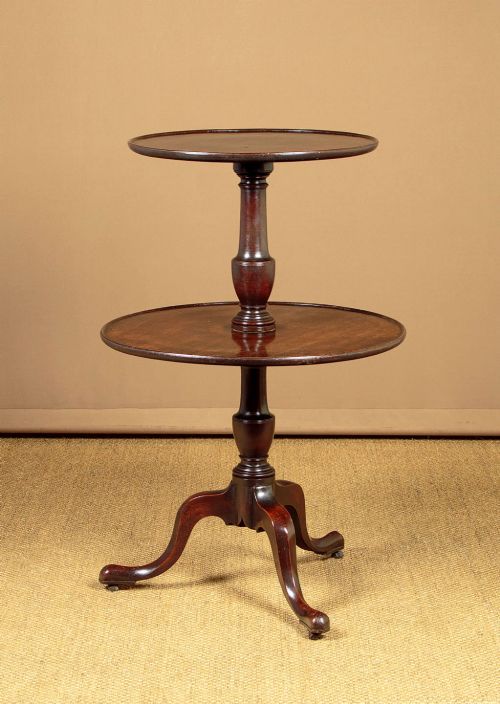
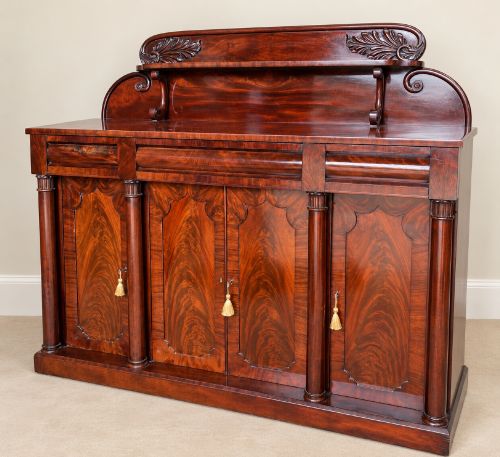
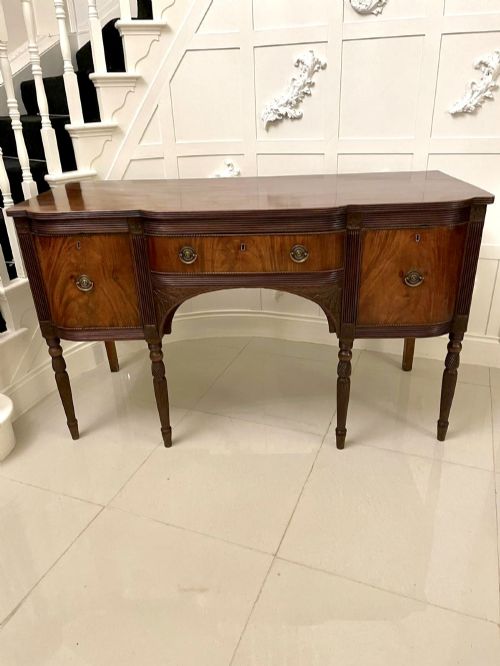
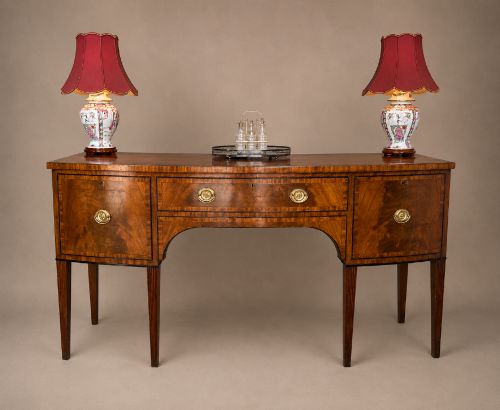
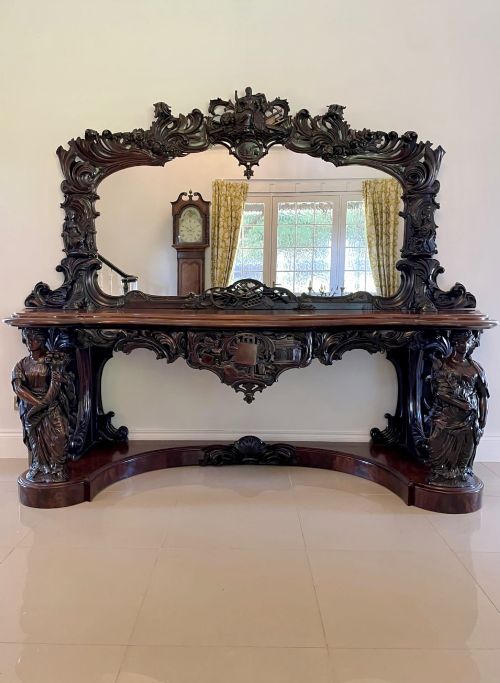
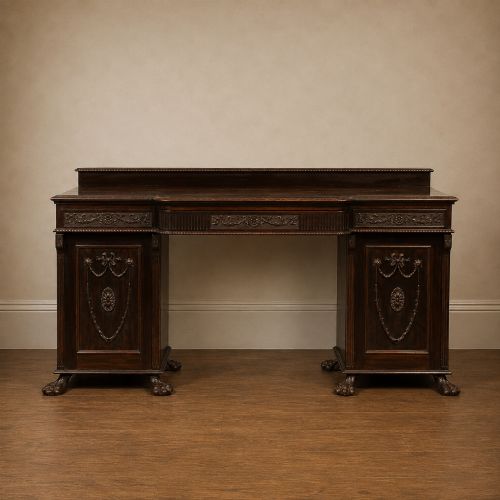
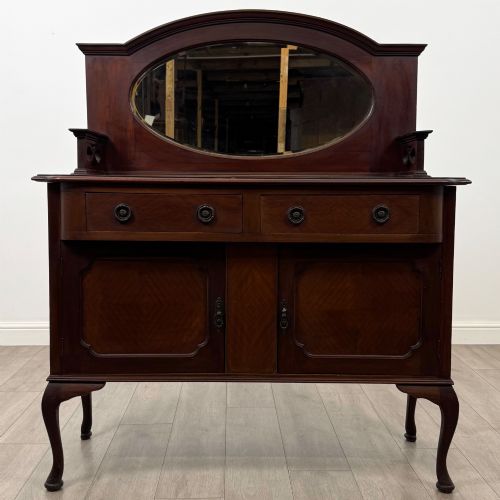
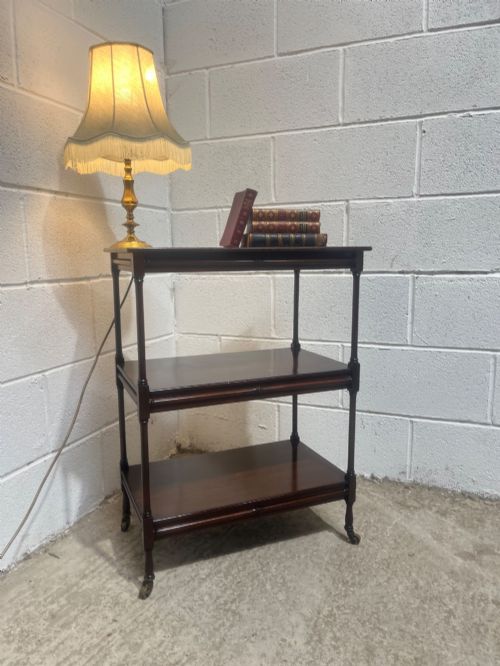
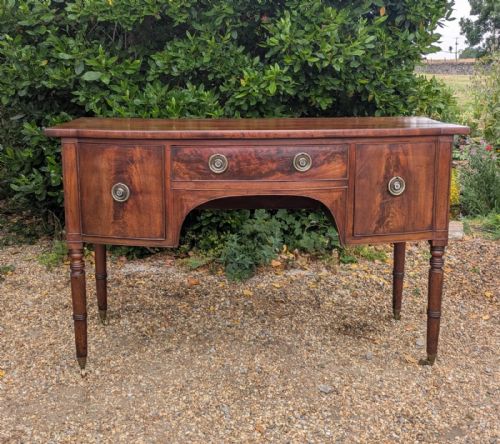
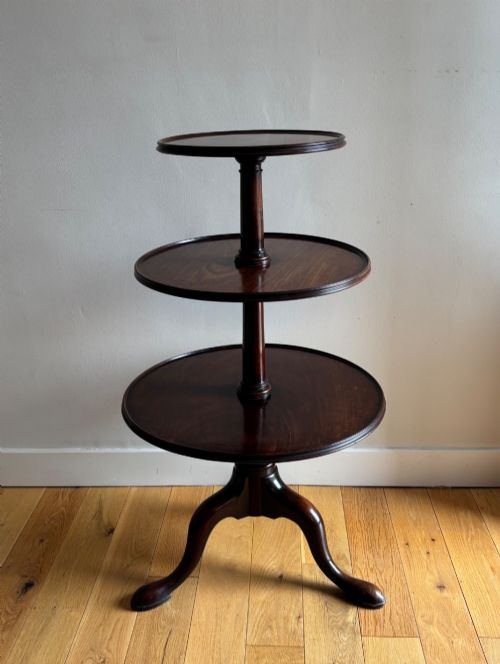
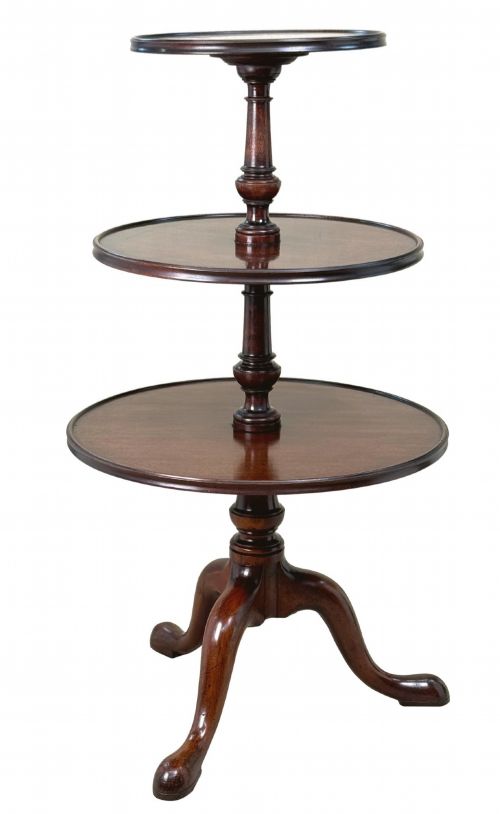
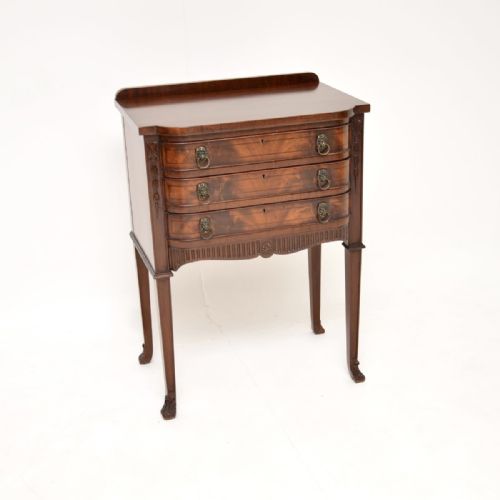
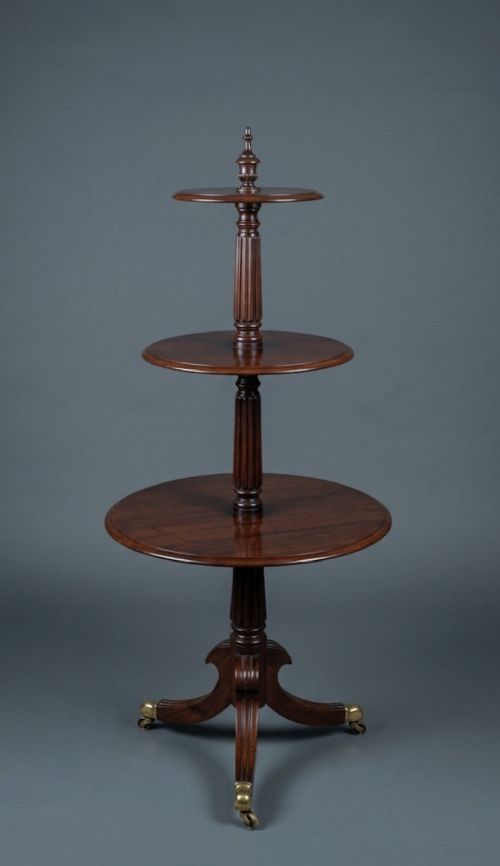
A dark mahogany buffet table encompasses sideboards, serving tables, and tiered dumb waiters designed for dining room service and storage. The selection spans the 18th century, Georgian, Regency, and Victorian periods, extending through to Edwardian and later revivals.
Sideboards and serving tables provide substantial surfaces and cabinetry, whilst dumb waiters utilise circular tiered shelves for holding dishes. Buyers encounter forms ranging from compact bow fronted servers to large breakfront configurations and carved console tables.
Originating largely from English workshops, these pieces demonstrate the evolution of dining furniture from the Georgian era into the 20th century. The consistent use of mahogany unites sideboard forms and tiered serving stands across diverse stylistic periods.
How they were made
Cabinet makers constructed these pieces primarily from solid mahogany and flame mahogany veneer, supported by internal secondary woods. Craftsmen applied figure and grain selection to prominent drawer fronts and top surfaces to create visual depth.
Detailing frequently incorporates contrasting timbers such as satinwood inlay and boxwood stringing. Brass handles, castors, and gallery rails provide structural function and decorative accent, whilst hand carving adorns feet, borders, and mirror backs on select Victorian and Edwardian examples.
Listings feature mahogany, brass, boxwood, glass, and satinwood across sideboards, serving tables, dumb waiters, and console tables.
What varies in quality
The degree of refinement in timber selection and cabinet construction dictates the distinction between standard items and exhibition pieces. Superior examples exhibit exceptional figure in the mahogany veneer, balanced proportions, and crisp, hand-carved detailing.
Integration of specialised elements such as intricate satinwood inlay, original brass hardware, and well-executed serpentine or breakfront shapes elevates a piece. Structural integrity relies upon the precision of joinery in drawer construction and the stability of tiered framework on dumb waiters.
Gillows·M. D. Miller & Sons·Robert Strahan & Co
The Dark Mahogany Buffet Table Glossary
- Breakfront
- A cabinet form where the central section projects forward from the flanking outer sections. This architectural arrangement creates depth and shadow across the front elevation of sideboards.
- Serpentine
- A curved shape resembling a snake, featuring a convex centre flanked by concave ends. It appears frequently on the front edges of Georgian and revival serving tables.
- Dumb waiter
- A tiered piece of furniture with revolving or fixed circular shelves mounted on a central pillar. These stands held plates and dishes during meals without requiring servant attendance.
- Flame mahogany veneer
- A thin slice of timber cut from wood where the branch meets the trunk, displaying a distinctive flammiform pattern. Cabinet makers laid this veneer over solid foundations to create dramatic visual movement.
- Inlay
- A technique where pieces of contrasting wood, such as satinwood or boxwood, are inserted into recesses within the primary mahogany surface. This ornamentation defines borders, panels, and geometric motifs.
Dark Mahogany Buffet Table: Frequently Asked Questions
What is a dumb waiter?
A dumb waiter is a tiered serving stand featuring circular trays mounted on a central column, designed to hold glassware and tableware during dining.
These pieces allowed diners access to extra courses and utensils without the presence of household staff.
Where were serving tables placed?
Serving tables stood against dining room walls to hold heavy platters, tureens, and beverages before service at the main table.
Their substantial timber construction and expansive top surfaces provided stable staging areas in formal domestic interiors.
How do I care for mahogany?
Mahogany furniture requires placement away from direct heat sources and strong sunlight to prevent the timber and veneer from drying out.
Routine dusting with a soft, dry cloth preserves the polished surface and the rich grain of the dark wood.