


Dark Leather Throne Chairs
Dark leather throne chairs are commanding seats offering deep upholstery and carved timber frames, bringing centuries of dramatic presence to a room.
Dark Leather Throne Chairs
Dark leather throne chairs combine high backs, substantial wooden frames, and leather upholstery to create an imposing seat with architectural weight. Buyers search for these pieces to anchor a study, library, or hallway with a strong sense of historical authority.
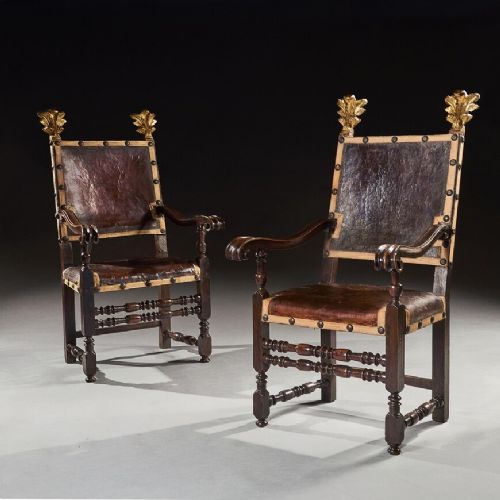
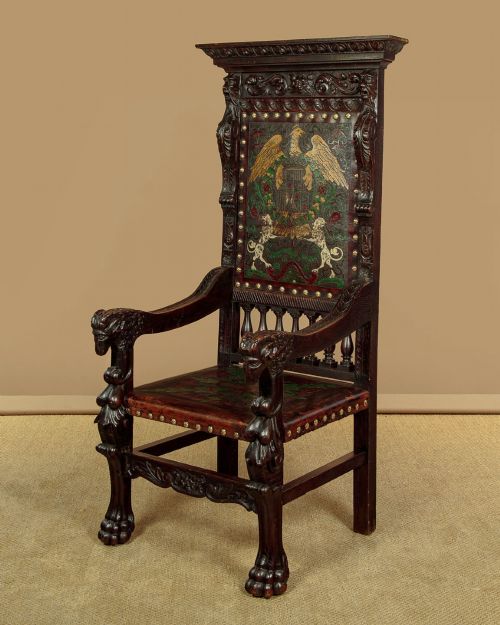
The versions met most often on this page date from the nineteenth century, drawing heavily on earlier revivals such as Gothic, Jacobean, and Renaissance styles. They frequently appear in oak or walnut, paired with dark hides secured by metal studs.
Makers of these armchairs utilised carved detailing, including barley twist supports and armorial panels, to emulate the grandeur of earlier centuries. While some examples originate from the seventeenth century or earlier, the majority seen here reflect later Victorian interpretations of antique grandeur.
How they were made
Carpenters constructed the structural frames of these armchairs using dense hardwoods like oak and walnut, often shaping the timber with deep relief carving. Joints relied on traditional joinery techniques to support the heavy loads placed upon high-backed frames.
Upholstery consisted of dark leather secured directly to the wooden framework using decorative metal studs or buttoning techniques. Artisans occasionally applied parcel-gilt highlights or painted finishes to accentuate the carved motifs on the timber.
Several armchairs boast carved wooden arms that double as miniature thrones for ghosts who prefer a sturdy seat.
What varies in quality
The refinement and depth of the hand-carved ornamentation separate standard seating from exceptional examples. Crisp execution in the timber detailing reflects the skill of the original workshop.
The selection and treatment of the leather upholstery significantly influence the character of the piece. Supple hides with natural patination and careful stud work elevate the overall execution.
A.W.N. Pugin
The Dark Leather Throne Chairs Glossary
- Parcel-Gilt
- Partially gilded with gold leaf. This technique highlights specific carved details against a darker timber or painted background.
- Barley Twist
- A turning resembling a twisted rope. This decorative feature appears frequently on the legs and stretchers of revival armchairs.
- Gothic Revival
- An architectural and decorative style popular in the nineteenth century. It draws inspiration from medieval forms, pointed arches, and heavy timber construction.
- Armorial
- Relating to heraldry or coats of arms. Such motifs are carved into wood or stamped into leather to denote lineage or status.
- Buttoned Leather
- Upholstery secured with deep indentations held by buttons. This method creates a padded, tufted surface common in Victorian seating.
Dark Leather Throne Chairs: Frequently Asked Questions
Are these chairs comfortable for daily use?
These chairs provide an upright and supportive seat rather than a slouching lounge experience. Their high backs and firm cushioning suit formal sitting or reading.
Over decades, the leather and internal padding have settled, offering a stable and supportive posture that works well in studies and libraries.
How do I care for antique leather?
Antique leather requires minimal intervention to maintain its stability and appearance. Keeping the hide away from direct sunlight and heat sources prevents drying and cracking.
Applying a specialised leather conditioner periodically helps preserve the suppleness of the material without altering its historic patination.
How do I date a carved oak armchair?
Dating relies on examining the construction methods, tool marks, and stylistic motifs present in the timber. Revivals from the nineteenth century often imitate seventeenth-century styles but reveal machine-sawn elements or later hardware upon close inspection.
Comparing the carving depth and wood grain against documented pieces from specific revival periods clarifies whether a chair is a seventeenth-century original or a Victorian interpretation.
Where should I place a throne chair?
These commanding seats require space to breathe and function best as focal points in large rooms. Placing one at the head of a boardroom table or beside a library fireplace highlights its architectural proportions.
Because of their high backs and substantial footprints, they anchor corners effectively without needing heavy surrounding furniture.