

Dark Leather Desk
A dark leather desk brings substance and colour to a room, offering a functional writing surface framed in rich timber.

Dark Leather Desk
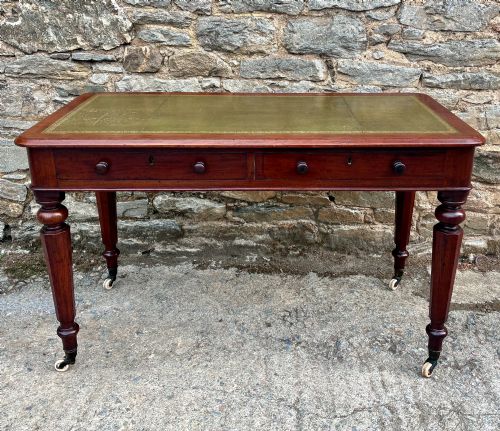
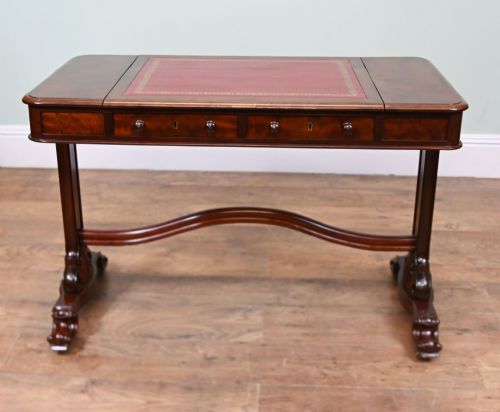
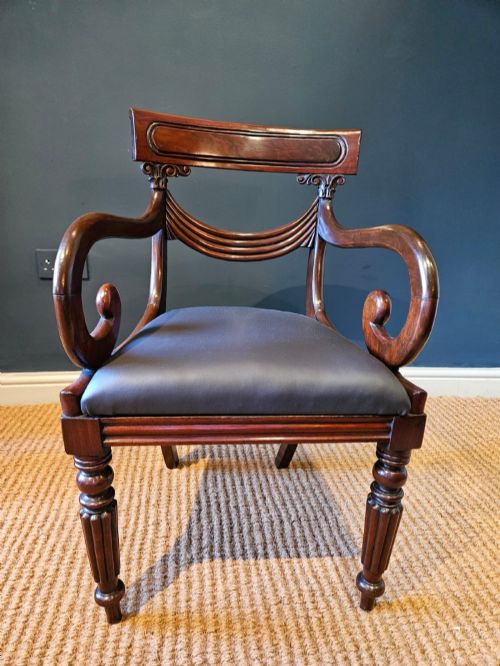
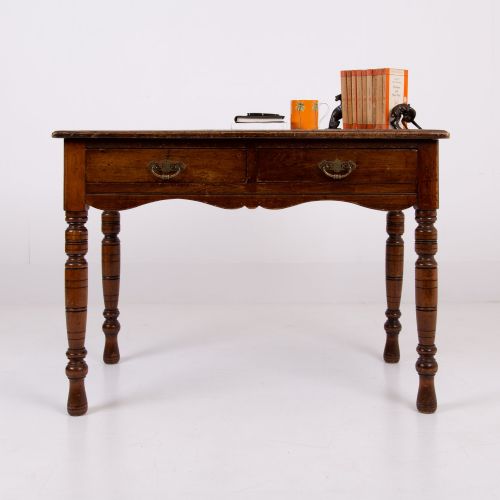
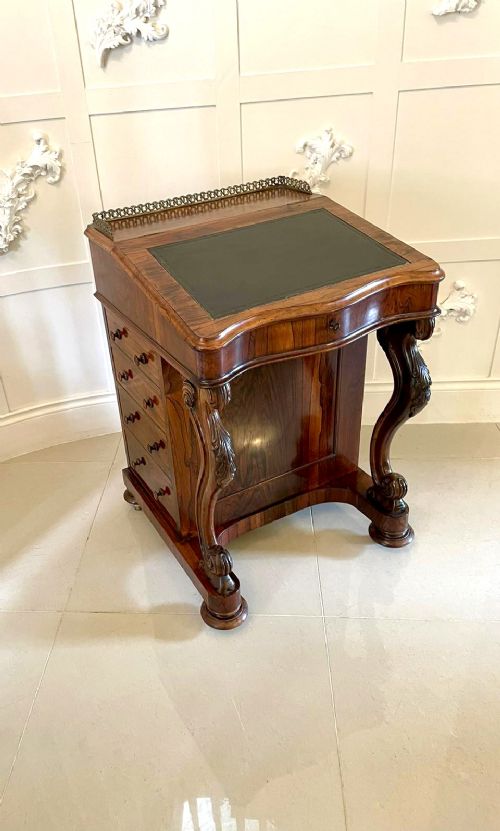
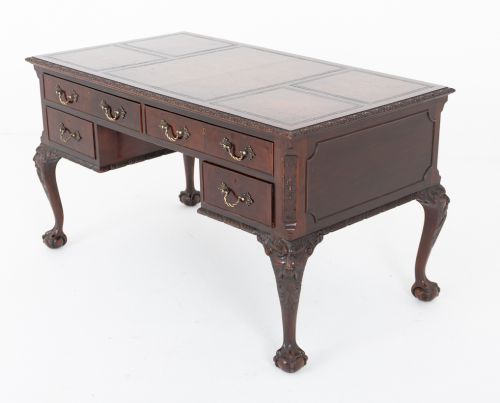
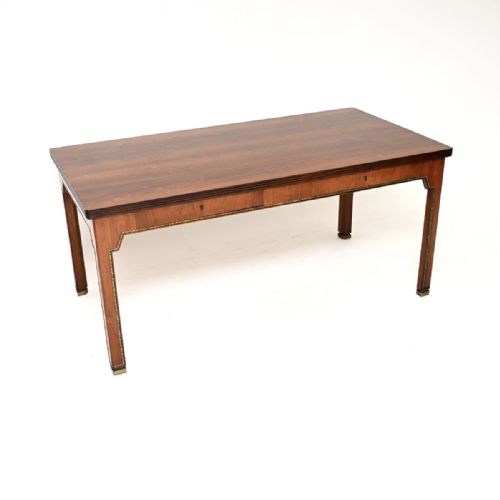
A dark leather desk provides a traditional workspace featuring a hide writing surface set into timber such as mahogany, oak, or rosewood. When searching for a dark leather desk, buyers encounter forms ranging from pedestal desks and writing tables to compact davenports and revolving chairs.
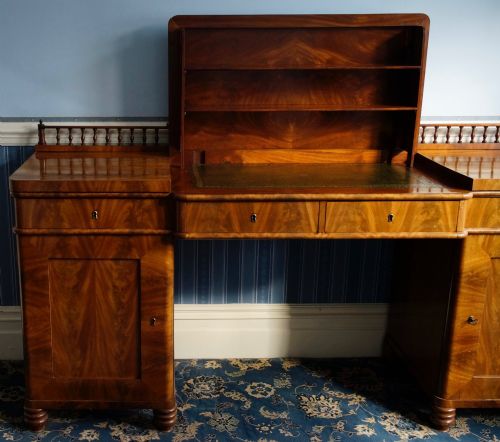
The pieces appearing on this page span the nineteenth and early twentieth centuries, encompassing Victorian, Regency, and Edwardian eras. Pedestal desks with multiple drawers sit alongside writing tables and partner desks designed for use from both sides.
Cabinetmakers constructed these pieces to serve practical administrative functions in libraries, studies, and offices. The integration of leather inserts created a durable, tactile surface suitable for daily writing and correspondence.
Materials and construction methods
Craftsmen utilised solid timbers and selected veneers, primarily mahogany and oak, building structural carcases designed to withstand heavy daily use. Brass hardware, including handles, castors, and decorative studs, supplemented the timber framework.
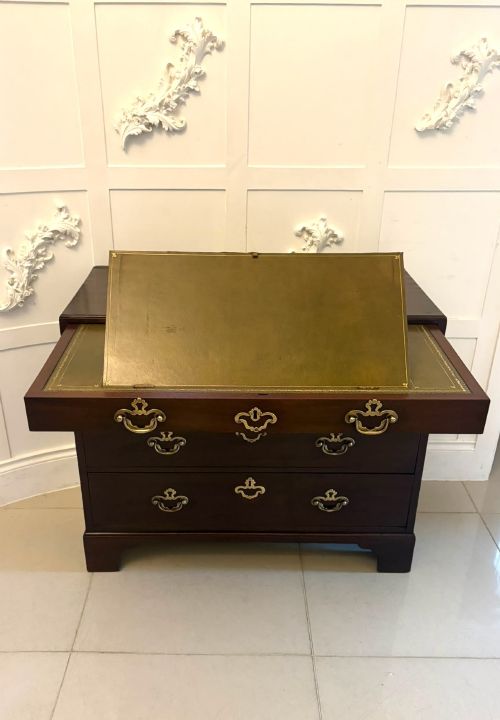
Writing surfaces incorporated treated leather hides, frequently secured with borders of blind tooling or gold leaf embossing. Cabinetmakers joined drawer frames using traditional dovetail techniques, ensuring long-term durability for pedestals and writing cabinets.
Desks occasionally retain small compartments designed specifically for holding sand shakers used to dry wet ink.
Distinctions in craftsmanship and materials
Superior examples demonstrate precision in timber selection, matching grain patterns across drawer fronts and table tops. Maker attribution through stamps or labels elevates certain pieces, reflecting workshop standards associated with firms such as Gillows or Holland & Sons.
The integrity of the structural joinery and the retention of original brass fittings and leather inserts distinguish finer examples from altered pieces. Secondary timbers inside drawer constructions and the crispness of carved details indicate the tier of workmanship.
Trollope & sons·Holland & Sons·Gillows·Liberty & Co.·Cookes of Finsbury London
The Dark Leather Desk Glossary
- Davenport
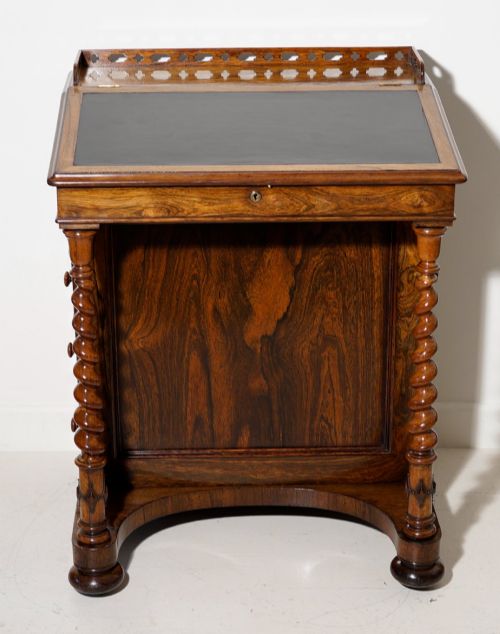
- A compact writing desk featuring a sloping top and drawers opening to the side. This form gained popularity during the nineteenth century for domestic studies.
- Pedestal desk
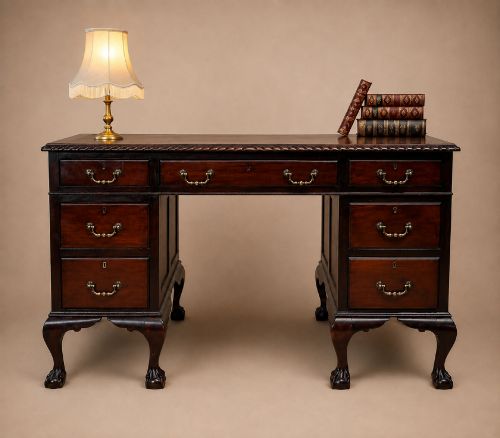
- A large freestanding desk comprising two supporting banks of drawers beneath a central writing surface. These pieces often incorporate leather inserts bordered by gilt tooling.
- Partners desk
- A double-sided writing table designed for two people to work opposite one another. Such desks typically feature pedestals with drawers on both faces.
- Drum table
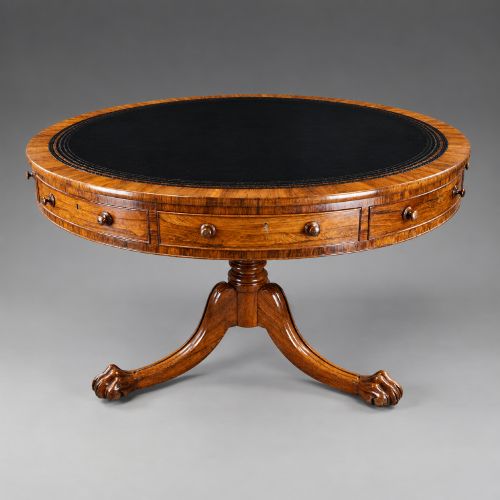
- A circular library table containing drawers around the perimeter, frequently mounted on a central pillar with branching legs. Many examples rotate on their base.
- Blind tooling
- An impressed decorative pattern applied to leather writing surfaces using heated brass tools without gold leaf. This technique creates subtle textural detail around the desk perimeter.
Dark Leather Desk: Frequently Asked Questions
How do I care for the leather top?
Maintain the leather by dusting gently and applying appropriate leather balms or waxes to prevent drying and cracking over time. Avoid exposing the surface to direct sunlight or excessive moisture.
Keep sharp objects away from the writing area to protect the hide and any blind tooling or gilt decoration applied along the borders.
What is the difference between a partner desk and a pedestal desk?
A pedestal desk sits against a wall or floats in a room with drawers accessible from one primary operating side. The internal construction usually includes dummy drawers on the reverse.
By contrast, a partner desk provides functional drawers and cupboards accessible from both front and back, allowing two individuals to sit and work opposite each other.
Are the leather inserts original?
Many antique desks retain their original leather writing surfaces, often showing patination, scuffs, and fading acquired through generations of use. Other pieces receive replacement leather during conservation work.
Examine the edges and surrounding timber rebate to determine whether the hide matches the age and wear of the surrounding cabinetwork.
How do I identify a Victorian desk?
Victorian desks typically employ dense mahogany or walnut, exhibiting substantial proportions and robust structural joinery. Drawer construction during this period frequently utilises hand-cut dovetails.
Stylistic cues range from heavy carving seen in later Victorian pieces to the cleaner lines associated with earlier nineteenth-century cabinetmaking traditions.