


Dark Iron Umbrella Stand
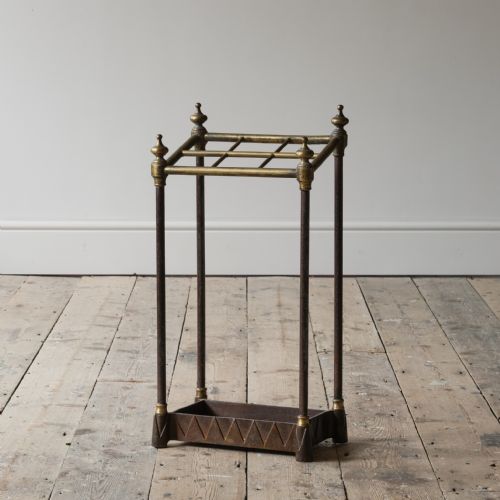
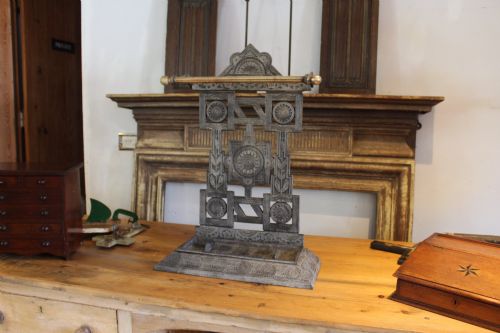
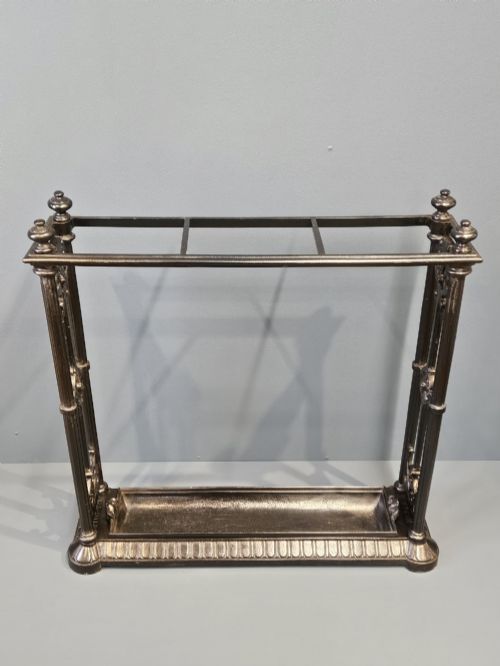
A dark iron umbrella stand brings robust utility and striking Victorian or Edwardian character directly to your hallway.
Dark Iron Umbrella Stand
When you search for a dark iron umbrella stand, you encounter heavy, durable hallway furniture designed to organise wet walking sticks and umbrellas in domestic entryways. These pieces primarily date from the Victorian and Edwardian periods, stretching from the mid-nineteenth century up to around nineteen hundred.
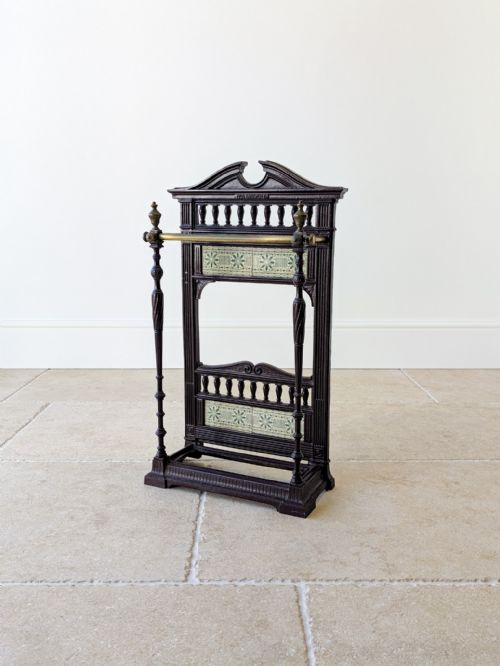
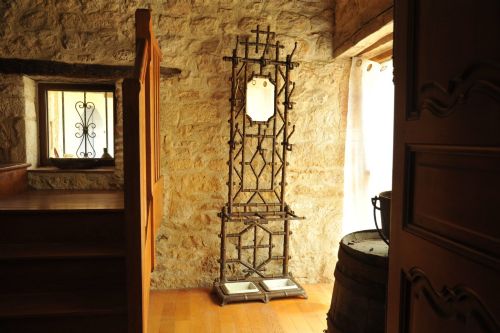
The versions you are most likely to meet on this page include utilitarian umbrella stands alongside taller hall stands that incorporate mirrors, coat hooks, and drip trays. They appear in styles ranging from plain Victorian Gothic and Aesthetic Movement designs to French faux bamboo and continental Art Nouveau.
Makers and foundries stamped or designed many of these heavy metal pieces, with names such as Coalbrookdale and Falkirk appearing among the inventory. Alongside the predominant cast iron examples, you also discover mixed media forms featuring ceramic components or coopered oak barrels banded in metal.
Materials and construction methods
Foundries utilised sand-casting techniques to shape molten metal into intricate openwork patterns, floral motifs, and structural umbrella loops. This heavy cast iron provided the necessary weight to keep tall stands stable when loaded with wet timber and steel walking sticks.
Many examples combine the primary dark iron structure with complementary materials such as removable zinc or ceramic drip trays to catch rainwater. French and English pieces from the late nineteenth century frequently employed faux bamboo moulding directly into the cast iron framework.
Listings on this site span the Victorian and Edwardian eras, predominantly featuring cast iron alongside oak and ceramic elements.
Assessing quality and design
The distinction between standard utility items and exceptional examples lies in the crispness of the foundry casting and the ambition of the design. Pieces modelled by known designers or produced by major foundries display sharper relief in decorative foliage and figures.
Complexity of function also elevates a piece, as seen in multi-purpose hall stands that integrate coat hooks, mirrors, and mirrored backs alongside the core umbrella storage. The presence of original, matching drip trays at the base preserves the integrity and completeness of the stand.
Coalbrookdale·Thomas Jeckyll·Shoolbred·Falkirk Foundry
The Dark Iron Umbrella Stand Glossary
- Cast iron
- A hard, relatively brittle alloy of iron and carbon that can be cast in a mould. Foundries heated pig iron and poured it into sand moulds to create the rigid frames seen in these hallway stands.
- Drip tray
- A shallow metal or ceramic pan positioned at the base of a stand. This removable tray collects rainwater from wet umbrellas to protect hallway flooring.
- Aesthetic Movement
- A late nineteenth-century design style that emphasised visual beauty over narrative subject matter. Pieces from this movement often feature stylised natural forms and geometric organisation.
- Faux bamboo
- A decorative finish or moulded design mimicking natural bamboo stems. Victorian metalworkers frequently cast iron to imitate this lightweight botanical aesthetic.
Dark Iron Umbrella Stand: Frequently Asked Questions
What is a dark iron umbrella stand?
A dark iron umbrella stand is a heavy, functional piece of hallway furniture designed to hold wet umbrellas and walking sticks upright.
Most surviving examples date from the Victorian and Edwardian eras, utilising cast metal frames and integrated base trays to protect interior floors from moisture.
How were these stands used historically?
These stands occupied the entrance halls of large homes, civic buildings, and townhouses to manage outdoor gear upon arrival.
Visitors and residents placed wet umbrellas and walking sticks into the designated loops, allowing rainwater to drain safely into the lower pan.
How do I care for a cast iron stand?
Maintain the metal by keeping the lower drip trays clean and dry to prevent moisture accumulation against the frame.
Dust the intricate openwork regularly with a soft brush and avoid harsh chemical cleaners that might strip the dark protective finish.
How can I tell Victorian stands apart?
Victorian examples often display heavier ornamentation, gothic revival motifs, or registration marks stamped directly into the metal.
Later Edwardian and Art Nouveau versions shift toward more stylised floral lines, asymmetrical layouts, or integrated faux bamboo moulding.