
Dark Hardwood Plant Table
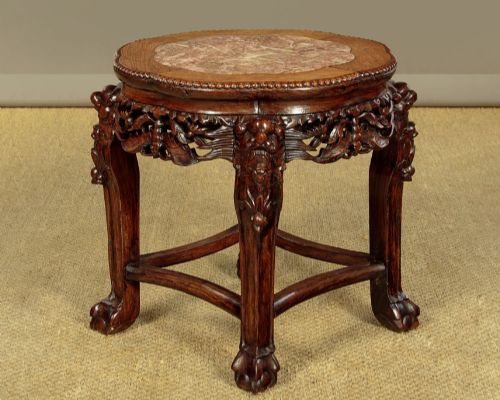
A dark hardwood plant table brings sculptural form and rich timber grain to an interior, designed specifically to elevate ceramics and flora.
Dark Hardwood Plant Table
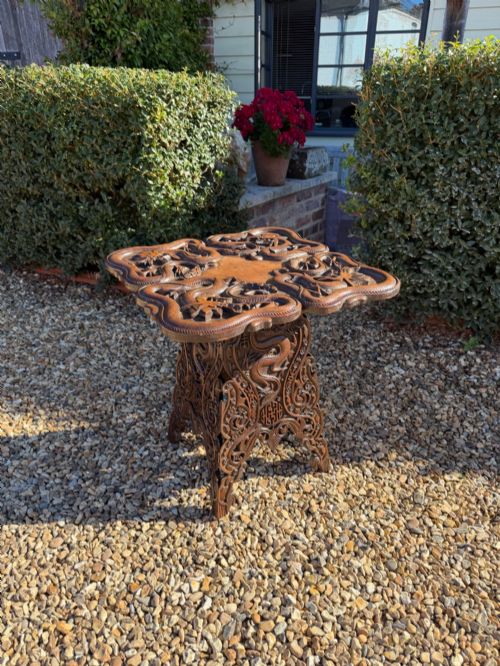
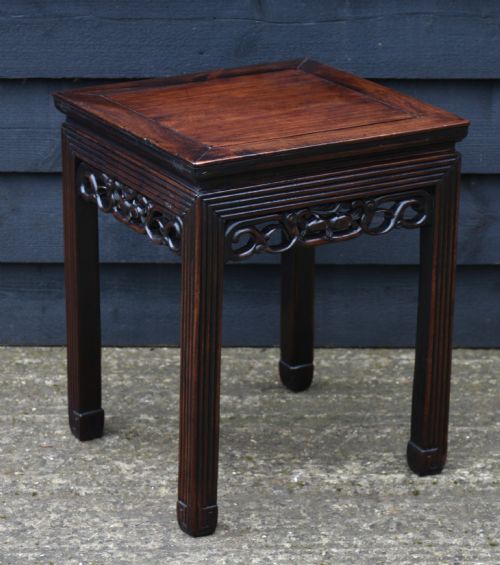
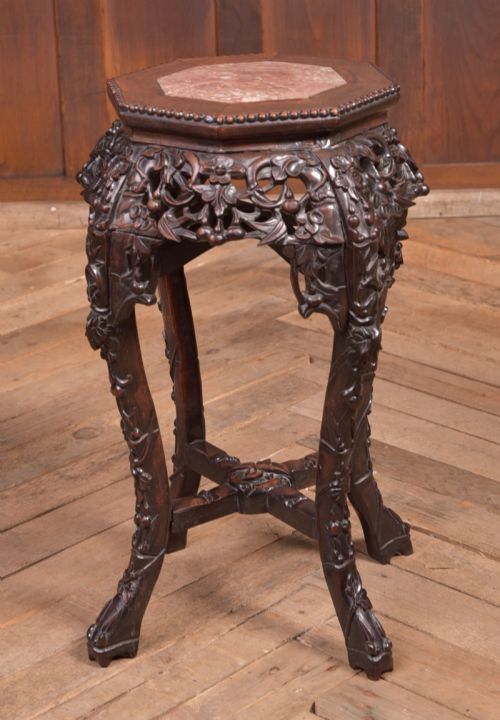
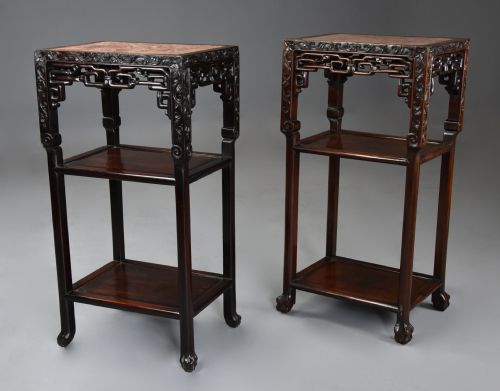
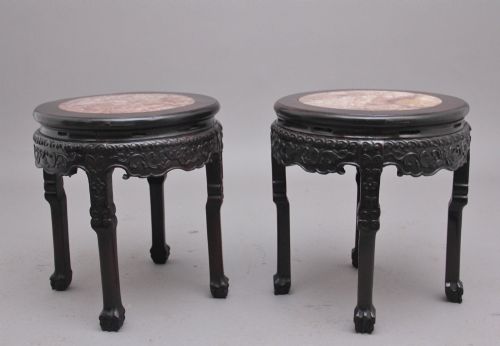
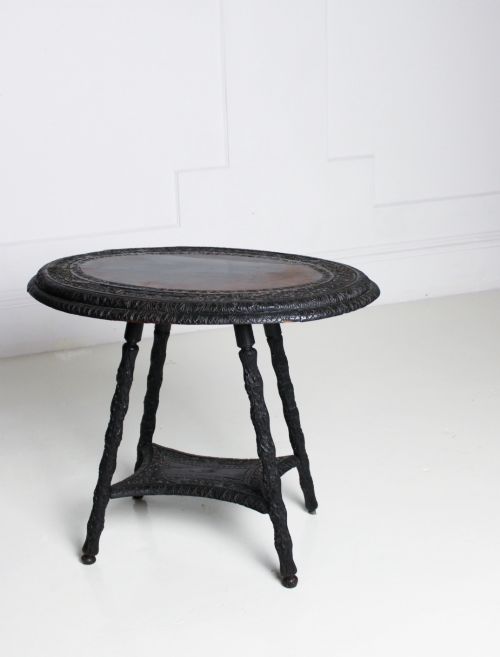
A dark hardwood plant table serves primarily as an elevated platform for pottery, vases, and jardiniere displays within a room. When searching this phrase, a buyer encounters a diverse selection of nineteenth and early twentieth century furniture originating from Chinese export workshops and Anglo-Indian colonial sources.
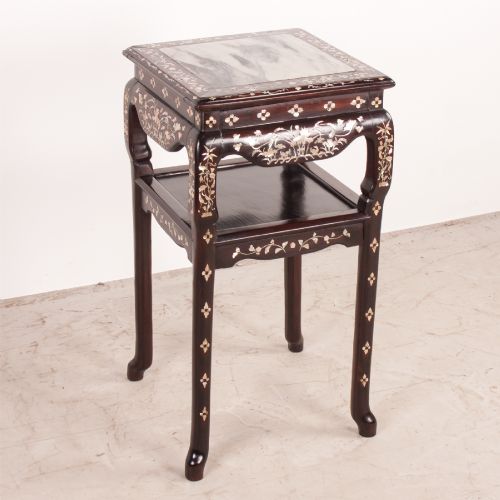
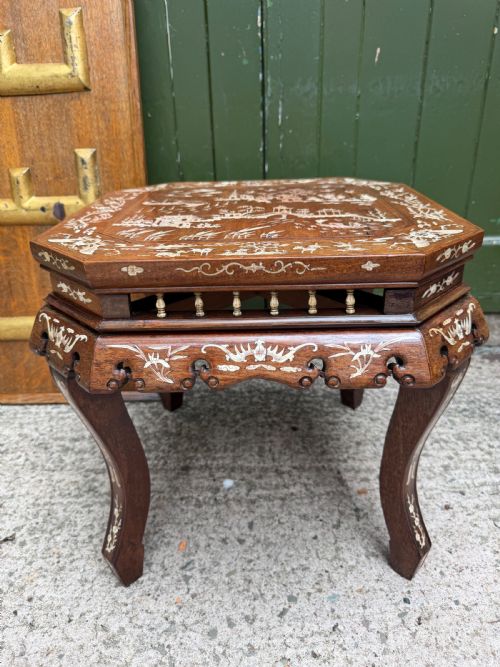
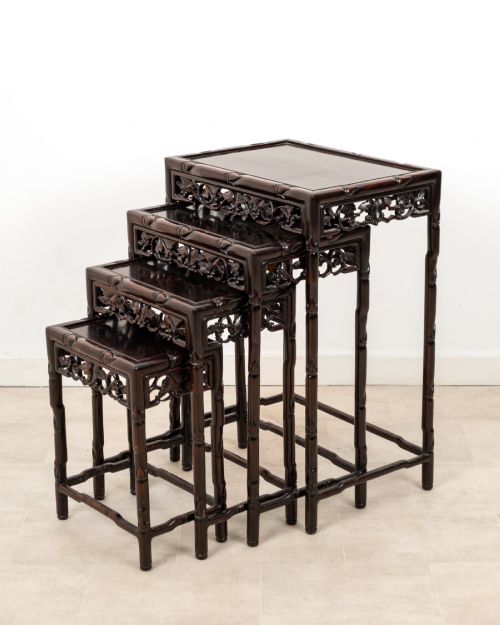
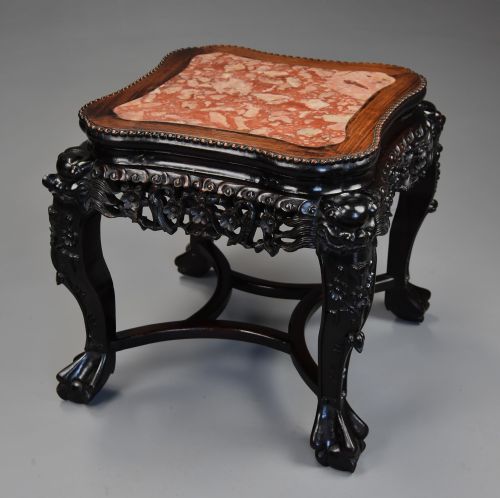
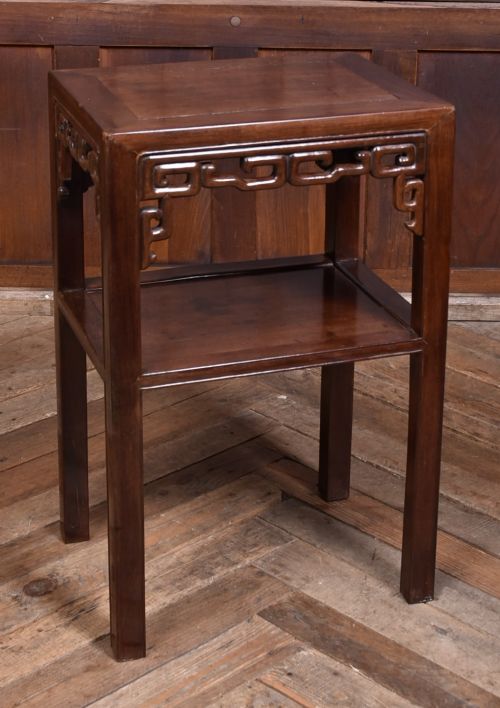
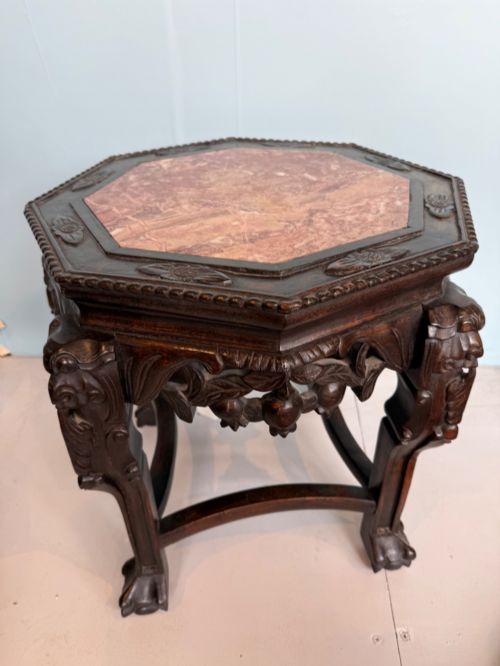
The physical forms vary considerably, encompassing tall pedestals, low square tables, octagonal occasional pieces, and nested sets. Many examples incorporate inset marble tops designed to withstand moisture from watering plants.
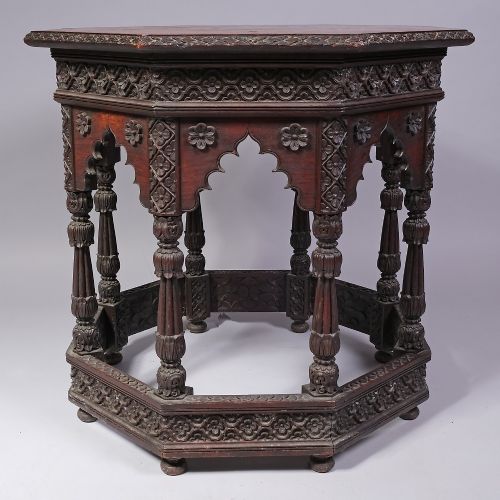
Originating largely from the Victorian and Edwardian eras, these pieces reflect global trade and aesthetic exchanges, spanning Chinese Qing Dynasty designs to intricate Anglo-Indian and Moorish craftsmanship.
How they were made
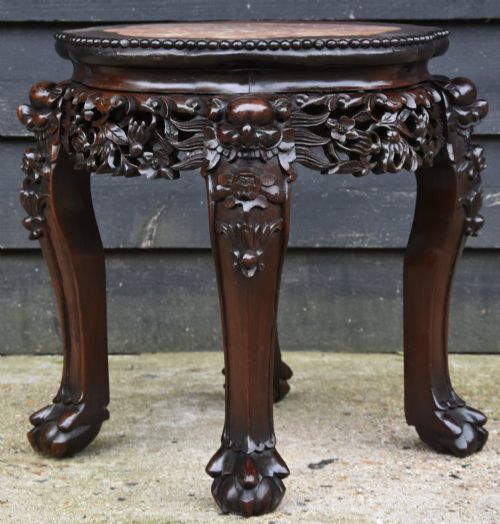
Makers utilised dense timbers such as rosewood, padauk, and hongmu, selecting them for their natural weight and deep colour. These hardwoods allow for intricate, deep relief carving without compromising structural integrity.
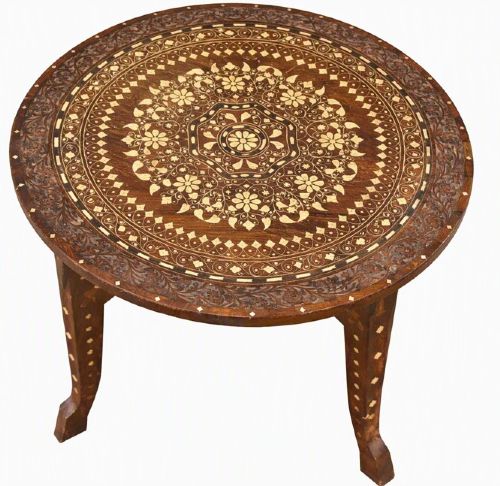
Surface ornamentation frequently incorporates contrasting materials, including inset panels of variegated rouge marble, mother of pearl inlay, and delicate bone or brass detailing. Artisans employed traditional joinery methods suited to tropical and dense woods, often combining mortise and tenon frames with complex carved aprons.
Listings feature traditional Chinese Qing Dynasty forms alongside nineteenth-century Anglo-Indian colonial tables and Edwardian adaptations.
What varies in quality
Quality rests significantly in the depth, crispness, and undercut precision of the hand carving. Pieces featuring fluid, sharply defined dragons, foliage, or geometric patterns demonstrate superior artisan skill compared to softer, shallower work.
The selection and fitting of secondary materials dictate overall merit, particularly the quality of the marble insert and the tightness of inlay work. Heavy, well-seasoned timber and robust structural joinery distinguish finer examples from standard production.
Liberty & Co·Gabriel Viardot
The Dark Hardwood Plant Table Glossary
- Hongmu
- A traditional Chinese term translating to red wood, used to describe dense, dark tropical hardwoods such as rosewood. It provides a heavy and durable foundation for carved furniture.
- Jardiniere stand
- A tall or low table specifically intended to hold a plant container or flower pot. These often feature protective stone or marble insets to prevent water damage to the timber.
- Anglo-Indian
- Furniture produced in India during the British colonial period, often combining traditional Indian carving motifs with European furniture forms. These pieces frequently utilise padauk or teak.
- Padauk
- A heavy, durable tropical hardwood with a reddish-brown hue that darkens with age. It is well suited to detailed carving and structural support.
- Qing Dynasty
- The last imperial dynasty of China, spanning from the mid-seventeenth to the early twentieth century. Furniture from this period is noted for ornate carving and formal elegance.
Dark Hardwood Plant Table: Frequently Asked Questions
What is a dark hardwood plant table used for?
These tables were created to display heavy ceramic pots, jardiniere bowls, and decorative vases at a convenient viewing height.
Today, they function equally well as lamp tables, bedside surfaces, or standalone sculptural accents in a room.
How do I identify a Chinese export piece?
Chinese export examples typically display traditional Qing Dynasty motifs such as prunus blossom, dragons, or key-fret borders executed in dense rosewood or hongmu.
Many incorporate inset marble tops and sturdy cabriole or straight framed legs designed for Western markets during the nineteenth century.
What distinguishes Anglo-Indian plant tables?
Anglo-Indian tables often feature dense overall carving depicting elephants, foliage, or geometric lattice work, sometimes complemented by bone or brass inlay.
They frequently utilise padauk timber and reflect the distinct stylistic crossover of the British colonial period in India.
How should I care for marble-topped plant stands?
The marble insert requires simple cleaning with a damp cloth and mild soap, avoiding acidic substances that can etch the polished stone surface.
Condition the surrounding hardwood frame periodically with a suitable furniture wax to maintain the natural timber sheen.