

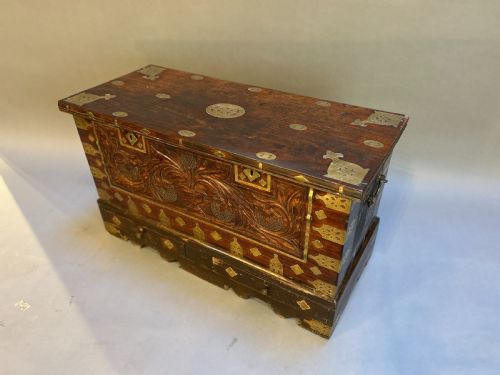

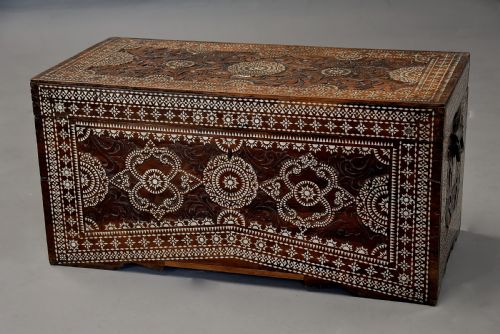


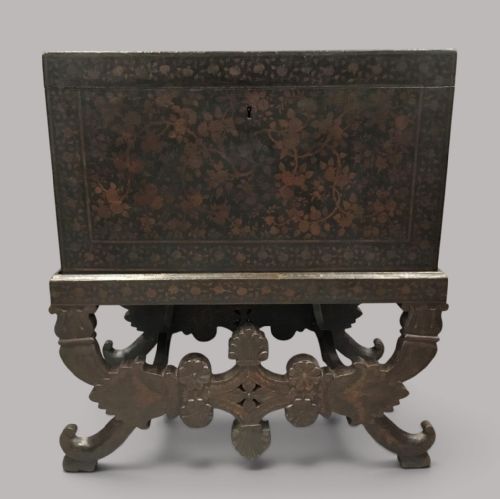


Dark Hardwood Coffer
A dark hardwood coffer is a robust storage piece built for travel or household use, offering deep compartments and rich grain.
Dark Hardwood Coffer
When you search for a dark hardwood coffer, you encounter sturdy storage chests, trunks, and settle boxes originating from the eighteenth, nineteenth, and early twentieth centuries. These pieces encompass global traditions including Chinese, Indian, Burmese, Middle Eastern, and Zanzibar craft, serving both practical containment and decorative function.
You are most likely to meet nineteenth-century examples on this page, particularly Indian teak storage chests and Chinese hardwood coffers or trunks. Many incorporate regional styles such as Anglo-Indian Colonial, Chinese Export, and Qing Dynasty characteristics.
Beyond standard chests, the selection includes related forms such as hall benches, sideboards, small cabinets, and armchairs sharing the same dense timbers. These items reflect maritime trade routes, colonial households, and traditional domestic interiors.
How they were made
Maker workshops utilised dense timbers such as teak, rosewood, elm, and hongmu, often ebonising the surfaces for a dark finish. These heavy woods provided the structural integrity required for long-distance travel and daily household service.
Decoration relied on contrasting materials and joinery techniques, incorporating brass studs, iron fittings, and inlaid mother of pearl. Carved panels and lacquered finishes further distinguished pieces from different regional traditions.
Dark Hardwood Coffer Retail Price Guide 2026
Typical asking prices for dark hardwood coffer among the pieces listed under this phrase on Sellingantiques today, from the lower quarter to the upper quarter. They describe what is for sale here now, not the wider market.
Regional styles represented include Qing Dynasty, Anglo-Indian Colonial, Ottoman, and Chinese Export traditions.
What varies in quality
Quality separates through the crispness of hand-carved details and the precision of inlaid mother of pearl or metal work. Master workshops achieved tighter joinery and more balanced proportions than utilitarian domestic equivalents.
The choice of timber and the preservation of original hardware, locks, and brackets dictate the standing of a piece. Examples retaining their untouched surface patination outrank those with altered or overly restored finishes.
The Dark Hardwood Coffer Glossary
- Hongmu
- A category of dense, dark tropical hardwoods utilised in traditional Chinese furniture making. It translates to red wood in English but typically appears dark brown or nearly black.
- Zanzibar chest
- A distinct type of trading chest originating from East Africa and India, characterised by heavy brass studding, strapwork, and elaborate hardware. They served as valuable travel trunks for merchants.
- Anglo-Indian
- A descriptive term for furniture made in India by local artisans for British colonial residents, combining British furniture forms with traditional Indian carving and materials.
- Ebonised
- Wood treated with a chemical stain or finish to imitate ebony, creating a dark, uniform appearance popular in nineteenth-century cabinet making.
- Mother of pearl
- The iridescent internal layer of mollusc shells, cut into thin pieces and set into wooden channels to create decorative floral or geometric patterns.
Dark Hardwood Coffer: Frequently Asked Questions
What is a dark hardwood coffer?
A dark hardwood coffer is a heavy storage chest constructed from dense timbers like teak, rosewood, or hongmu. These pieces were built for household storage or long-distance transport.
They originate from diverse regions including China, India, and East Africa, often featuring brass fittings, carved panels, or mother of pearl inlay.
How were these chests used?
Historically, these chests served as secure containers for clothing, documents, and valuable commodities during maritime trade and overland travel. Their robust construction protected contents from moisture and pests.
In domestic settings, they functioned as storage furniture that could double as seating benches or display surfaces depending on the room.
Where do they come from?
The pieces originate from global trade hubs and colonial regions, reflecting Chinese Qing Dynasty workshops, Indian craft centres, and Middle Eastern or East African trading ports. Anglo-Indian and Chinese Export pieces specifically catered to international markets.
Makers utilised locally available tropical hardwoods influenced by the stylistic traditions of their specific region of manufacture.
How do I live with one?
A dark hardwood coffer functions effectively as a coffee table, blanket box, or hallway storage bench in modern interiors. Their dark timbers and decorative metalwork anchor a room visually while offering concealed storage space.
Maintain the wood with appropriate natural waxes and avoid placing them near direct heat sources to protect the dense grain and historical joinery.