

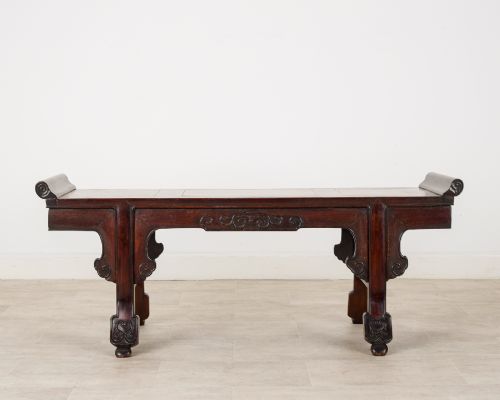


Dark Hardwood Altar Table
A dark hardwood altar table brings centuries of Chinese craftsmanship into a room, offering deep tones and striking structural forms that anchor a modern interior.
Dark Hardwood Altar Table
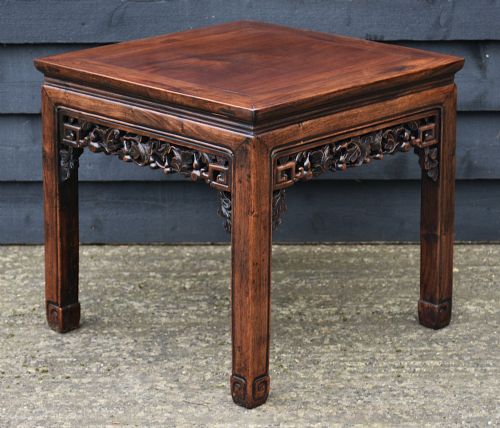
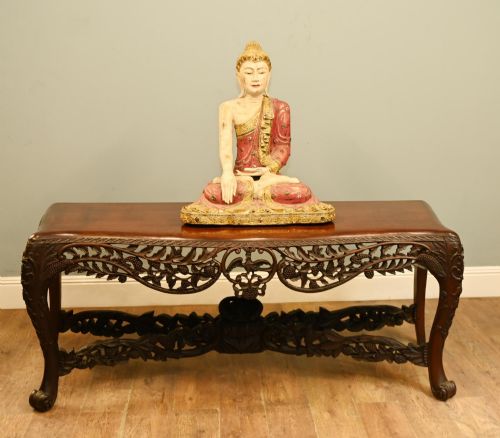
A dark hardwood altar table is a sculptural form originating from traditional Chinese furniture, designed primarily for display and ceremonial use. These pieces often serve modern interiors as striking console tables, hall tables, or low tables.
The selections available here stem largely from the nineteenth century, including pieces associated with the Qing Dynasty. You will encounter rectangular altar tables alongside benches, side tables, and trestle forms.
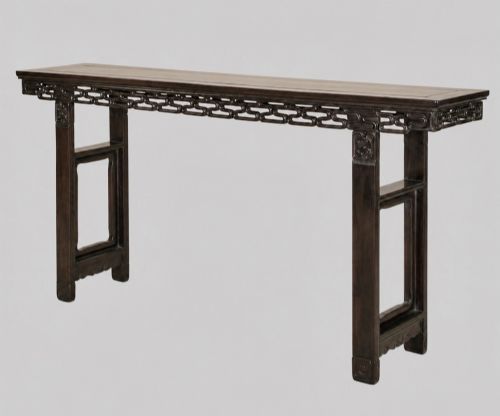
Makers shaped these tables from dense tropical timbers, integrating traditional joinery and carved details that reflect centuries of design lineage. The forms range from simple plank-top trestle tables to heavily carved console and altar tables.
Materials and construction methods
Carpenters utilised dense hardwoods such as hongmu and rosewood, alongside elm and amboyna wood, selecting timbers known for their weight and grain depth. Certain pieces incorporate inset marble panels or lacquer finishes upon the wooden structure.
Construction relied on traditional joinery techniques that allowed the dense timber to expand and contract without splitting. Carvers added surface decoration by hand, shaping relief panels and edge mouldings directly into the hardwood.
Dark Hardwood Altar Table Retail Price Guide 2026
Typical asking prices for dark hardwood altar table among the pieces listed under this phrase on Sellingantiques today, from the lower quarter to the upper quarter. They describe what is for sale here now, not the wider market.
Current listings feature nineteenth-century pieces incorporating rosewood, hongmu, marble, and lacquer across various console, bench, and altar table forms.
Assessing quality and craftsmanship
Quality rests in the selection of the timber and the crispness of the hand carving on the apron and legs. Dense hongmu and well-figured rosewood distinguish the finest examples from simpler elm or mixed-wood builds.
Structural harmony also separates the work, where proportions remain balanced and joinery stays tight without excessive modern intervention. The depth of the carved detail and the finish of the timber surface dictate the standing of the piece.
The Dark Hardwood Altar Table Glossary
- Hongmu
- A traditional Chinese term for dense, red-brown or dark hardwoods used in fine furniture making. It translates literally to red wood and encompasses several heavy tropical species.
- Amboyna wood
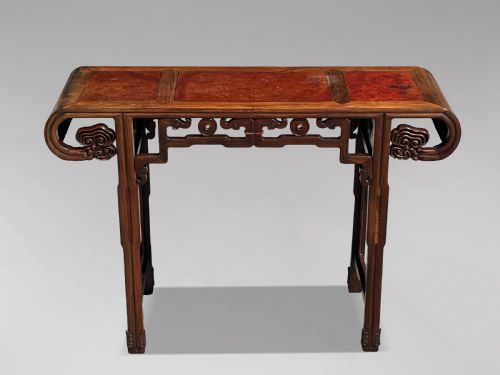
- A highly decorative burr wood prized for its rich swirling grain patterns. Cabinetmakers utilised it as an accent veneer on high-status tables.
- Demi-lune
- A half-moon shape used for console tables designed to stand flat against a wall. This form became popular for smaller halls and reception rooms.
- Trestle table
- A table construction where the top rests on upright supports connected by a horizontal beam. This form provides sturdy support without bulky corner legs.
Dark Hardwood Altar Table: Frequently Asked Questions
What is an altar table used for?
Traditional altar tables served sacred and ceremonial functions in Chinese homes, often holding ancestral tablets, incense burners, or ritual objects.
In contemporary interiors, these narrow tables function effectively as console surfaces in hallways, behind sofas, or as display stands for art objects.
How do I care for hardwood furniture?
Maintain the timber by keeping it away from direct heat sources and sudden humidity changes that can affect dense antique wood.
Dust regularly with a soft dry cloth and occasionally apply a neutral beeswax to nourish the polished surface without building up residue.
Are all these tables from the nineteenth century?
The majority of pieces date from the nineteenth century, particularly the late Qing Dynasty period around eighteen eighty to nineteen hundred.
Earlier examples from around eighteen hundred appear occasionally, alongside pieces spanning into the early twentieth century.
What is the difference between a console and an altar table?
Altar tables typically feature distinctive upturned flanges at the short ends, a design derived from traditional architectural roofs and ceremonial altars.
Console tables generally have flat rectangular tops without these raised ends, though both share a narrow profile suited for placement against walls.