





Dark Hardwood Accent Stools
Dark hardwood accent stools bring rich timber tones and versatile seating or surface space to any room.
Dark Hardwood Accent Stools
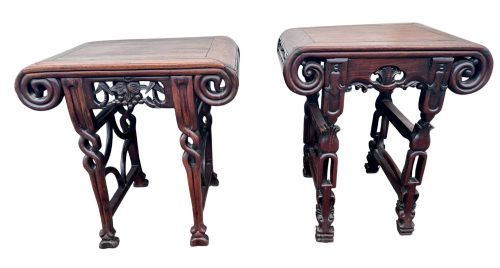
Buyers browsing dark hardwood accent stools encounter sturdy nineteenth century pieces, including matched pairs and individual examples featuring carved details. Many double as side tables or plant stands depending on their height and top surface.
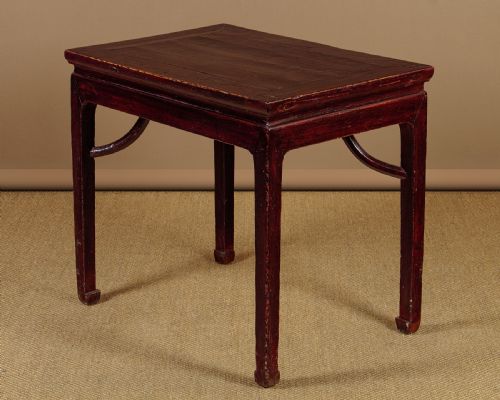
Origins span diverse workshops, with Chinese provincial and Qing Dynasty pieces forming a large share alongside African tribal chairs and Anglo-Indian elephant tables. The selection relies heavily on nineteenth century craftsmanship in dark timbers.
How they were made
Joinery relies on dense tropical hardwoods, rosewood, and elm shaped into robust frames for stools and stands. Artisans worked the heavy timber using traditional hand tools to achieve stable, load-bearing structures.
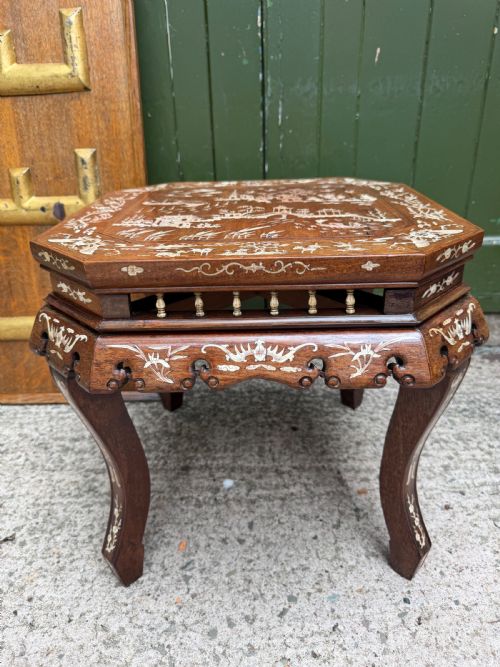
Surface enrichment often includes detailed carving directly into the hardwood, complemented by contrasting inlays of bone or mother-of-pearl. Certain pieces incorporate inset marble tops or ebonised finishes to enhance the visual depth of the wood.
Listings feature items from the nineteenth century, including specific dates such as eighteen-eighty and eighteen-sixty alongside Victorian era pieces.
What varies in quality
The refinement of the carving distinguishes standard utility items from finer workshop output, with crisp relief work showing superior control over dense timber. Depth and clarity in floral or figurative motifs indicate the hand of a more accomplished artisan.
Material selection dictates much of the inherent value, particularly the choice between dense hongmu, figured rosewood, or simpler elm. The integration of decorative elements such as bone inlay or inset marble further separates basic forms from exceptional examples.
The Dark Hardwood Accent Stools Glossary
- Hongmu
- A category of dense tropical hardwoods prized in traditional Chinese furniture making for its deep colour and heavy weight. It resists wear and takes a fine carved edge.
- Ebonised
- Wood treated with a chemical stain or finish to imitate the dense, dark appearance of ebony. This technique was common on nineteenth century statement furniture.
- Inlay
- A decorative technique where contrasting materials such as bone or mother-of-pearl are set flush into recesses within the hardwood surface. It creates intricate patterns against the dark timber.
- Provincial
- Describing items made in regional workshops rather than major metropolitan centres. These pieces often display simpler, robust construction methods suited to everyday local use.
Dark Hardwood Accent Stools: Frequently Asked Questions
How were dark hardwood accent stools used historically?
These versatile items served as extra seating or sturdy platforms for lamps, urns, and plants within domestic interiors. Their compact footprint allowed them to be moved easily between rooms as household needs shifted.
In various cultural traditions, low stools and stands also functioned as display furniture for valued objects, elevating specific pieces to draw the eye within a reception space or parlour.
Can these stools double as side tables?
Many nineteenth century examples function equally well as low tables, plant stands, or auxiliary surfaces. Their flat wooden or inset marble tops provide a stable platform for holding small items.
When evaluating a piece for surface use, the height and top dimensions determine whether it suits placement beside a chair or functions better as a dedicated display stand.
What woods were used for these pieces?
Construction typically involves dense timbers such as rosewood, elm, and hongmu. These heavy hardwoods provided the structural integrity needed for daily seating and weight-bearing display.
Ebonised finishes also appear on certain items to darken lighter woods, while contrasting details often incorporate bone or mother-of-pearl embellishments.
How do I care for antique hardwood furniture?
Maintain the timber by keeping pieces away from direct heat sources and sudden humidity changes. Regular dusting with a soft, dry cloth preserves the natural sheen of the dark hardwood.
Avoid chemical polishes that can build up on carved surfaces over time. A light application of appropriate wax occasionally helps nourish older wood without harming delicate inlays.