
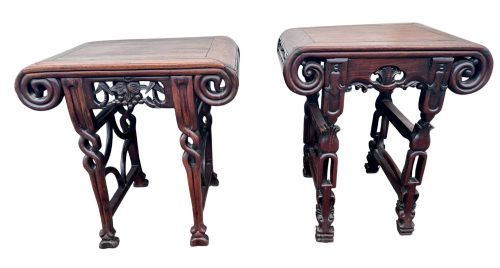


Oriental Hardwood Stools Pair
Oriental hardwood stools pair pieces are robust, characterful seating and display furniture crafted during the Qing dynasty and later decades.
Oriental Hardwood Stools Pair
When buyers search for an oriental hardwood stools pair, they examine matched sets of seating and display furniture originating from Chinese traditions. These pieces function variously as low tables, plant stands, barrel stools and occasional tables.
The items seen on this page date primarily from the nineteenth century through to the early twentieth century, spanning periods such as the Qing dynasty and the year 1920. Forms range from heavy barrel stools to dish-top stools and low tables.
Makers designed these objects for versatile domestic utility, serving as seats, lamp tables or jardiniere stands. Buyers frequently encounter dual formats shaped by regional Chinese craftsmanship and traditional aesthetics.
How they were made
Artisans constructed these items using dense oriental timbers including rosewood, hongmu, huali wood, teak and general hardwood. Workshops often incorporated contrasting materials like burr wood, mother-of-pearl and porcelain panels into the primary wooden frames.
Carving techniques defined the surface ornamentation, producing detailed relief work across skirts and legs. Selected examples also feature inset rouge marble tops fitted flush into the carved wooden structures.
Some nineteenth-century makers cleverly disguised heavy structural joints behind whimsical floral wood carvings that tickle the fingertips.
What varies in quality
The grade of an oriental hardwood stools pair depends upon the density and selection of the timber, such as figured huali or heavy hongmu. Superior examples demonstrate precise joinery that maintains structural integrity across matched sets without reliance on modern fasteners.
Depth and crispness of the carved ornamentation separate standard production from finer workshop output. The integration of specialty inserts, including inset marble panels or porcelain plaques, influences the overall refinement of the piece.
The Oriental Hardwood Stools Pair Glossary
- Hongmu
- A traditional Chinese term for dense hardwoods, literally translating to red wood. These heavy timbers supplied durable material for Qing dynasty furniture.
- Huali wood
- A prized fragrant hardwood utilised in classical Chinese furnituremaking. It displays distinctive grain patterns favoured by period craftsmen.
- Rouge marble
- A deep reddish ornamental stone imported or utilised for inset table tops. It provides a cool, smooth contrasting surface against carved dark wood.
- Barrel stool
- A cylindrical seat form with a bulging profile reminiscent of a cask. These items often feature pierced or carved frames designed for portability.
- Jardiniere stand
- A tall occasional table intended to elevate potted plants and floral arrangements. They share construction methods with standard oriental stools.
Oriental Hardwood Stools Pair: Frequently Asked Questions
How were these stools used?
These pieces served multiple functions within traditional interiors, acting as moveable seating, auxiliary tables and display platforms for heavy ceramic planters or lamps.
Their robust construction allowed them to support heavy objects while remaining compact enough to shift between rooms as domestic needs required.
What woods were commonly utilised?
Craftsmen relied on dense regional timbers such as hongmu, huali wood, teak, rosewood and general ebonised hardwoods.
These heavy materials resisted warping and provided a stable foundation for intricate hand-carved decorative motifs.
How do I date these pieces?
Dating relies on stylistic markers associated with the Qing dynasty and late nineteenth or early twentieth-century production methods. Tool marks, timber oxidation and the presence of traditional joinery help determine age.
Comparative analysis of regional carving styles also assists in placing items within specific decades like 1880, 1890 or 1920.
Are these items matched pairs?
Listings feature both identically carved matched pairs and assembled pairs that share similar dimensions, timber types and period characteristics.
Minor variations in grain pattern or carving depth frequently occur due to the hand-made nature of historical workshop production.