
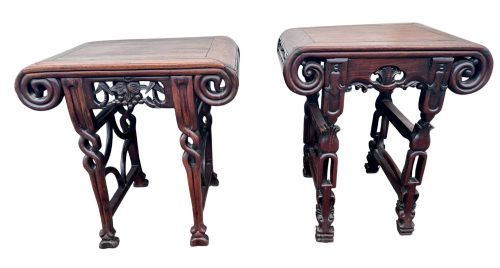


Pair of Asian Stools
These pair of asian stools bring genuine regional character and sculptural presence to a room, offering versatile seating and display surfaces.
Pair of Asian Stools
A pair of asian stools encompasses matched sets of low seats, plant stands, and occasional tables originating from the nineteenth and early twentieth centuries. These objects typically take the form of heavy hardwood stands, carved elephant seats, and painted lacquer pedestals.
The versions most commonly met on this page belong to the Qing Dynasty and Chinese Republic periods, fashioned from dense timbers like rosewood, hongmu, and teak. Alongside standard seating, many examples function equally well as side tables, lamp tables, or jardiniere stands.
Makers from regional workshops produced these pieces to serve both utilitarian and decorative roles within traditional interiors. Buyers encounter variations that incorporate inset porcelain panels, elaborate wood carving, or bold black lacquer finishes.
How they were made
Craftsmen utilised dense hardwoods such as hongmu, rosewood, and teak to construct stable frames capable of supporting heavy porcelain planters and daily seating use. Joinery techniques relied on precise interlocking joints without relying on modern metal fasteners.
Surface decoration frequently involved intricate hand carving, polychrome paint, and applied gold leaf over wooden substrates. Certain pieces incorporated fragile materials like inset porcelain panels or deep layers of black lacquer that required meticulous curing and polishing.
Listings span the nineteenth century through the nineteen twenties, featuring traditional materials including rosewood, hongmu, porcelain, and black lacquer.
What varies in quality
The density and selection of the timber dictate the structural integrity and weight of each piece, with heavy hongmu and dense rosewood sitting at the upper end of the scale. Superior examples display crisp, deeply undercut hand carving that retains sharp definition across every contour.
Refinement in surface finish separates standard items from exceptional ones, particularly where delicate painted details, gold leaf application, or inset porcelain panels remain undisturbed. Matched pairs that have survived together with consistent patina command greater visual harmony than assembled counterparts.
The Pair of Asian Stools Glossary
- Hongmu
- A dense, heavy tropical hardwood prized in traditional Chinese furniture making for its rich colour and durability. It takes a fine natural polish without needing heavy stains.
- Jardiniere
- A large ornamental pot or stand designed to hold plants and flowers indoors. In Asian furniture, matching stands often support these heavy ceramic vessels.
- Qing Dynasty
- The final imperial dynasty of China, spanning from sixteen forty-four to nineteen twelve. Pieces from this era often feature formal carving and traditional regional motifs.
- Lacquer
- A durable varnish made from tree sap, applied in multiple coats and polished to a smooth finish. Black lacquer surfaces frequently serve as a base for painted or gilded decoration.
- Republic Period
- The era in Chinese history following the fall of the empire in nineteen twelve. Furniture from this time often blends traditional forms with evolving decorative styles.
Pair of Asian Stools: Frequently Asked Questions
How were these stools used?
These pieces served multiple functions within traditional households, acting as portable seats, low tables, and elevated display pedestals for art objects.
Owners frequently positioned them to hold heavy ceramic planters, lamps, or ritual items rather than solely for seating.
What woods were used for these?
Carpenters utilised dense regional timbers including hongmu, rosewood, teak, and general Asian hardwoods to ensure long-term structural stability.
These heavy woods allowed artisans to carve intricate details directly into the solid material without weakening the frame.
How do I date a Chinese stand?
Dating relies on assessing the timber type, construction methods, and stylistic markers associated with periods like the Qing Dynasty or the nineteen twenties.
Wear patterns, tool marks left by hand shaping, and the natural ageing of the wood grain help confirm the era of manufacture.
Can I use these as side tables?
Their sturdy construction and flat tops make them well suited for use as occasional tables, lamp stands, or bedside surfaces.
Many surviving examples were designed with stable proportions specifically to accommodate objects placed upon them in modern living spaces.