



Dark Green Footstool
A dark green footstool brings rich colour and solid timber framing into a room, offering a practical seat or rest.
Dark Green Footstool
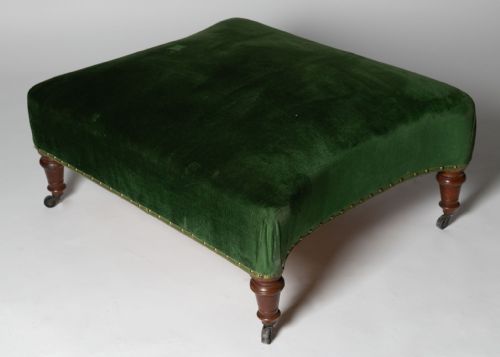
A dark green footstool appears across several historical periods, taking the form of low hall seats, joint stools, and upholstered footstools. These pieces range from compact Victorian designs to substantial Regency frames.
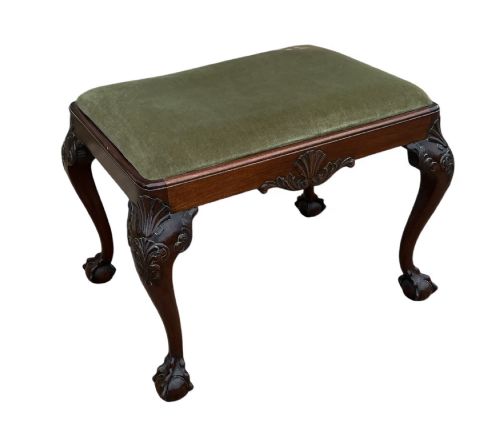
The materials used for these forms include mahogany, oak, walnut, and rosewood, paired with upholstery fabrics such as velvet, wool, and leather. Buyers encounter variations that span styles from Chippendale Revival and Georgian Irish to Anglo-Indian and Gothic.
The selection reflects diverse construction dates, including the Regency era, the Victorian period, and the early twentieth century. Each version displays distinct carving, framing, and leg styles characteristic of its origin.
Materials and construction methods
Makers built the frames of these pieces using hardwoods such as mahogany, oak, walnut, and rosewood. These timbers provided the structural strength needed for regular seating and foot support.
Upholstery involved materials like leather, velvet, wool, and tapestry fabrics, secured to the wooden frames. Brass accents and detailed wood carving frequently completed the decoration of the piece.
Dark Green Footstool Retail Price Guide 2026
Typical asking prices for dark green footstool among the pieces listed under this phrase on Sellingantiques today, from the lower quarter to the upper quarter. They describe what is for sale here now, not the wider market.
Current listings demonstrate timber frames in mahogany, oak, walnut, and rosewood, paired with leather, velvet, and wool upholstery.
Distinctions in craftsmanship and material grade
Quality separates pieces through the precision of the timber carving and the selection of dense, durable hardwoods. Superior examples display crisp detail in styles such as Chippendale Revival or Carolean.
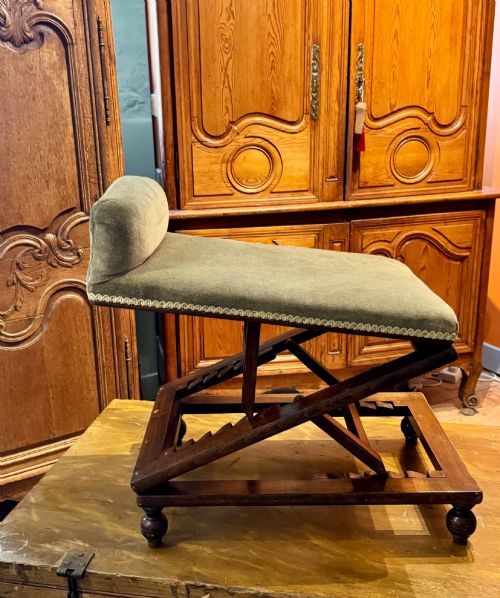
The finish of the upholstery materials, from fine leather to heavy wool tapestry, dictates the refinement of the piece. Integrated mechanisms, such as those found on metamorphic gout stools, also demonstrate advanced workshop skill.
The Dark Green Footstool Glossary
- Joint stool
- A joined or framed wooden stool constructed with pegged mortise and tenon joints. These sturdy seats date back centuries and typically feature simple rectangular timber tops.
- Metamorphic gout stool
- An adjustable footrest designed to alter its angle for medical or resting comfort. They often incorporate mechanical movement within a Victorian wooden frame.
- Carolean style
- A decorative design movement associated with the late seventeenth century, revived in later periods. It is characterised by ornate scrolling woodwork and turned legs.
- Anglo-Indian
- A description for items made in India under British influence during the nineteenth century. These objects typically feature deep, intricate carving on local hardwoods.
Dark Green Footstool: Frequently Asked Questions
What periods do these footstools come from?
The pieces span the Regency era, the Victorian period, and the early twentieth century. Workshops also produced revival pieces referencing earlier historical styles.
Craftsmen utilised traditional hardwoods and upholstery methods distinctive to each era of production.
How were these stools originally used?
They served as low seats in halls and parlours, or as rests for feet and legs during relaxation. Specific variants like gout stools provided adjustable support.
Their robust wooden construction ensured they could handle daily domestic use across different rooms of the house.
What timbers form the basis of these frames?
Makers relied on durable hardwoods including mahogany, oak, walnut, and rosewood. These woods supported elaborate carving and stable joinery.
Secondary woods and stained beech also appear in the internal framing and specific regional pieces.
How do revival styles differ from older pieces?
Revival items replicate historical aesthetics from periods like the Georgian or Jacobean eras while utilising nineteenth or twentieth-century manufacturing techniques. They reflect the Victorian and Edwardian taste for historical design.
Examining the joinery, wear patterns, and timber characteristics helps clarify the actual date of manufacture.