




Restoration Style Seat
These restoration style seat pieces offer period grandeur for the home, combining seventeenth-century carved walnut and oak with sturdy later craftsmanship.
Restoration Style Seat
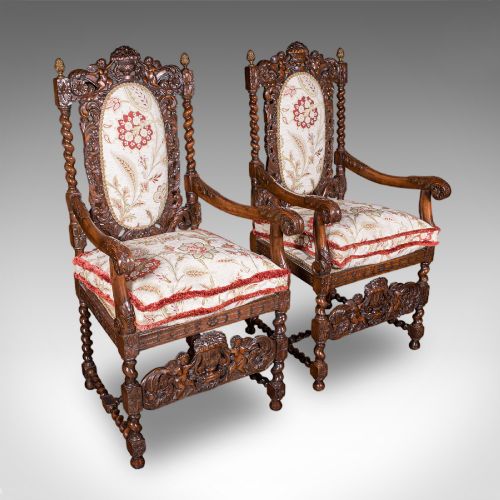
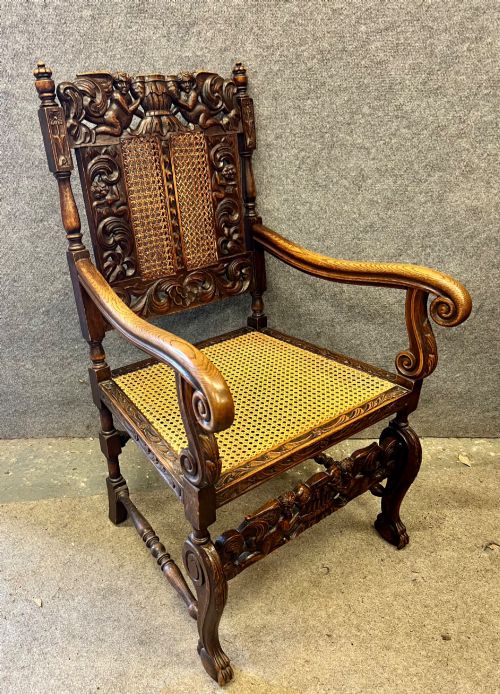
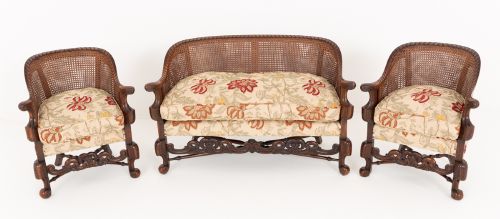
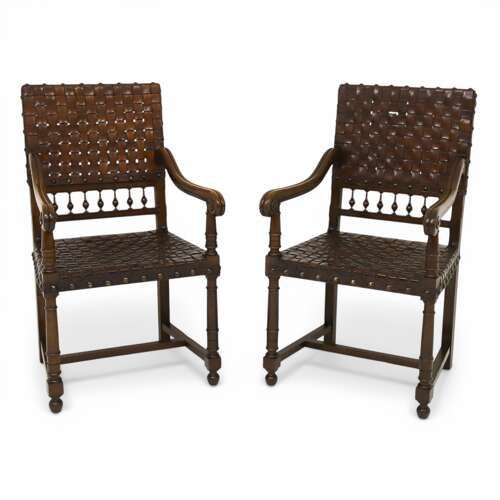
You are most likely to encounter nineteenth-century interpretations on this page, including oak and walnut armchairs, hall chairs, and larger seating suites. These later revival pieces capture the elaborate carved details and high backs of the originals while offering robust construction suitable for daily use.
The forms vary widely across the inventory, ranging from single side chairs and low hall stools to extensive dining sets and large settees. Materials such as woven cane, leather, and rich upholstery frequently complement the dark woods, reflecting the diverse ways makers adapted the style over the centuries.
How they were made
Makers relied heavily on solid hardwoods like oak and walnut, shaping the frames through traditional joinery and deep relief carving. These timbers provided the structural strength necessary for the high backs and ornate stretchers characteristic of the style.
Surfaces were frequently finished with paint or left in the natural grain of the wood, while seating areas utilised woven cane, leather, or fabric upholstery. Brass details sometimes appeared as accents, securing upholstery or highlighting the structural joints of the chairs.
Restoration Style Seat Retail Price Guide 2026
Typical asking prices for restoration style seat among the pieces listed under this phrase on Sellingantiques today, from the lower quarter to the upper quarter. They describe what is for sale here now, not the wider market.
Listings feature walnut and oak predominantly, alongside cane, leather, and painted finishes across multiple revival periods.
What varies in quality
The sophistication of the carved woodwork distinguishes the finer examples from simpler production, with crisp, deep relief work showing greater artisan skill. Weaker pieces often feature shallow, machine-cut decoration that lacks the crispness of hand-carved surfaces.
The integrity of the frame and the quality of the materials, such as tight cane work or robust leather, determine the enduring utility of the seating. Original timber patination and honest signs of age elevate the character of a piece far above heavily altered alternatives.
Waring and Gillow·Howard and Sons
The Restoration Style Seat Glossary
- Carolean
- Pertaining to the reign of Charles II, known for lavishly carved walnut furniture, scroll legs, and rich upholstery. This era forms the primary visual reference for many revival pieces.
- Bergere
- An enclosed upholstered armchair with wooden framing, often featuring cane work on the sides or back. It provides a comfortable seating option within period-inspired suites.
- Jacobean
- Relating to the early seventeenth-century reign of James I, characterised by sturdy oak construction and geometric, strapwork carving. Furniture from this period feels heavier and more rectilinear than later Carolean designs.
- Stretcher
- A horizontal wooden rail connecting the legs of a chair for added stability, frequently ornately turned or carved in seventeenth-century designs. They serve both a structural and a decorative purpose.
- Patina
- The surface sheen and mellowing developed by wood and leather over centuries of handling and exposure. It acts as a visual indicator of age and careful preservation.
Restoration Style Seat: Frequently Asked Questions
Are these seats comfortable to use?
Many of these pieces offer surprisingly supportive seating, particularly the upholstered armchairs and padded settees designed for relaxation. Stiffer wooden hall chairs and low stools prioritise upright posture and decorative presence over deep cushioning.
Buyers often pair firm antique side chairs with modern cushions or place them in reception rooms where extended lounging is less essential. Their sturdy timber frames ensure they remain practical for everyday seating.
How do I spot a revival piece?
Revival pieces from the nineteenth and early twentieth centuries usually display machine-assisted uniformity in their carving and cleaner internal construction than seventeenth-century originals. The timber grain and joinery techniques often reveal the true age of the framework.
Examining the underside and the wear patterns helps clarify whether a chair dates to the seventeenth century or borrows its style from later historicist movements.
Where should I place a heavy oak chair?
These substantial seats suit hallways, studies, or dining rooms where dark wood furniture anchors the interior scheme. Their architectural presence makes them effective standalone accent pieces against neutral walls.
Ensure the floor surface is level, as heavy wooden frames can rock slightly if placed on uneven antique flooring. Pairing them with softer textiles nearby balances their rigid carved aesthetic.
How do I care for cane seating?
Woven cane requires moderate humidity to prevent the natural fibres from becoming brittle and snapping under pressure. Avoid placing cane panels directly next to heat sources or in harsh sunlight.
Occasional gentle cleaning with a damp cloth maintains the material, while heavy weight should be distributed evenly across the seat to protect the weave from sagging.