


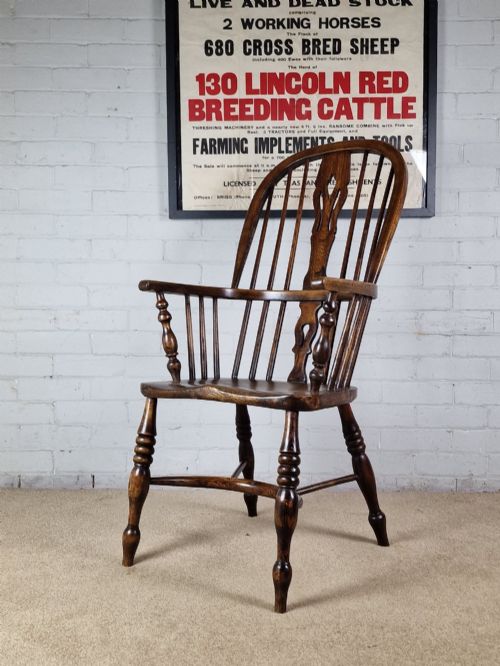
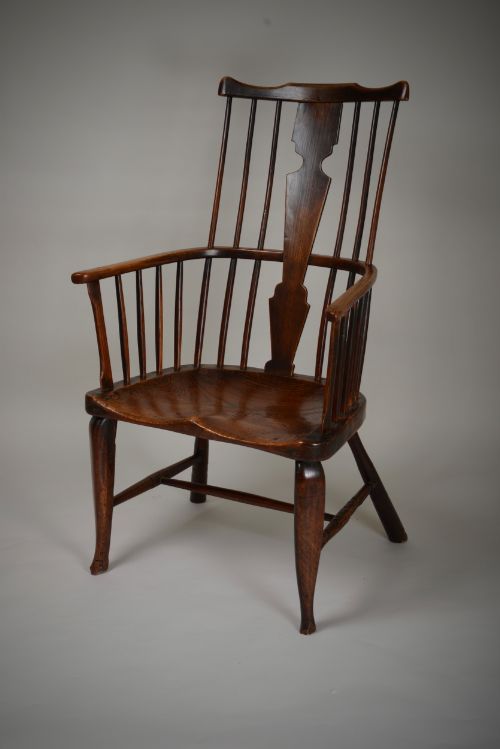
Dark Elm Windsor Armchair
A dark elm windsor armchair is a robust country seat built for strength, bringing centuries of vernacular woodworking straight into a room.
Dark Elm Windsor Armchair
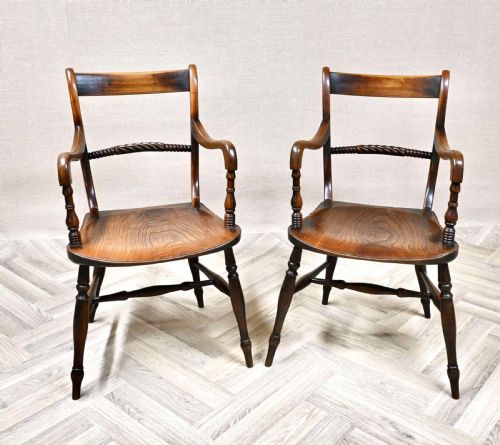
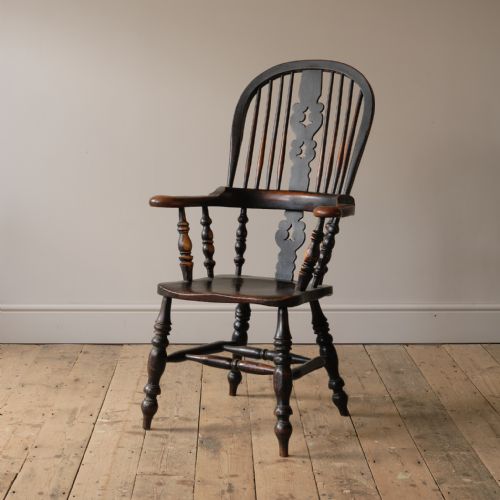
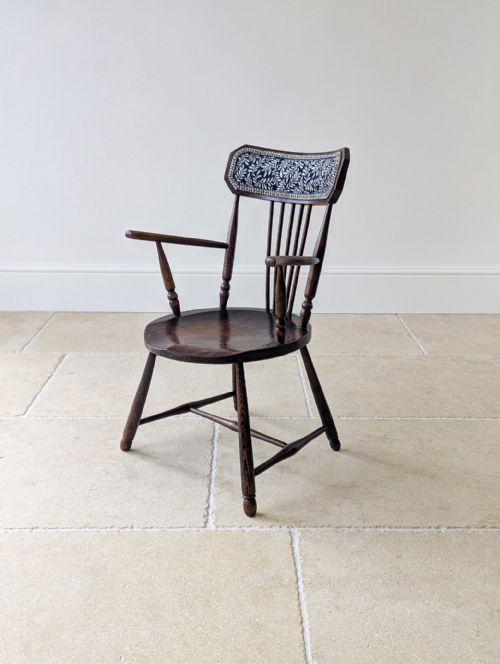
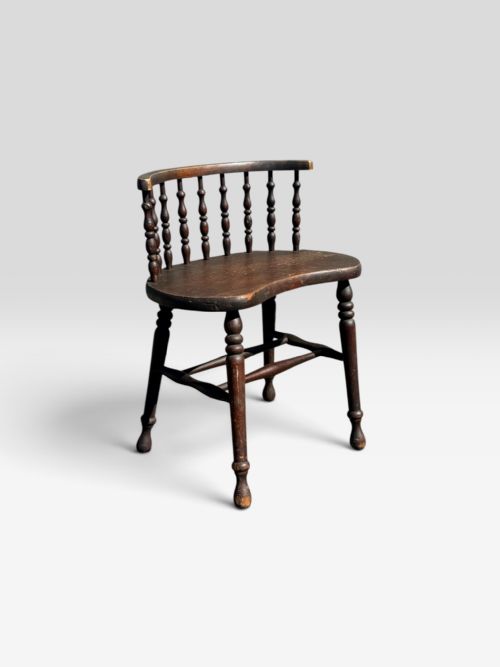
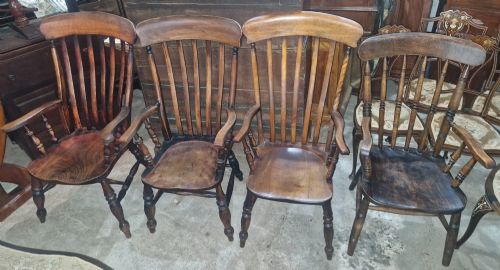
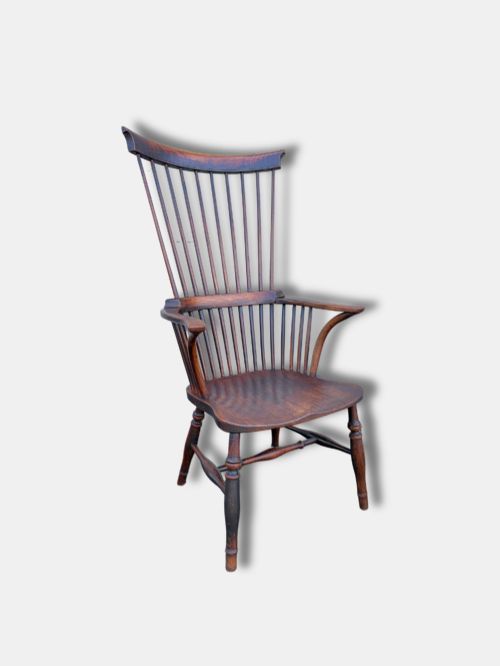
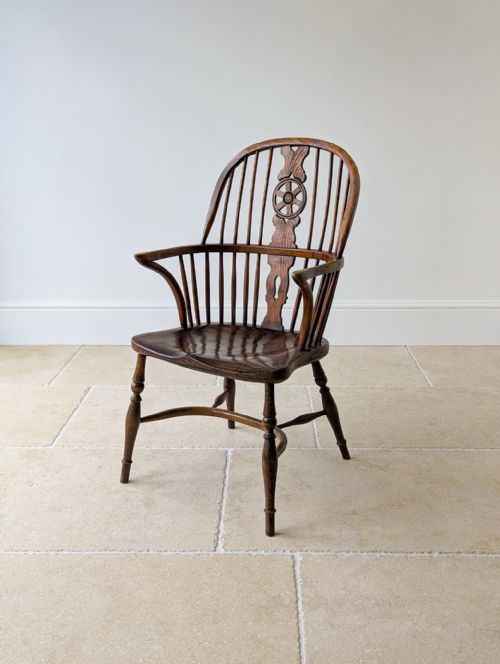
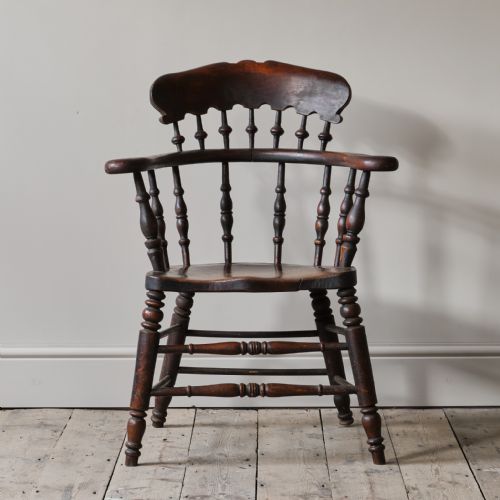
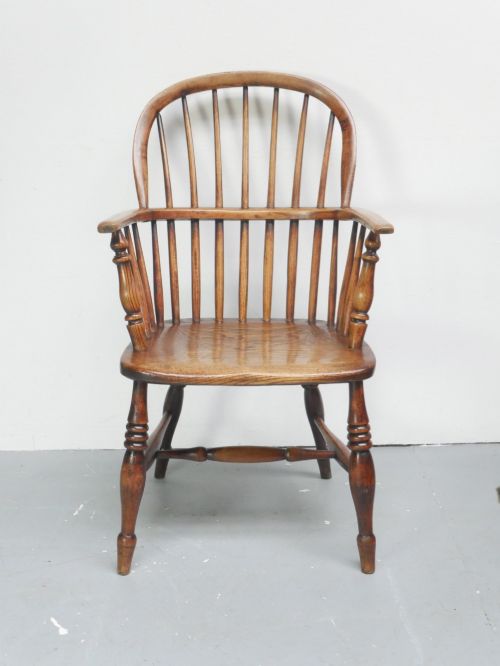
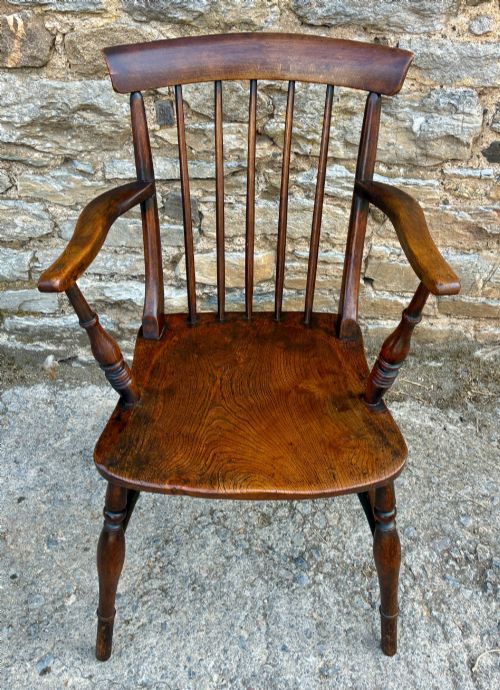
A dark elm windsor armchair brings together substantial country seating spanning the 18th and 19th centuries, including Victorian and Georgian periods. The forms range from kitchen armchairs and smokers bows to wheelbacks, comb backs, and hoop backs.
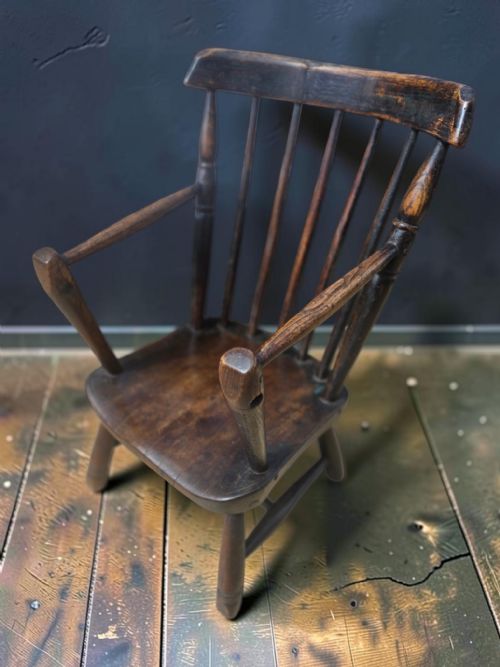
Most examples found here combine elm seats with ash, beech, or oak frameworks, reflecting English regional traditions from the Thames Valley, Lincolnshire, Scotland, and the West Country. Buyers also encounter smaller children's chairs, rocking chairs, and high chairs alongside standard armchairs.
How they were made
Maker-joiners utilised solid elm for contoured, thick seats carved into a saddle shape for comfort. This timber is paired with turned ash, beech, or oak spindles and legs, secured through traditional wedged tenon joints.
The construction relies on steam-bending flexible wood such as ash to form the continuous hoops, bows, and armrests. Surfaces developed deep patinas over decades of daily use in farmhouses and vernacular settings.
Several miniature children's versions survive, proving that past generations expected toddlers to sit just as rigidly as their parents.
What varies in quality
The distinction between ordinary and superior pieces rests on timber selection and the elegance of the spindle turning. Heavier plank seats with pronounced saddles and well-balanced comb backs or wheelbacks command greater attention.
Regional shaping and timber figuring dictate character, where clear grain patterns in the elm seat meet crisp architectural lines in the stick back or bar back structure.
The Dark Elm Windsor Armchair Glossary
- Windsor chair
- A wooden chair built with a thick solid timber seat into which the legs and back spindles are separately socketed. This method creates a rigid and durable frame without needing a central post.
- Comb back
- A chair back featuring vertical spindles topped by a horizontal headpiece resembling a hair comb. This regional design provides solid shoulder support.
- Smokers bow
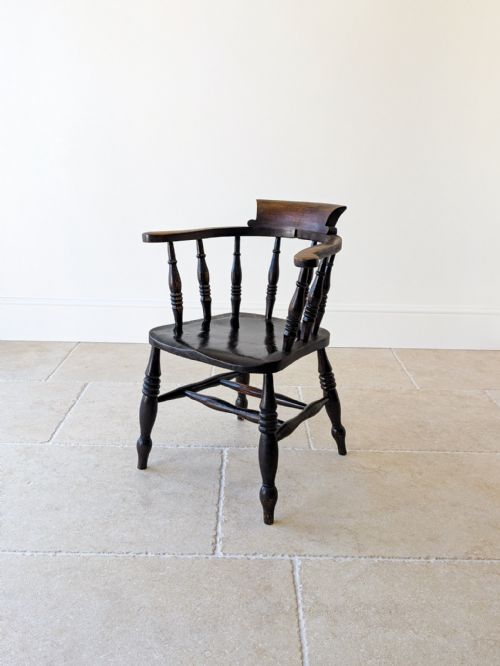
- A low-backed Windsor armchair with a rounded continuous rail wrapping around the arms. These were common in 19th-century domestic and tavern interiors.
- Wheelback
- A Windsor chair style incorporating a pierced central splat carved in the shape of a spoked wheel. It became widely popular during the Victorian period.
- Vernacular
- Localised furniture built by regional craftsmen using traditional methods and native timbers. These pieces follow practical domestic needs rather than strict metropolitan design rules.
Dark Elm Windsor Armchair: Frequently Asked Questions
What defines a windsor armchair?
A windsor armchair uses a solid sculpted wooden seat that anchors both the undercarriage legs and the upper back spindles directly into bored holes.
This structural technique separates it from framed chairs, distributing weight evenly through pegged joints.
How do I care for elm wood?
Elm responds best to stable room temperatures and occasional applications of traditional beeswax to nourish the dry grain.
Keep these chairs away from direct heat sources to prevent timber shrinkage and movement.
What is a smokers bow chair?
A smokers bow is a lower, compact Windsor armchair featuring a rounded arm rail supported by short turned spindles.
Victorian households and rural taverns utilised them extensively for comfortable seating around firesides.
How can I tell the age of a chair?
Age is indicated by construction traits, tool marks on the underside of the plank seat, and the depth of the timber patina.
Earlier 18th-century examples often display broader proportions and simpler, hand-turned components compared to late Victorian output.