

Dark Elm Carver Chair
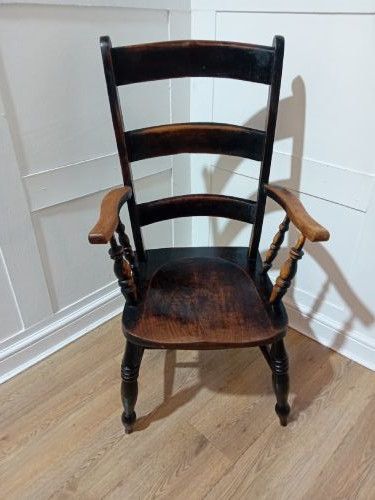
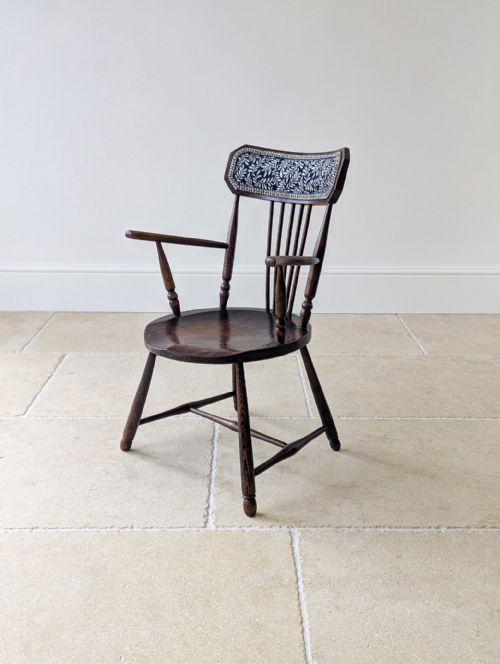
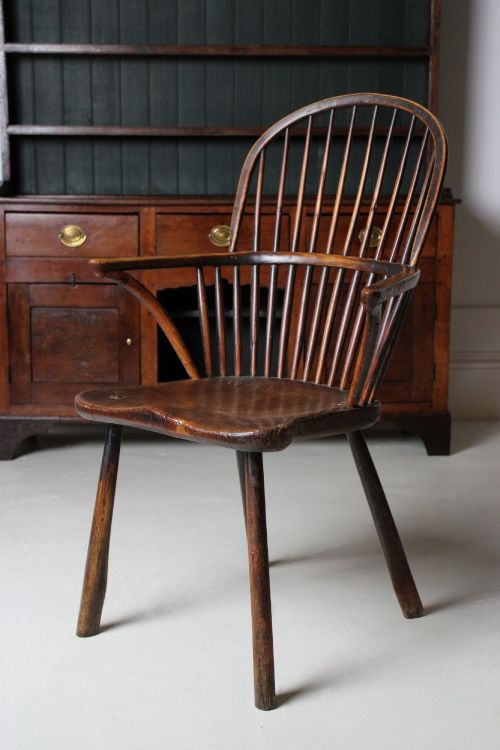
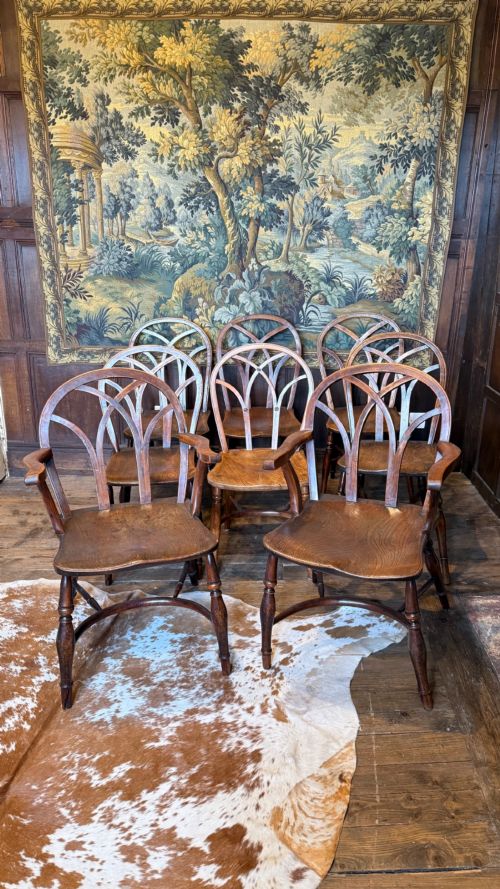
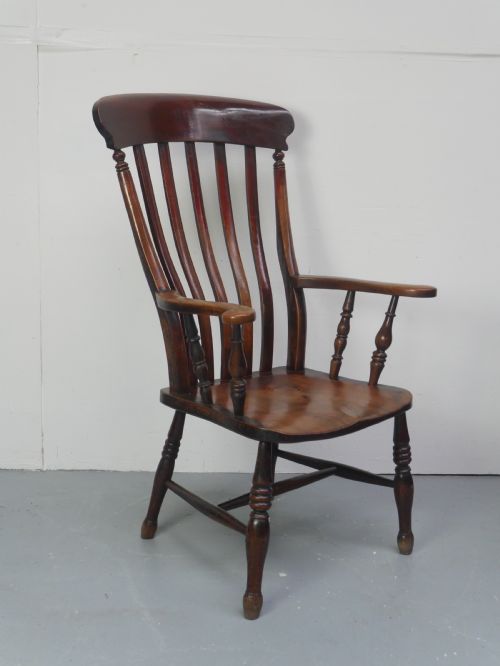
A dark elm carver chair brings tactile English country character into a room through sturdy vernacular woodwork and rich timber grain.
Dark Elm Carver Chair
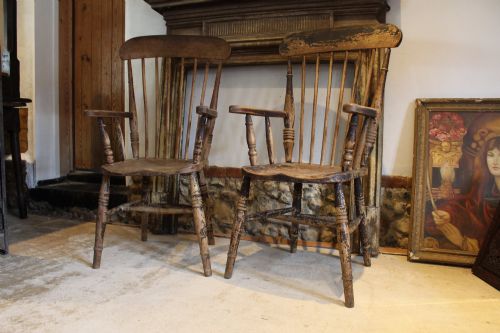
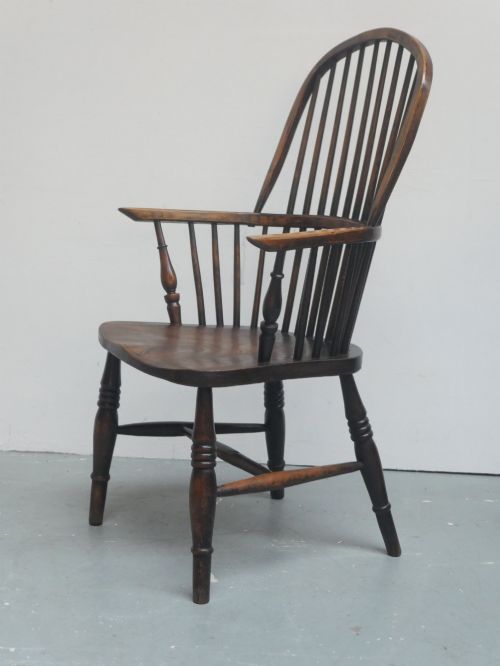
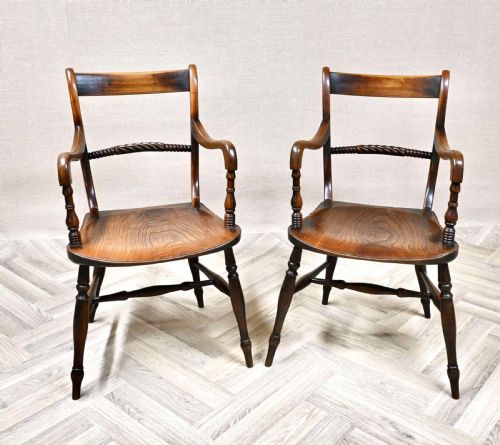
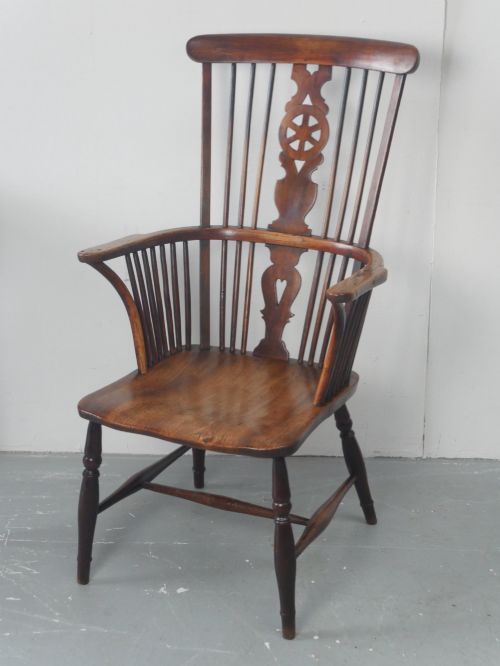
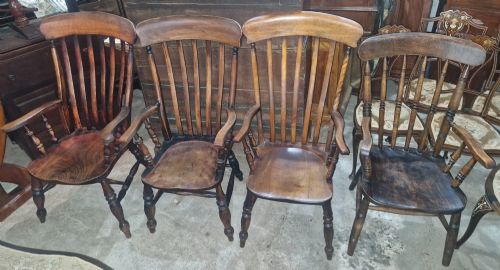
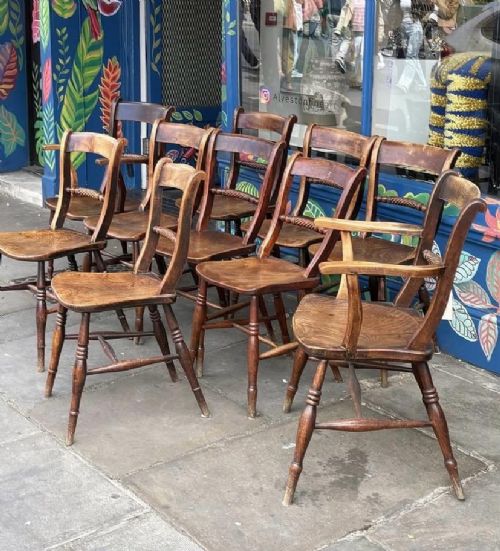
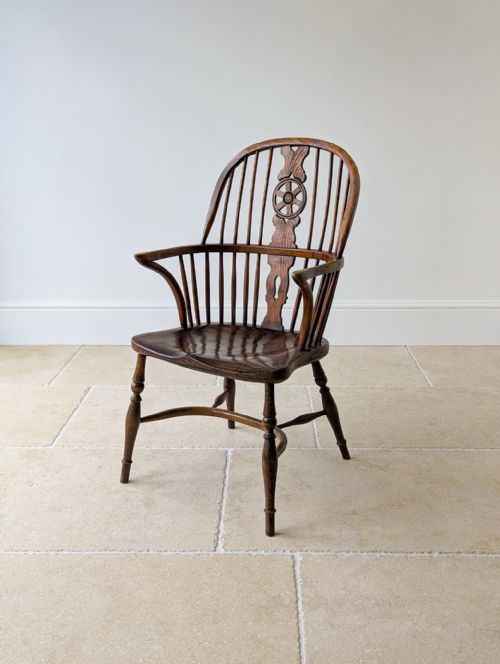
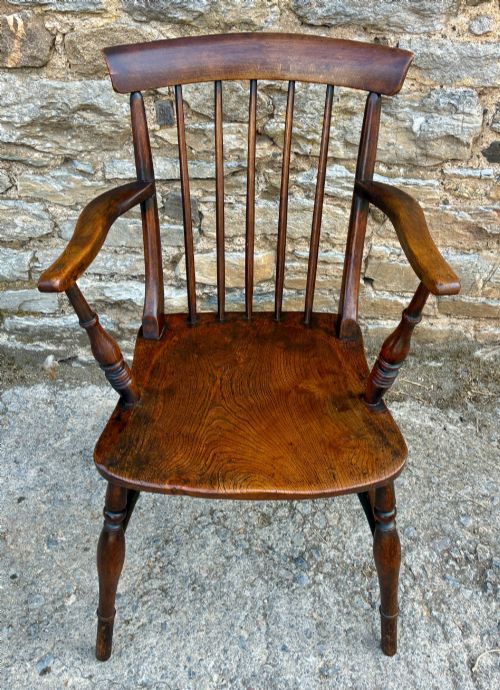
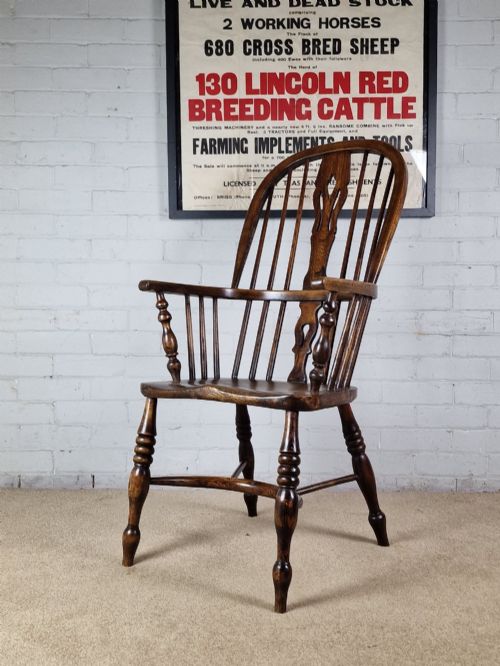
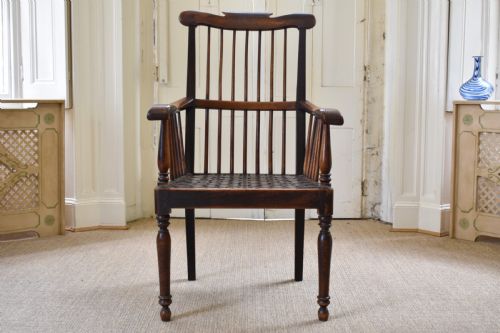
A dark elm carver chair represents traditional British seating, spanning Georgian, Victorian, and Edwardian periods with robust regional forms. Buyers seeking a dark elm carver chair will encounter vernacular Windsor armchairs, stick backs, and wheel backs originating from English country workshops and the Thames Valley. These seating pieces combine substantial armrests with supportive high or low backs designed for daily domestic use.
The selection ranges from early Georgian vernacular grandfathers to late Victorian farmhouse kitchen armchairs built with generous proportions. Most examples pair a deep elm seat with contrasting spindle supports in ash, beech, or yew wood. This combination yields a sturdy armchair suited equally to dining tables or fireside placement.
Construction and Materials
Craftsmen built these chairs by wedging tapered legs and back spindles directly into solid, thick elm saddle seats. Elm timber provided the necessary toughness to prevent splitting under heavy use, whilst flexible ash or beech formed the turned spindles and steam-bent hoops. Local makers utilised traditional mortise and tenon joints secured with wooden wedges to ensure long-lasting structural integrity.
Surface treatments relied on simple oils and waxes built up over decades, enhancing the natural dark figuring of the elm grain. Regional variations in turning and back construction identified specific manufacturing centres, from Lincolnshire stick backs to Thames Valley wheel backs. The joinery prioritised functional strength over decorative artifice, resulting in honest, utilitarian frames.
Some nineteenth-century makers carved subtle thumb depressions into the arm terminals for resting weary hands.
Assessing Craft and Preservation
Quality rests in the sculptural depth of the saddle seat and the harmonious balance of the turned spindles. Superior examples display carefully sculpted arms and substantial timber scantlings that have survived centuries of use without major timber replacement. The visual appeal depends heavily on the patination of the wood and the retention of an original surface finish rather than a modern stripped appearance.
Finer pieces exhibit thoughtful timber selection, pairing rich yew or dark elm with well-matched contrasting woods for the underframe. Lesser examples show simpler turning, thinner seats, or extensive structural repairs that alter the original proportions. The best carvers maintain tight joints and a pleasing posture that reflects the maker's eye for regional balance.
The Dark Elm Carver Chair Glossary
- Carver
- An armchair, typically designed to sit at the head of a dining table or by a hearth. These pieces feature structural armrests integrated into the back frame.
- Windsor
- A chair constructed with a solid wooden seat into which the legs and back sticks are separately tenoned. They often incorporate steam-bent hoops or comb backs.
- Vernacular
- Objects built by regional craftsmen following local traditions rather than academic architectural styles. These pieces prioritise utility and local material availability.
- Wheelback
- A Windsor chair variation featuring a pierced wooden splat shaped like a cartwheel centred in the backrest. This decorative motif became popular during the nineteenth century.
- Spindle
- A slender, turned wooden rod used to form the back support or undercarriage of a chair. Makers turned these components on a lathe to balance strength with lightness.
Dark Elm Carver Chair: Frequently Asked Questions
How do I date an elm chair?
Dating relies on observing construction methods, tool marks, timber combinations, and overall stylistic evolution from the Georgian period onward. Early pieces often feature broader seats and simpler hand-turned components.
Later Victorian and Edwardian examples incorporate more complex steam-bending techniques and factory-assisted lathe work. Comparing the wear patterns and timber shrinkage helps confirm the age of the frame.
Why is elm used for seats?
Elm timber possesses an interlocking grain structure that makes it exceptionally resistant to splitting when nailed or wedged. This property made it the ideal material for thick, carved chair seats that had to hold tenoned legs firmly.
Makers valued elm for its durability and the rich, dark figuring it developed over time. Its toughness ensured the chair undercarriage remained stable through decades of movement.
Where were Windsor chairs made?
Windsor chairs were produced across various English regions, with notable regional centres developing in the Thames Valley, Lincolnshire, and the West Country. Local turners utilised accessible woods like beech, ash, and elm found in their immediate surroundings.
Different districts developed distinct back designs, such as wheel backs, comb backs, and stick backs. These regional traits help modern collectors trace the geographical origin of individual pieces.