
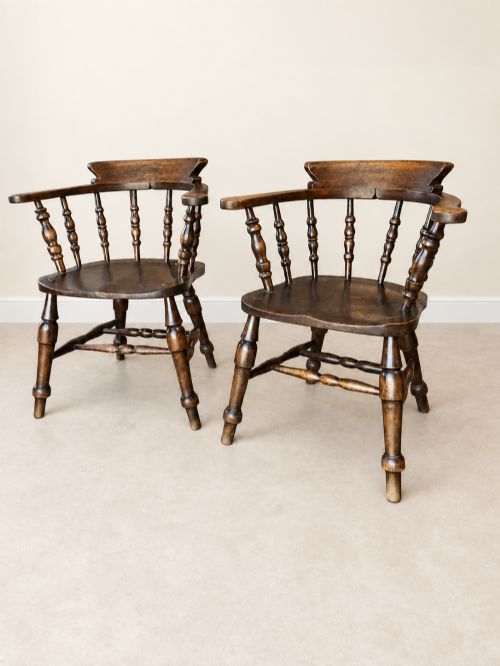
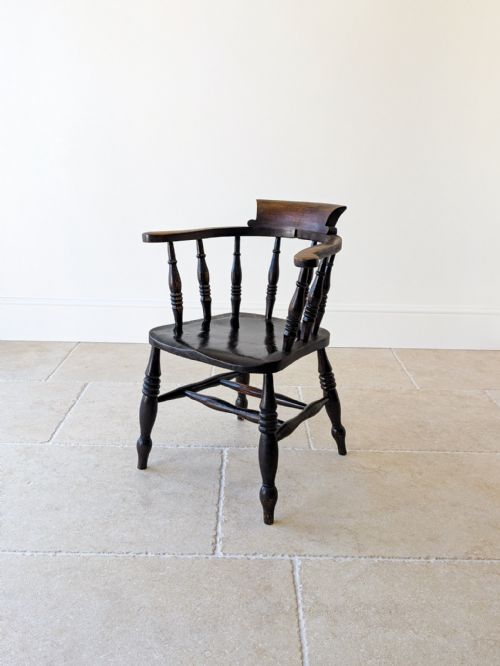
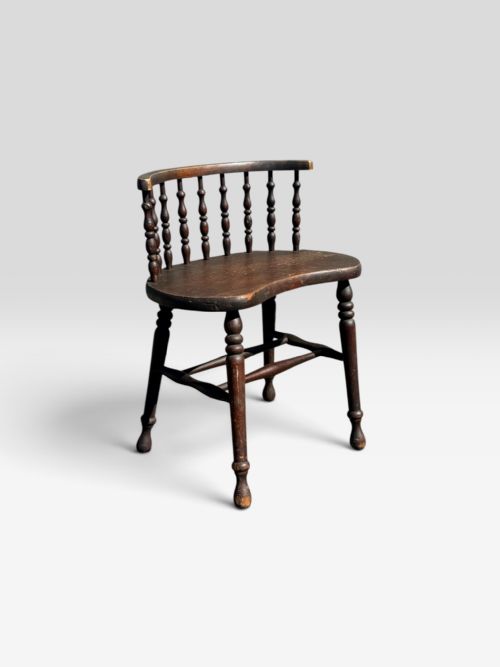
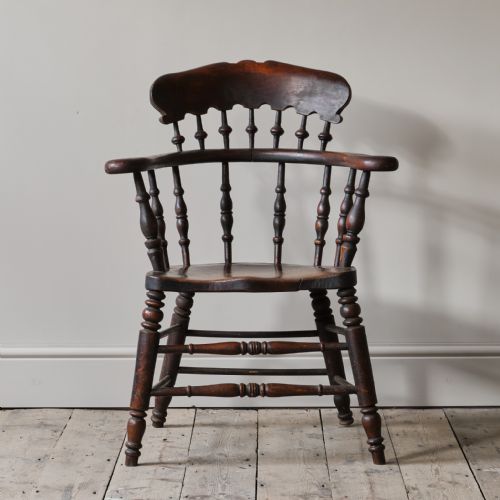




Dark Elm Captains Chair
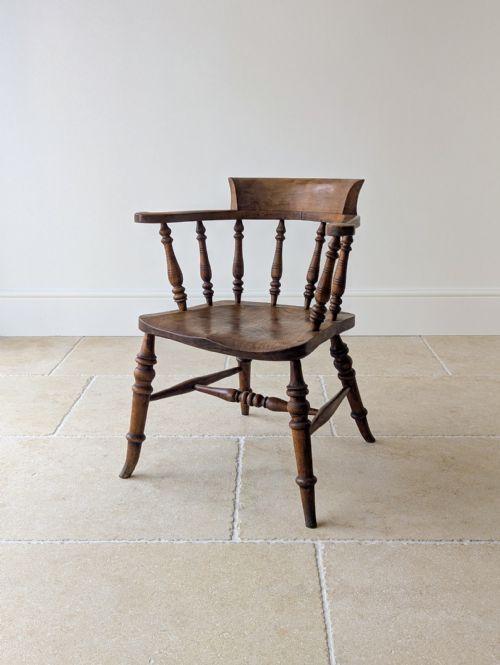
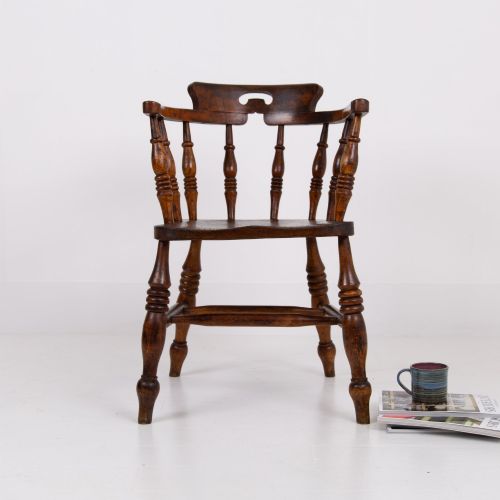
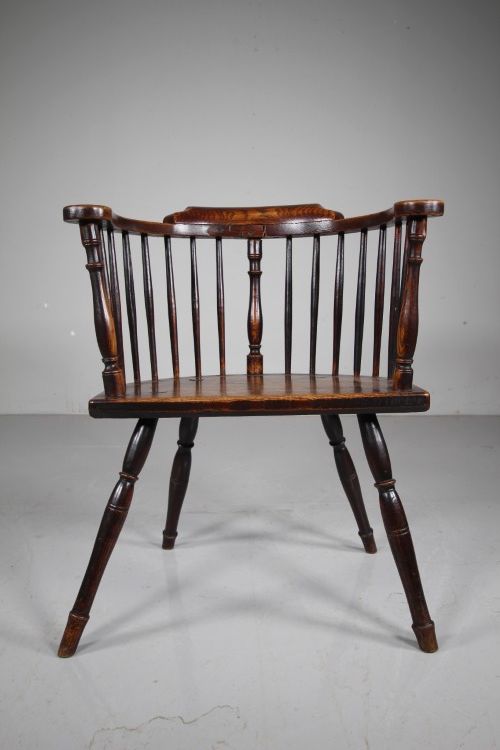
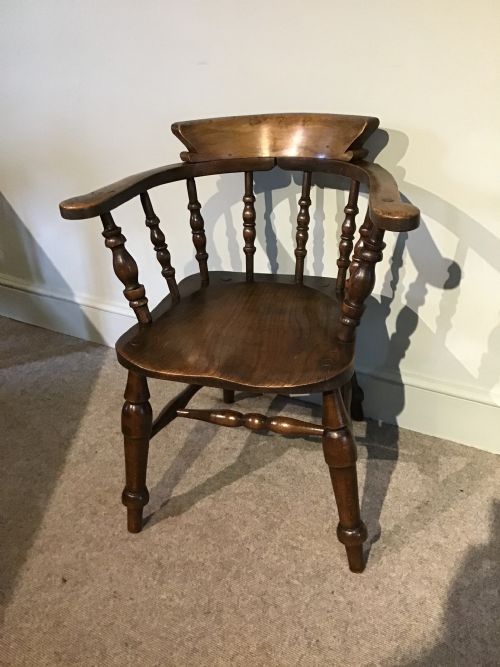
A dark elm captains chair is a sturdy country seat built for comfort, and these historic examples bring honest English character to any room.
Dark Elm Captains Chair
A dark elm captains chair sits firmly within the English Windsor and vernacular seating traditions, often known locally as smokers bows or elbow chairs. These sturdy armchairs appear across several periods, stretching from the eighteenth century through the Victorian era and into the early twentieth century.
The versions most common on this page combine a rich dark elm seat with supporting timbers like beech, ash, or alder in the spindles and legs. They serve primarily as desk chairs or robust armchairs, valued for their low backs and generous proportions.
Materials and construction
Cabinet makers and bodgers shaped these chairs using a combination of turned wood for the spindles and legs, alongside heavily saddled solid elm for the seat planks. Elm provided a tough, splinter-resistant surface that could be scooped out for comfort.
Makers utilised steam-bending techniques to form the continuous curved back rails and armrests from single pieces of timber. The components were then joined using traditional wedged tenons and mortises.
Many of these sturdy country chairs survived decades of tavern smoke and bustling studies without losing their balance.
Assessing quality and character
Quality rests heavily on the depth of the timber figuring in the elm seat and the crispness of the wood turnings on the legs and arm supports. Strong pegging and minimal replacement parts elevate an example.
The extent of honest wear and the warmth of the patination dictate the visual appeal of each piece. Superior examples retain their original structural integrity alongside deep, aged colour.
John Shadford
The Dark Elm Captains Chair Glossary
- Smokers Bow
- A low-backed Windsor armchair variant with a rounded, continuous armrail. These chairs were common in domestic parlours and public houses.
- Windsor Chair
- A wooden chair constructed with a thick solid seat into which the legs and back spindles are separately bored and wedged. This method creates a robust, rigid frame.
- Saddled Seat
- A wooden chair seat carved and scooped into a concave shape to mimic a saddle for sitting comfort. This shaping requires considerable skill with an adze and scorper.
- Broad Arm
- A chair featuring significantly widened wooden armrests designed for writing or resting papers. They appear frequently on desk and captain chairs.
- Bodger
- A traditional pole-lathe turner working in the woods to produce chair legs and spindles for urban and rural workshops. Their output formed the basis of many country chairs.
Dark Elm Captains Chair: Frequently Asked Questions
What is a dark elm captains chair?
A dark elm captains chair is a traditional English vernacular armchair featuring a low curved back and a solid wood seat. They belong to the broader Windsor chair family and were built for daily utility.
These pieces typically combine an elm seat with turned wooden legs and spindles made from ash, beech, or alder. Their robust construction made them popular in offices, studies, and country homes.
How do I date a Victorian captains chair?
Dating relies on observing construction methods, timber choices, and tool marks left on the underside of the seat. Victorian examples often display machine-sawn components alongside hand-turned spindles.
Looking closely at the patina and the wear patterns on the arms and footrests also helps establish age. Comparing the turned leg patterns against known period styles narrows down the decade.
Are these chairs comfortable for daily use?
The saddled elm seats are ergonomically carved to provide surprising comfort during extended periods of sitting. Their sturdy proportions offer solid back and arm support.
Many people utilise them today as desk chairs or reading seats in studies and living rooms. Their robust build handles regular daily use without issue.
How do I care for antique elm wood?
Maintain elm furniture by keeping it away from direct heat sources and sudden humidity changes to prevent timber splitting. Regular dusting with a dry cloth keeps the surface clean.
Applying a traditional beeswax polish occasionally helps nourish the wood and preserve its historic patination. Avoid silicone-based sprays which can damage aged finishes.