
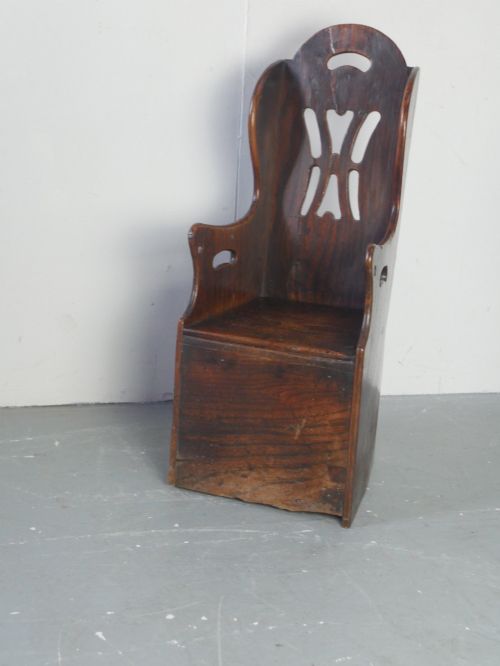
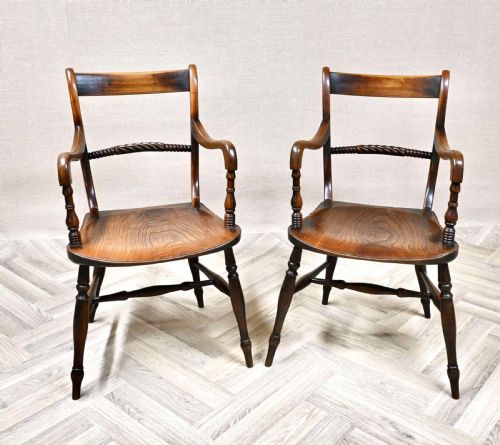
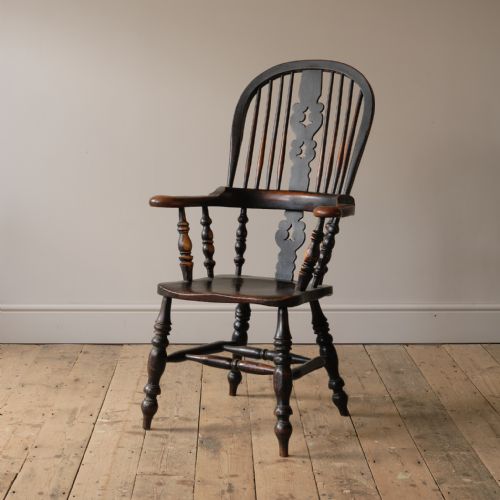
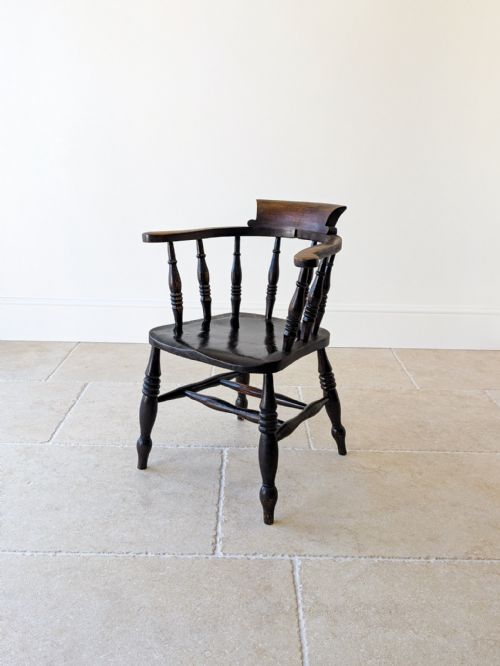


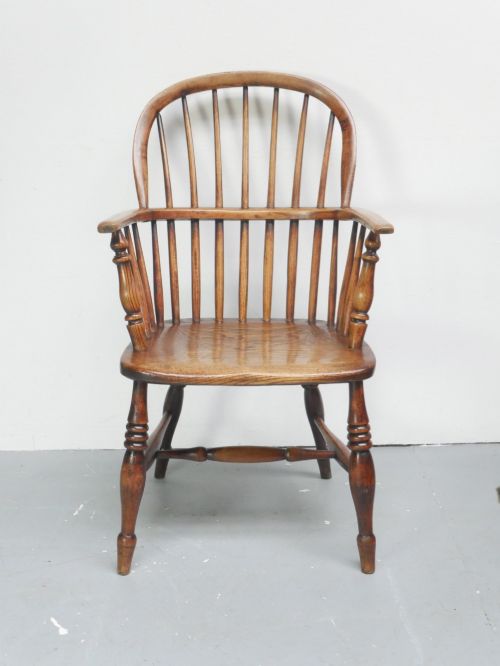
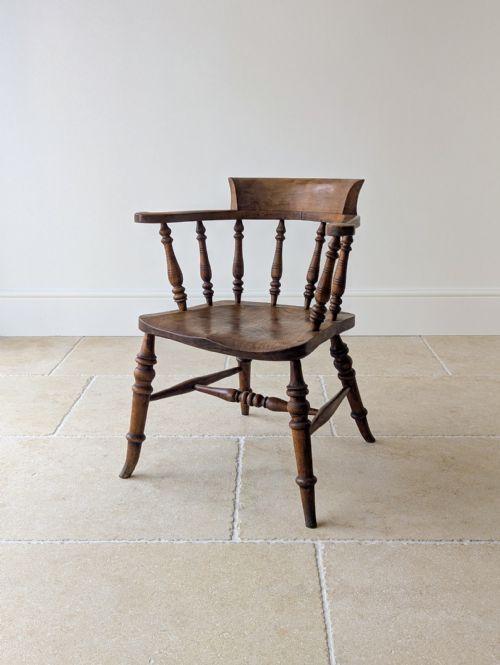
Dark Elm Armchair
A dark elm armchair brings immediate warmth and honest character to a room through its rich grain and traditional country craftsmanship.
Dark Elm Armchair
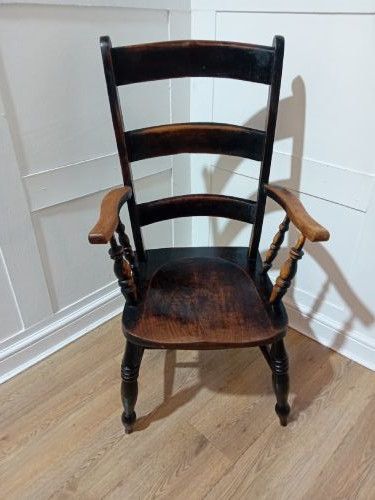
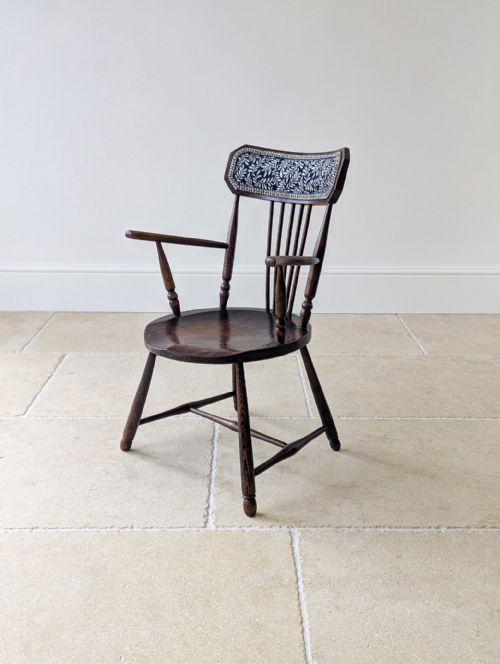
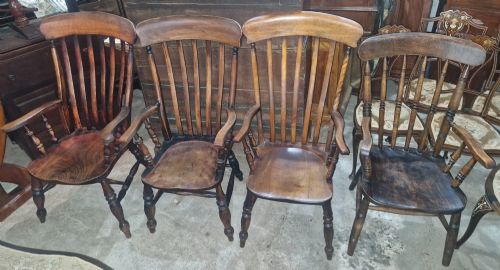
A dark elm armchair is a robust wooden seat designed for everyday utility, drawing on vernacular traditions from the eighteenth and nineteenth centuries. You will most frequently encounter Windsor-style chairs originating from English rural workshops, alongside regional variations such as Thames Valley, West Country, and Lancashire examples.
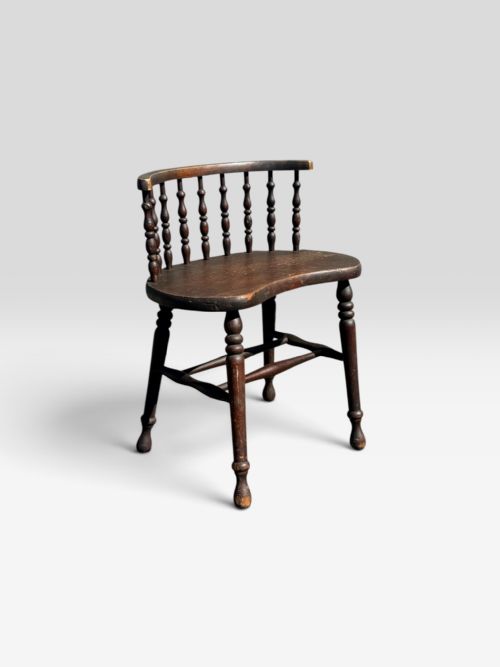
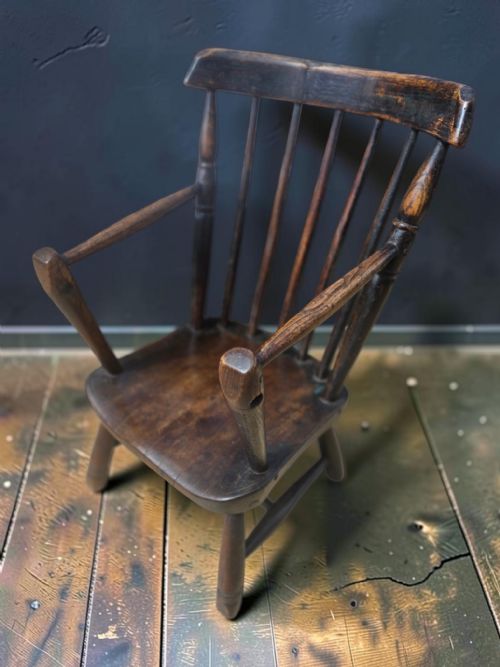
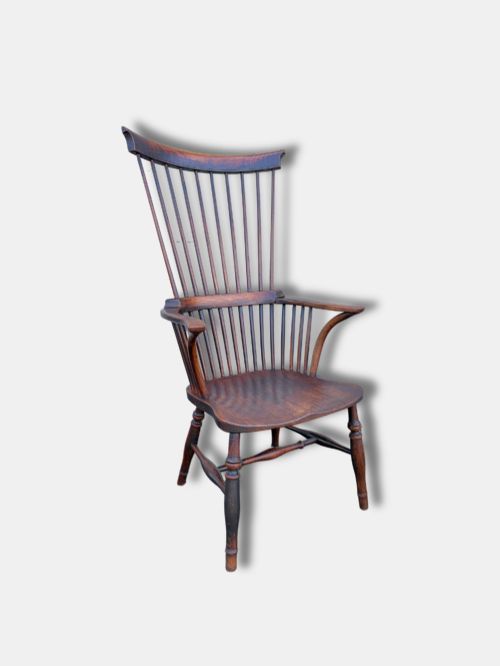
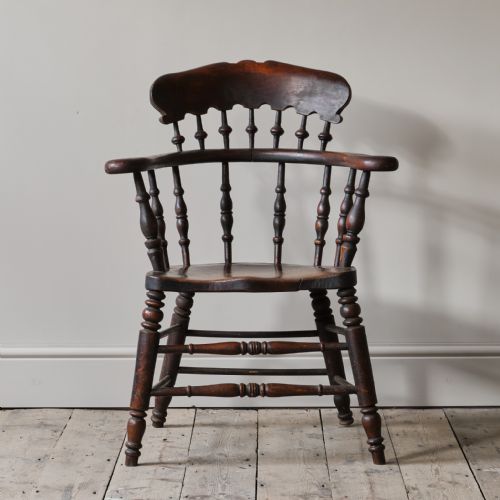
The selection ranges from generous farmhouse kitchen armchairs and smokers bows to high comb-backs, wheel-backs, and low rocking chairs. Alongside adult seating, smaller child-sized chairs and high chairs appear regularly in elm, reflecting domestic life across the Victorian and Georgian periods.
Regional vernacular makers utilised locally available timber, pairing elm seats with ash, beech, oak, or yew for spindles and legs. While the majority of pieces stem from English country traditions, occasional imported examples such as Chinese elm yoke-back chairs broaden the scope.
How they were made
The construction relies on a thick, solid elm seat saddle into which the legs, back spindles, and arm bow are wedged and pegged. Elm is chosen for the seat because its interlocking grain resists splitting when bored and shaped.
Turned components in ash, beech, or oak provide structural rigidity for the legs and spindles, while steam-bending shapes the continuous hoops, comb-backs, and arm bows. Carpenters used simple drawknives, spokeshaves, and pole lathes to shape each part by hand.
Surfaces receive traditional finishes including wax, oil, or original dark patination built up through generations of use. Some regional variants retain early surface treatments such as red lacquer.
Dark Elm Armchair Retail Price Guide 2026
Typical asking prices for dark elm armchair among the pieces listed under this phrase on Sellingantiques today, from the lower quarter to the upper quarter. They describe what is for sale here now, not the wider market.
Several miniature child chairs mirror full-sized farmhouse armchairs precisely, proving that toddlers required proper Windsor seating too.
What varies in quality
Quality rests primarily in the harmony of proportion, the depth of the seat's sculptural adzing, and the integrity of the original construction. Superior chairs display balanced turnings on the legs and spindles without clumsy replacement parts.
The visual appeal of the timber grain and the depth of surface patina distinguish finer examples from standard utility seating. Original finishes and minimal structural intervention preserve the historic character sought by collectors.
The Dark Elm Armchair Glossary
- Comb-back
- A Windsor chair variation where the central vertical spindles extend upward to support a horizontal top rail resembling the teeth of a comb. This style offers robust upper back support.
- Smokers bow
- A low-backed Windsor armchair designed for domestic or tavern use, featuring a continuous curved arm rail and turned spindles. These are also known as captain's chairs.
- Wheel-back
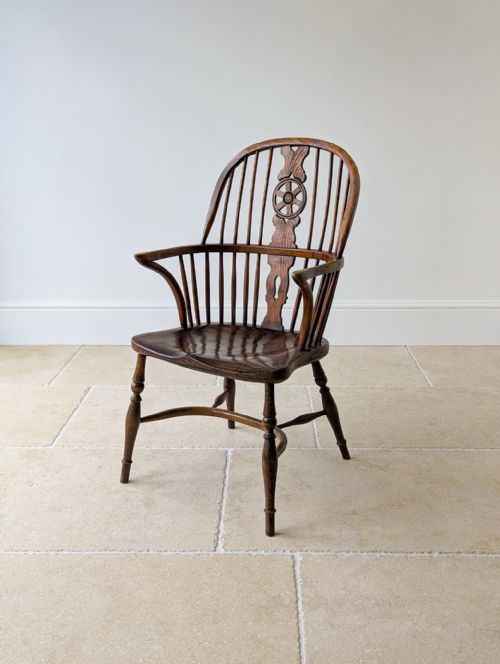
- A chair style incorporating a pierced splat shaped like a cartwheel in the centre of the backrest. This decorative motif gained popularity during the nineteenth century.
- Vernacular
- Objects made by local craftsmen following regional traditions rather than strict academic design patterns. These pieces prioritise practical utility and local materials.
- Patina
- The surface sheen and colour developed by wood over decades of handling, exposure to light, and polishing. A rich patina indicates age and regular use.
Dark Elm Armchair: Frequently Asked Questions
How do I identify a Windsor armchair?
A Windsor armchair is defined by its distinct construction method, where all components are inserted directly into a solid wooden seat rather than a traditional frame.
Look for turned legs and spindles pegged into a sculpted elm seat alongside a steam-bent back rail.
Why is elm used for chair seats?
Elm timber possesses a tightly intertwined grain structure that makes it exceptionally tough and resistant to splitting under pressure.
Chair makers utilised this strength to carve deep, comfortable saddles without the wood cracking when fitted with heavy legs and back spindles.
What is a Thames Valley chair?
Thames Valley chairs refer to rural seating produced along the river valleys of southern England, noted for refined turning work and elegant proportions.
These pieces frequently combine elm seats with ash or yew components, showing higher status craftsmanship than standard farmhouse furniture.
How should I care for an antique elm chair?
Keep wooden seating away from direct heat sources and rapid temperature fluctuations to prevent the elm and supporting timbers from drying out and shrinking.
Apply a traditional beeswax polish occasionally to nourish the surface and maintain the natural lustre of the aged timber.