
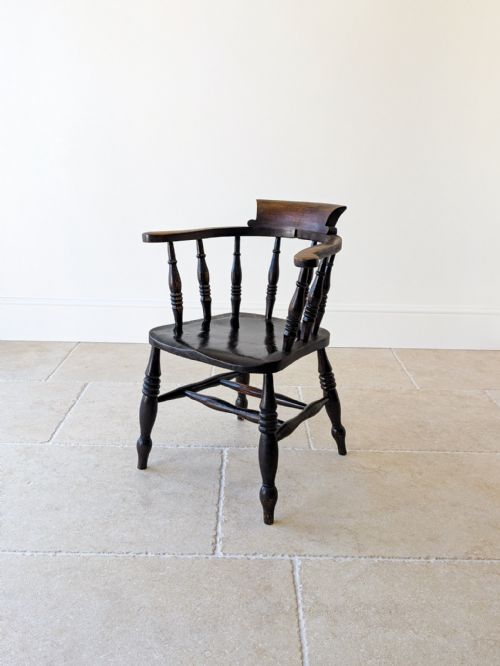

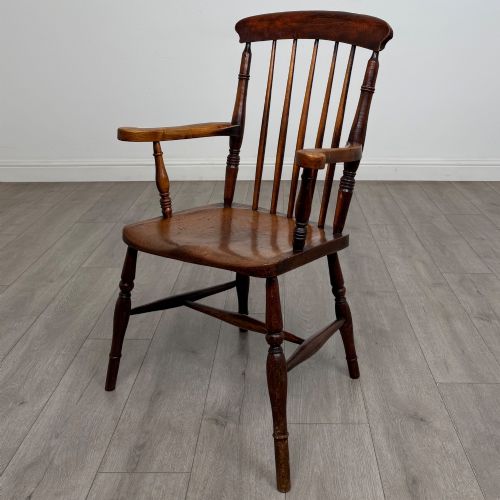
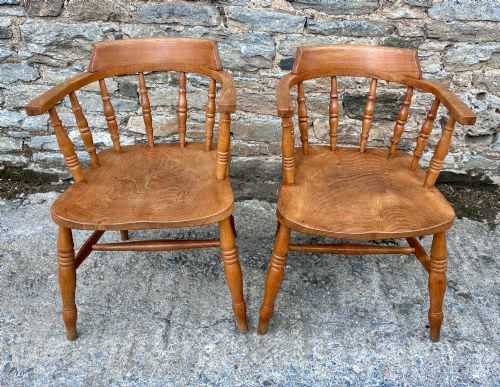
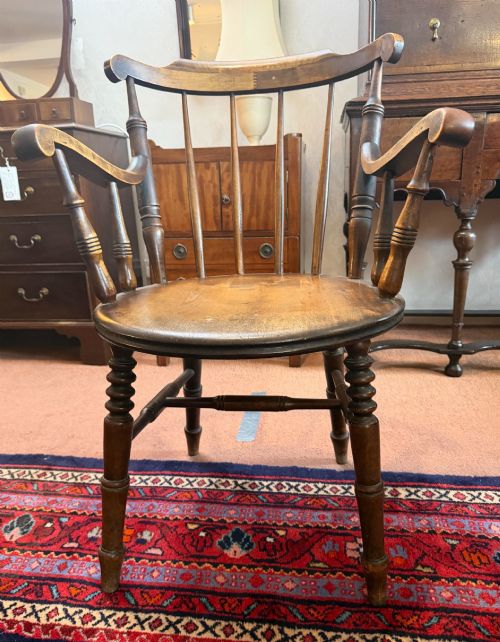
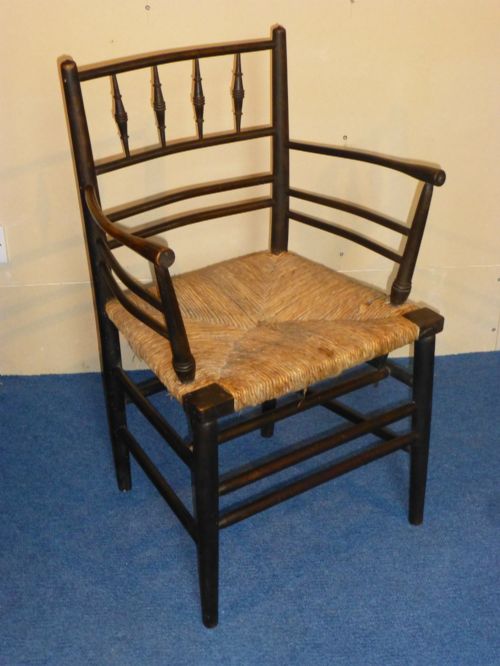
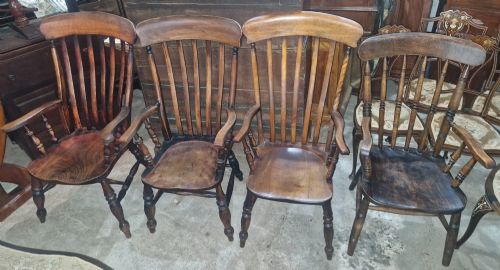
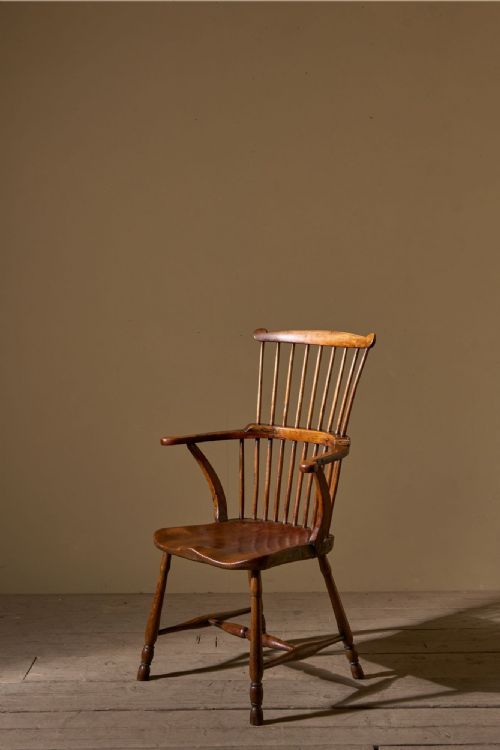
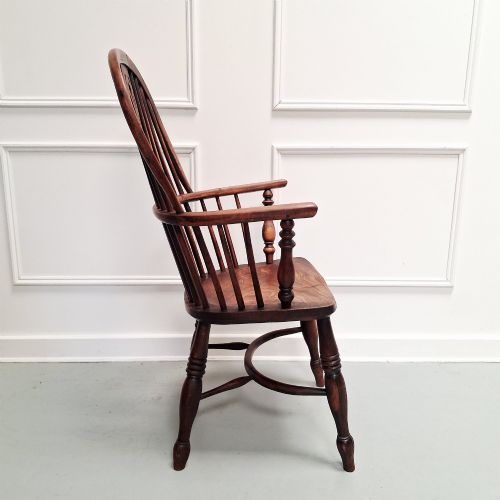
Wooden Spindle Armchair
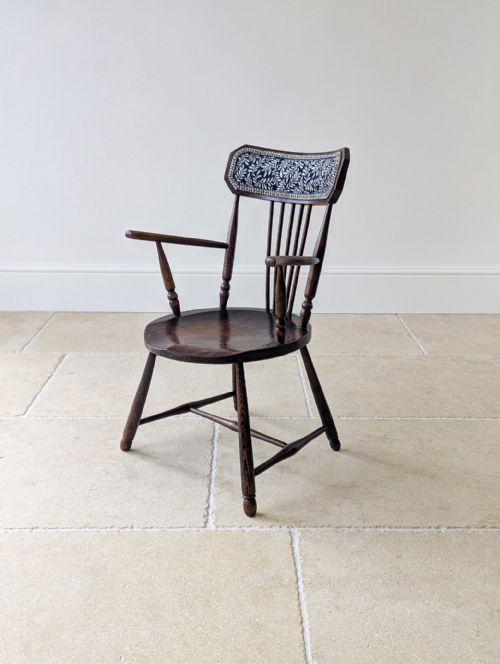
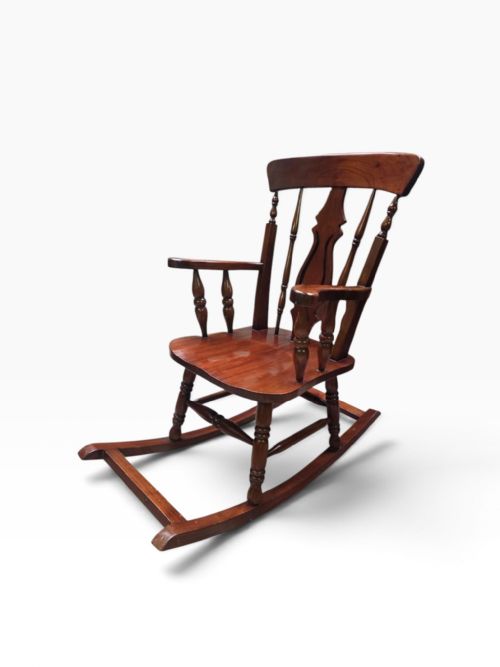
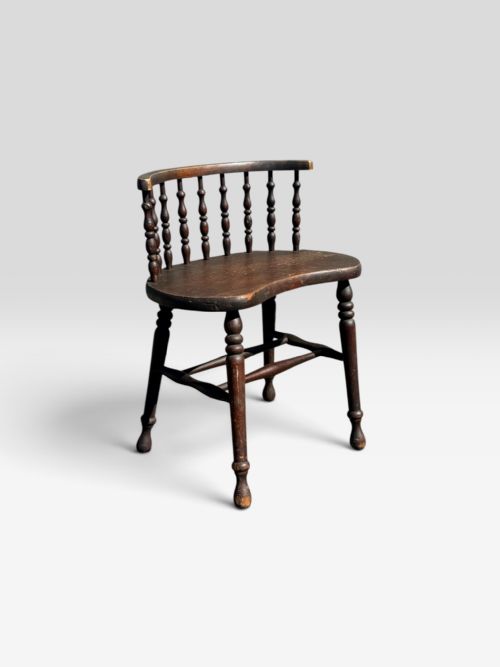
A wooden spindle armchair brings robust vernacular charm to a room, offering sturdy turned uprights and time-worn timber seats.
Wooden Spindle Armchair
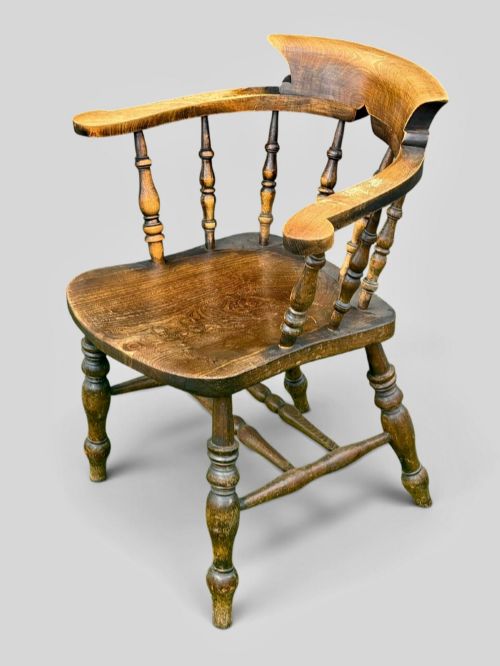
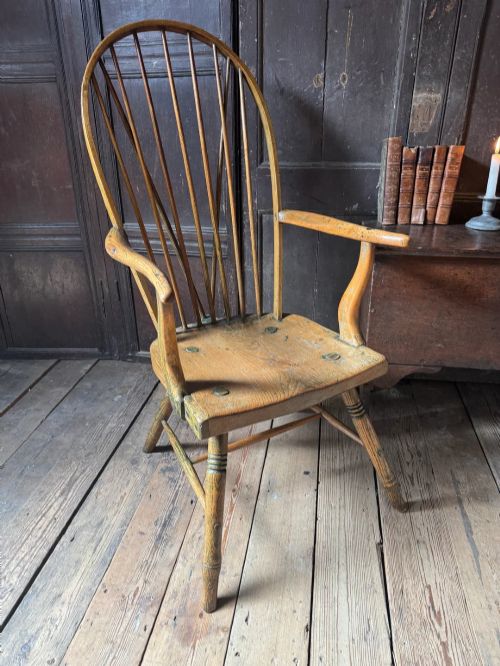
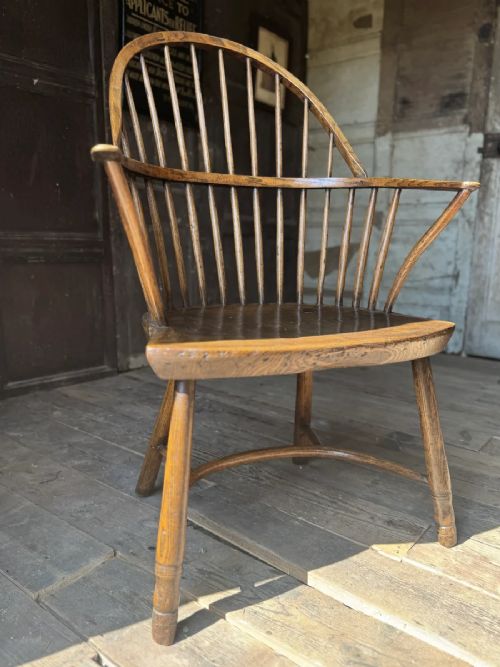
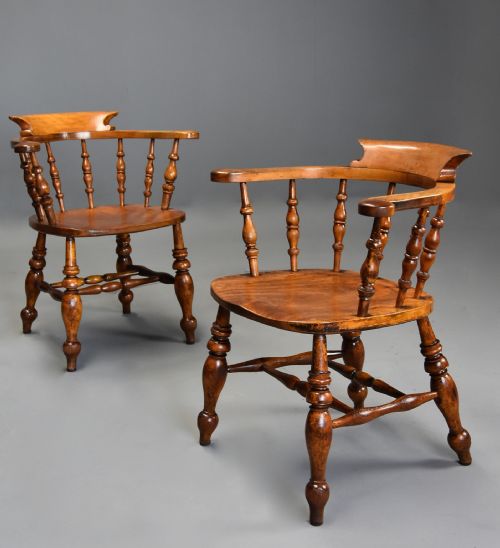
A wooden spindle armchair encompasses diverse vernacular forms including Windsor chairs, captain's chairs, smoker's bows, and farmhouse rockers. These sturdy seats originate primarily from the eighteenth, nineteenth, and early twentieth centuries, spanning periods from George II through to the Edwardian era.
The versions met most frequently on this page are nineteenth-century Victorian pieces, often exhibiting country vernacular styling. Buyers encounter kitchen armchairs, desk chairs, and corner chairs shaped by regional English traditions.
Makers utilised local timbers to construct practical seating for farmhouses, country houses, and offices. The resulting chairs balance functional durability with expressive turning and curved backrests.
Materials and Construction
Craftsmen built these chairs by combining contrasting native woods, frequently pairing elm for comfortable, resilient seats with ash, beech, or oak for bent frames and turned spindles. This traditional method harnessed the specific properties of each timber to withstand heavy daily use.
Joinery relied heavily on wedged through-tenons and steam-bent components, creating rigid frameworks without relying on excessive metal fixings. Many examples incorporate rush seating or solid plank construction shaped by adze and drawknife.
Surface treatments developed over decades through friction and natural waxing, producing distinctive patinas across fruitwood, laburnum, birch, and mahogany.
Listings feature eighteenth-century, Victorian, and Edwardian examples constructed from elm, ash, oak, beech, and mahogany.
Judging Quality
Quality rests in the harmony of the timber selection and the crispness of the spindle turnings. Superior examples display thoughtful grain matching between the seat saddle and the upright members, avoiding clumsy replacement parts.
Structural integrity dictates value, distinguishing chairs that retain their original wedged joints and unaltered leg heights from those heavily modified over generations of domestic service.
Subtleties of proportion and the depth of the patination separate ordinary utility seating from workshop masterpieces possessing distinct regional character.
Morris & Co·Philip Webb·J Spencer
The Wooden Spindle Armchair Glossary
- Windsor chair
- A chair built with a solid wooden seat into which the legs and back spindles are separately inserted. This construction method provides exceptional stability.
- Smoker's bow
- A low-backed Windsor armchair featuring a continuous curved arm rail supported by turned spindles. These were common in nineteenth-century smoking rooms and offices.
- Comb back
- A Windsor chair variation where the top rail resembles the spine of a comb, holding vertical spindles rising from a lower back bow. Eighteenth-century examples often display this form.
- Crinoline stretcher
- An arched under-stretcher connecting the legs of a chair, named after the expanding hooped skirts of the nineteenth century. It adds rigidity to the lower frame.
- Vernacular
- Objects made by regional craftsmen following local traditions rather than strict academic design patterns. These pieces prioritise practical utility and local material availability.
Wooden Spindle Armchair: Frequently Asked Questions
How do I identify a Windsor armchair?
A Windsor armchair is defined by its solid carved wooden seat, which acts as the central anchor for both the legs below and the vertical spindles above. Unlike upholstered seating, the structural frame remains entirely exposed.
Look for distinctive hoop backs or comb backs constructed from bent ash or elm fitted directly into bored holes in the seat slab.
Where were these chairs used historically?
These robust chairs served varied domestic and commercial roles, appearing in farmhouse kitchens, rural inns, country house libraries, and solicitors' offices. Their durable construction suited heavy daily traffic.
Captain's chairs and smoker's bows specifically evolved to provide low, supportive armrests for sitting at desks or relaxing in communal rooms.
How should I care for antique timber?
Maintain the wood by applying microcrystalline wax sparingly to nourish the dry surface and protect the historic patina. Avoid placing chairs near direct heat sources or in fluctuating humidity.
Gentle dusting with a soft, dry cloth preserves the finish better than modern liquid polishes, which can build up harmful residues over time.
How can I tell the period of a wooden chair?
Dating relies on observing tool marks, timber combinations, assembly techniques, and wear patterns on the seat base. Eighteenth-century versions often feature deep saddle seats and pegged joints, whereas later Victorian examples utilise machine-turned components.
Comparing the curvature of the arm bow and the thickness of the spindle turnings helps narrow down the decade of manufacture.