


Dark Brown Wooden Chest
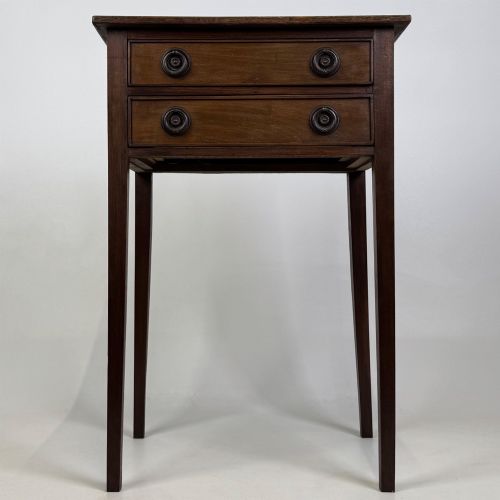
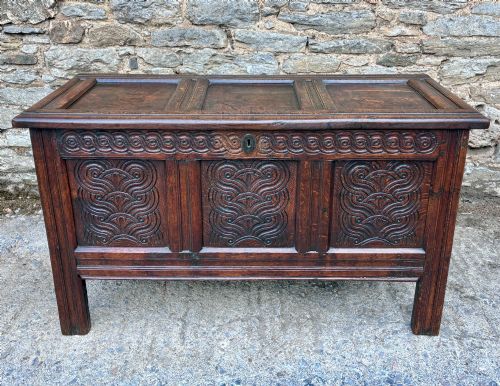
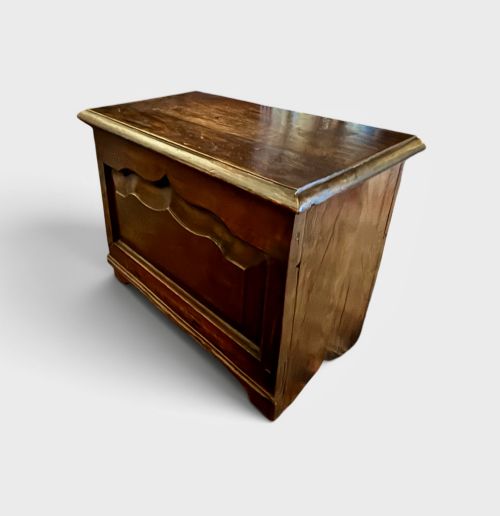
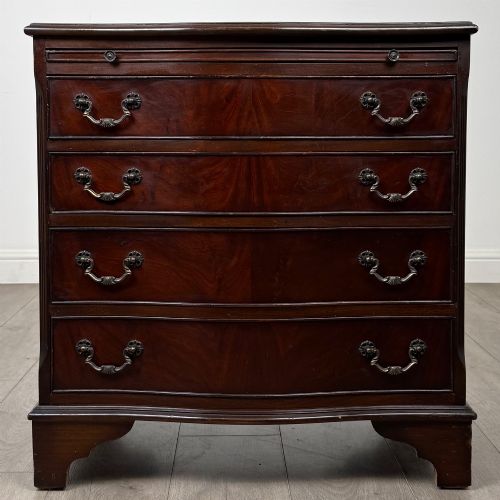
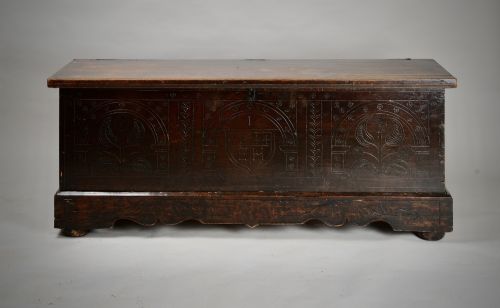
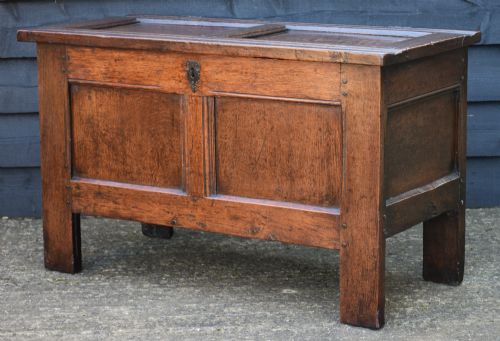
A dark brown wooden chest brings centuries of practical storage into a room, offering heavy timber construction and deep tones that anchor traditional interiors.
Dark Brown Wooden Chest
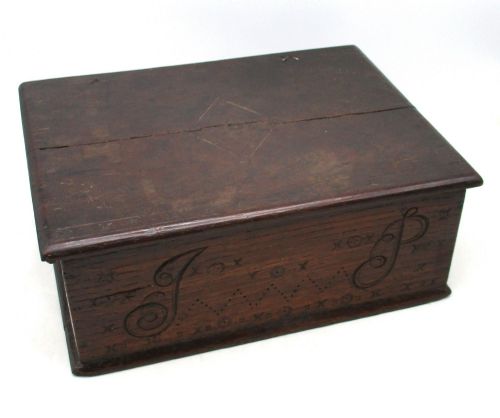
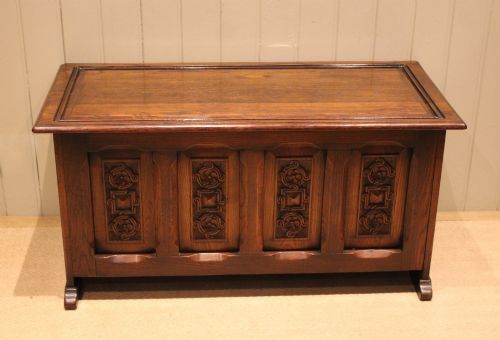
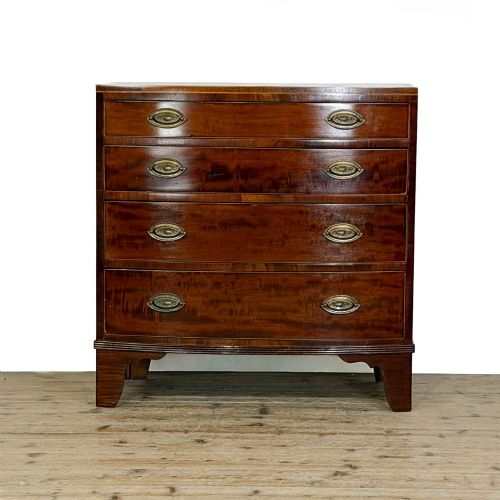
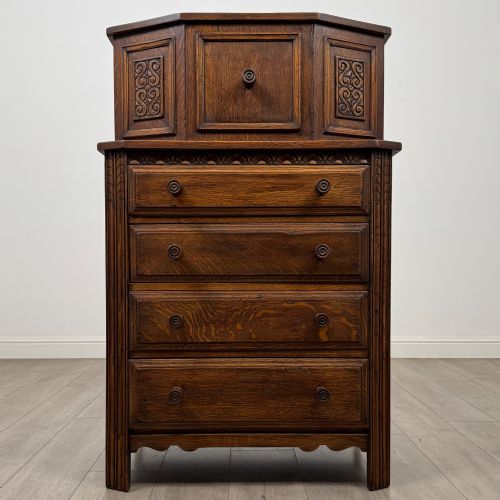
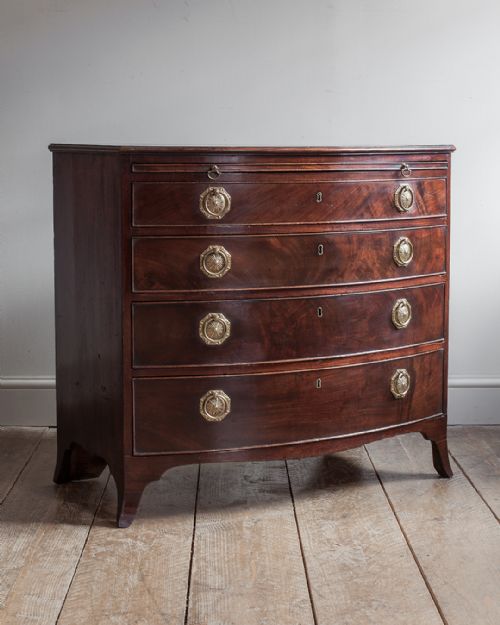
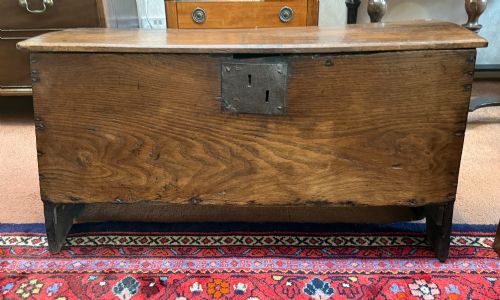
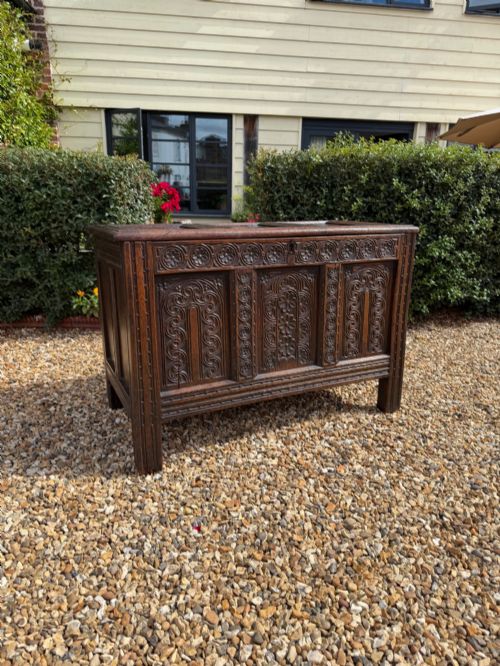
When searching for a dark brown wooden chest, collectors encounter a diverse range of forms spanning from sixteenth-century coffers to nineteenth-century chests of drawers. The selection on this page leans heavily toward sturdy oak coffers and mahogany chests of drawers produced across the seventeenth, eighteenth, and nineteenth centuries.
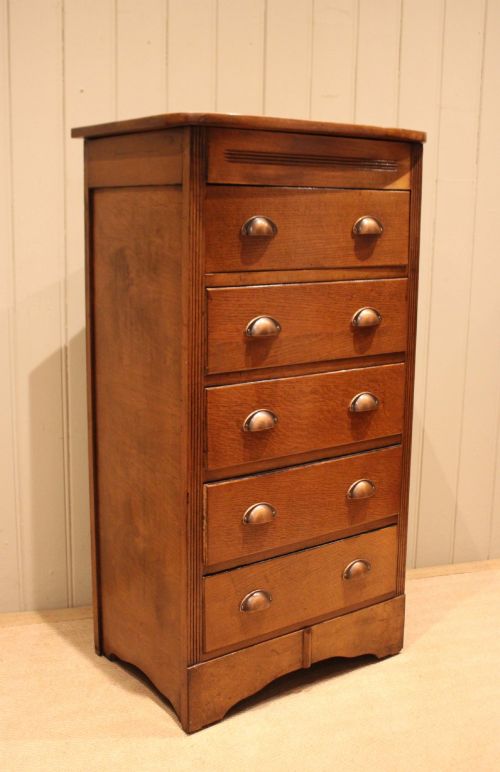
Buyers find utilitarian storage pieces including document boxes, sword chests, writing bureaux, and banks of drawers alongside panelled coffers. Oak and mahogany dominate the offerings, presenting deep brown patinas built up through centuries of handling and polishing.
How they were made
Constructed predominantly from solid oak, mahogany, elm, and pine, these pieces rely on traditional joinery such as dovetails, mortise and tenon joints, and six-plank construction. Timber selection prioritized straight-grained woods capable of supporting heavy structural frames and deep lid panels.
Iron, brass, and wrought iron hardware provides essential reinforcement and opening mechanisms, appearing as hinges, escutcheons, and drop handles. Surface finishes depend on hand-applied wax and oil treatments that interact with the natural grain to produce deep brown coloration over time.
Several heavy coffers quietly carry the scars of centuries of dropped keys, errant boots, and midnight document searches in damp rectories.
What varies in quality
The distinction between ordinary utility items and exceptional pieces rests in the crispness of carved details, the integrity of original timber, and the depth of the surface patina. Early geometric mouldings, linenfold panels, and finely figured mahogany veneers indicate a higher level of workshop ambition.
Originality of hardware and feet strongly influences the character of a piece, as replacements alter the visual weight and historical honesty. Pieces retaining their early locks, hinges, and untouched surface finishes demonstrate superior survival through the centuries.
The Dark Brown Wooden Chest Glossary
- Coffer
- A large wooden chest used historically for storing valuables, textiles, or documents. These heavy storage boxes often feature hinged lids and sturdy boarded construction.
- Bow front
- A convexly curved front facade commonly found on nineteenth-century mahogany chests of drawers. This styling softens the geometric lines of the cabinet.
- Six-plank
- A primitive construction method utilising six distinct boards pinned together with wooden pegs to form a simple chest. This technique represents early vernacular cabinet making.
- Geometric moulded
- Surface decoration formed by applying small, shaped mouldings in repeating patterns onto drawer fronts or panels. It is characteristic of seventeenth-century joinery.
- Patina
- The surface sheen and darkening developed on wood over decades of handling, light exposure, and polishing. It serves as a visual indicator of age and continuous use.
Dark Brown Wooden Chest: Frequently Asked Questions
How do I date an oak coffer?
Dating relies on examining the construction methods, tool marks left on the timber, and the style of any carved decoration. Six-plank designs and simple paneling typically point to earlier centuries.
Hardware styles, including forged iron hinges and locks, offer further chronological clues. Later revival pieces from the twentieth century often display machine-cut elements and standardised fixings.
Where should I place a mahogany chest?
These dark wood cabinets suit living rooms, hallways, and bedrooms where their rich tones can anchor the spatial arrangement. Placing them away from direct heat sources prevents the timber from drying and splitting.
Ensure the location allows adequate clearance for opening drawers or lifting heavy hinged lids. Stable room humidity preserves both the structural joints and the delicate surface wax.
Are these chests suitable for daily storage?
Many of these pieces were built precisely for heavy domestic storage and remain entirely functional today. Deep drawers and spacious internal compartments accommodate linens, blankets, or household items.
Care should be taken not to overload fragile antique bottoms or force warped lids. Lining interiors with acid-free tissue protects delicate fabrics from direct contact with older wood.
What is the difference between a coffer and a chest of drawers?
A coffer is essentially a large box accessed via a hinged lid on top, primarily designed for bulk storage. A chest of drawers utilises horizontal sliding compartments stacked vertically for organised access.
Coffers represent older vernacular traditions, whereas banks of drawers became prominent during the seventeenth and eighteenth centuries. Both utilise heavy timber construction but serve distinct organizational needs.