


Dark Brown Tribal Rug
Dark brown tribal rug selections bring together nomadic textiles woven across Persia and Afghanistan during the nineteenth and early twentieth centuries.
Dark Brown Tribal Rug
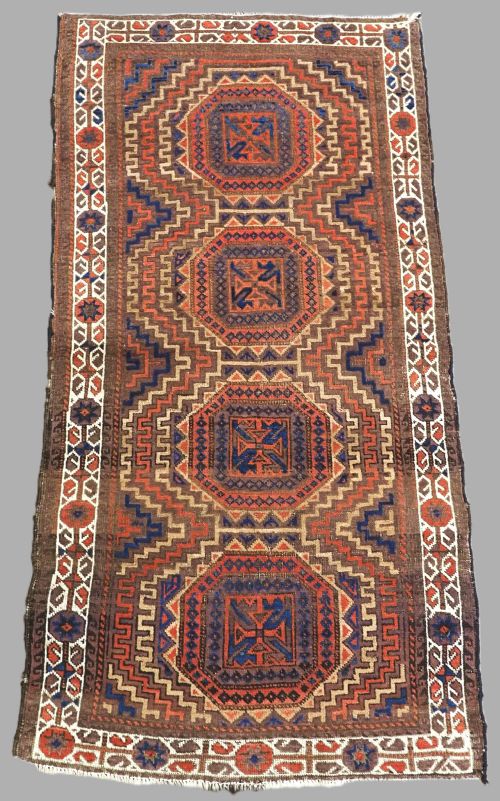
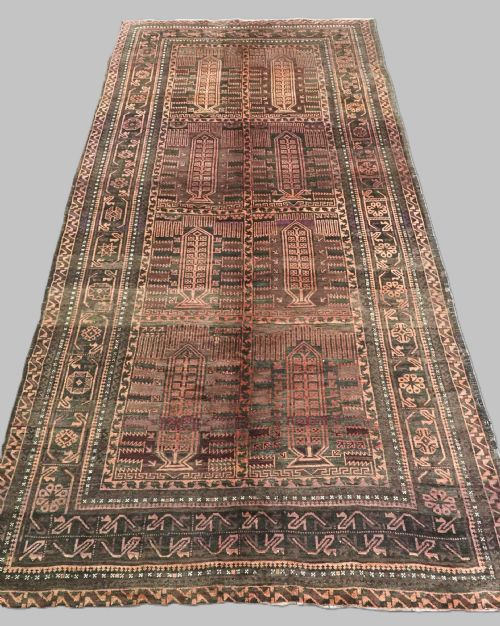
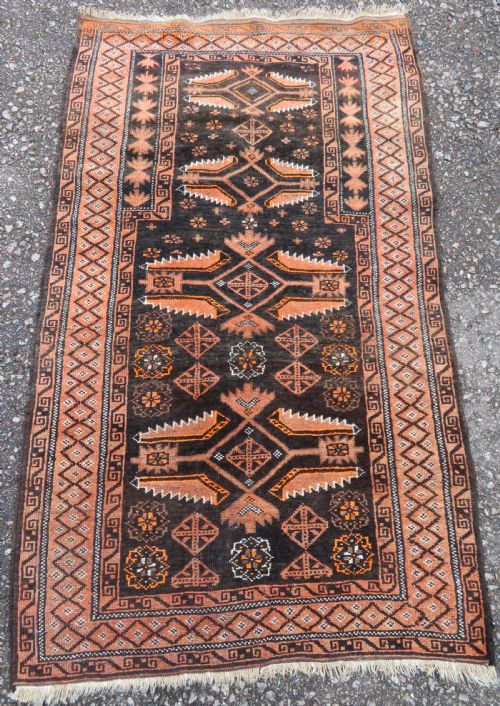
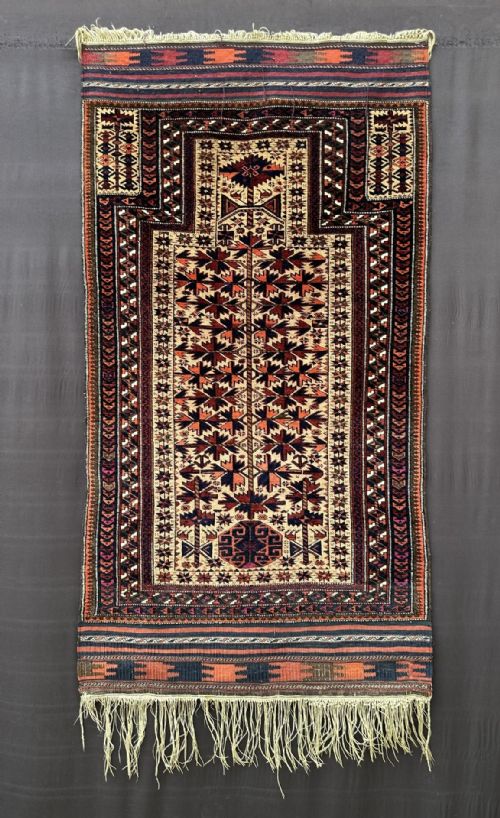
A dark brown tribal rug encompasses hand-woven floor coverings and small textiles produced by nomadic and village groups, including Baluch, Kurdish, Timuri, and Yomut Turkmen tribes. These pieces frequently manifest as small rugs, prayer rugs, runners, and main carpets created for daily domestic use.
The objects originate from borderlands across Persia and Afghanistan, reflecting regional tribal traditions through recurring motifs like guls, lattice patterns, and mihrabs. Collectors encounter examples spanning the late nineteenth century into the early decades of the twentieth century.
Makers utilised traditional formats ranging from narrow runners to square formats like the pushti face, designed to function as portable furnishings within nomadic dwellings.
How they were made
Weavers constructed these textiles predominantly from wool foundation and pile yarns, frequently incorporating hand-spun wool and goat hair for added durability in warps and selvedges. Cotton foundations also appear in specific regional productions.
Colour palettes derived from natural dyes, yielding deep earthy tones, browns, and contrasting accents. Artisans knotted the pile by hand onto warp threads, occasionally employing supplementary embroidery techniques on kilims and covers.
Listings feature works from the nineteenth and early twentieth centuries, spanning periods from the eighteen-seventies to the nineteen-thirties.
What varies in quality
Quality in these textiles depends upon the fineness of the knotting and the precision executed in rendering traditional tribal motifs, such as guls or lattice networks. Tighter structures and more intricate drawing separate finer tribal examples from standard utility weaves.
The clarity and depth of natural dyes influence visual success, alongside the integrity of original borders and selvedges. Preserved pile height and structural stability further distinguish superior survivals.
The Dark Brown Tribal Rug Glossary
- Gul
- A repeating primary medallion motif commonly found in Turkmen and Baluch tribal weaving. These octagonal or gabled designs often identify specific tribal groups.
- Prayer rug
- A small format textile featuring a mihrab or arch design intended to indicate the direction of prayer. These pieces often serve as portable devotional furnishings.
- Pushti
- A small mat or rug designed for seating or small floor spaces within a nomadic tent. They frequently display compressed versions of larger carpet designs.
- Mafrash
- A storage bag face or panel woven by nomadic groups to carry household goods on pack animals. These survivals are prized for their compact, dense compositions.
- Kelleh
- A large rectangular format runner or long rug traditionally utilised in Persian domestic interiors. They accommodate specific architectural layouts in larger rooms.
Dark Brown Tribal Rug: Frequently Asked Questions
How were these rugs used originally?
Nomadic families laid these textiles on earthen floors within tents or used smaller formats as sleeping mats, prayer mats, and pack covers.
They served essential daily functions while demonstrating tribal identity and artistic expression through traditional patterns.
How do I live with a tribal rug?
These pieces suit high-traffic areas or quiet corners depending on their size, anchoring furniture layouts with rich earthy tones.
Place a breathable underlay beneath the rug to protect the wool foundation and prevent slipping on smooth flooring.
How can I tell different tribal designs apart?
Distinctions rely upon specific structural markers, such as the repeating guls of Turkmen pieces versus the lattice patterns of Baluch or Kurdish weaves.
Border arrangements and palette choices also point directly to particular regions across Persia and Afghanistan.
What materials make up these antique rugs?
Weavers relied on locally sourced wool for the pile and foundation, often hand-spinning the yarn to achieve varied textural density.
Goat hair and cotton appear in structural elements like selvedges and warps, combined with natural dye stuffs for colour.