

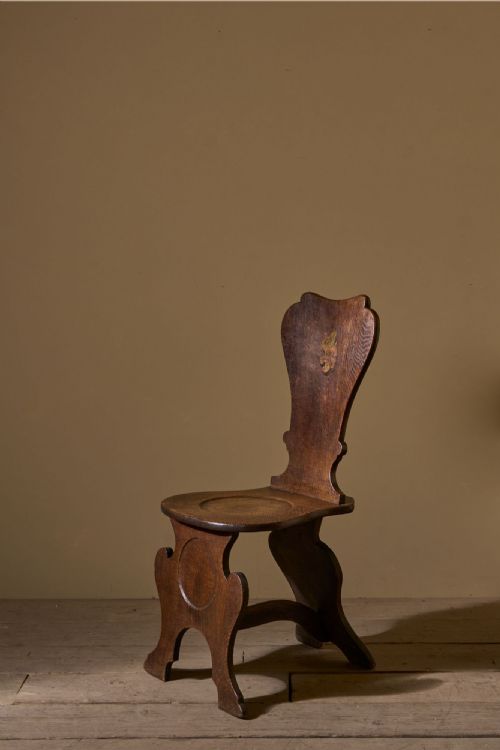
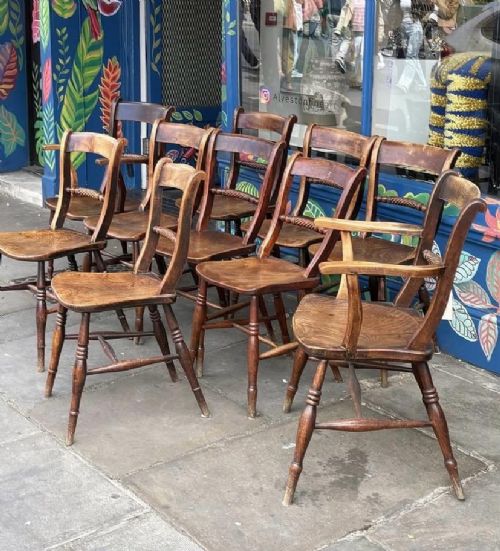
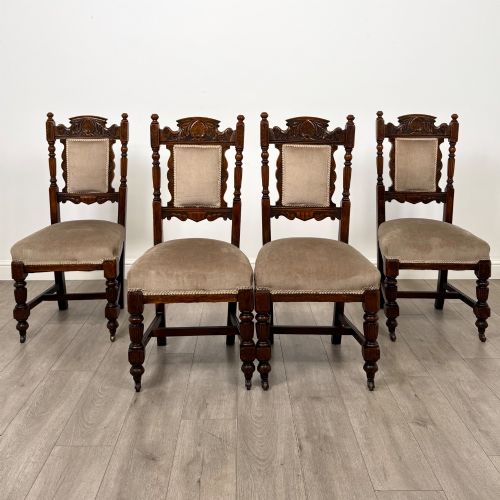
Dark Brown Side Chairs
These dark brown side chairs span centuries of timber craftsmanship, offering sturdy seating in rich mahogany, oak, and walnut tones for any room.
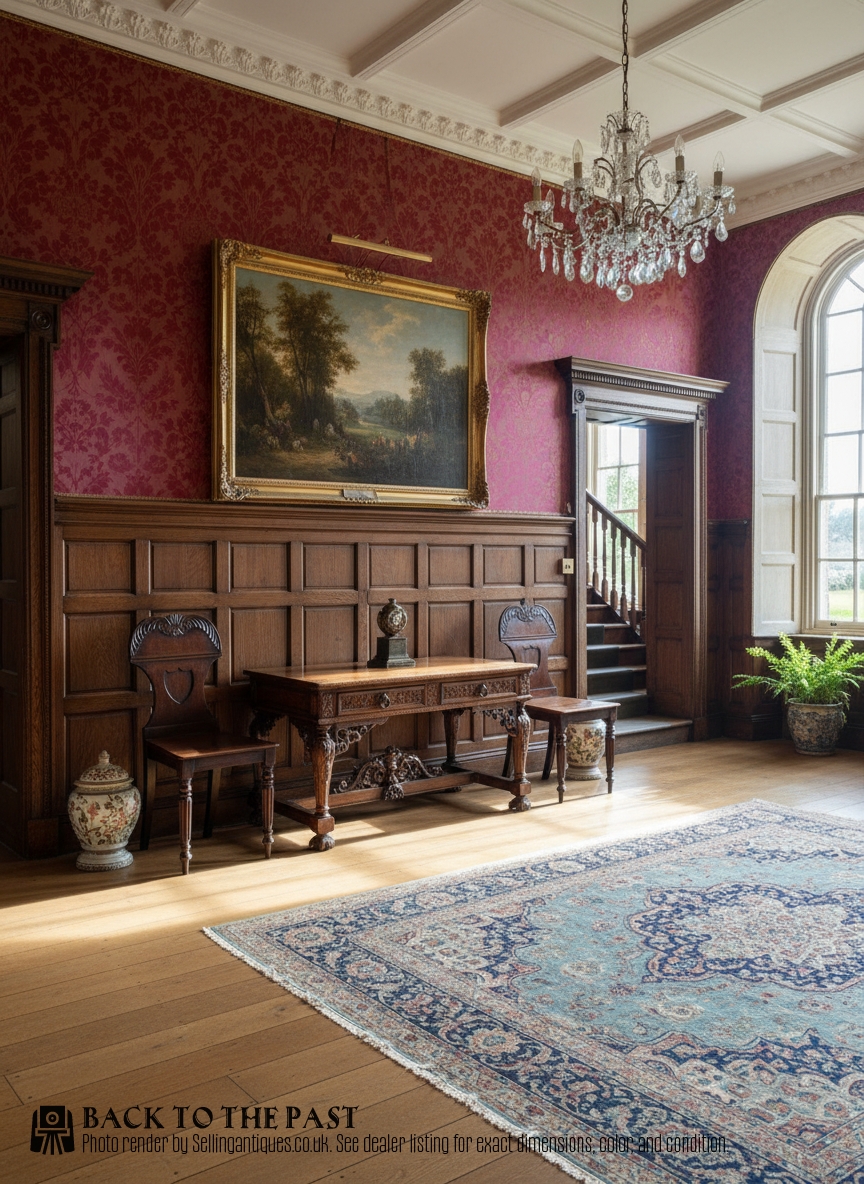
Dark Brown Side Chairs
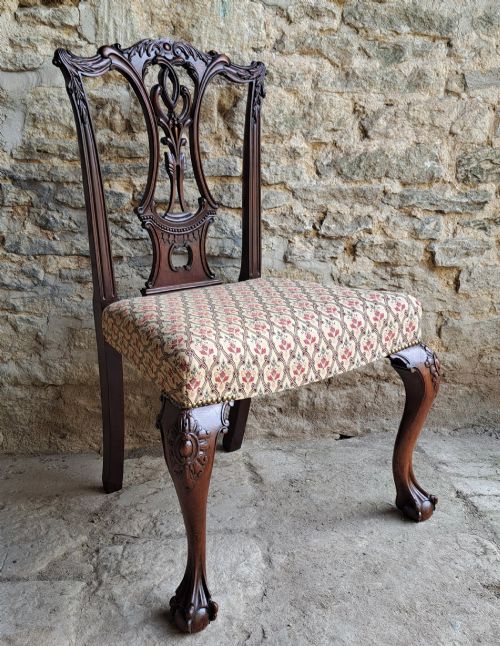
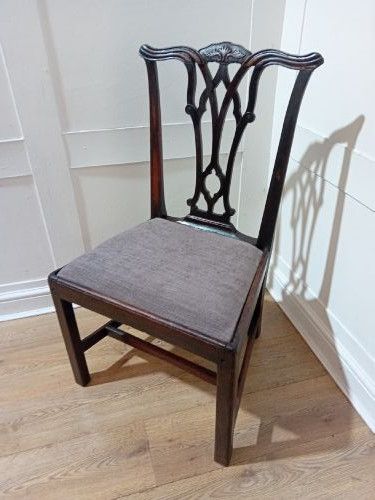
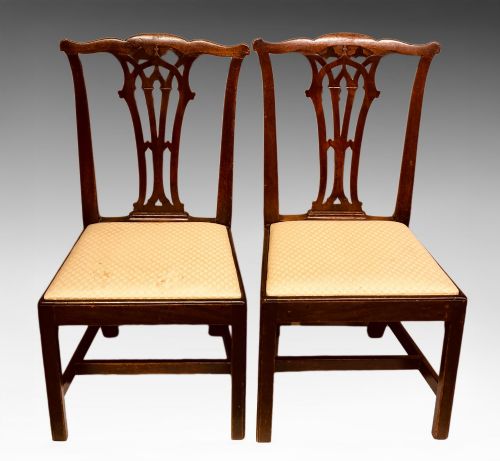
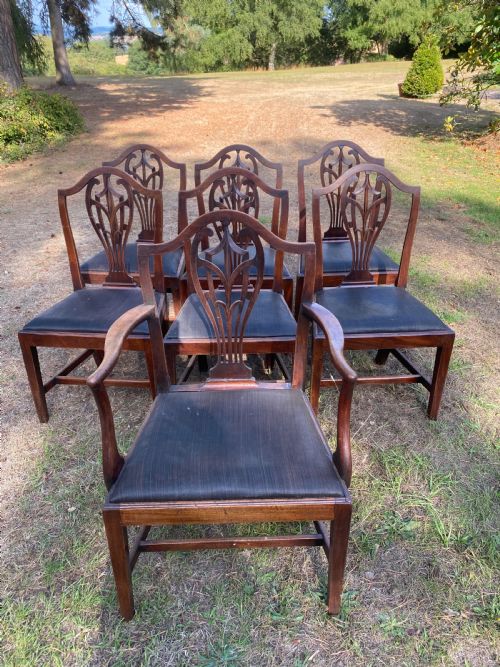
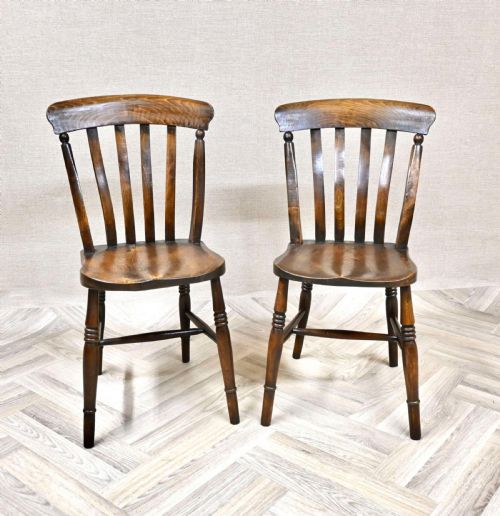
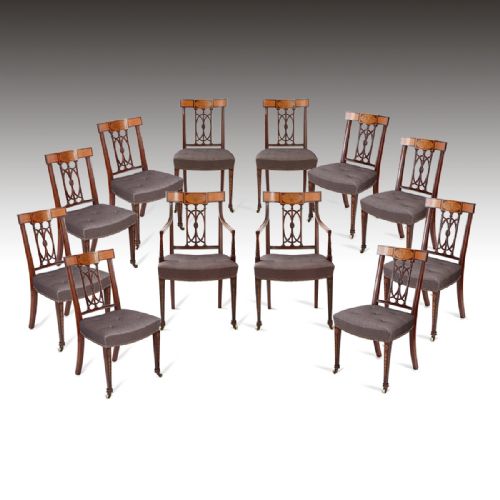
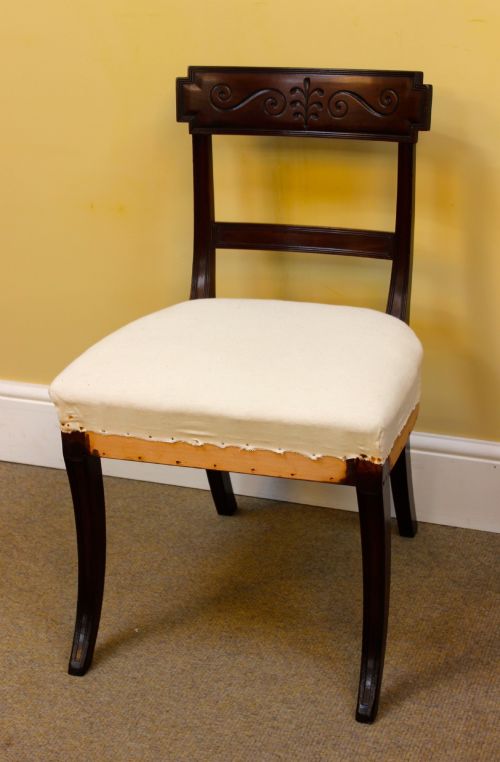
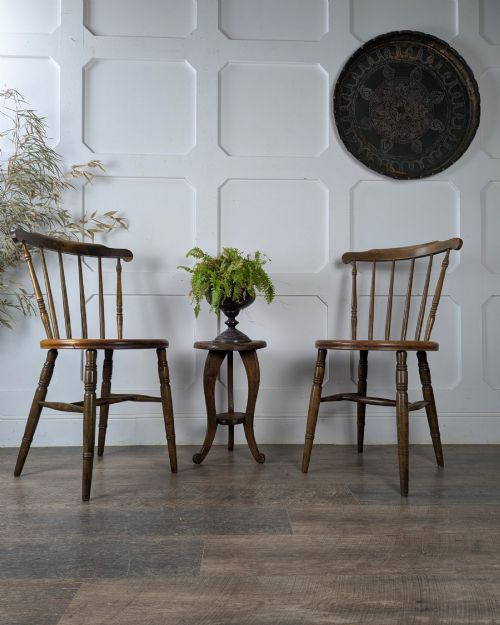
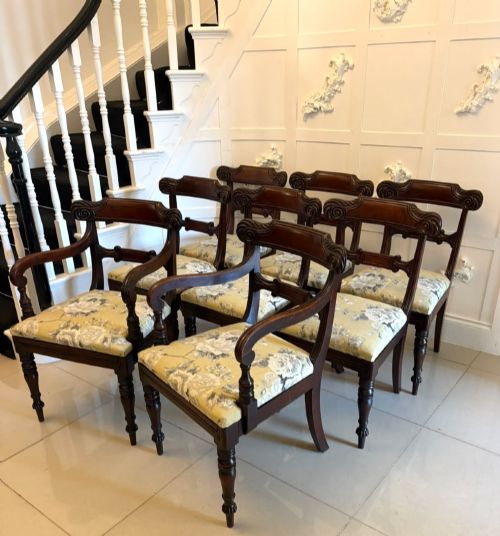
Dark brown side chairs encompass an array of dining, hall, and kitchen seating found across 18th century, Regency, Victorian, and Edwardian periods. These pieces serve practical seating needs while displaying the rich, dark timber tones favoured by past cabinetmakers.
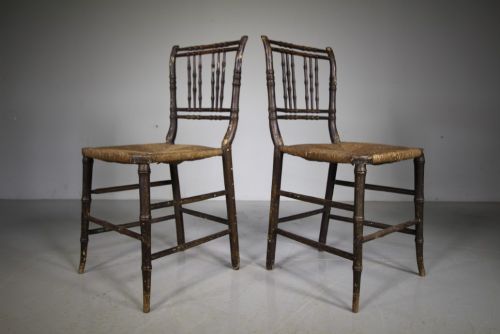
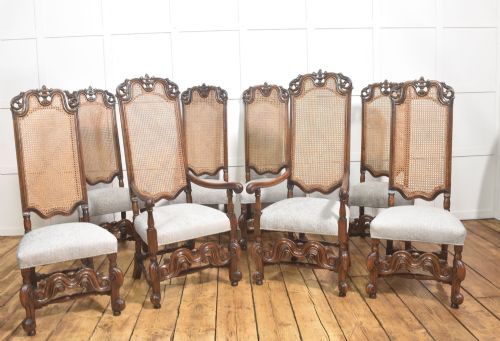
Buyers encounter diverse regional and stylistic variations, including shield back forms, ladder backs, and carved Gothic details. Many examples integrate cane seats, rush, or upholstered fabric pads within their dark wood structures.
Materials and construction
Cabinetmakers built these dark brown side chairs primarily using dense hardwoods like mahogany, oak, walnut, and elm, often complemented by secondary pine or beech frameworks. Artisans shaped structural elements using traditional joinery, turning lathes, and hand-carved decorative motifs.
Surfaces frequently showcase natural timber grain enhanced by polished finishes, while certain pieces incorporate brass mounts, embossed leather, or ormolu details. Seats utilise cane weaving, rush, or traditional fabric upholstery secured over webbing and stuffing.
Dark Brown Side Chairs Retail Price Guide 2026
Typical asking prices for dark brown side chairs among the pieces listed under this phrase on Sellingantiques today, from the lower quarter to the upper quarter. They describe what is for sale here now, not the wider market.
The listings on this site span 18th century, Victorian, Regency, and Edwardian periods, utilising mahogany, oak, walnut, elm, and beech.
Factors determining quality
Quality rests upon the crispness of hand-carved details in the wood and the structural integrity of the frame joints. Superior examples maintain original timber surfaces without excessive modern intervention or replacement components.
The cohesion of matched sets and the selection of well-figured mahogany or oak dictate the upper tier of these chairs. Finer specimens display careful attention to proportion, subtle turning, and intact period upholstery materials.
Codina
The Dark Brown Side Chairs Glossary
- Side chair
- A chair without arms, traditionally used at the side of a dining table or against a wall. These form the bulk of traditional wooden seating.
- Shield back
- A chair back shaped like a heraldic shield, popular in late eighteenth-century furniture design. This form showcases delicate openwork carving in mahogany.
- Hall chair
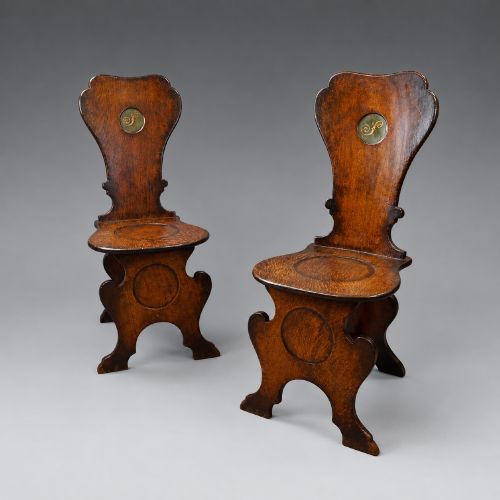
- A rigid wooden seat intended for an entrance hall, often featuring a solid carved back and painted or carved armorial crests. They were rarely used for long periods of sitting.
- Cane seat
- A seating surface woven from rattan peel, providing a light yet resilient grid pattern. Edwardian and eighteenth-century makers employed this technique extensively.
- Barley twist
- A decorative turning technique resembling a twisted rope, common in seventeenth and early twentieth-century oak furniture. This profile adds texture to chair legs and stretchers.
Dark Brown Side Chairs: Frequently Asked Questions
How do I date an antique dark brown side chair?
Dating relies on identifying timber choices, tool marks, and stylistic traits typical of periods like the Georgian era or the Edwardian epoch. Construction methods, such as hand-cut joinery versus machine machining, offer clear clues to age.
Examine the wear patterns and the finish beneath the seat or along the inner rails. Original timber patination develops naturally over generations of use.
Are these chairs suitable for daily dining use?
Many solid oak and mahogany dining chairs remain structurally robust enough for everyday modern seating. Checking the stability of the frame and joints ensures safe daily deployment.
Adding discreet modern glues or tightening historic screws can reinforce older frames without harming their historic value. Ensure upholstered or cane seats can handle regular weight.
What is the difference between a side chair and a hall chair?
Side chairs are generally designed for comfort around a dining table, featuring upholstered or woven seats. Hall chairs are stiffer, entirely wooden items intended for brief use in an entryway.
Hall chairs frequently display carved crests or shield backs meant to impress visitors rather than provide lounging comfort.
How should I care for dark wood antique chairs?
Keep wooden chairs away from direct heat sources and strong sunlight to prevent the timber from splitting or warping. Dust them regularly with a soft, dry cloth to protect the polished surface.
Applying occasional specialist wax helps nourish historic hardwoods like mahogany and oak. Avoid harsh liquid cleaners that strip aged patination.