


Dark Brown Runner Rug
A dark brown runner rug brings linear geometry and rich, earthy warmth to a narrow hallway.
Dark Brown Runner Rug
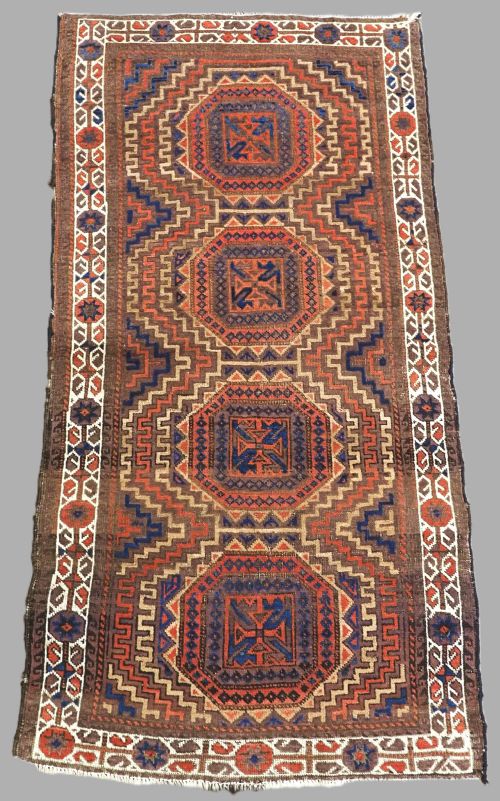
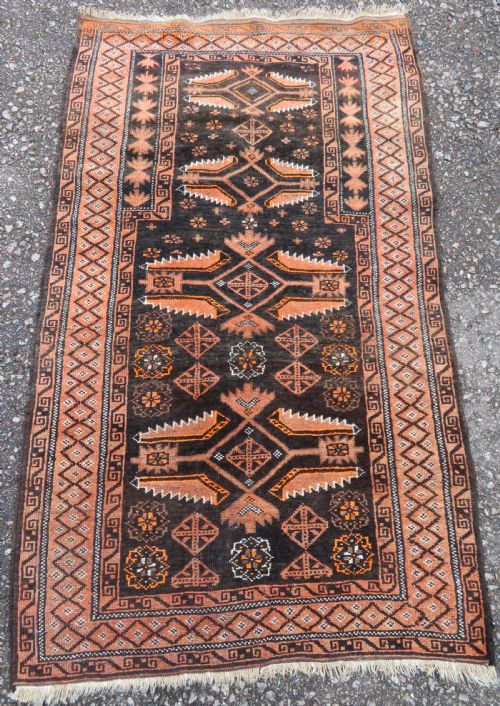
A dark brown runner rug is typically a tribal or nomadic weaving from nineteenth and early twentieth-century Persia, Afghanistan, or the Caucasus. These elongated floor coverings serve corridors, hallways, and narrow spaces with durable utility.
The inventory on this page consists primarily of antique tribal pieces, including Baluch variants, Kurdish pieces, and Caucasian runners. These textiles showcase traditional geometric patterns, lattice designs, and prayer mihrabs rendered in deep, dark tones.
How they were made
Weavers constructed these pieces using wool, hand-spun wool, cotton, and occasionally goat hair for foundations and pile. Natural dyes provided the deep earth tones, dark browns, and contrasting accents seen across the region.
Tribal workshops employed knotting and flatweaving techniques passed down through generations. These manual processes resulted in dense, resilient floor coverings capable of withstanding heavy domestic traffic.
Listings span from the nineteenth century into the 1930s, featuring wool, cotton, goat hair, and natural dyes.
What varies in quality
Quality separates through the fineness of the wool and the precision of the hand-spun yarn. Tighter knot densities and expertly fixed natural dyes yield a more enduring structure and depth of colour.
The sophistication of the tribal design, whether handling complex guls, lattice motifs, or pictorial elements, distinguishes standard village work from superior weaving achievements.
The Dark Brown Runner Rug Glossary
- Gul
- A repeating medallion motif often found in tribal weavings. These octagonal or rounded shapes act as clan or tribal identifiers.
- Kelim
- A flatwoven carpet or rug produced without a pile. These lighter textiles function as floor coverings or hanging covers.
- Pushti
- A small mat or rug designed for fractional seating or leaning against. They share the structural qualities of larger tribal rugs.
- Mihrab
- A niche design element indicating the direction of prayer. This architectural feature appears frequently on prayer rugs.
Dark Brown Runner Rug: Frequently Asked Questions
Where should I place a dark brown runner rug?
These elongated textiles fit naturally in narrow hallways, corridors, and entryways where linear floor coverings soften high-traffic timber or stone flooring.
The deep brown tones anchor surrounding furniture while protecting high-use pathways from daily wear.
How do I identify a tribal rug?
Tribal rugs display geometric motifs, repeating guls, and symbolic tribal markers rather than formal court designs. Their construction relies on regional wool and traditional dyeing methods.
Nomadic and village weavers produced these pieces independently, resulting in expressive, slightly asymmetrical village patterns.
What materials make up these antique rugs?
Most pieces combine wool pile with cotton or wool foundations, occasionally incorporating goat hair for added structural durability. Natural dyes provide the palette, creating rich variations across the dark brown fields.
Hand-spun fibres give the surface texture an organic irregularities that machine-made carpets cannot replicate.
How do I care for an antique wool runner?
Regular gentle vacuuming without a rotating brush roll keeps dust from settling deep into the wool pile. Professional cleaning suited for antique textiles preserves the integrity of natural dyes.
Positioning a quality underlay beneath the runner prevents slip and reduces friction against the floor.