

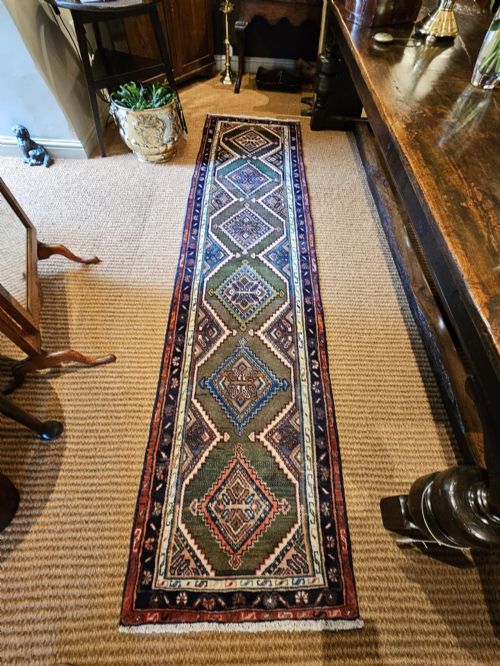
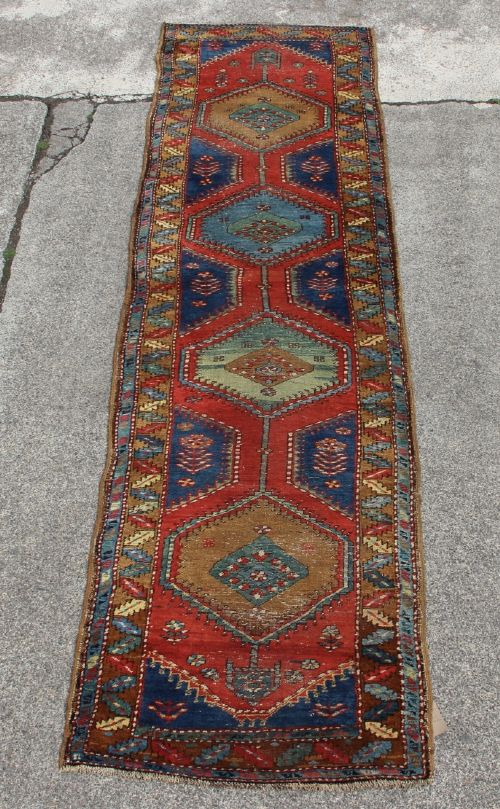


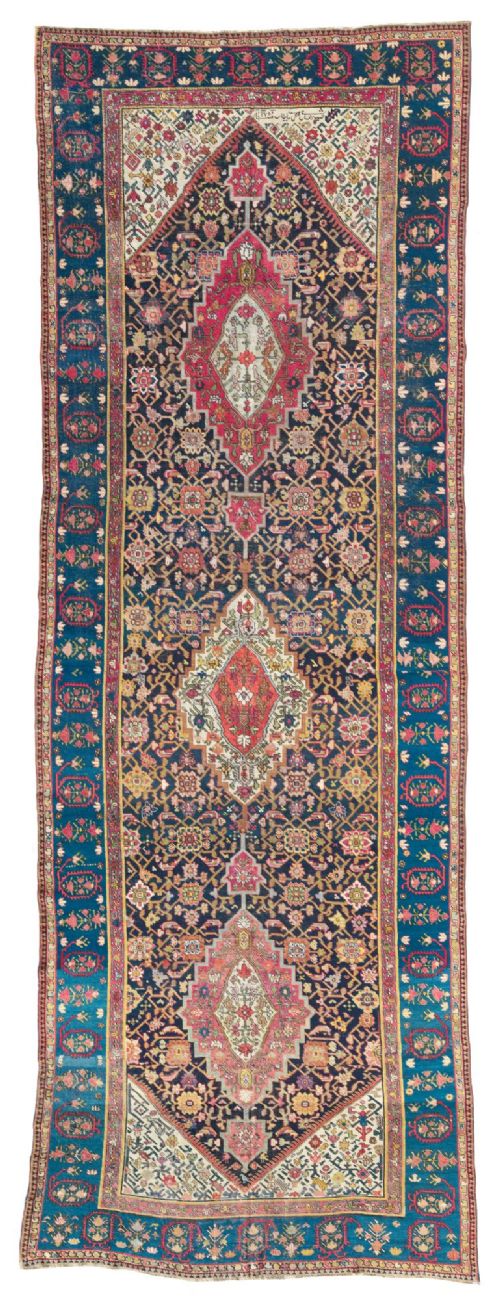
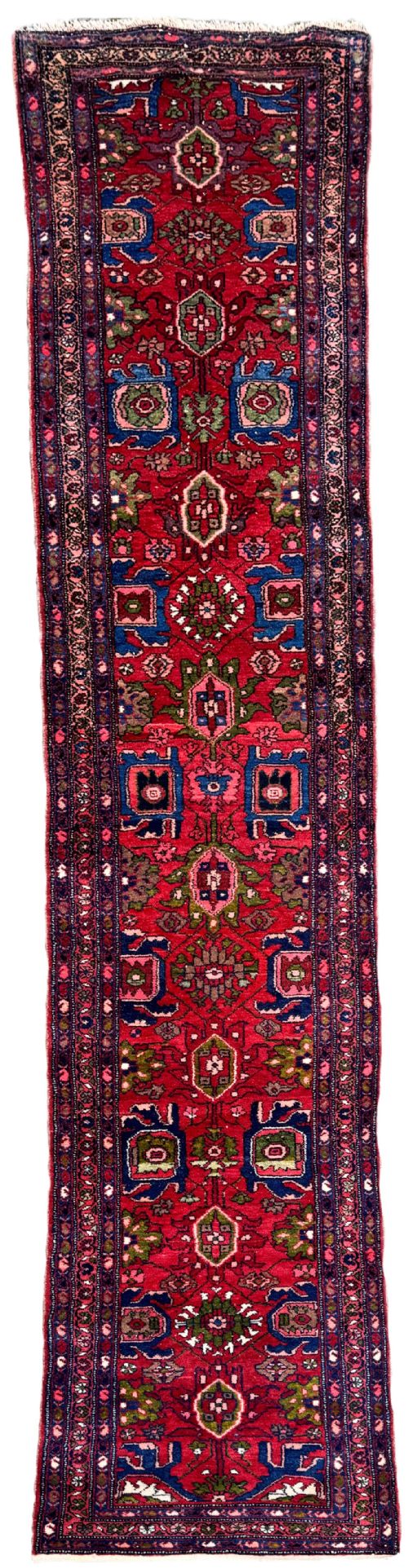
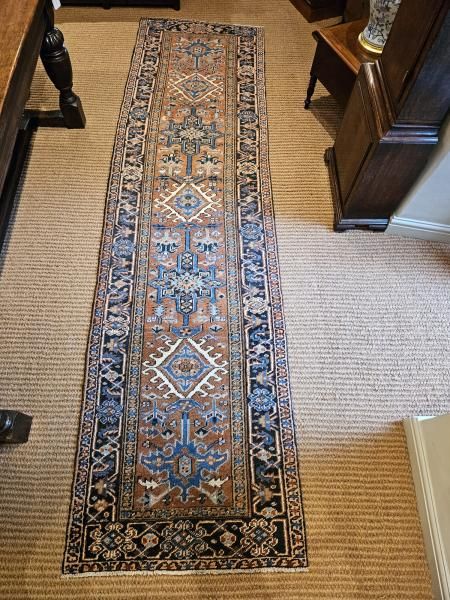
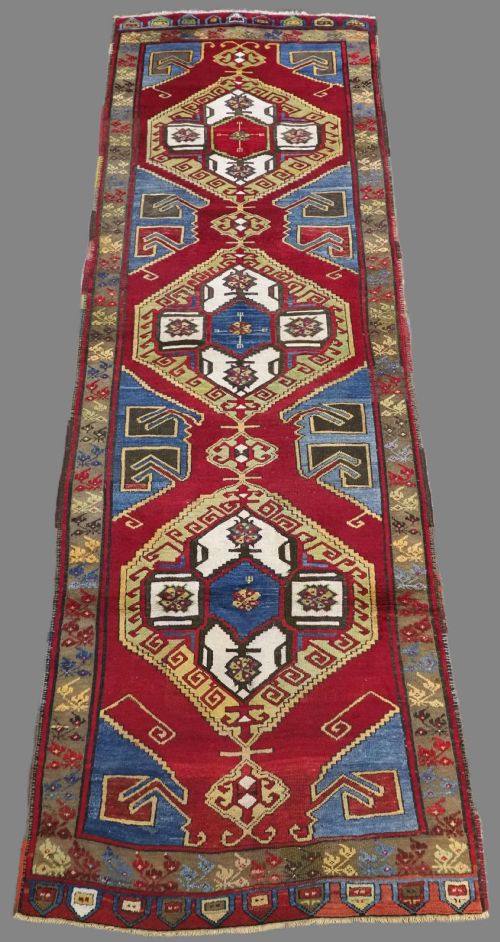
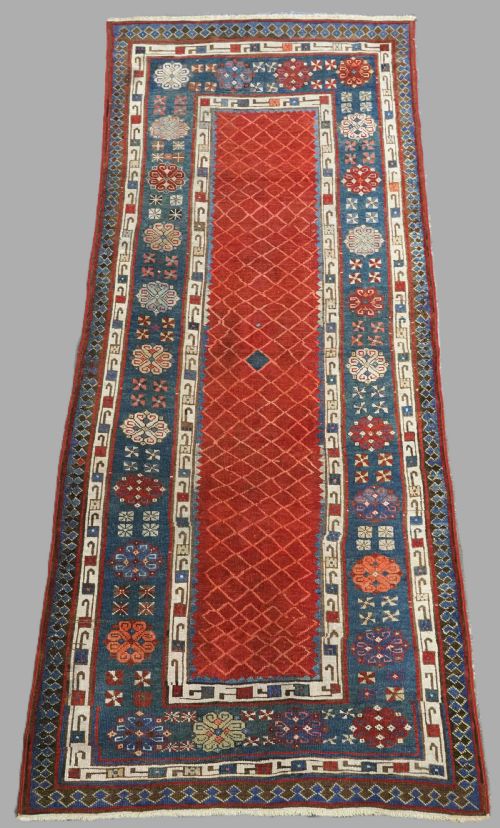
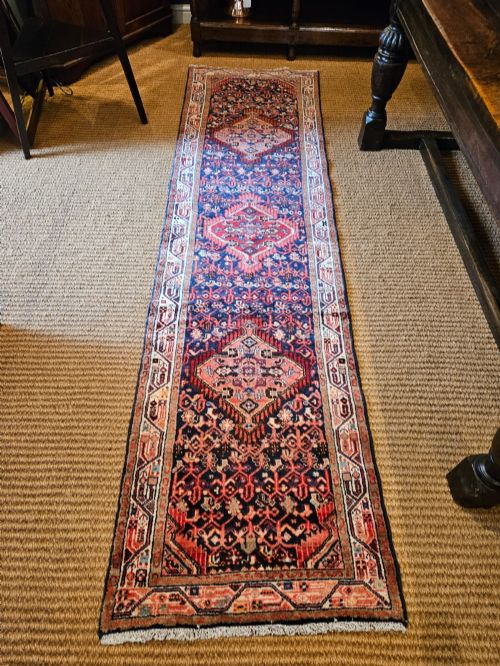
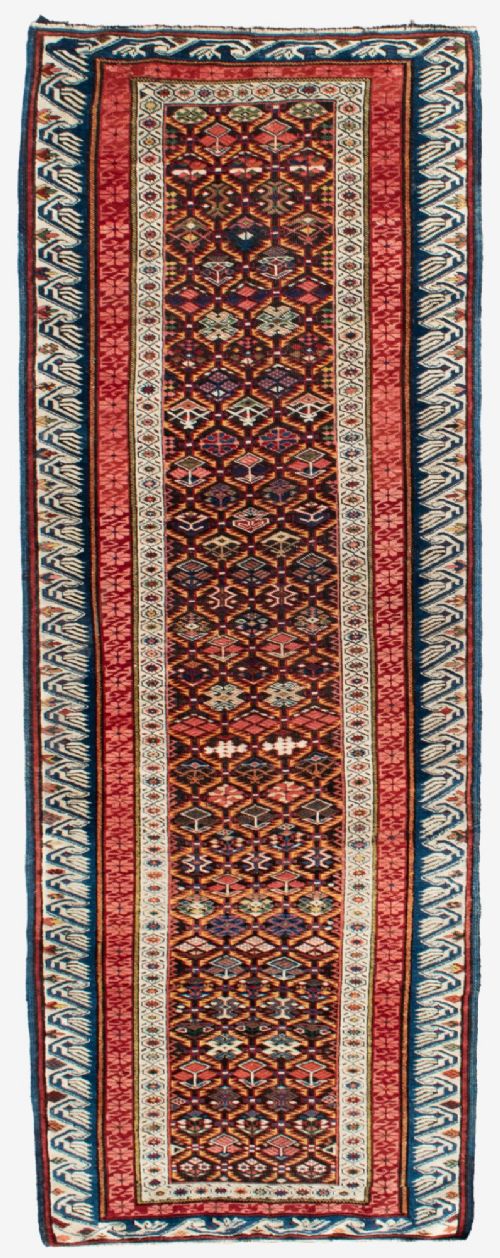
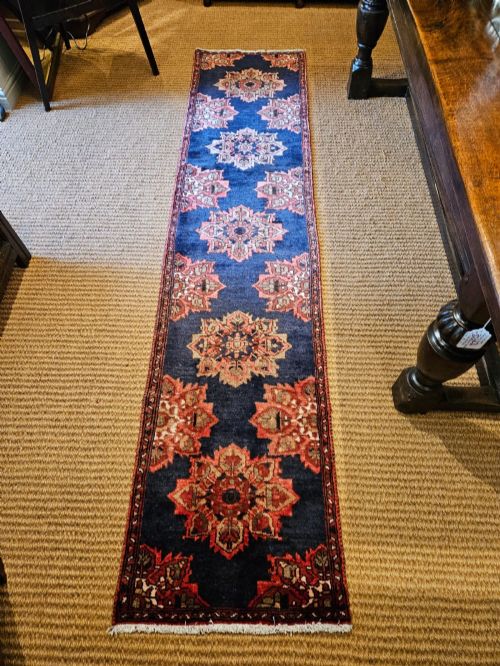
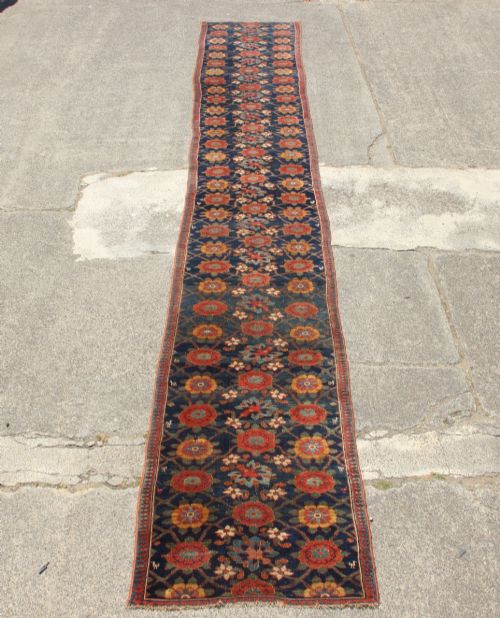
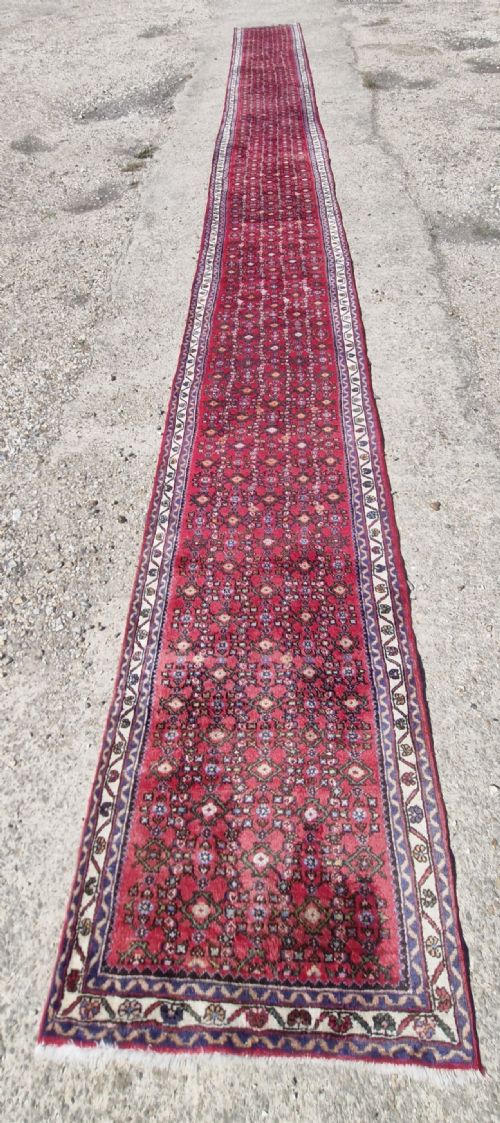

Long Tribal Runner
A long tribal runner brings narrow, patterned warmth to hallways and corridors through centuries of weaving traditions.
Long Tribal Runner
A long tribal runner is a narrow floor covering produced by village or nomadic weavers across Persia, the Caucasus, Anatolia, and surrounding regions. These pieces span from the mid nineteenth century through the early twentieth century, designed specifically for corridors, halls, and long landings.
The selections encountered here include Kurdish, Heriz, Hamadan, Caucasian, and Anatolian pieces in extended rectangular formats. Such rugs display traditional geometric medallions, repeating lattice motifs, and tribal symbols unique to the weaving communities that produced them.
Makers utilised narrow looms to construct these lengthy formats, resulting in floor coverings that balance practical utility with expressive village artistry. Each piece reflects the specific regional palette and knotting techniques of its origin.
Materials and construction methods
Weavers constructed these long tribal runner examples predominantly from wool and hand-spun wool, frequently employing cotton for foundational warps and wefts. The natural animal fibres provided durability for heavy foot traffic in domestic hallways.
Dyers utilised natural materials to achieve deep saturated tones of indigo blue, madder red, and olive green against neutral grounds. Hand-knotting techniques varied by region, creating dense piles that secured the intricate geometric designs.
Listings feature pieces spanning from the mid nineteenth century through the 1930s, originating from Persian, Caucasian, Anatolian, and Kurdish workshops.
Evaluating quality and execution
Quality in a long tribal runner rests upon the tightness of the weave, the clarity of the geometric motifs, and the depth of the natural dyes. Superior examples demonstrate skilled proportion across an extended length, maintaining straight edges and balanced borders without distortion.
The choice of wool influences longevity and tactile richness, with hand-spun yarn offering superior resilience and a more varied absorption of natural colour. Finer knot counts allow complex lattice and medallion patterns to appear crisp and well-defined.
The Long Tribal Runner Glossary
- Runner
- A long, narrow carpet format intended for corridors, staircases, and hallways. These pieces typically measure significantly greater in length than in width.
- Kelleh
- A large rectangular carpet or extended runner format traditionally produced in Persian and Caucasian workshops. Such pieces often display grand medallion arrangements.
- Gul
- A repeating octagonal or botanical medallion motif frequently found in Turkmen and tribal weaving traditions. Each design element represents a specific clan or tribal origin.
- Mina Khani
- An all-over repeating pattern composed of stylized flowers linked by a delicate lattice network. This classical Persian design appears frequently in Kurdish and village carpets.
- Warp
- The vertical foundation threads stretched lengthwise on the loom before knotting begins. Weft threads pass horizontally between these structural elements to secure the pile.
Long Tribal Runner: Frequently Asked Questions
Where should I place a long runner?
These narrow formats suit hallways, corridors, long landings, and narrow gallery spaces where floor warmth and pattern are desired.
Ensure you measure the passage width and length carefully to allow borders to remain visible along skirting boards.
How do I clean an old wool rug?
Gentle surface brushing and careful vacuuming without a rotating power head help remove embedded dust from the wool pile.
Professional textile conservation cleaning is recommended for deep washing to protect natural dyes and fragile foundations.
Are these rugs durable for hallways?
Village and nomadic weavings were constructed using sturdy wool and dense knotting to withstand daily domestic foot traffic.
Utilising a quality underlay prevents slipping and cushions the foundation fibres against hard wooden or stone floors.
How do I date a tribal piece?
Stylistic indicators such as natural colour palettes, knot density, and regional wool characteristics help determine the production era.
Comparing structural details against documented village types provides a reliable guide to the approximate period of manufacture.