





Dark Brown Nest Tables
Dark brown nest tables stack together when space matters and separate for tea, moving effortlessly from corner to centre.
Dark Brown Nest Tables
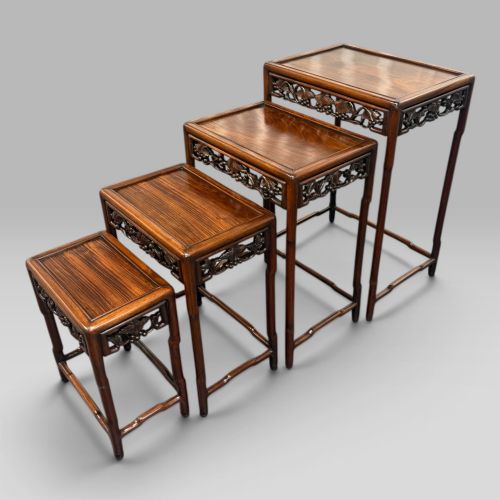
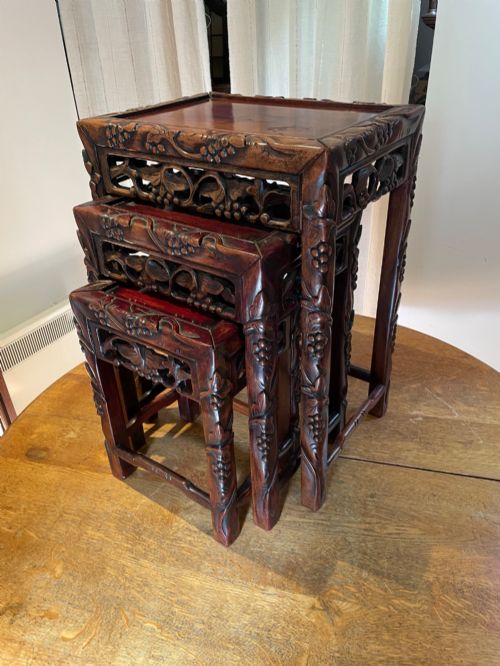
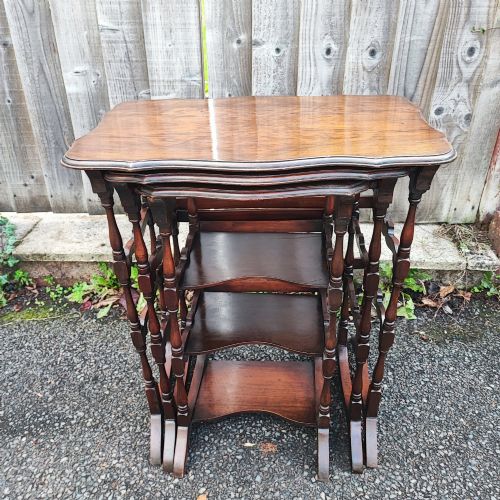
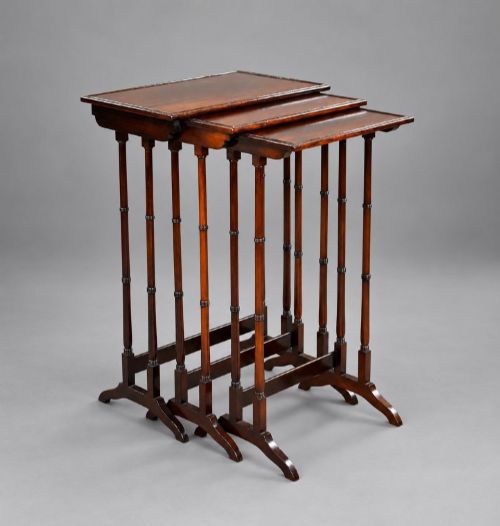
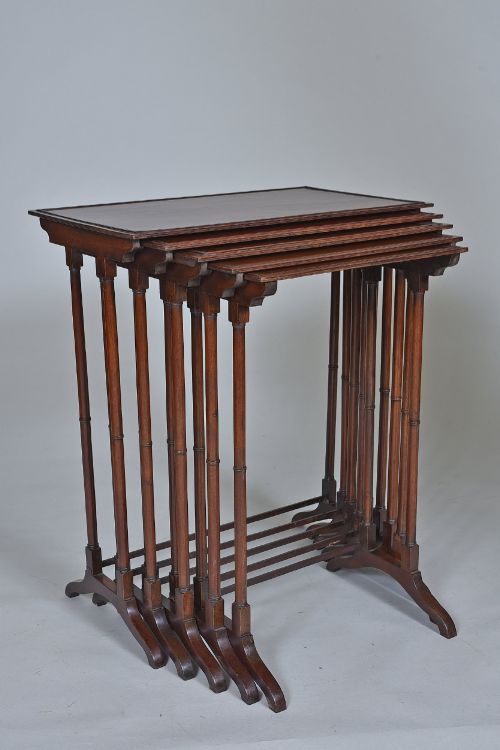
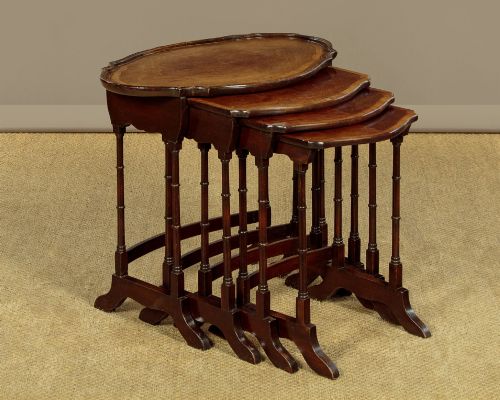
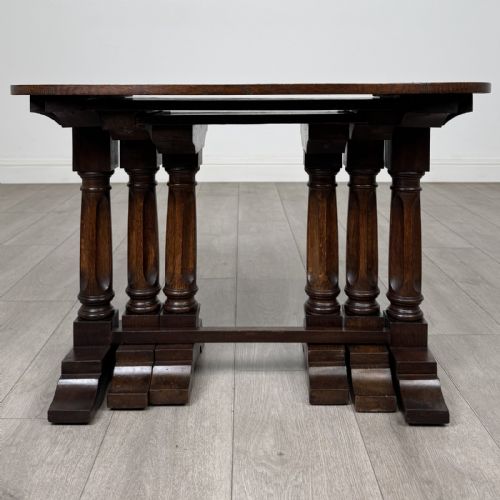
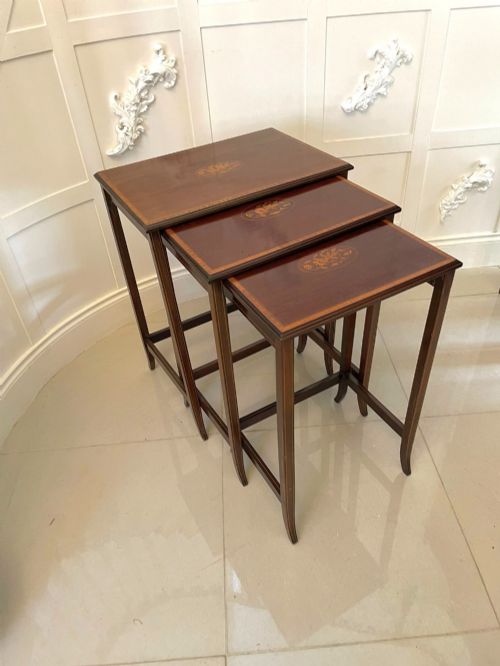
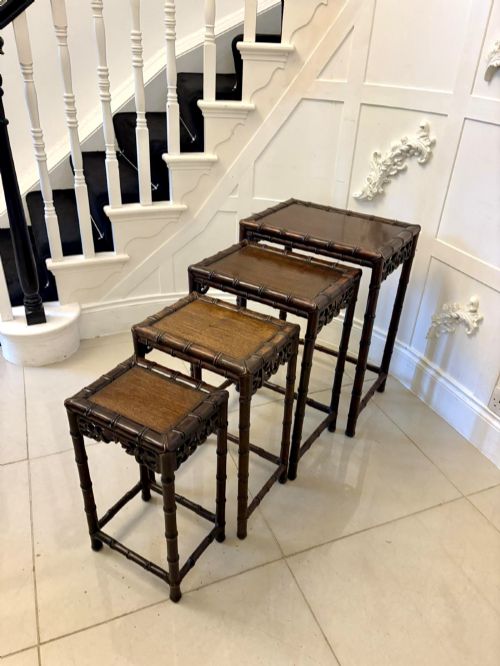
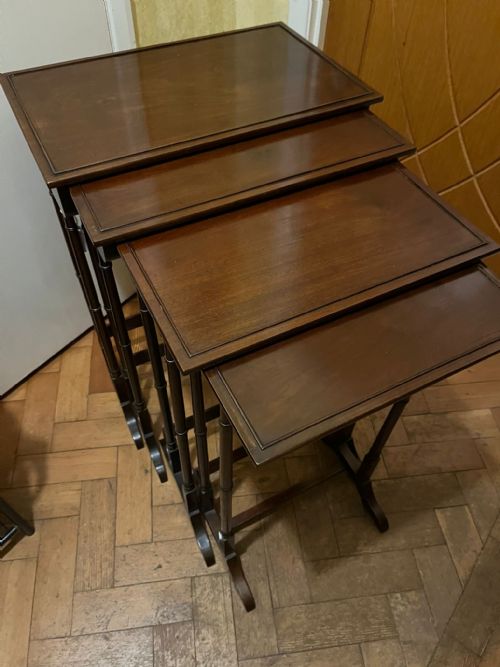
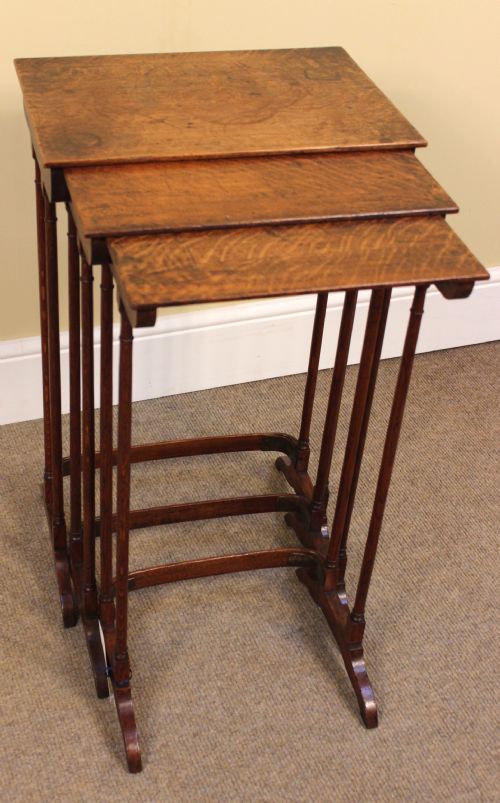
Dark brown nest tables comprise sets of graduating side or occasional surfaces designed to slide neatly beneath one another. The form appears most frequently in Edwardian mahogany or nineteenth-century Chinese hardwood, running from three-piece sets up to quartetto arrangements of four or five tables.
Originating in domestic sitting rooms and export workshops alike, these sets serve both practical hospitality and compact living. Buyers encounter traditional British designs alongside Chinese export, Chinoiserie, and Anglo-Indian variants.
The layout adapts readily to daily routines, holding a lamp, books, or teacups before stowing away in a fraction of the floor space. Sets range from plain utilitarian oak frames to elaborately carved rosewood and inlaid mahogany.
How they were made
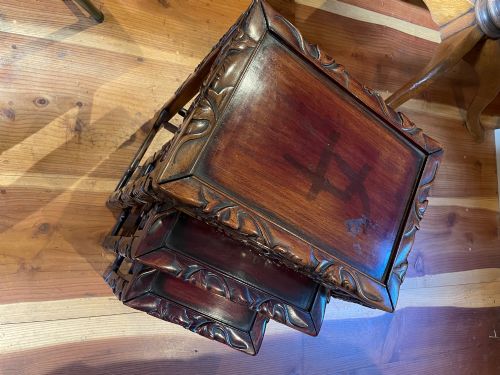
Cabinetmakers constructed these tables primarily in mahogany, rosewood, oak, teak, and hardwood, often selecting dense timbers capable of enduring frequent pulling and stacking. Surfaces display hand-carved floral motifs, faux bamboo turnings, or fine string inlay.
Joinery techniques relied on tight framing and pegged joints to keep each graduating table structurally sound despite slender legs. Polished finishes highlight the natural grain of the timber, whether dark brown mahogany or figured walnut.
Dark Brown Nest Tables Retail Price Guide 2026
Typical asking prices for dark brown nest tables among the pieces listed under this phrase on Sellingantiques today, from the lower quarter to the upper quarter. They describe what is for sale here now, not the wider market.
What varies in quality
Quality rests upon the crispness of the carving, the precision of the graduating frame sizes, and the uniformity of the timber selection across all tables in the set. Finer examples maintain structural rigidity and smooth sliding actions without excessive play in the joints.
Decorative ambition separates standard utility pieces from high-end commissions, with delicate inlay, figured mahogany veneers, or deep relief carving indicating superior workshop execution.
Gillows
The Dark Brown Nest Tables Glossary
- Quartetto
- A set of four graduating tables designed to nest together. The term appears frequently in Regency and nineteenth-century cabinetmaking.
- Chinoiserie
- European decorative style imitating Chinese artistic traditions. These pieces often feature lacquered surfaces and oriental motifs.
- Inlay
- Contrasting timber or shell embedded into the wood surface to form decorative patterns. Edwardian makers utilised this technique extensively on mahogany.
- Barley twist
- A spiral turning resembling a twisted rope, commonly found on oak table legs from the early twentieth century.
- Graduating
- Descending in scale so smaller tables fit precisely beneath larger ones. This sizing ensures the entire nest occupies the footprint of the largest surface.
Dark Brown Nest Tables: Frequently Asked Questions
How do you arrange nest tables in a room?
Keep the set stacked beside a sofa or armchair where the largest table handles primary tasks like holding a lamp or book. Separate the smaller tables around the room only when entertaining guests.
Return them to the stacked position once tea or drinks conclude to preserve floor space and maintain a tidy silhouette.
What is the difference between Edwardian and Victorian nests?
Victorian examples lean towards heavier proportions, deeper mahogany tones, and occasionally more robust carving or quartetto arrangements of four tables. Edwardian versions frequently introduce lighter inlaid stringing, satinwood highlights, or oval tops.
Both eras prioritise utility, but Edwardian pieces often reflect a growing taste for slender, easily repositioned occasional furniture.
Are Chinese export nest tables antique?
Many Chinese hardwood and rosewood nests date from the late nineteenth and early twentieth centuries, constructed for both domestic export and Western markets. They utilise dense indigenous hardwoods and traditional carving methods.
Their distinct aesthetic blends traditional Chinese joinery with the modular nesting format popular in British homes.
Can these tables hold heavy objects?
The largest table in a set safely supports standard items like table lamps, stacked books, or tea trays. Smaller constituent tables feature lighter frames suited to transitory use rather than permanent heavy weight.
Distributing weight appropriately across the set prevents undue strain on the slender legs and joining rails.