


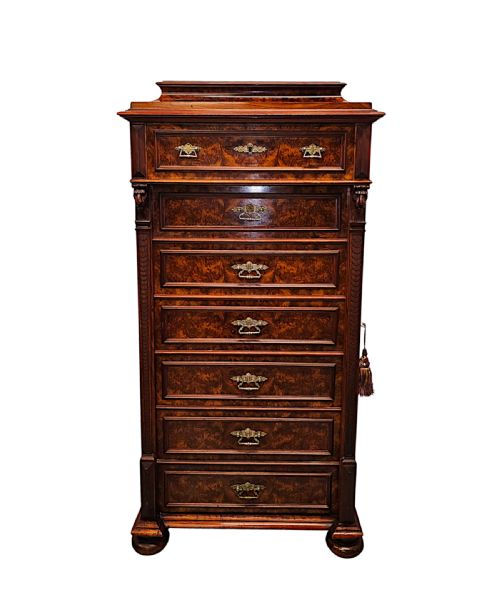
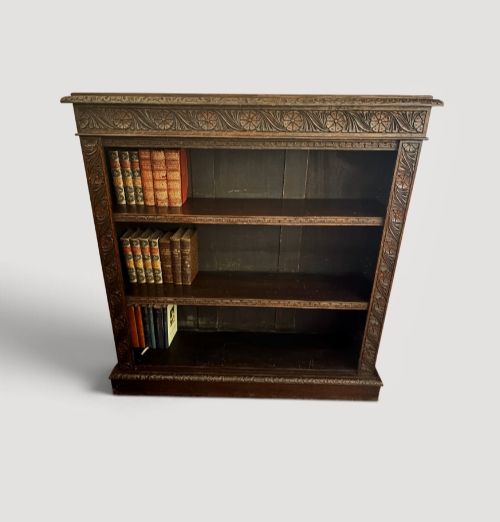
Dark Brown Carved Cabinet
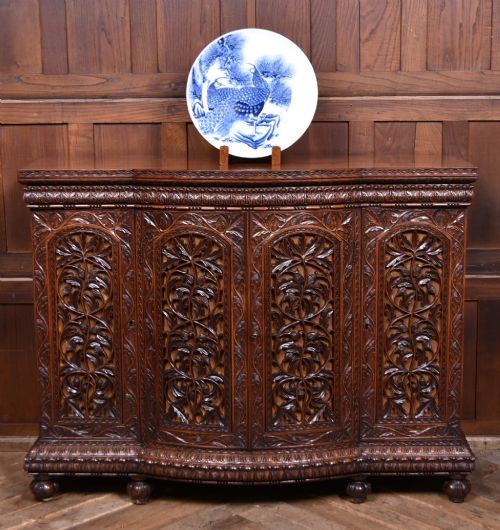
A dark brown carved cabinet brings substantial timber and deep relief into a room, offering practical storage through period craftsmanship.
Dark Brown Carved Cabinet
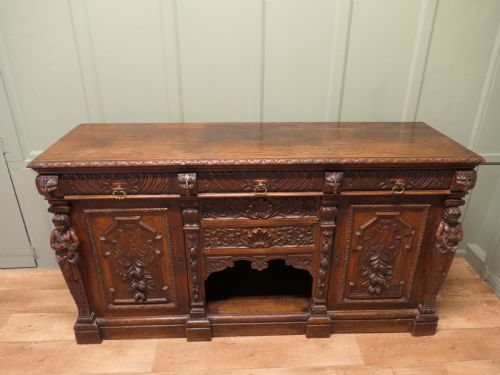
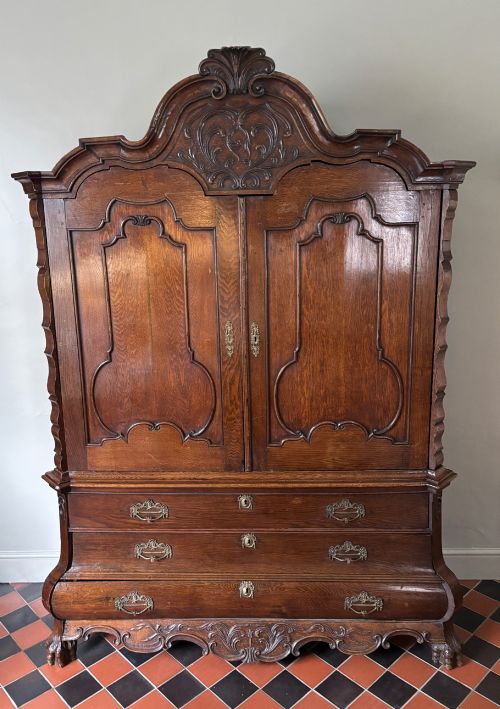
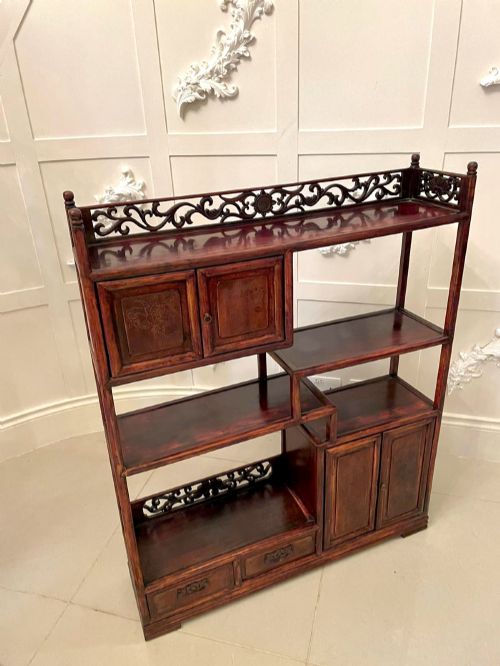
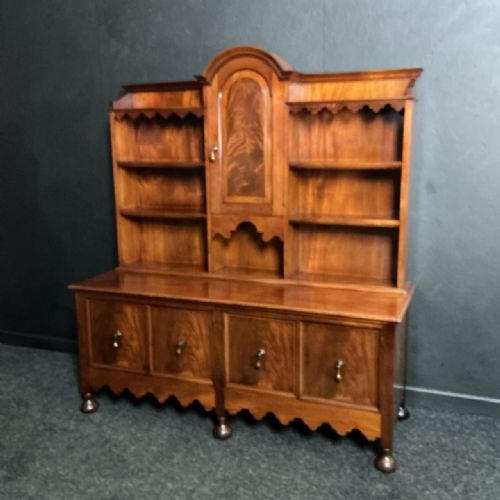
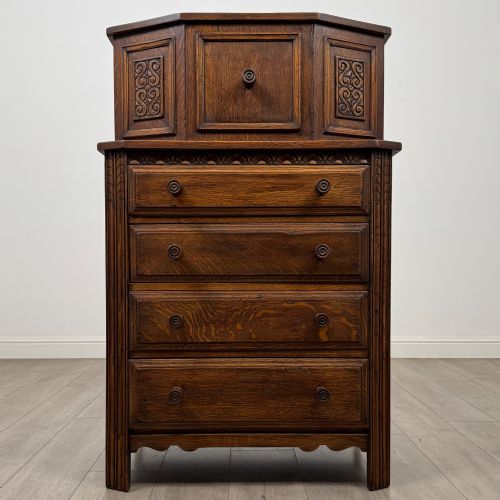
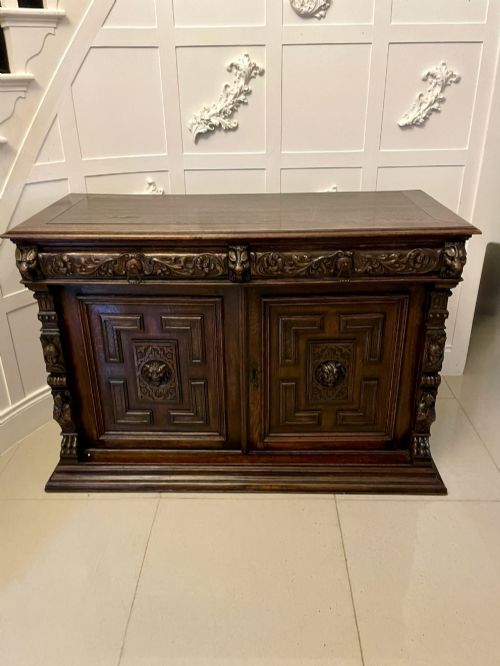
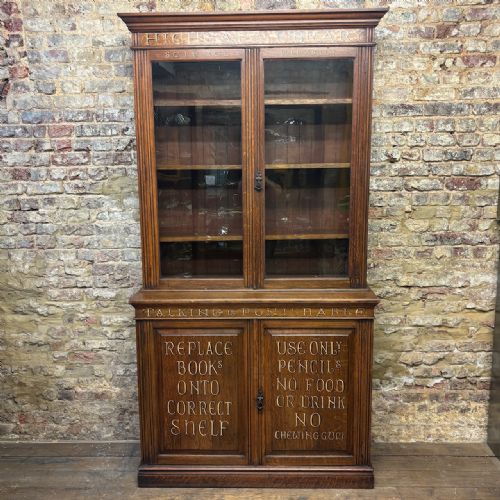
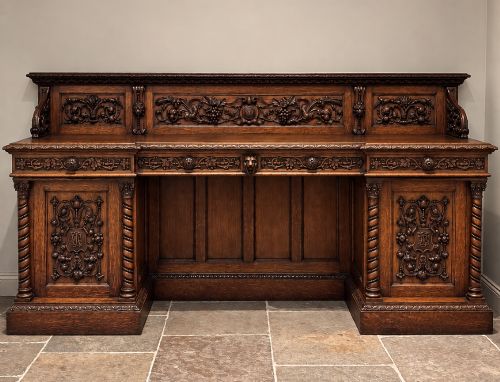
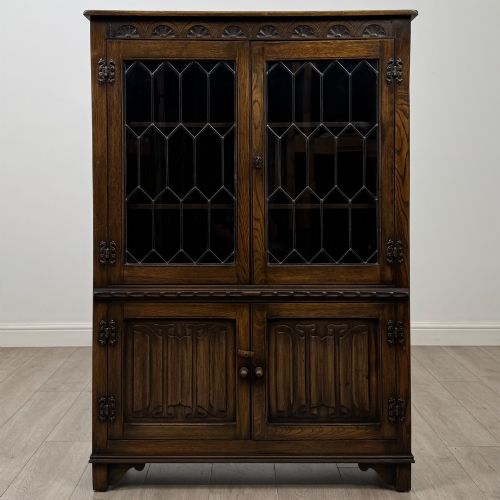
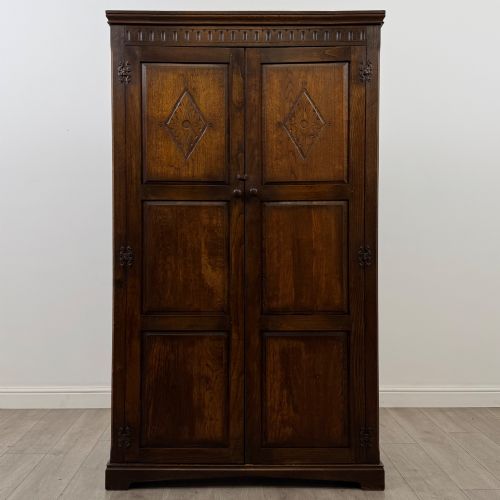
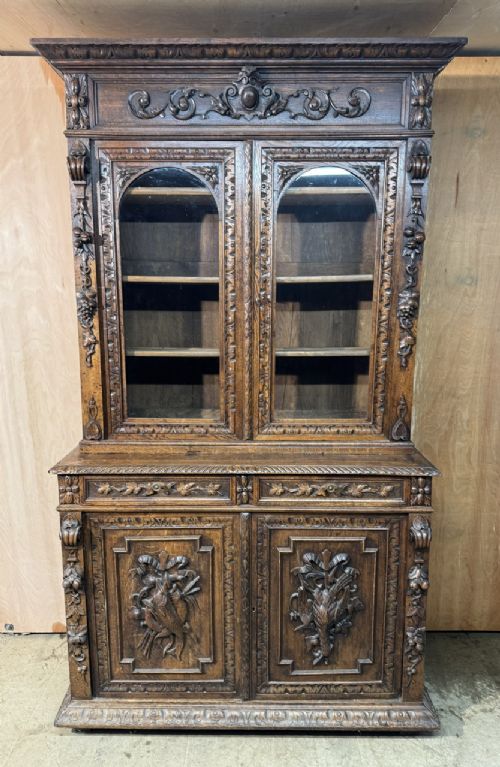
A dark brown carved cabinet encompasses diverse timber forms including sideboards, bookcases, dressers, and wall cupboards spanning multiple centuries. These pieces originate from domestic and institutional settings, reflecting the functional storage needs of past eras.
Oak dominates the selection, frequently shaped into Edwardian cupboards, Victorian sideboards, and Georgian court pieces. Alongside oak, mahogany, walnut, and padouk appear in various bookcase and display configurations.
Stylistic influences range from Jacobean Revival and Tudor Revival to Gothic Revival, Arts and Crafts, and English Country. The typical dark brown carved cabinet encountered here relies on deep patination and historic joinery traditions.
Materials and Technique
Cabinetmakers utilised solid timbers such as oak, mahogany, and walnut, selecting boards with strong grain patterns suited to heavy carving. Panel construction, dovetailed drawers, and pegged joints provided structural stability for large sideboards and bookcases.
Carving techniques varied from deep linenfold panels and geometric strapwork to elaborate foliate reliefs executed by hand. Brass hardware, glass panes, and iron hinges completed pieces designed for daily utility and display.
Listings feature pieces spanning from the 17th century through the Edwardian era, constructed primarily in oak and mahogany.
Evaluating Craftsmanship
Depth and crispness of the hand-carved detail distinguish exceptional examples from standard production, particularly on revival sideboards and court cupboards. The integration of relief work into structural panels indicates the skill of the original maker.
Timber selection and surface patination dictate visual success across centuries of production. Dense, richly toned woods with minimal restoration retain greater historical integrity than heavily altered pieces.
The Dark Brown Carved Cabinet Glossary
- Court Cupboard
- A traditional English two-tier storage piece, often featuring carved upper recesses and heavy turned supports. These substantial items date back to earlier centuries of vernacular woodwork.
- Linenfold
- A style of wood carving that mimics folded fabric, commonly seen on panels of cupboards and chests. This decorative technique creates vertical folds resembling starched linen.
- Astragal Glazed
- A method of dividing glass panes within cabinet doors using narrow wooden strips. This technique is frequently found on bookcases and display cabinets from the Georgian and Victorian eras.
- Jacobean Revival
- A nineteenth-century architectural and furniture style emulating seventeenth-century motifs. Pieces feature heavy geometric mouldings, strapwork, and dark polished timber.
- Pediment
- The decorative triangular or curved structure crowning the top of a bookcase or tall cupboard. It draws the eye upward and finishes the architectural composition of the piece.
Dark Brown Carved Cabinet: Frequently Asked Questions
How do I date a carved oak cupboard?
Dating relies on examining construction methods, timber preparation, and decorative motifs consistent with known periods. Hand-cut joinery and historic tool marks offer reliable clues to age.
Style revivals can occasionally complicate dating, as nineteenth-century makers frequently copied seventeenth-century designs with remarkable fidelity.
Were these cabinets used in kitchens?
Many larger forms, such as dressers and court cupboards, served utilitarian roles in domestic kitchens and dining halls for storing provisions and tableware.
Over time, surviving examples transitioned into formal living spaces and libraries for display and general storage.
How should I care for dark wood furniture?
Maintain timber stability by avoiding direct sunlight and consistent exposure to extreme temperature fluctuations. Gentle dusting preserves the historic wax or polish finish.
Harsh chemical cleaners should be strictly avoided to protect the natural patination built up over centuries.
What is the difference between a sideboard and a buffet?
Sideboards generally incorporate enclosed cupboards and drawers specifically arranged for dining room service. Buffets often emphasise open shelving or serving surfaces with distinct regional characteristics.
Both forms utilise heavy timbers and decorative carving within traditional domestic settings.