



Dark Brown Bronze Art
Dark brown bronze art encompasses cast metal figures, vases, and desk accessories spanning the nineteenth and early twentieth centuries.
Dark Brown Bronze Art
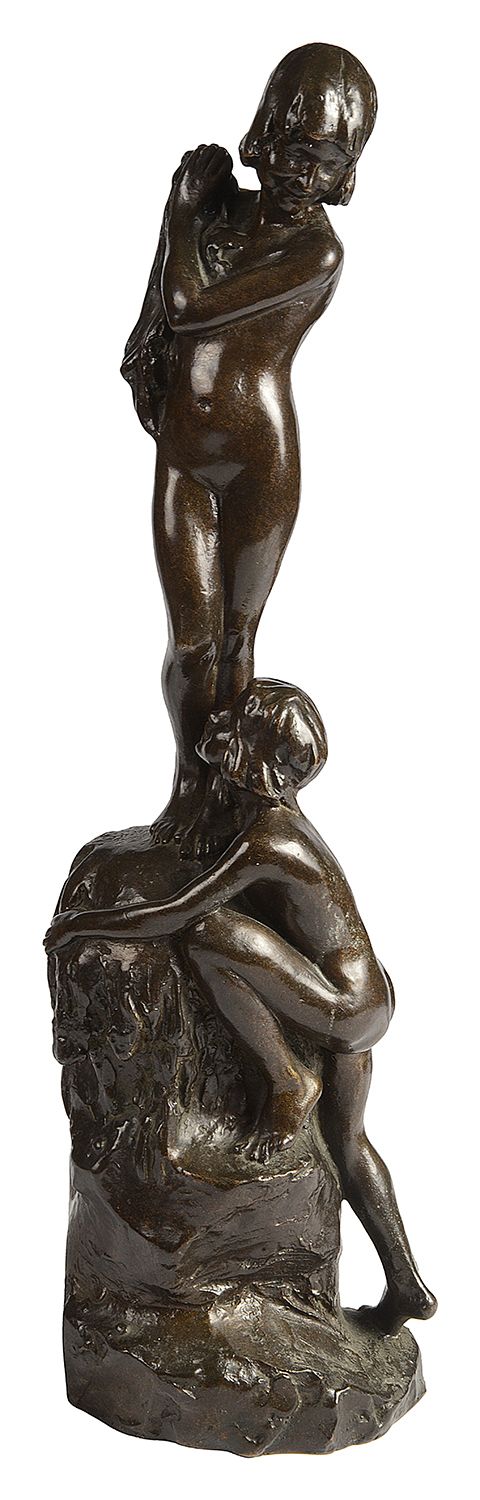
Dark brown bronze art comprises sculptures, bookends, wall plaques, and vessels created primarily during the Victorian, Edwardian, and early twentieth-century periods. These pieces frequently manifest styles such as Art Nouveau, Art Deco, and French Realism, alongside Meiji Period Japanese metalwork.
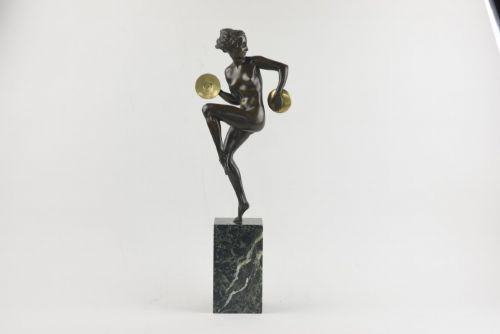
Buyers encounter figurative subjects ranging from classical mythology and allegorical studies to animals, children bathing, and dancers. Many pieces combine metal figures with bases made of marble, onyx, wood, or stone.
The selection includes specific sculptural groups, desk accessories with ink bottles, and decorative vases designed to showcase the deep patinated surfaces achieved by makers of the era.
Materials and methods
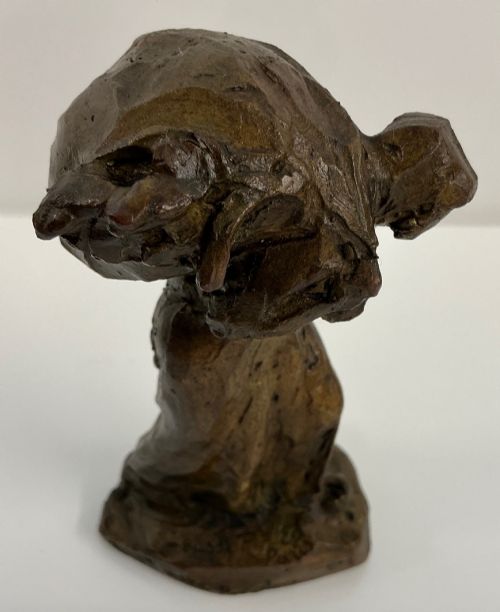
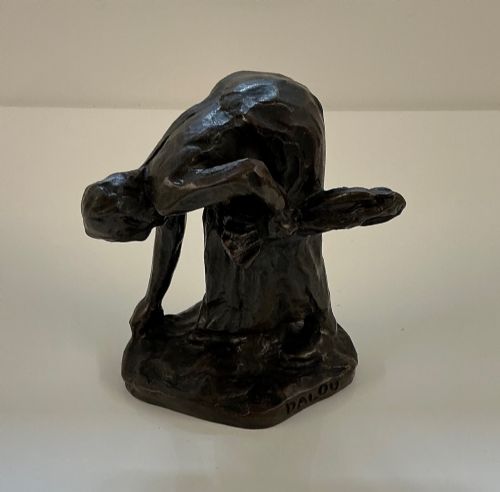
Makers utilised bronze, patinated bronze, and spelter as primary metals, often casting figures with rich dark brown patination. Alternative materials such as terracotta, stone, wood, onyx, and marble frequently serve as integral plinths and bases for the metal sculptures.
Casting techniques allowed artisans to capture fine details in human figures, animals, and decorative reliefs. Patination methods were applied to achieve the characteristic dark brown tones visible across the nineteenth and twentieth-century pieces.
Dark Brown Bronze Art Retail Price Guide 2026
Typical asking prices for dark brown bronze art among the pieces listed under this phrase on Sellingantiques today, from the lower quarter to the upper quarter. They describe what is for sale here now, not the wider market.
Refugee monkeys and lobster boys occasionally share shelf space with classical nymphs and panthers.
Assessing quality
Quality rests in the crispness of the cast and the depth of the dark brown patination applied to the surface. Superior works demonstrate meticulous detailing in facial expressions, drapery, and anatomical proportions.
The integration between the metal sculpture and its supporting base, whether marble, onyx, or stone, distinguishes finer studio output. The handling of the metal surface determines whether the piece retains its intended visual definition.
Jules Dalou·Franz Gruber·Aristide Maillol·Sylvain Kinsburger·Charles Korschann·Carl Kauba·Giuseppe Renda·Emmanuel Villanis·Albert Hussmann·Maurice Bouval·Adrien Gaudez·Henri Plé·Georges Van Der Straeten
The Dark Brown Bronze Art Glossary
- Patinated bronze
- Bronze that has been chemically treated to alter its surface colour, frequently resulting in deep dark brown tones. This treatment protects the metal and enhances sculptural detail.
- Spelter
- An alloy of zinc and lead often used as a substitute for bronze during the manufacturing of decorative figures and lamp bases. It takes patination well to mimic heavier metals.
- Meiji Period
- The era in Japanese history spanning from 1868 to 1912, known for sophisticated bronze casting, okimono, and intricate metalwork exported to Western markets.
- Art Nouveau
- A decorative style prevalent around 1900 characterised by flowing, organic lines inspired by natural forms. This aesthetic heavily influenced figurative bronzes and vases of the period.
- Okimono
- A Japanese ornamental carving or metal figurine intended for display in a traditional interior setting. These often depict animals or historical subjects.
Dark Brown Bronze Art: Frequently Asked Questions
What is dark brown bronze art?
Dark brown bronze art encompasses decorative metal sculptures, bookends, and vessels produced during the nineteenth and early twentieth centuries.
These items display a range of historical styles including Art Nouveau, Art Deco, and French Realism.
How do I identify periods?
Periods are identified through stylistic markers such as the flowing organic lines of Art Nouveau around 1900 or the geometric forms of Art Deco.
Material combinations, such as bronze figures mounted on marble or onyx bases, also point toward specific manufacturing eras.
How were these pieces used?
These pieces served primarily as decorative ornaments, desk accessories with ink bottles, and architectural wall plaques within period interiors.
Sculptures and bookends were displayed on mantelpieces, desks, and dedicated stands.
What materials are common?
Common materials include cast bronze with patinated dark brown surfaces, alongside alternative metals like spelter.
Supporting elements frequently incorporate marble, onyx, wood, stone, and terracotta.