


Dark Brown Baluch Rug
A dark brown baluch rug brings tribal woolwork into a room, offering dense patterns and deep tones woven by nomadic groups.
Dark Brown Baluch Rug
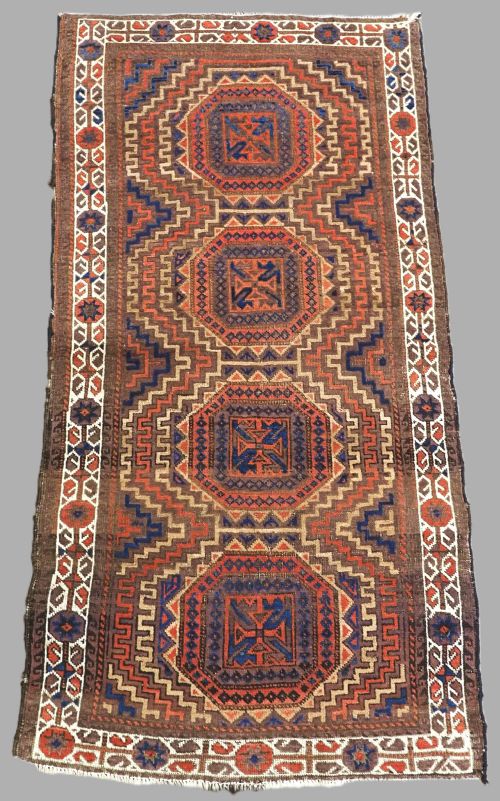
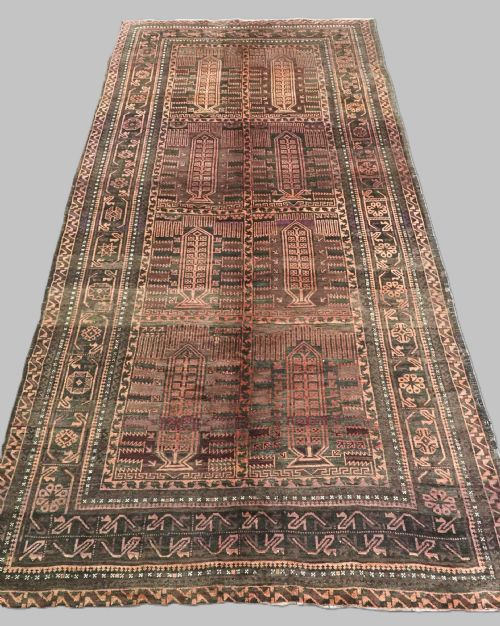
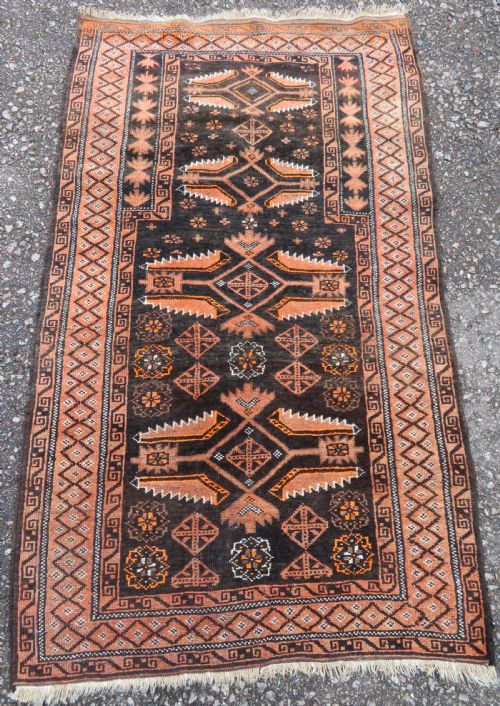
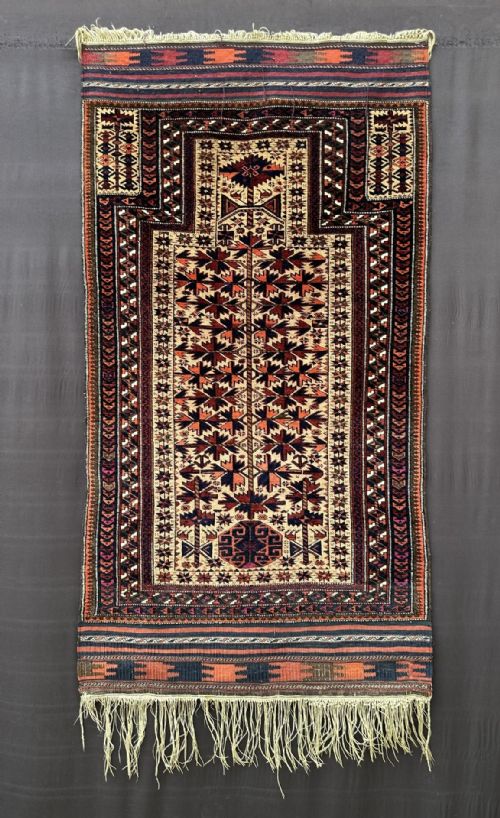
A dark brown baluch rug represents the textile traditions of nomadic and semi-nomadic tribes spanning the borderlands of Persia and Afghanistan. These pieces include main carpets, smaller floor coverings, and specific formats like prayer rugs or pushti faces.
The items seen here date across several decades bridging the late nineteenth and early twentieth centuries, centring around the years from eighteen seventy to nineteen twenty. Makers utilised traditional motifs such as guls, lattice arrangements, and specific tribal designs including Timuri and Mahdad Khani patterns.
Buyers encounter formats ranging from compact runner rugs to square room pieces, often woven in wool with characteristic dark ground colours. Each piece reflects regional weaving habits tied to specific tribal groups operating in Khorasan and Western Afghanistan.
Materials and Construction
Weavers constructed these textiles predominantly using hand-spun wool and standard wool fibres, occasionally incorporating goat hair for structural edges or selvages. Natural dyes provided the deep brown, ivory, and secondary palette tones seen across the surface.
The foundations typically rely on wool or cotton warps and wefts, upon which the dense pile is knotted by hand. This combination yields a durable fabric designed to withstand heavy daily use within tribal tents and houses.
The listings span production dates from eighteen seventy through to nineteen twenty, utilising wool, cotton, and natural dyes.
Distinctions in Quality
Quality rests on the fineness of the knotting, the crispness of the design execution, and the stability of the foundation. Tightly packed wool yields a resilient handle that holds intricate patterns clearly.
The depth and variation of natural dyes influence visual success, with richer colour saturation elevating the piece. Preservation of the original borders and outer selvedges also separates well-maintained examples from heavily worn ones.
Yaqoub Khani Tribe·Salar Khani Baluch·Mushwani Baluch·Mahdad Khani Tribe·Bahluli Baluch
The Dark Brown Baluch Rug Glossary
- Gul
- A repeating medallion design often found in tribal rugs. These octagonal or geometric motifs form the primary pattern structure across many carpets.
- Pushti
- A small mat or small rug used for sitting or leaning against. These compact pieces often display intricate face designs.
- Seh Mihrab
- A triple arch design layout used primarily on prayer rugs. This niche format directs the petitioner during daily observance.
- Warps
- The vertical threads stretched lengthwise on the loom before weaving begins. They form the structural skeleton of the textile.
- Natural Dyes
- Colourants derived from plants, roots, and minerals rather than synthetic compounds. They produce organic tones that age with subtle patination.
Dark Brown Baluch Rug: Frequently Asked Questions
How do I identify a prayer rug?
Prayer rugs feature a distinctive arched niche, known as a mihrab, at one end of the field. This architectural motif indicates the direction of prayer during use.
Such formats are generally smaller in scale, intended for individual personal devotion rather than covering a large floor space.
Where were these textiles made?
Production centred on the borderlands between north-east Persia and north-west Afghanistan, encompassing regions such as Khorasan and Ferdows. Various nomadic and semi-nomadic groups inhabited these areas.
Weavers drew upon local tribal patterns passed down through generations rather than urban workshop designs.
What is a runner rug used for?
Runners provide long, narrow floor coverings suited for hallways, corridors, or alongside beds. Their elongated format fits restricted architectural spaces.
Tribal examples bring patterned warmth to transit areas without overwhelming smaller rooms.
How should I care for antique wool?
Protect the textile by vacuuming gently without a rotating brush roll to prevent snagging the wool pile. Professional cleaning suited for antique textiles preserves the natural fibres.
Keeping the rug out of direct, harsh sunlight prevents the natural dyes from fading prematurely.