



Dark Brown Accent Mirror
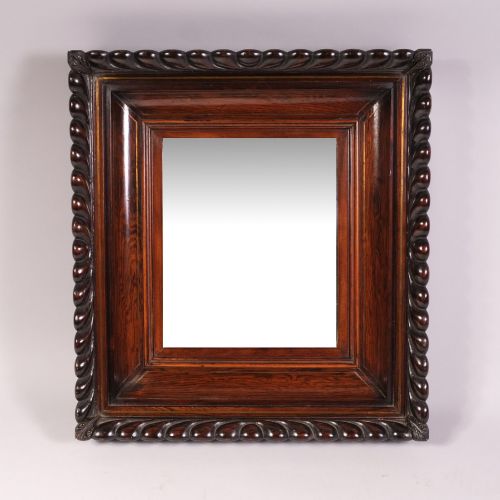
A dark brown accent mirror brings rich timber tones and reflective depth to a wall, offering warmth that lighter frames miss.
Dark Brown Accent Mirror
When you search for a dark brown accent mirror, you encounter timber frames spanning several distinct periods, including the Georgian era and the nineteenth century. These wall mirrors serve both functional and decorative roles within a room, anchored by wooden construction.
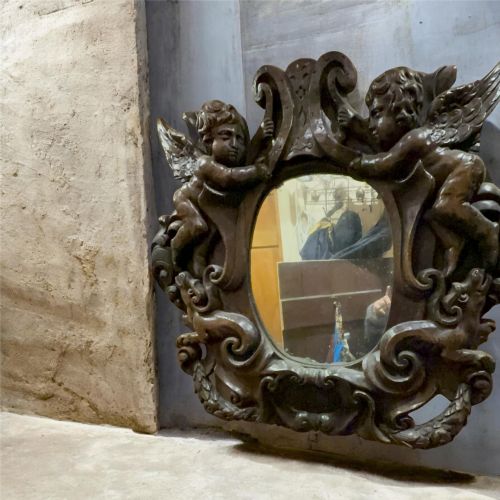
The versions most frequently met on this page include carved wood designs from the eighteenth century alongside later Victorian and 1890 examples. Forms range from oval wall hanging shapes to rectangular wall mirrors influenced by Dutch Baroque and French Provincial styles.
Makers utilised dark timbers such as mahogany, walnut, and oak, often enhancing the wooden surfaces with carved details. The stylistic vocabulary draws on Georgian Chippendale, Rococo, and Gothic traditions to create distinct focal points.
How they were made
Makers constructed these frames using solid hardwoods like mahogany, walnut, and oak, often shaping the timber through hand carving. Gesso was frequently applied beneath surface finishes or gilding to provide a smooth base for intricate ornamentation.
Mirror glass was set into these wooden structures, sometimes accompanied by carved wood elements or faux bamboo turning. Joinery methods varied by period, from eighteenth-century cabinet-making techniques to later nineteenth-century assembly.
Dark Brown Accent Mirror Retail Price Guide 2026
Typical asking prices for dark brown accent mirror among the pieces listed under this phrase on Sellingantiques today, from the lower quarter to the upper quarter. They describe what is for sale here now, not the wider market.
Materials recorded on this site include glass, carved wood, mahogany, walnut, carved oak, gesso, and mirror glass.
What varies in quality
The depth and crispness of the hand carving separate standard pieces from superior examples, particularly in how sharply the wooden ornament holds its edge. Timber selection also dictates the visual weight, with dense mahogany and figured walnut displaying richer grain patterns than simpler woods.
Age and originality of the mirror glass contribute significantly to the character of the piece, alongside the preservation of the original wooden frame. The cohesion of period details, such as accurate Georgian Chippendale or Dutch Baroque proportions, determines the overall execution.
The Dark Brown Accent Mirror Glossary
- Mahogany
- A durable tropical hardwood prized for its deep reddish-brown colour and stable grain. It became the dominant timber for fine cabinetry during the eighteenth century.
- Gesso
- A plaster-like mixture applied to wood surfaces to prepare them for carving or gilding. It allows for sharp, intricate relief work that plain timber cannot hold.
- Chippendale
- A mid-eighteenth-century English design style associated with Thomas Chippendale. It incorporates exuberant carving, asymmetrical scrolls, and Gothic or Rococo motifs.
- Baroque
- An ornate European style spanning the seventeenth and eighteenth centuries. It emphasises dramatic movement, deep relief carving, and grand proportions.
Dark Brown Accent Mirror: Frequently Asked Questions
How do I clean an antique wood frame?
Dust the carved wooden surfaces gently with a soft, dry brush or a lint-free cloth to remove surface particles. Avoid modern chemical sprays or excessive moisture, which can damage aged finishes and open grain.
Occasional application of a suitable wax polish helps nourish dry hardwoods like oak or mahogany. Buffing lightly after application restores a natural lustre without building up heavy residue.
How do I distinguish eighteenth-century mirrors from later copies?
Eighteenth-century mirrors typically display hand-cut joinery, old timber shrinkage, and subtle asymmetries characteristic of manual tool work. The backing boards and fixings often show age-appropriate wear and period-specific construction methods.
Later Victorian or revival pieces may utilise machine-sawn elements or standard modern screws alongside older stylistic motifs. Examining the back of the frame alongside the front reveals the true age of the construction.
What rooms suit a dark brown accent mirror?
Dark wood frames provide a strong visual anchor in hallways, above mantelpieces, or as a focal point in a dining room. Their deep tones contrast effectively against lighter painted walls and complement traditional interior schemes.
Smaller oval or wall-hanging versions fit comfortably in narrower spaces where reflective light is beneficial. Positioning the mirror opposite a window maximises natural illumination within the room.